 Tony Francis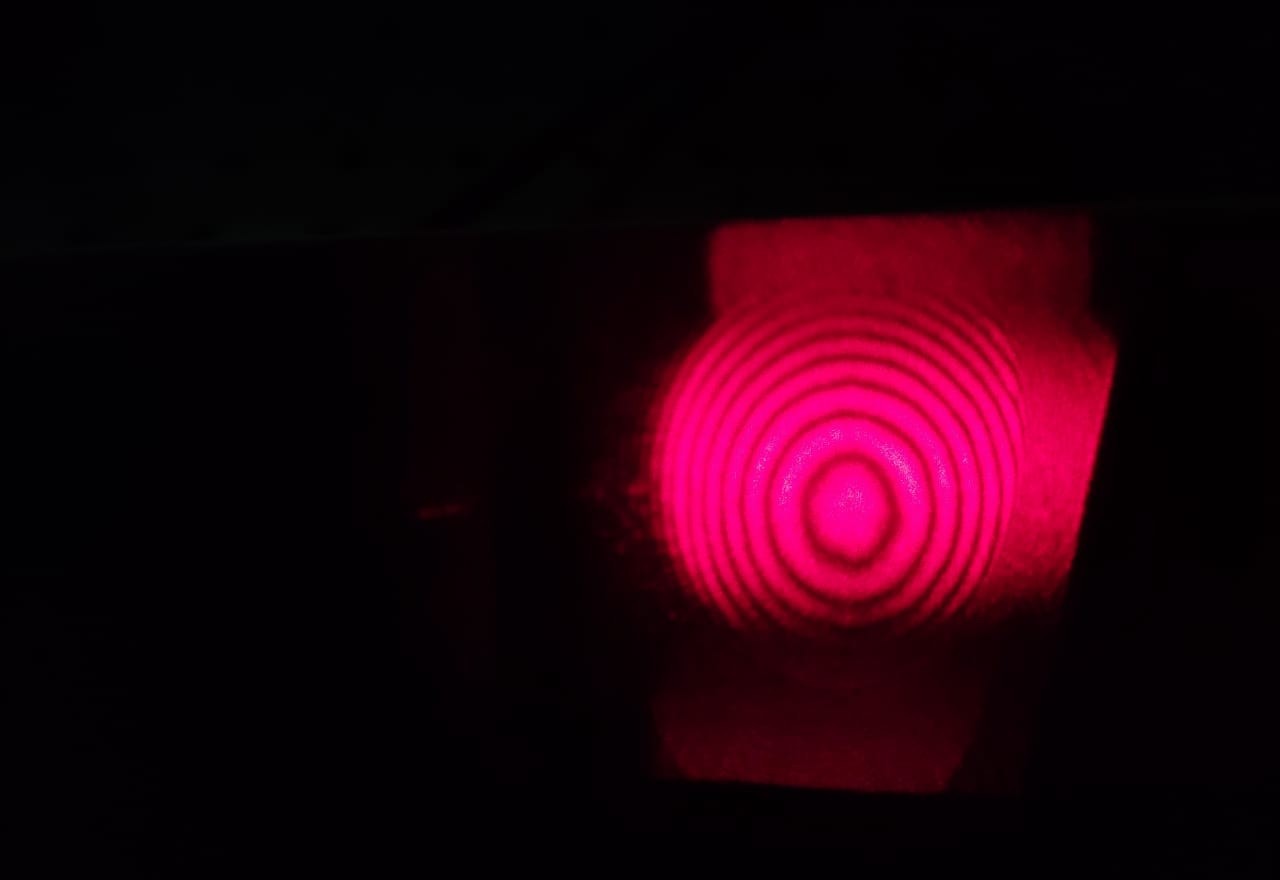
The Heart of the Rings: How It Works
The magic of the circular fringes is rooted in the precision of the interferometer's setup.
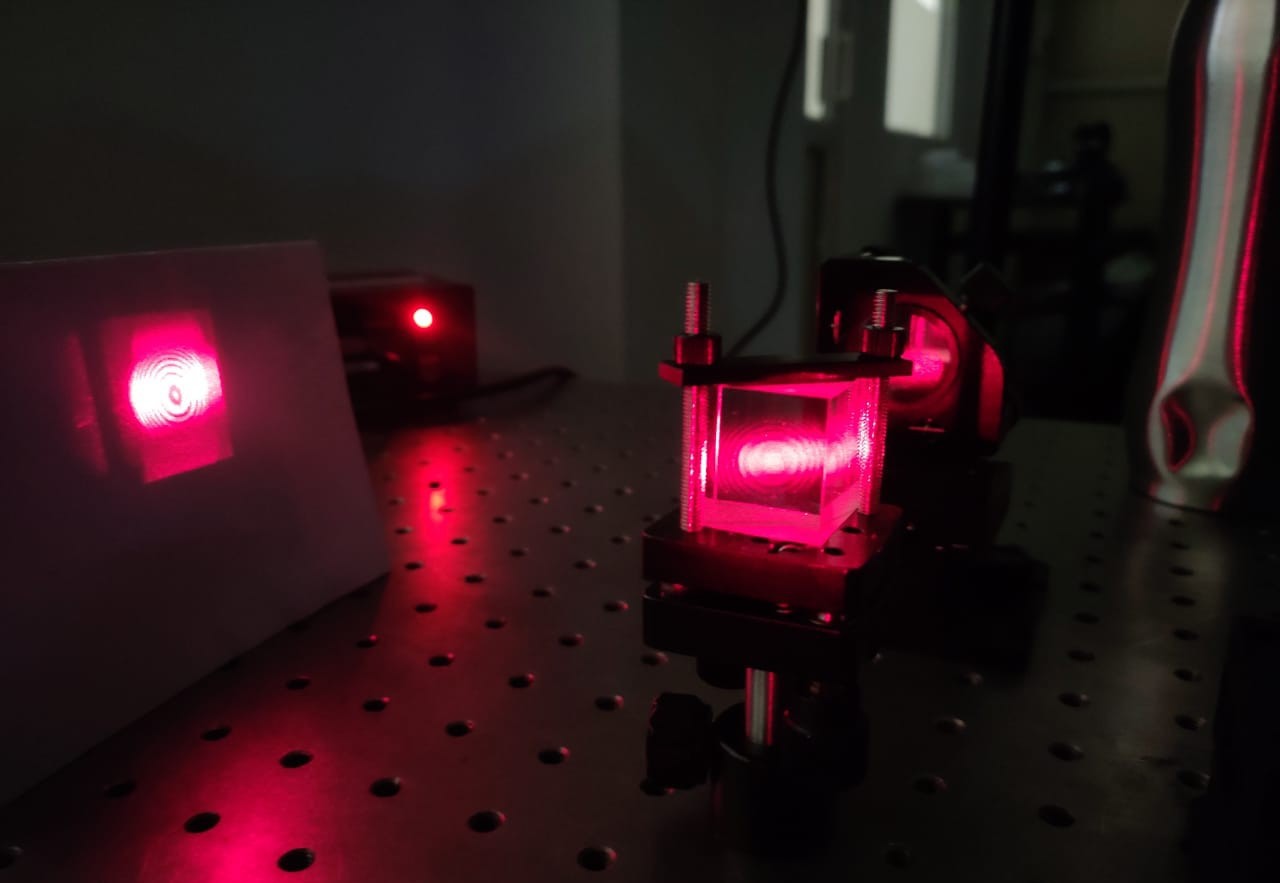
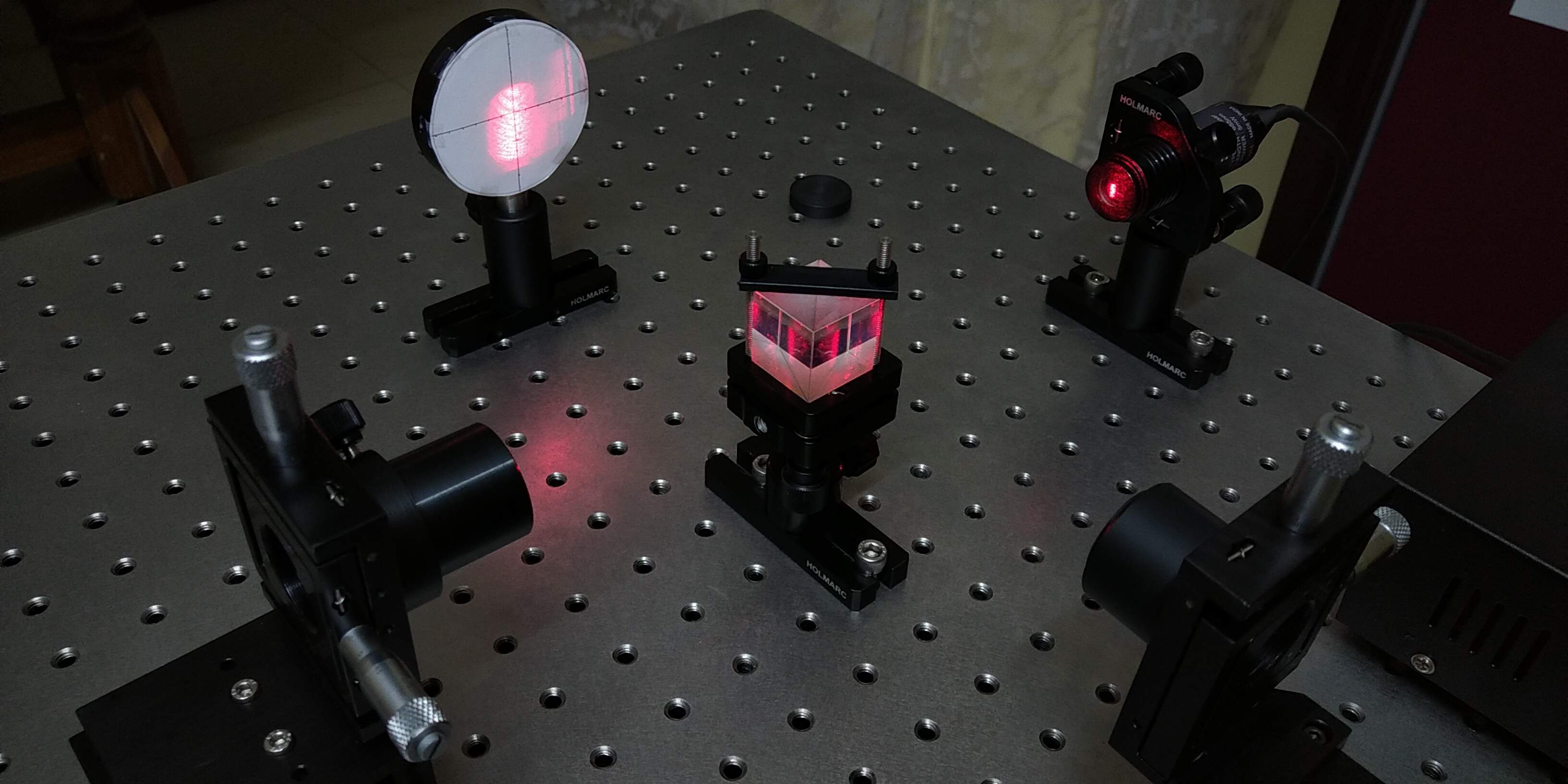
- Splitting the Beam: The red laser light, typically from a Helium-Neon (He-Ne) laser with a wavelength (λ) around 632.8 nm, hits a beam splitter. This semi-silvered mirror divides the single beam into two coherent beams: one reflected and one transmitted.
- Path Difference: These two beams travel along perpendicular paths, reflect off two separate mirrors (M1 and M2), and then return to recombine at the beam splitter. The resulting pattern depends on the optical path difference (Δx) between the two arms of the interferometer.
- Achieving the Rings: To get circular fringes, the two mirrors (M1 and M2's virtual image) must be set up to be perfectly perpendicular to each other, or as close as possible. This creates an effect where the path difference, Δx, depends only on the angle of inclination (θ) at which the light rays leave the extended laser source (which is typically broadened by a lens).
The Mathematics of the Rings
The conditions for the interference pattern are:
Bright Fringes (Constructive Interference):
where is the effective distance between the two mirrors, is the angle of inclination, and is an integer known as the order of the fringe.
Dark Fringes (Destructive Interference):
Since , (the red light's wavelength), and are constant for a specific ring, the angle is also constant. All points on the screen that correspond to the same angle of inclination will have the same path difference and therefore the same intensity, forming a perfect circle centered on the optical axis. These are often called fringes of equal inclination.
Watching the Rings Breathe
One of the most exciting parts of the experiment is observing the movement of the fringes as you carefully adjust the movable mirror, .
- Mirror Movement: When M1 is moved slightly, the distance changes. According to the equation, 2dcosθ=mλ , this changes the order for a given angle .
- Shrinking and Expanding: If you slowly move a mirror to decrease the path difference d , you will see the circular fringes shrink and disappear at the center. If you increase d, new fringes appear at the center and expand outward.
By counting the number of red fringes (N) that pass a fixed point as the mirror is moved a known distance (Δd), you can precisely determine the red laser's wavelength using the relationship:
The circular fringes of a red laser in a Michelson interferometer are not just a beautiful sight—they are a powerful, tangible tool used in science and engineering to make incredibly precise measurements of distance, wavelength, and refractive index.
Discussions
Become a Hackaday.io Member
Create an account to leave a comment. Already have an account? Log In.