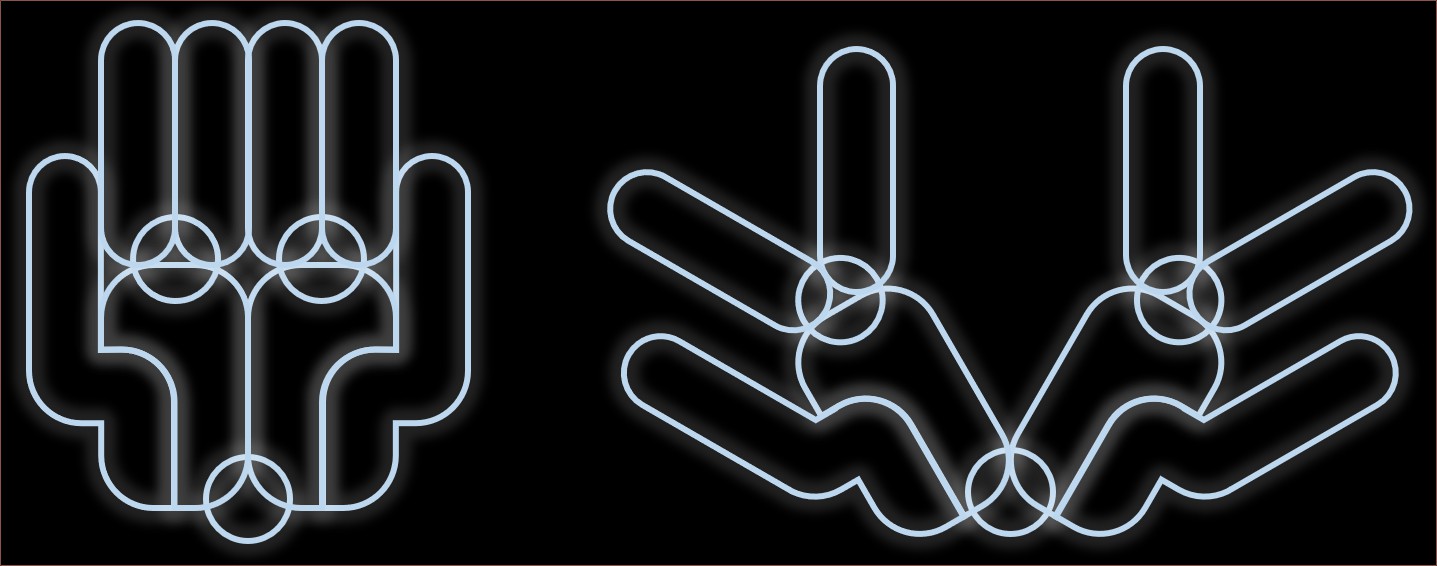
An idea for a robot hand with 2 thumbs and a palm that splits in half
To make the experience fit your profile, pick a username and tell us what interests you.
We found and based on your interests.
Inspired by the humanoid robotics industry that's been heating up in this second half of 2025, I started to formulate my own thoughts about them. After discussing with my mother, I came to a notable conclusion:
I can last 12 days without thinking "I need to sweep".
I cannot last 12 hours without thinking "I need to eat".
Thus, my conclusion was that if I was ever on a cutting-edge robotics team, it would be one trying to make a robotic cook. And no I don't mean the robots that seem to be a concrete mixer food fryer, but something that can chop chives that Reddit would say are almost perfect.
While it's probably possible to design a fridge-freezer-airfryer-microwave-chopping-blending vending machine, the trendy way (i.e. the way to get that VC money and star-eyed engineering graduates) is via robotics.
I was quite impressed with ALLEX from WIRobotics , particularly the robotic hands:
Robot vacuum companies are also starting to implement arms:
Thus, I started to focus on hands, most likely because I've already been thinking about the human hand in general due to #Tetizmol [gd0153] and #Tetent [gd0090].
Coincidentally enough, Boston Dynamics came out with a video on their 3-digit gripper and I agree that you can do a lot with just 3. I also learned from Sunday of the importance of being able to pick up more than one object.
Because I like symmetry, these are essentially the reason behind 6 digits.
The next question to solve was how many degrees of freedom do they need to have, and my solution is as follows:
The two fingers aren't locked to their same axis. In other words, the design should allow to "cross the fingers":
All in all, there should be:
Thus 17 DOF total.
This hand needs to be water washable, be able to feel and have something resembling nails to be able to do things like peel an orange.
I learned quite a bit from https://rodneybrooks.com/why-todays-humanoids-wont-learn-dexterity/, such as Meta's touch sensors:
I also learned quite a bit from https://rodneybrooks.com/rodney-brooks-three-laws-of-robotics/, namely the first law:
The visual appearance of a robot makes a promise about what it can do and how smart it is. It needs to deliver or slightly over deliver on that promise or it will not be accepted.
From this, I can gather that the robotic hand needs 14 m/s of acceleration and cannot sound like a symphony of hobbyist servos during operation. Additionally, as mentioned in the 3rd law, there needs to be minimum 99.9%, ideally 99.999% reliability. It sounds excessive, but if not falling was 99.9% reliable, people would trip and fall every thousand steps on average. This means characterising wear-and-tear.
Obviously, having the idea and implementing the solution are vastly different things. I just wanted to write this for the potential chance that someone on a team to design yet another robot arm stumbles upon it.
Create an account to leave a comment. Already have an account? Log In.
Become a member to follow this project and never miss any updates