 Vladimir Todorov
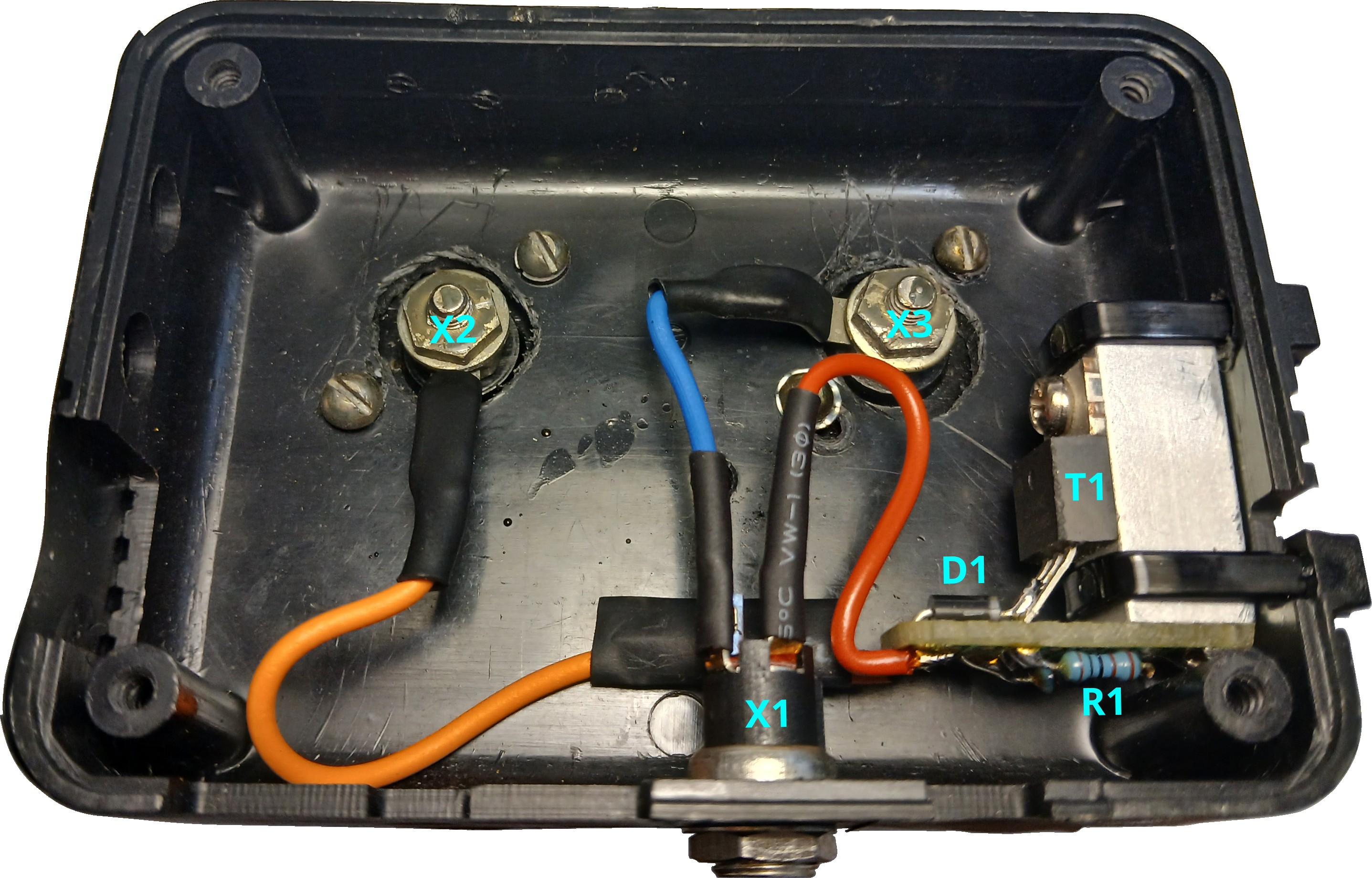
Lately, I've been heavily involved in reverse engineering. Sometimes I need to check at what voltage a Zener diode breaks down. For this purpose, I built a tester. It consists of a constant current source, a general-purpose power supply, and a voltmeter. The constant current sources is simple - one Depletion MOSFET and a resistor.
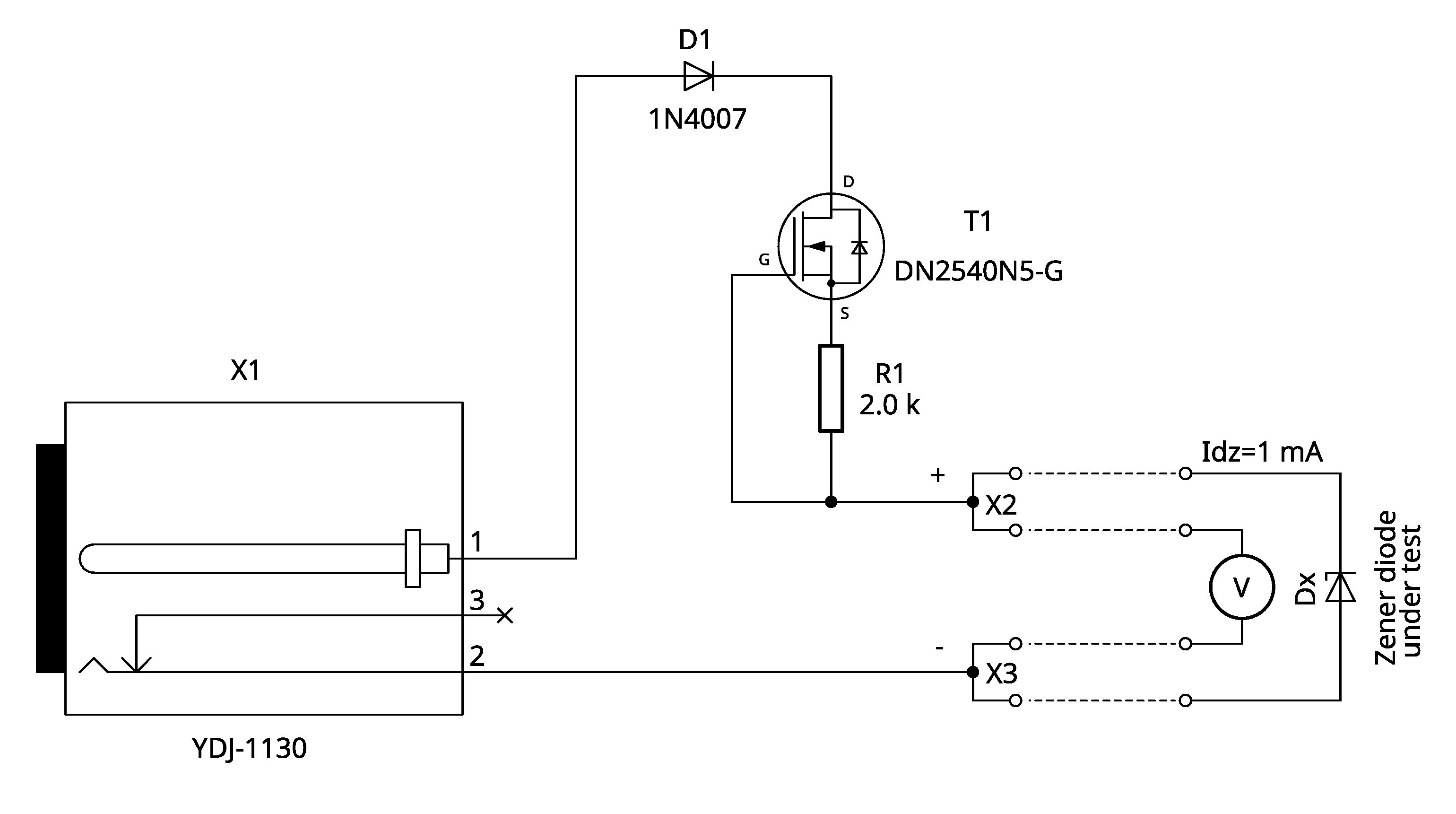
Electrical Schematic of the Zener Diode Tester
The Idz current is adjusted with resistor R1. Infineon provides a very comprehensive Application Note on the operation of Depletion MOSFETs as constant current sources. Since it's an old article that is difficult to find, I will provide a download link at the end.
Application Note title: Depletion MOSFETs.
Author: Pradeep Kumar Tamma.
Document reference: AN_201410_PL11_003.
Revision 1.0, 2015-02-03.
Here is the relationship between
R1 ,
Id : the desired current ,
Vgs(th) : the gate threshold voltage of the MOSFET and
Idss : the on-state current at VGS = 0 V .
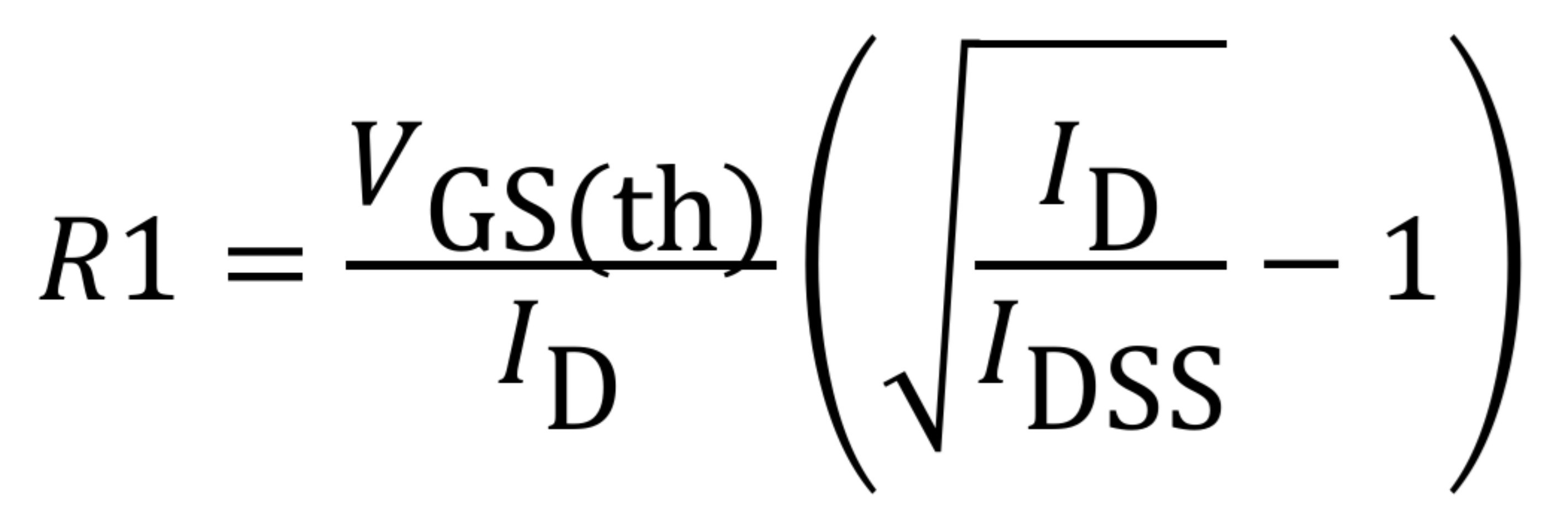
According to the DN2540N5-G datasheet, VGS(th) ranges from 1.5 V to 3.5 V. Тhe minimum Idss value is 0.15 A, and the maximum value is not specified.
The table below shows the calculated values of R1 for specific values of VGS(th), with Idss and Id held constant.
| VGS(th) , V | Idss,A | Id,A | R1, Ω |
| 1.5 | 0.15 | 0.001 | 1378 |
| 2.0 | 0.15 | 0.001 | 1837 |
| 2.5 | 0.15 | 0.001 | 2296 |
| 3.0 | 0.15 | 0.001 | 2755 |
| 3.5 | 0.15 | 0.001 | 3214 |
At the end, I have included links to ODS and XLSX files which contain the implemented formula. You can view the results and perform calculations with different values there.
Practice, however, has shown that instead of calculating the resistor, the easiest way is to place a potentiometer in place of R1 and use it to adjust the current. That's what I did. Afterwards, I replaced the potentiometer with a fixed resistor of an appropriate value. The calculations gave me a guideline for the potentiometer's value.

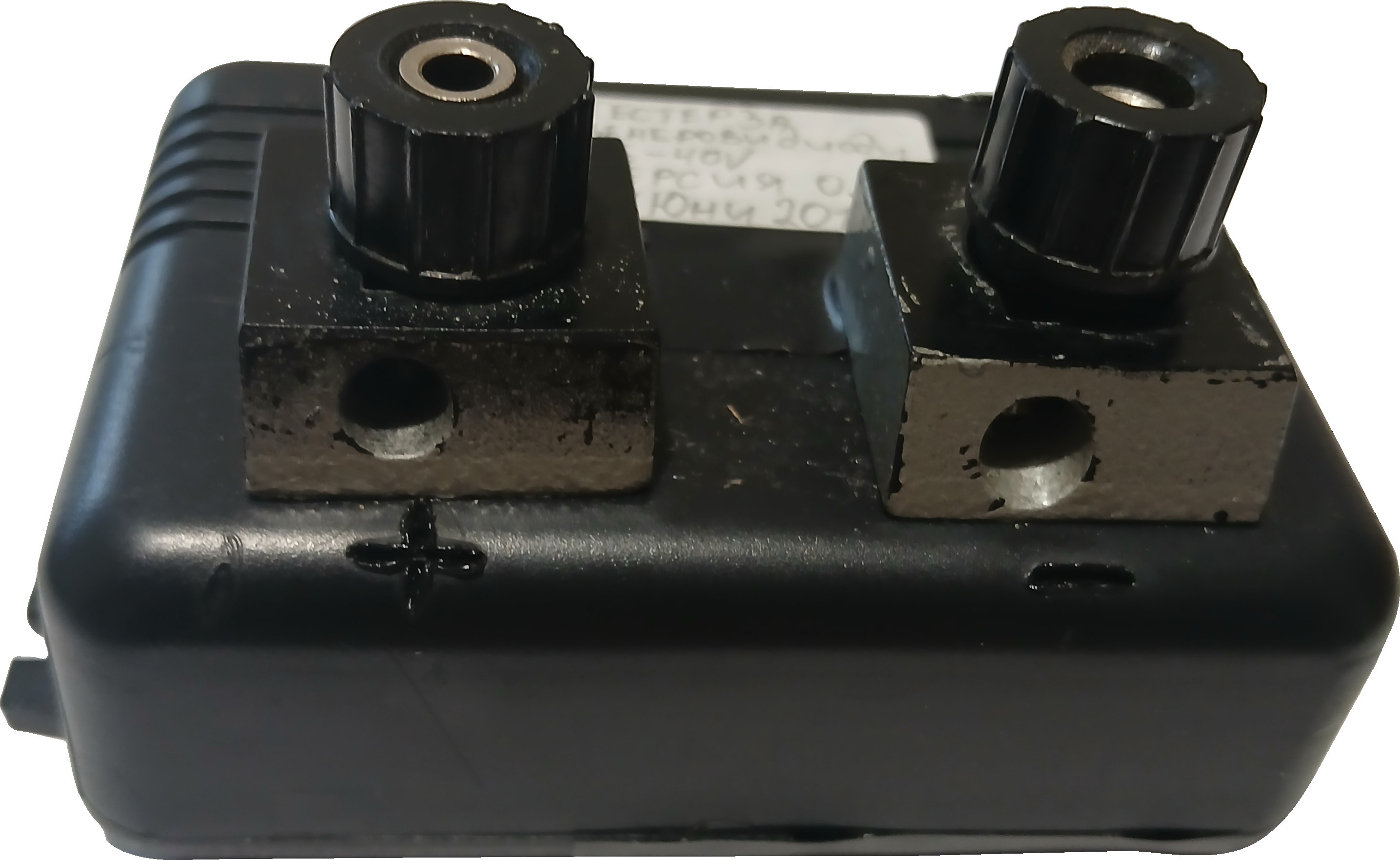
Below are some photos :
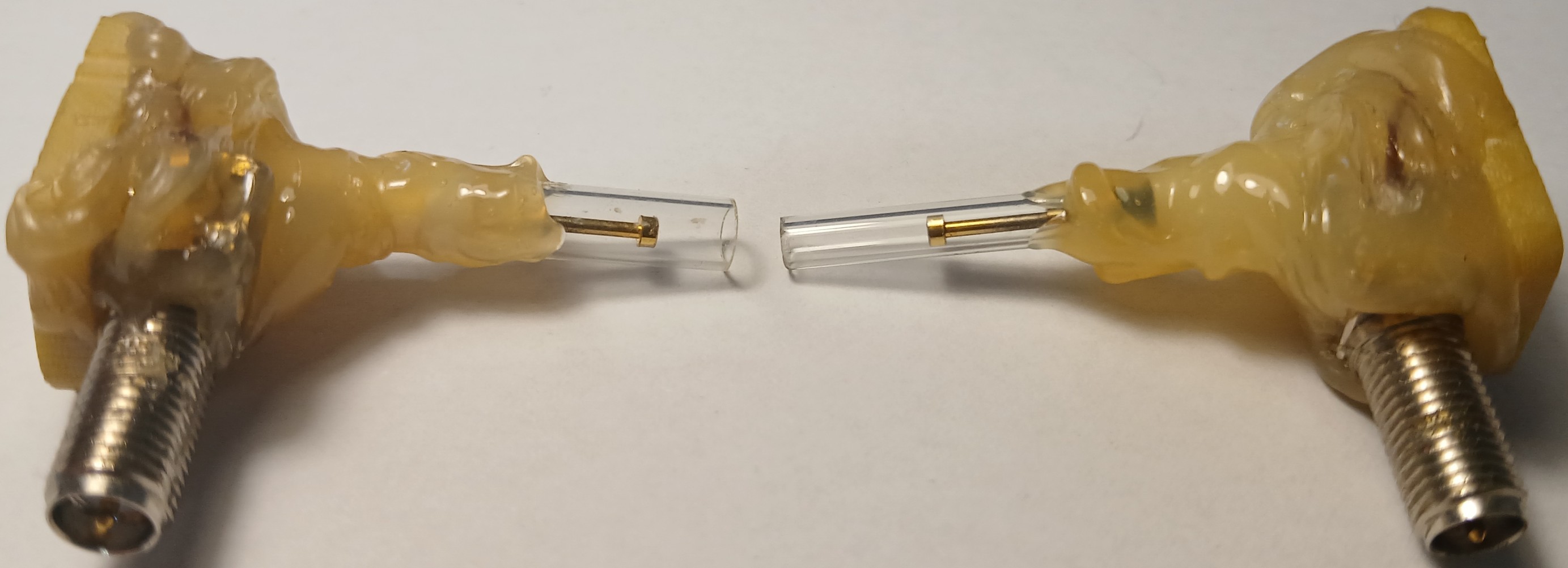
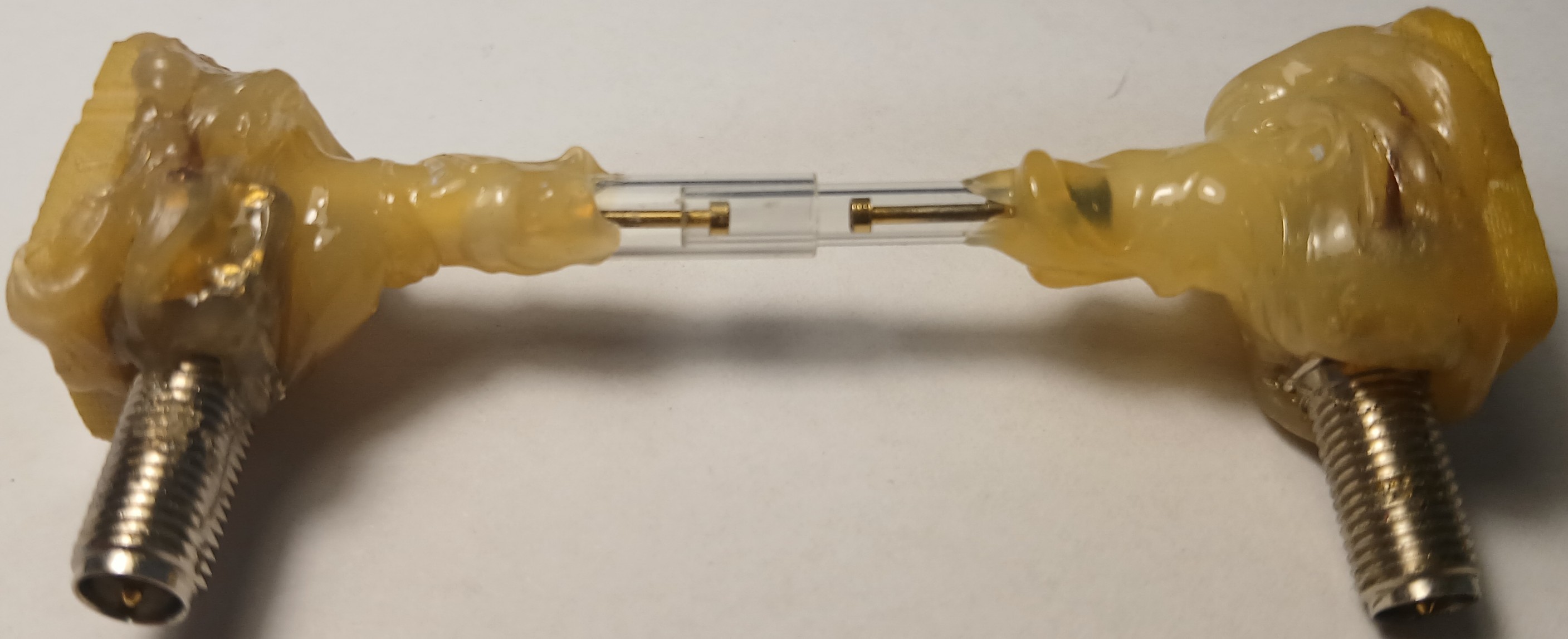
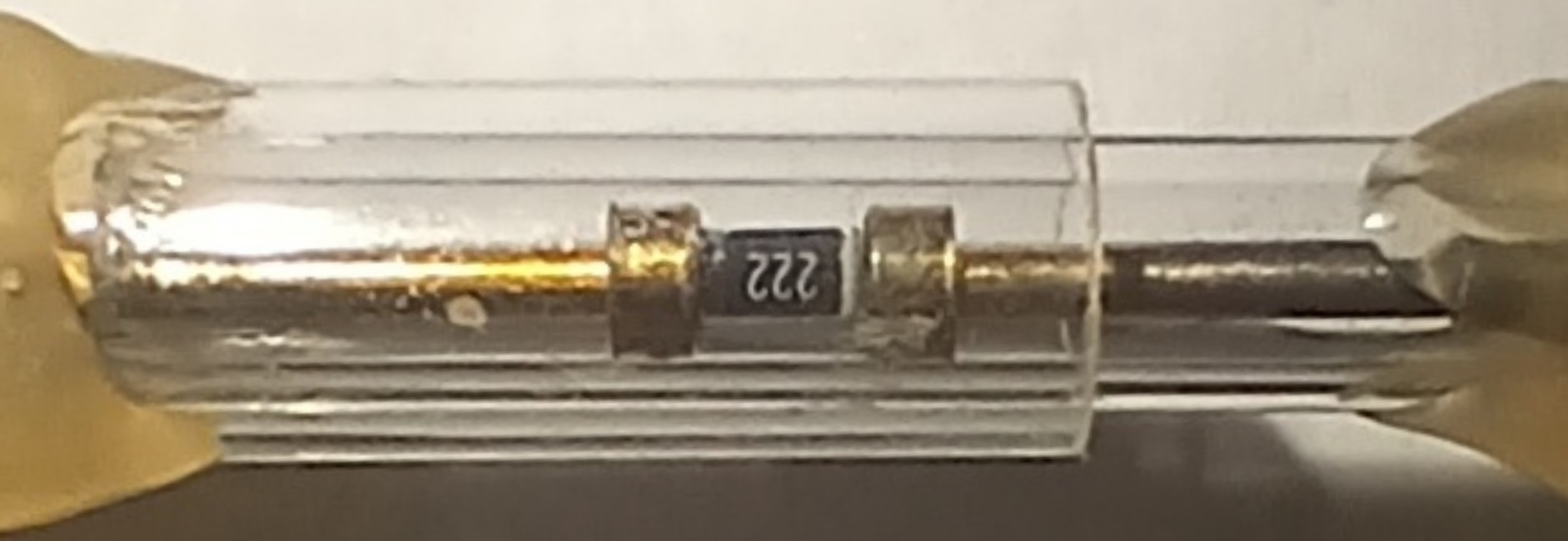
I made a jig for easily measuring Minimelf packages. The glass tubes were taken from incandescent light bulbs. I also used SMA connectors (male and female) and spring test probes. I attached the tubes to the SMA connector and the spring test probe using epoxy resin. I could have skipped the connectors and soldered the cables directly, but I was worried that the cable might break one day.
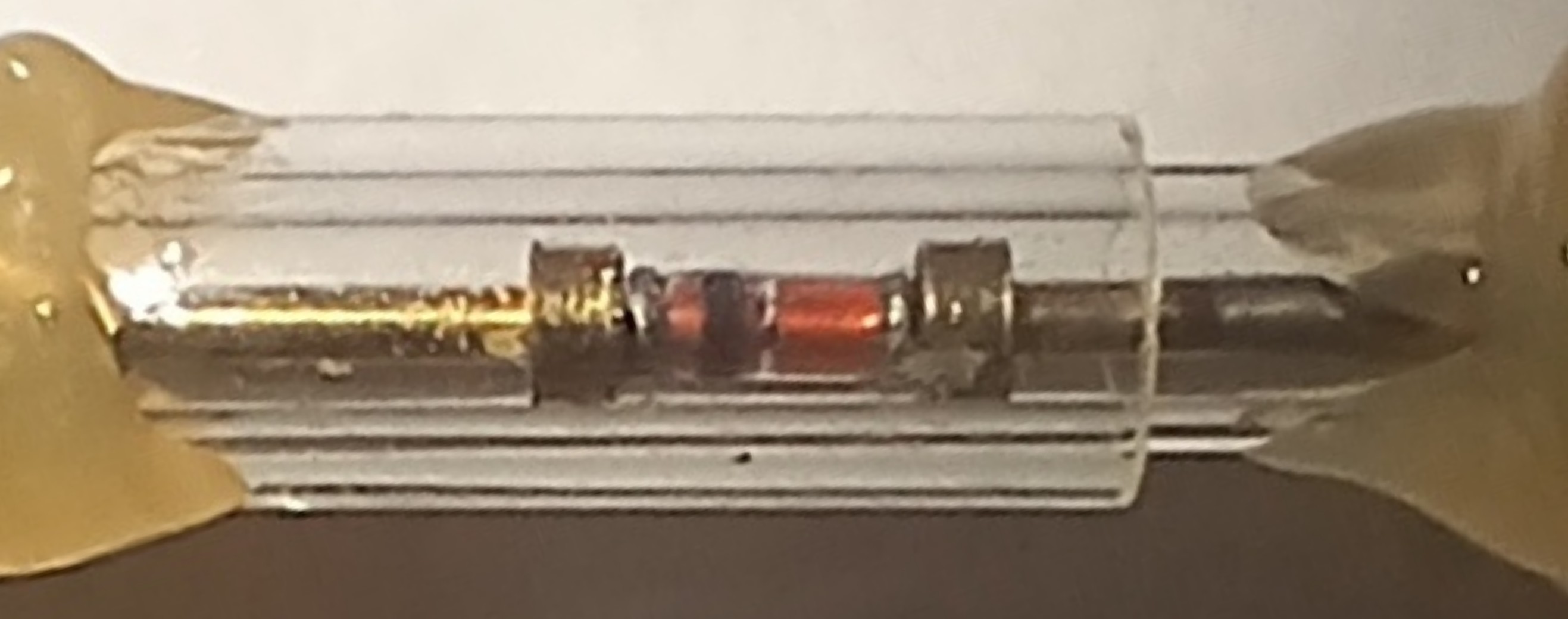
With Minimelf package.
You can probably use ready-made Current Regulator Diodes such as the 1N5283-1 through 1N5314-1, J500 SERIES current regulating diodes, and similar types. I haven't used them because they are expensive and hard to find. I invite readers to share their opinions.
LINKS : Calculation of R1 , ods format
Calculation of R1 , xlsx format
Discussions
Become a Hackaday.io Member
Create an account to leave a comment. Already have an account? Log In.