 voidrane Splicer
A Daedric-skinned pocket computing environment with synthesizers, network reconnaissance, ASCII 3D, Wi-Fi motion sensing, and a Gemini browser.
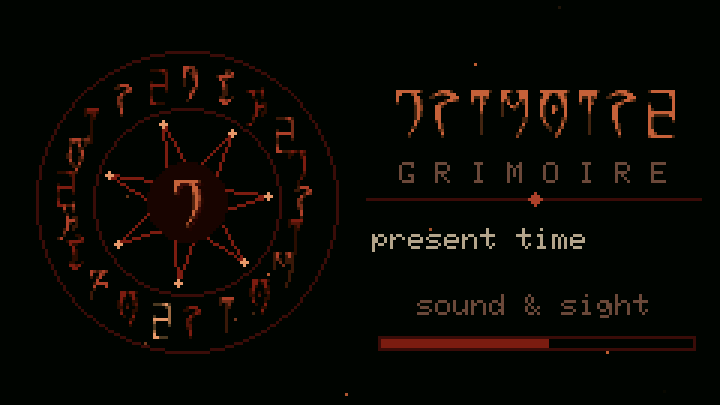
I wanted the Cardputer ADV to feel like something stranger than a collection of ESP32 utilities.Not another menu of vaguely related tools. Something with its own identity. An operating environment that feels like it was recovered from a machine that probably shouldn't have existed.
The result is DIVINER, a custom firmware environment for the M5Stack Cardputer ADV containing sixteen applications, called rites, divided into four domains: Sound, Sight, The Wired, and Wards.
It combines experimental audio synthesis, procedural graphics, network diagnostics, wireless observation, and a surprisingly functional little corner of the alternative internet. All dressed in a Daedric interface inspired by Morrowind, Serial Experiments Lain, and the general idea that computers used to be allowed to look mysterious.
The interface is part of the machine
DIVINER has a custom, hand-rasterized Daedric glyph font and a blood-and-ember color scheme.
Applications appear in a carousel written in Daedric script. Select one and the glyphs dissolve into readable English.
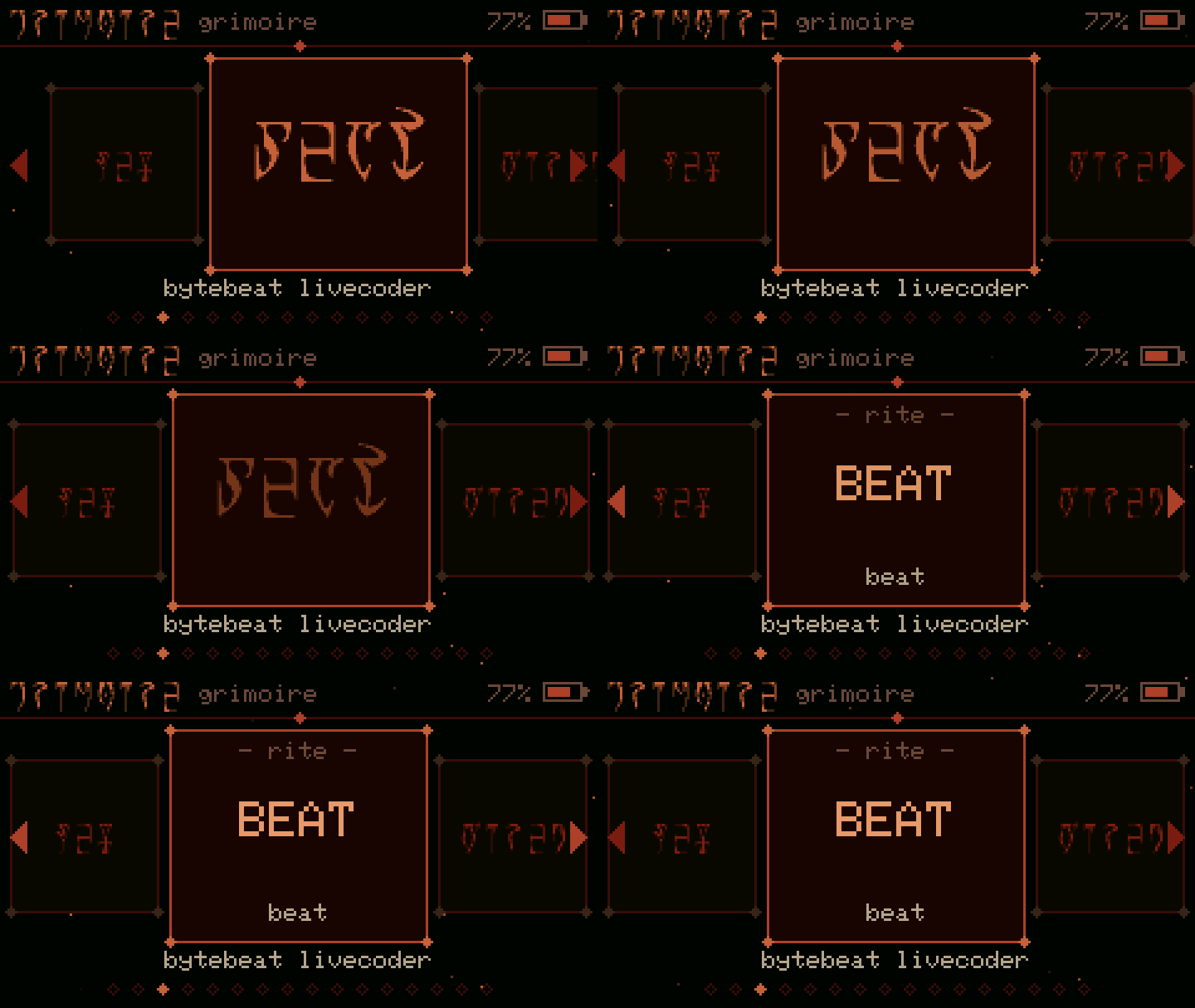
The interface has its own sound effects, navigation behavior, and visual conventions. It's deliberately unlike the usual embedded-device dashboard.
Underneath the atmosphere, though, there's actual software doing actual work.
SOUND: a synthesizer hiding in a pocket computer
Three of DIVINER's rites are dedicated to making noise.
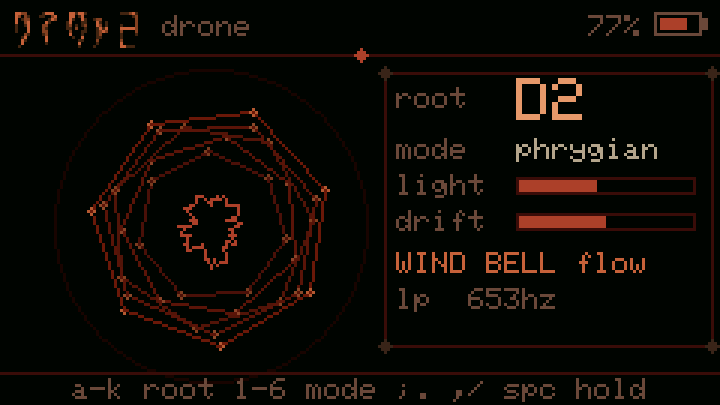
DRONE is a five-voice generative synthesizer with drifting oscillators, resonant low-pass filtering, wind, bells, and dark delay effects. It's designed for slow, evolving sound rather than conventional melodies.
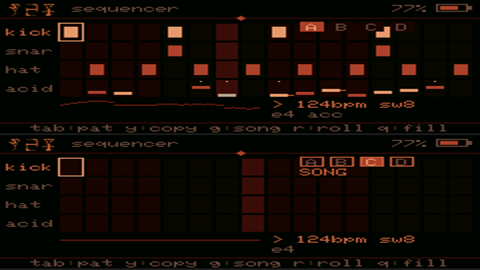
SEQ is a miniature groovebox with kick, snare, hi-hat, acid synthesis, Euclidean fills, four pattern banks, song mode, and pattern saving/loading.
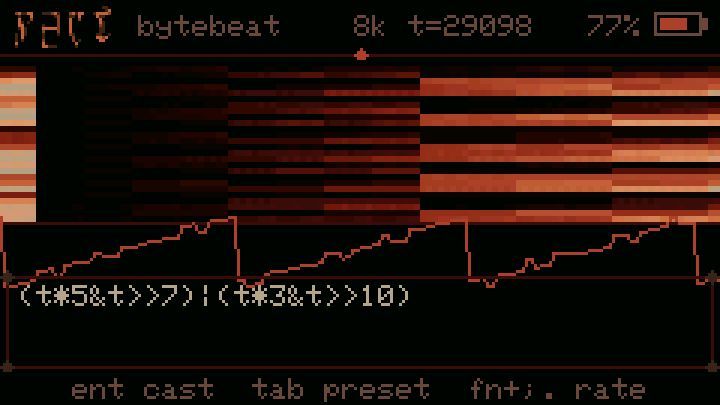
BEAT is a bytebeat livecoding instrument. Enter a C expression using t and hear the result immediately.
There is something deeply satisfying about turning a small embedded computer into an instrument that sounds like a corrupted answering machine discovered in a basement.
SIGHT: graphics from an alternate timeline
The graphics rites explore how much atmosphere can be squeezed out of a small display.
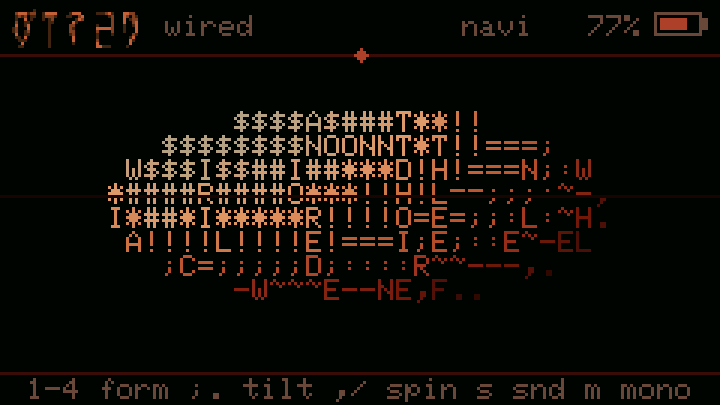
WIRED renders ASCII-based 3D structures, including toruses, wireframe solids, tunnels, and a navigation sphere.
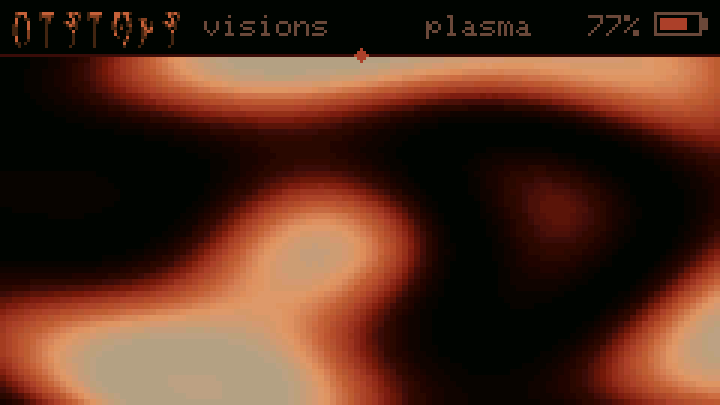
VISIONS generates plasma fields, an Oblivion-inspired gate, ash-fire, falling Daedric glyphs, and a heptagram kaleidoscope.
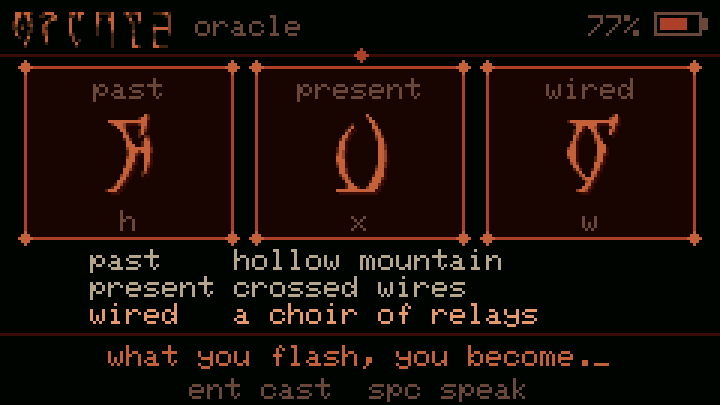
ORACLE casts three runes, accompanied by synthesized bell chimes.
These aren't image viewers. The point is generating strange little worlds directly on the hardware.
THE WIRED: watching the invisible infrastructure
This domain is where DIVINER starts behaving more like a pocket cyberdeck.
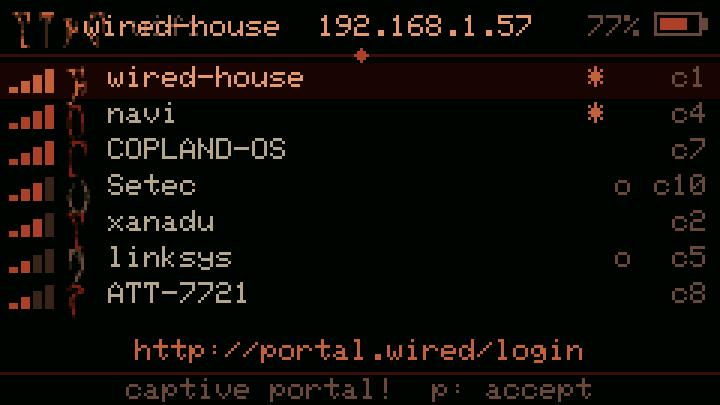
LINK handles Wi-Fi connections, remembers networks, detects captive portals, and provides a way to accept supported portal pages.
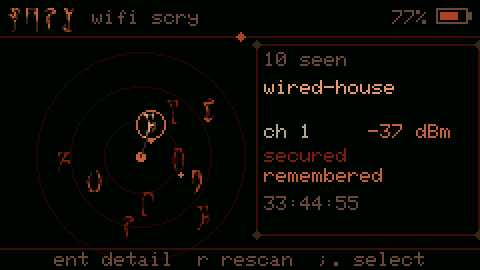
SCRY presents nearby Wi-Fi networks as a constellation rather than a conventional scan list.
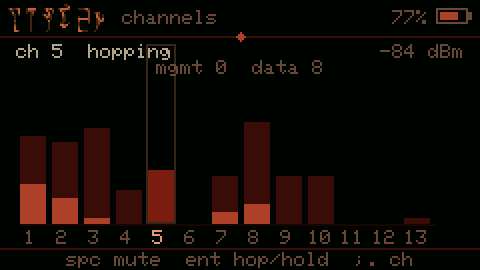
LISTEN provides a receive-only wireless channel monitor with an audible representation of activity.
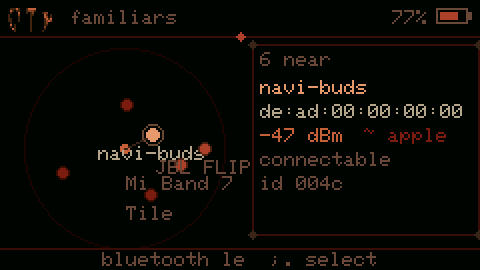
KIN visualizes nearby Bluetooth devices as drifting familiars.
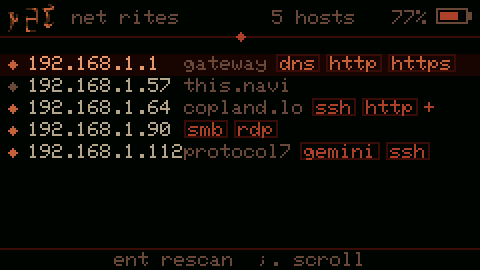
NET discovers hosts on a local network and examines names and exposed ports.
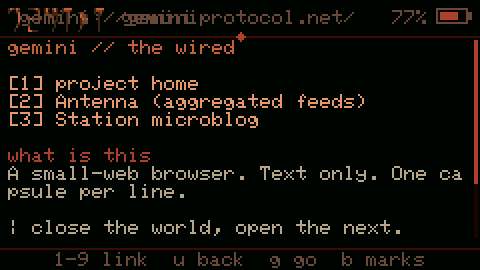
GEMINI is a TLS-capable gemtext browser, including support for posting. Yes, an actual small-web client running on a Cardputer.
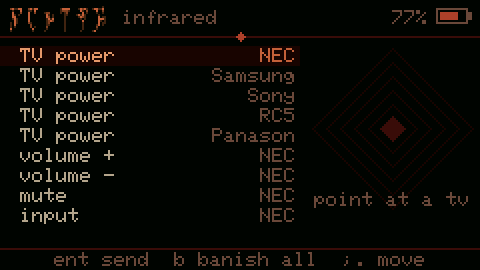
BANISH adds infrared remote-control functions across five protocols.
The aim is to make wireless infrastructure visible, audible, and explorable, instead of reducing everything to rows of numbers.
WARDS: the experimental perimeter
The remaining rites turn the Cardputer toward environmental observation and authorized network assessment.
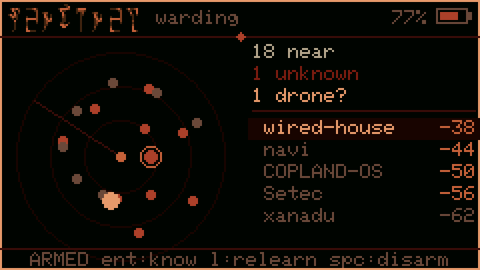
SENTINEL learns a baseline of nearby devices and alerts when unfamiliar ones appear. It also flags signatures potentially associated with drones. Those are heuristic indicators, not definitive drone identification.
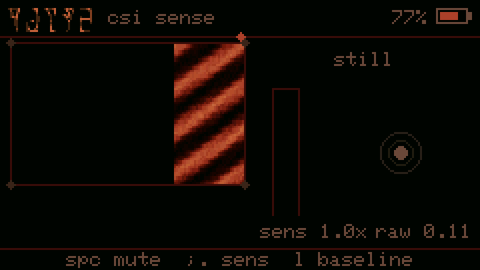
PULSE experiments with Wi-Fi Channel State Information to infer motion or presence from changes in the radio environment. This is experimental rather than a replacement for a calibrated motion sensor.
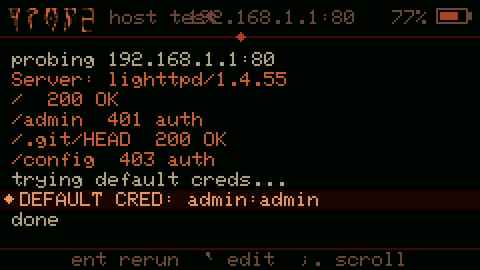
PROBE performs active HTTP reconnaissance and checks for default credentials on explicitly authorized hosts.
There are no denial-of-service or phishing functions. The security tools are intended for networks and devices the operator owns or has permission to inspect.
Built for the ADV, with a desktop simulator too
DIVINER is written in C++ using PlatformIO, with a hardware abstraction layer separating the physical Cardputer ADV from a native desktop implementation. The hardware build uses the M5Cardputer ecosystem, while an SDL2-based simulator runs the interface at its native 240 × 135 resolution, scaled for desktop viewing. The simulator supports audio playback, WAV output, scripted input, and headless screenshot generation.
This means the firmware can be explored and developed without having to reflash the hardware every time a pixel or oscillator needs adjusting.
A prebuilt firmware image is included in the repository.
Installation is handled through the Cardputer Launcher, either from an SD card or over USB serial while the Launcher is running.
Back up the factory firmware before replacing it.
Why build something like this?
Because small computers are becoming increasingly interesting while their interfaces are becoming increasingly interchangeable.
The ESP32 is capable of considerably more than serving a webpage with some toggles on it.
I wanted a machine that could produce music, visualize radio activity, browse Gemini, render procedural graphics, and provide an experimental window into nearby networks, while feeling like a coherent artifact rather than sixteen unrelated demos.
A computer can be useful and still have a personality.
DIVINER is an attempt to prove that.
Source code, firmware, previews, and build instructions:
https://github.com/numbpill3d/cardputer-adv-diviner
Hardware: M5Stack Cardputer ADV Language: C++ Build system: PlatformIO Desktop simulator: SDL2 License: MIT
Created by numbpill3d. Contributions, experiments, bug reports, and strange ideas welcome.
Discussions
Become a Hackaday.io Member
Create an account to leave a comment. Already have an account? Log In.