 Maave
MaaveCuttlephone website
I've made a website for the project: https://cuttlephone.com/
It's hosted on GitHub and includes some guides for using the phone case customizer and 3D printing. It also has premade 3D models to print.
I want to expand the "premade models" section later. Comment if you have any ideas for handling the dozens of files this program can make. I might move the website to a different repo so that STL files aren't cluttering the generator codebase. Then I could use Github release artifacts for big bundles of STLs while also providing links or duplicates on the website.
Website is made with Jekyll to generate HTML and Just-the-Docs for theming/formatting.
New phone, new phone case
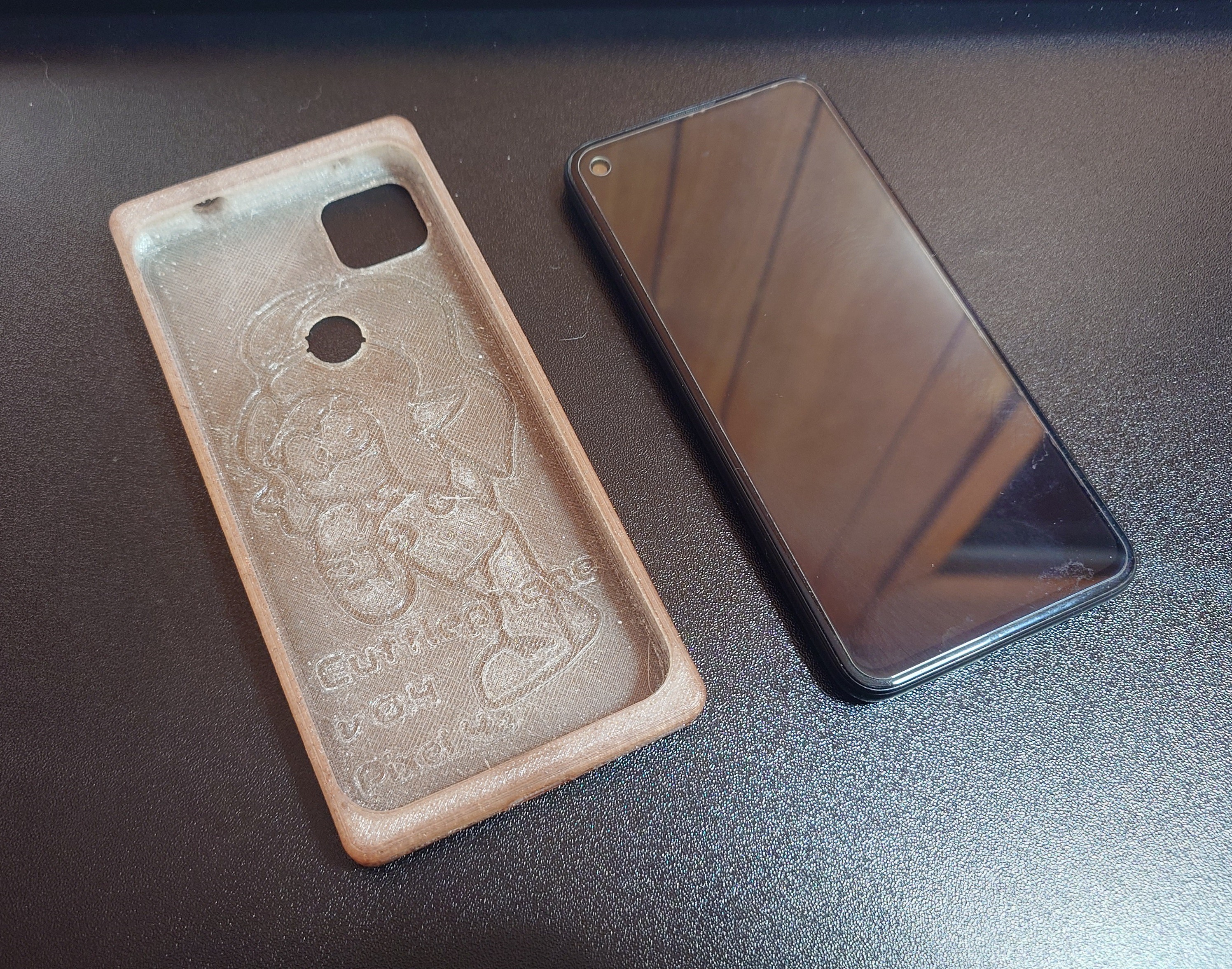
In other news, my old phone was killed via update. RIP Pixel 4a. In its stead I got an Xperia 1 V. This fills the gaming/media niche nicely with stereo front-facing speakers and a microSD slot.
The clear TPU gets gross after a couple years of use. I should print it in black to hide the dirt but it looks too cool.
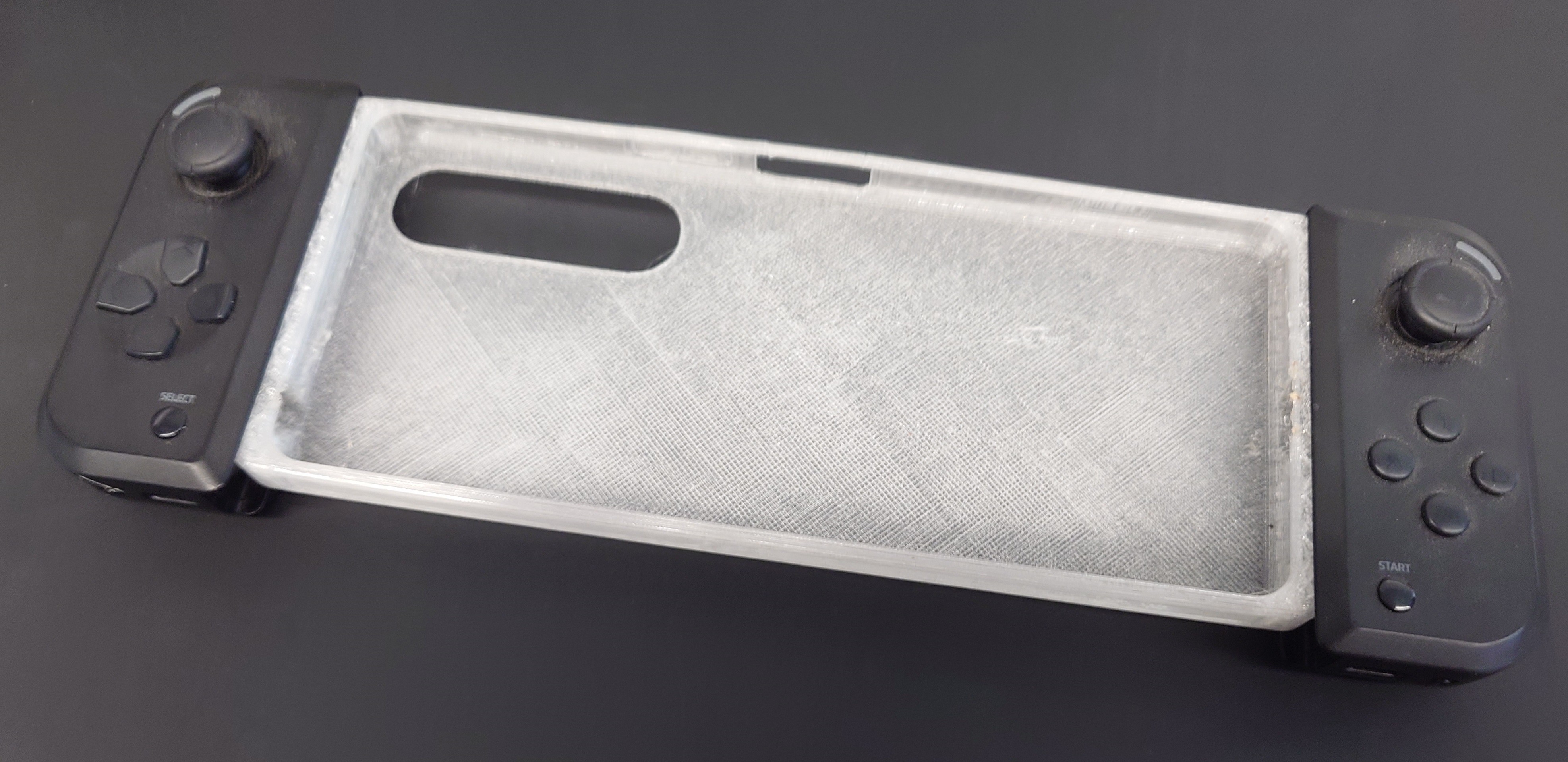
Overall I'm very pleased with the phone case and it will be posted on the website soon. I made a few iterations like a plain phone case at 1.2mm thick and a Junglecat case at 1.0mm thick. I have several commercial phone case to compare and compete against. The commercial cases are slim at about 0.8-1.0mm thick but they use much stiffer material. I'm using Overture High-Speed TPU which is fairly stiff, around 95A. A regular phone case at 1.2mm is good, regular phone case @1.0mm is too flimsy, but Junglecat @1.0mm is OK. I'm going to try more TPU blends soon that are even stiffer, going past Shore-A into the Shore-D range.
this case has a couple of challenges when printing. On the right side there's a cutout for the fingerprint reader. It needed significant bevel cuts so my finger can reach the button. Printing the overhangs on this cutout is difficult so I wonder if I can improve the manual supports. This is the thinnest weakest area on the case - stiffer TPU would improve it.
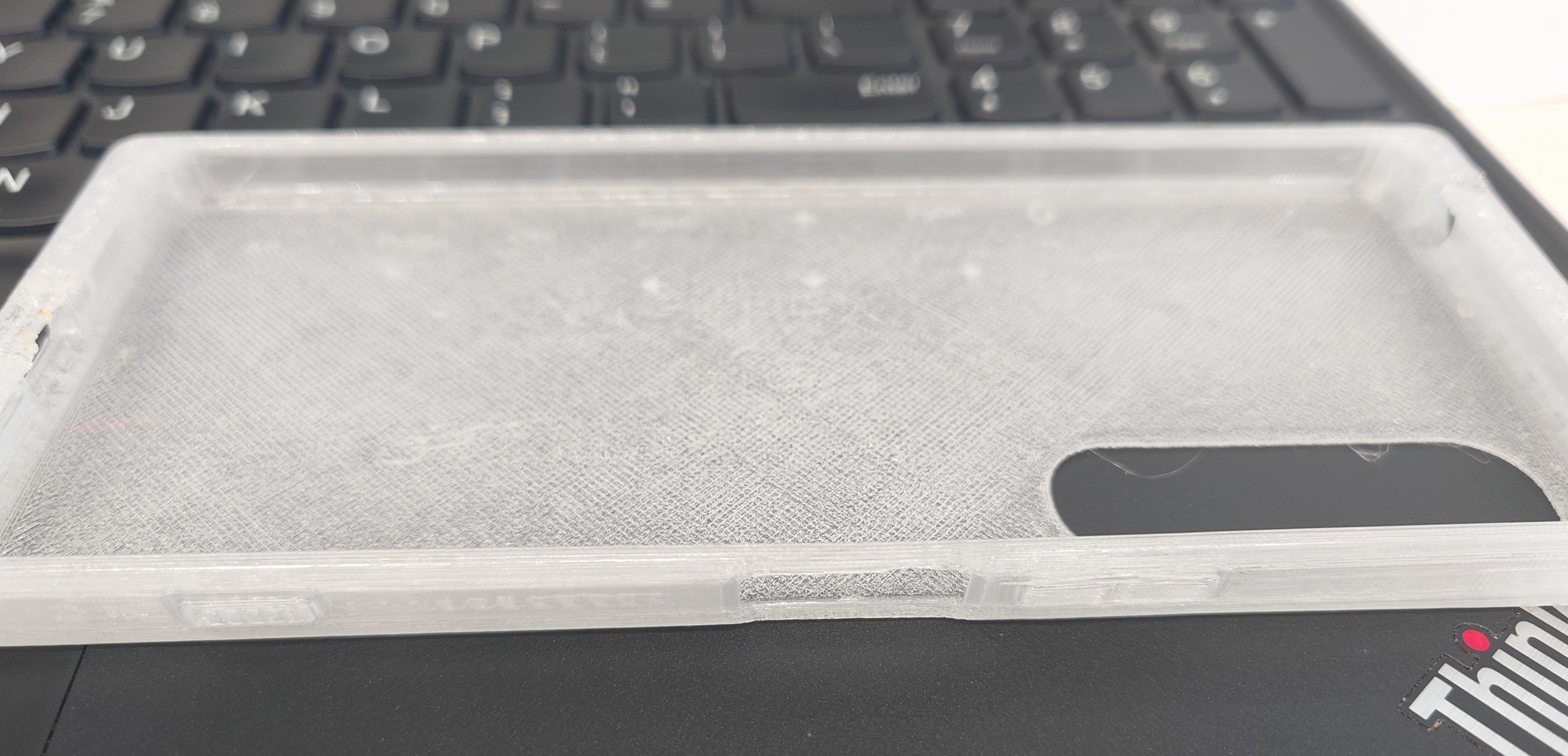
the second trouble spot is the microphone hole next to the USB port. These features are too close - the thin tower separating them doesn't print nicely.
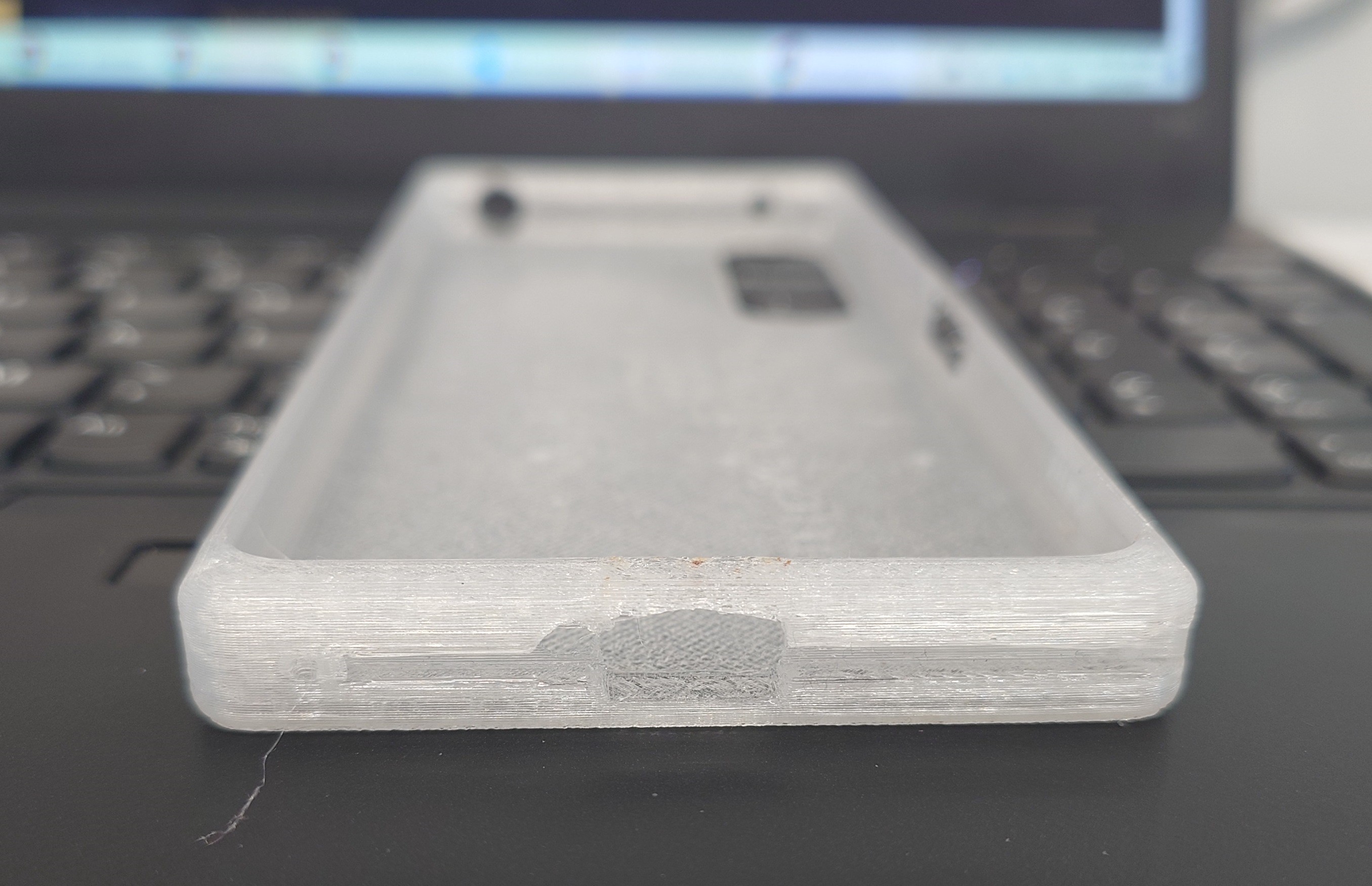
the last printing problem I'm getting is burnt boogers. You can see a brown spot just above the USB port. TPU is sticking to the printer nozzle, burning, then depositing later in the print. It's especially noticeable because of the filament color. I'm considering a wipe mechanism for my printer, something that could activate every layer or every couple layers.
getting help with PCB
As a final note, I'm getting help with the PCB. My friend ldrrp remade the PCB using EasyEda. It's not as open-source as KiCad but it's significantly easier to manage the BOM, parts inventory, and ordering. This will help us manufacture faster and get out of the prototype phase. We're making some design changes like switching from Atmega32u4 to STM32 chips, using a smaller STM32 for the left side inputs, and ferrying data using i2c.
Discussions
Become a Hackaday.io Member
Create an account to leave a comment. Already have an account? Log In.