 Paul McClay
Ok, it's just 0.005" / 0.12mm shim stock. But brass is harder than copper and 0.005" is thicker than 1oz copper cladding, so that's a capability expansion.
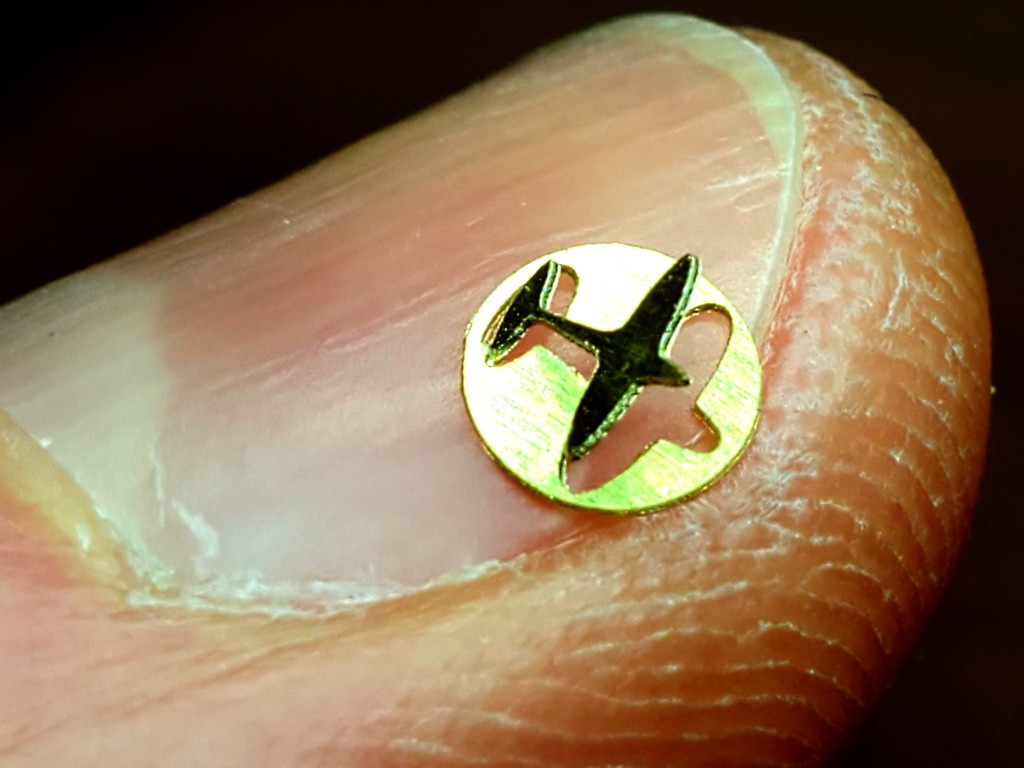
Cut with a 0.1mm 30° V-bit.
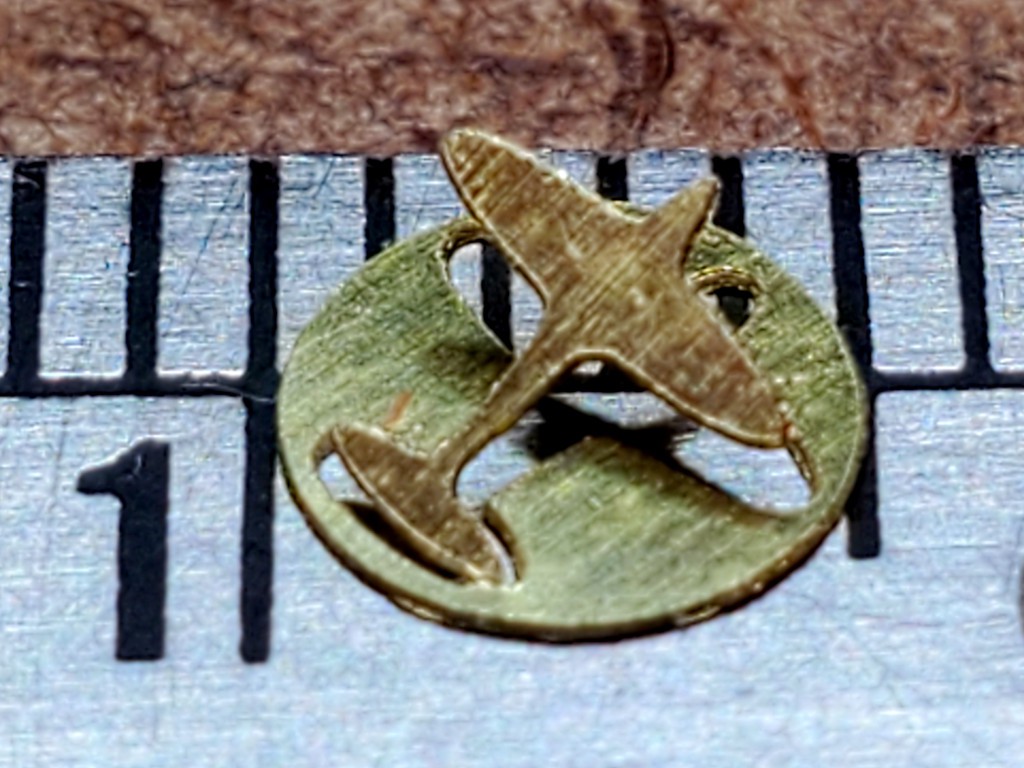
Cutting more substantial brass stock with an actual milling cutter remain ̶s̶ ed to be tried.
... and just for fun, I tried skimming the side of a razor blade:

That produced a very small pile of metal slivers, so it wasn't just scratching the steel. Interesting. I didn't try to do any more with that today. Also interesting: at this scale, there's enough magnetic attraction between the steel blade and slivers thereof that the slivers don't leave the immediate area around the action. Convenient because, not expecting to cut anything ferrous or particularly hard, I haven't given much thought to keeping magnetic or hard bits out of the works. Dunno if the blade was already magnetized or magnetized by cutting.
Discussions
Become a Hackaday.io Member
Create an account to leave a comment. Already have an account? Log In.
Magnetized by cutting. I hate working with non-stainless steel because my mill can only take small bites with a sharp bit, and they magnetically stick to everything, pointing straight outward to kill me.
For 1/32" and smaller end mills like your machine uses, just coat the work area in Anchorlube so the chips never go flying in the first place, and the bit is cooled and lubricated at all times. Add water until the viscosity is just right so it forms a blob rather than a puddle, but does have enough surface tension to keep the bit fully enclosed in the liquid. Straight from the bottle, it's too viscous and just gets pushed out of the way.
Are you sure? yes | no
"Magnetized by cutting” - unexpected. Magnetism is weird.
"Anchorlube ... Add water ..." - that sounds very helpful. Thanks! Occasionally I think about how to manage lubricant for more adventures in cutting metal, and haven't made much progress beyond thinking about what kind of lube I should be thinking about how to manage.
Are you sure? yes | no
I use a syringe with a piece of rubber tube on it to apply lubricant, and a toothbrush and handheld vacuum to clean it up. Scrub back and forth between the workpiece and some other surface (masonite table top in my case) to get the workpiece clean. Once it dries out, scrub while vacuuming to get the table clean :)
Are you sure? yes | no
"Scrub back and forth..." - do you mean use the toothbrush to sweep up swarf/lube/muck from the workpiece, scrub it off the brush onto another surface, then go back to the workpiece for more (repeat)? Letting it dry then vacuuming makes sense (esp for a water-based lube).
Are you sure? yes | no
That is correct.
Are you sure? yes | no