 Ghani Lawal

- This is a block diagram of how the music visualizer operates
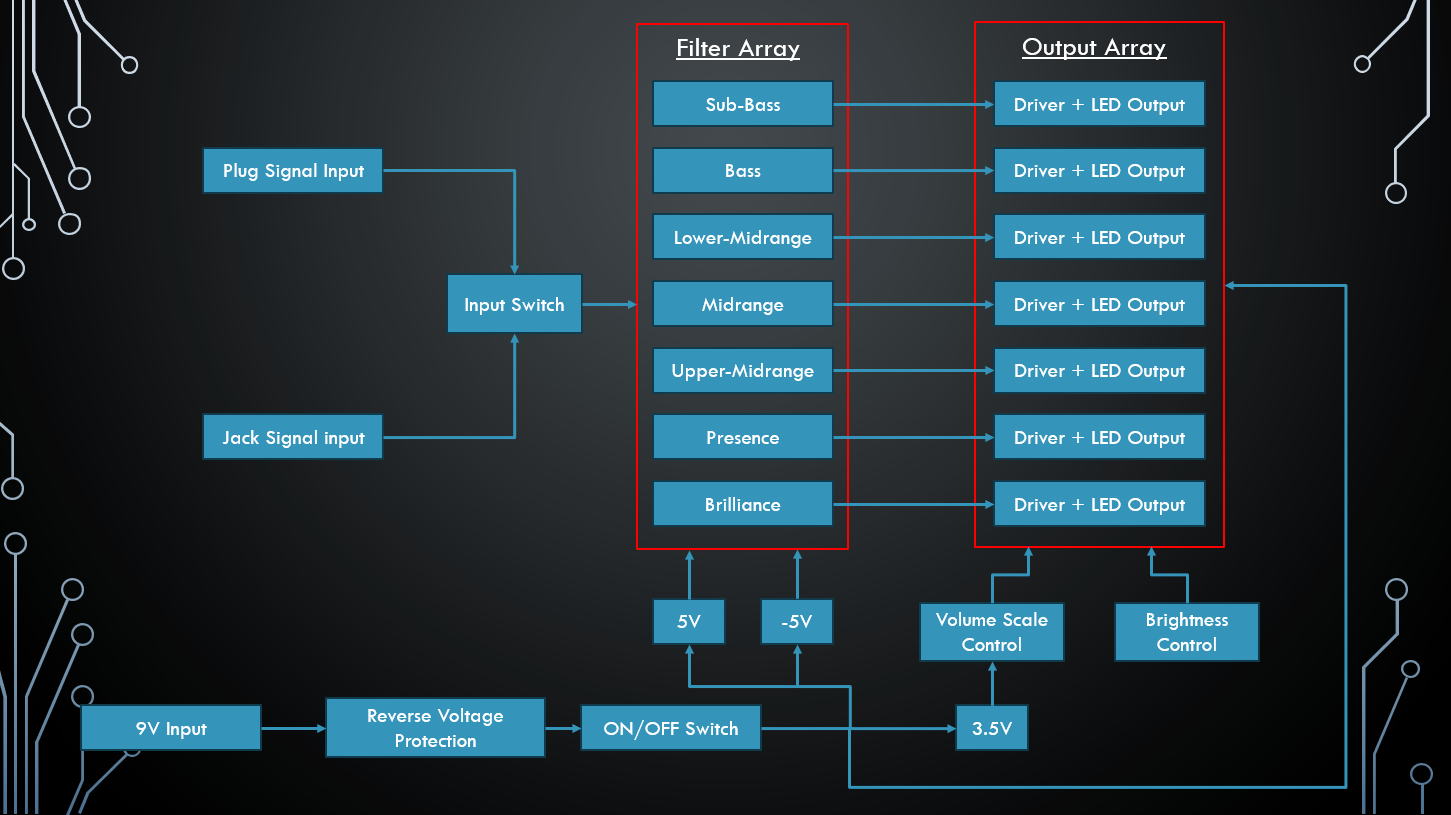
- The entire system is powered by 9V
- A pmos transistor is placed between the DC power jack and the wrest of the circuit to protect it from negative voltages
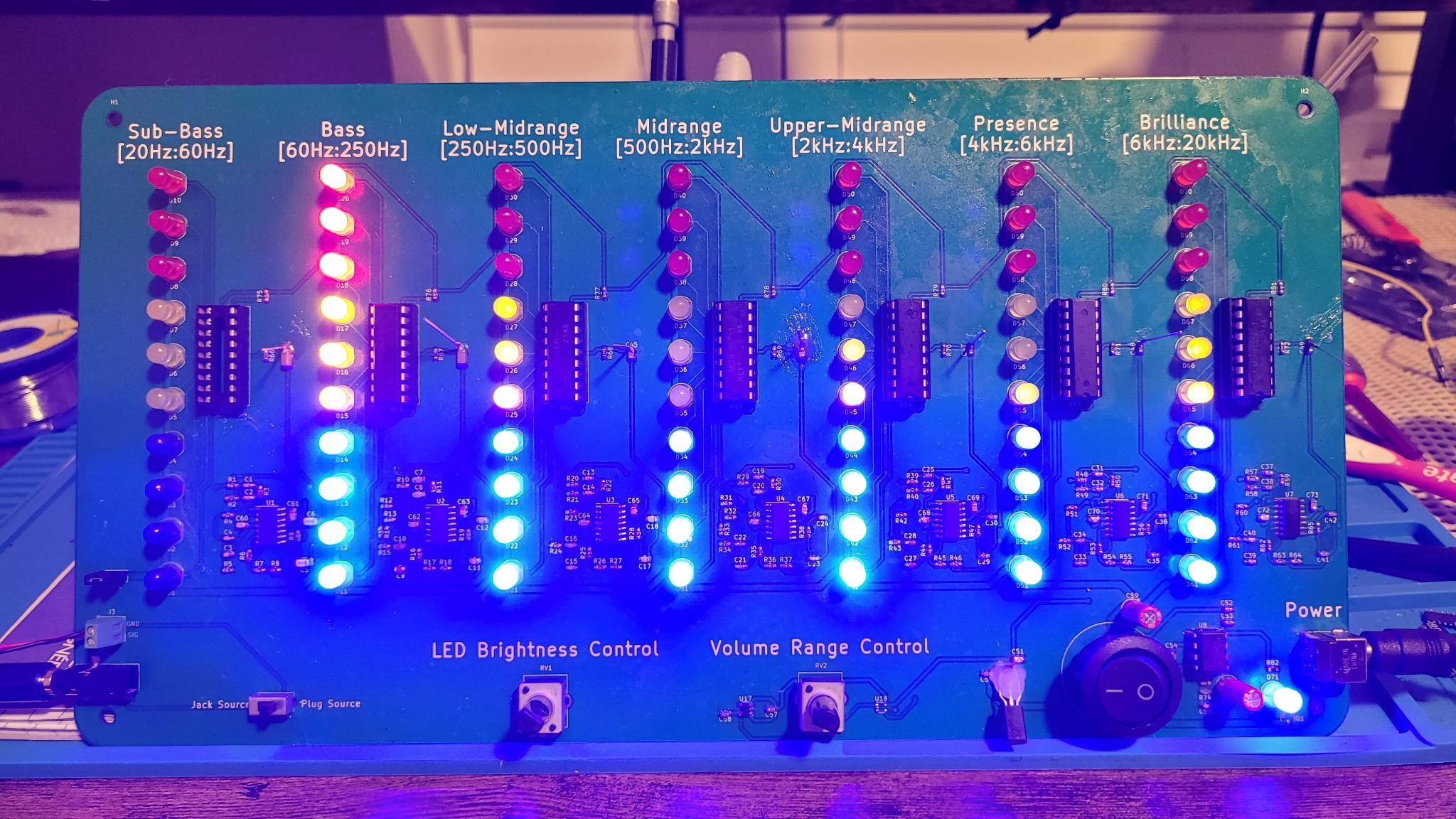
- When the device is switched on, a blue indicator LED will glow, confirming that the board is receiving power
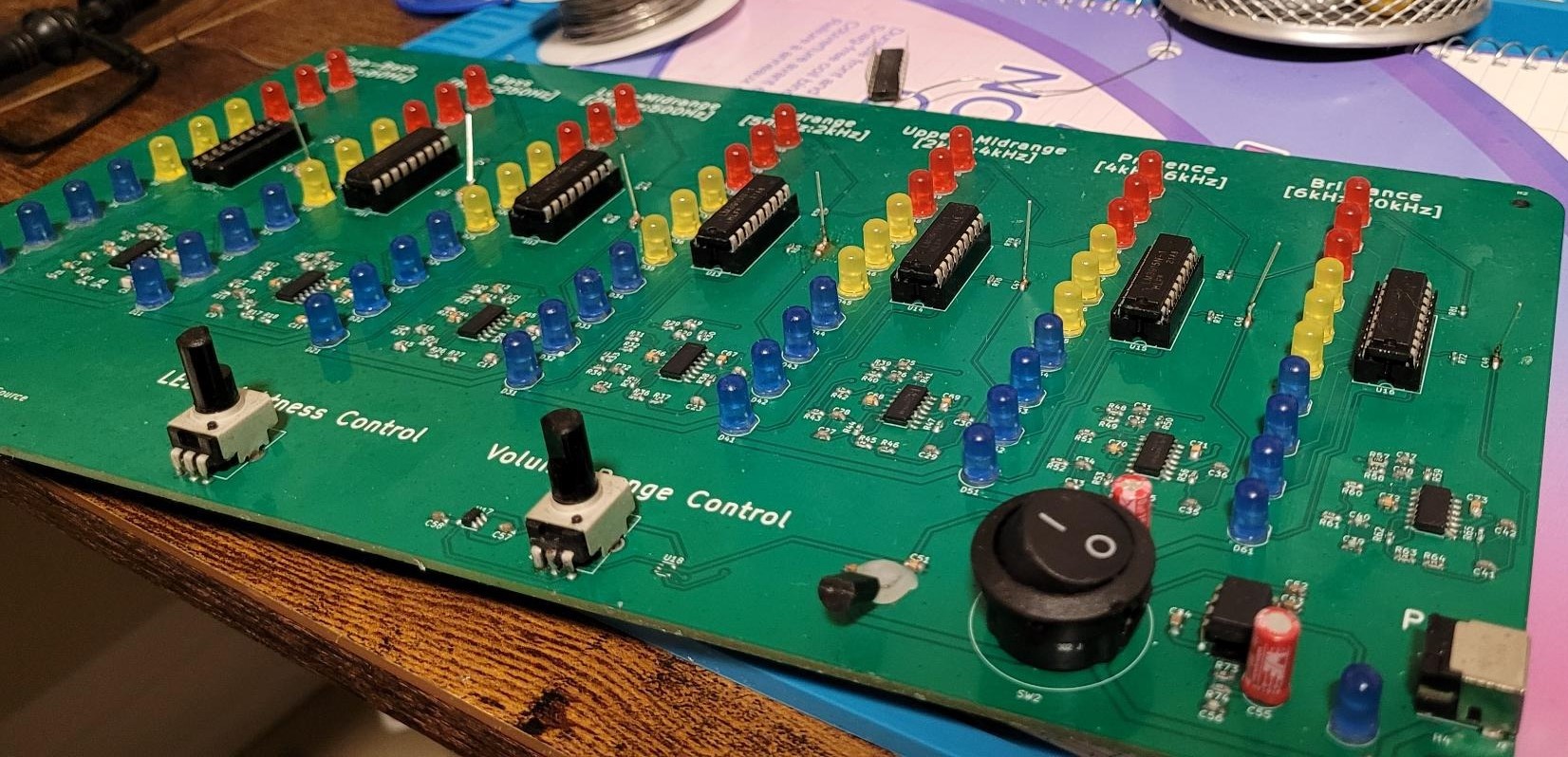
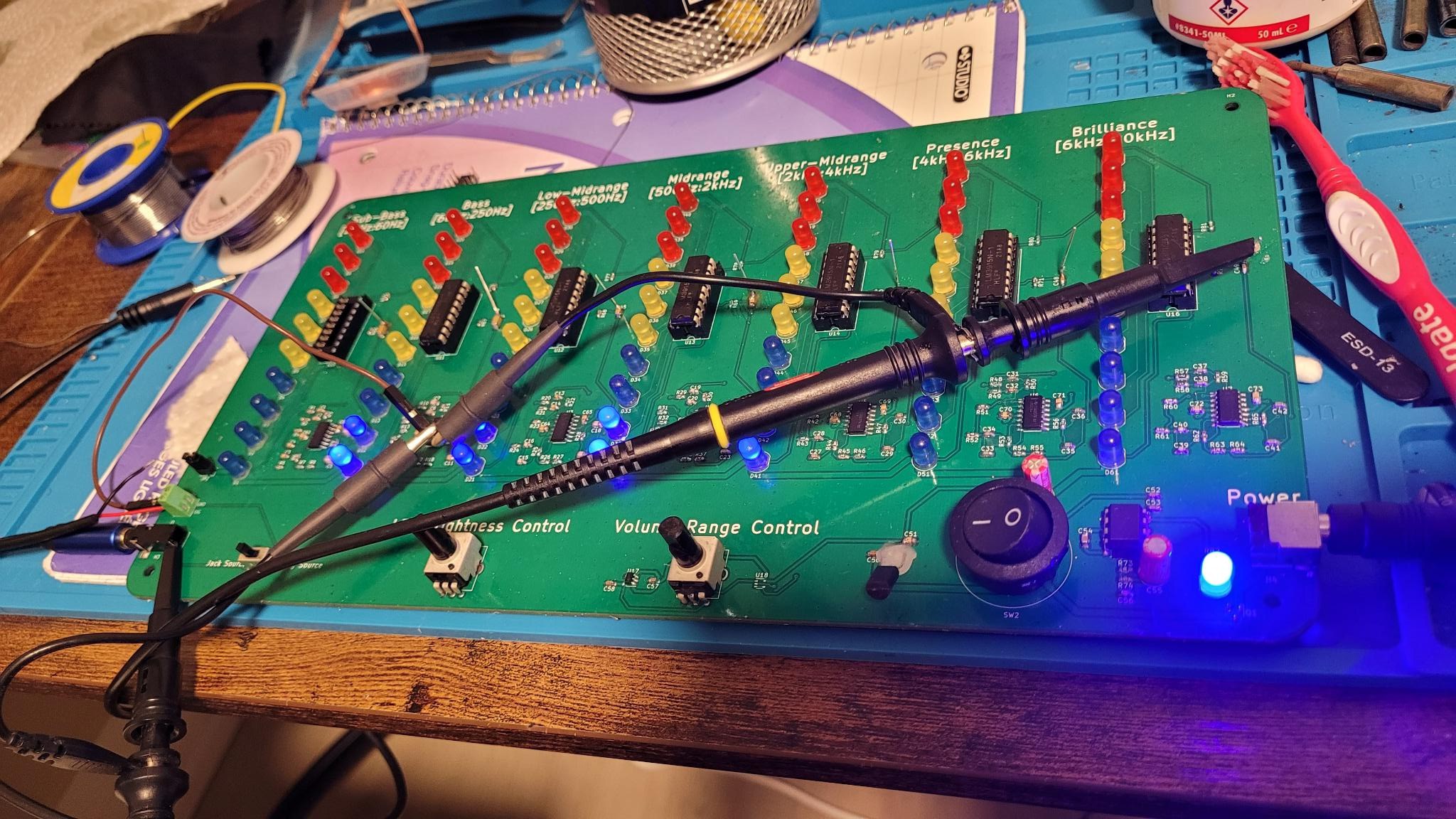
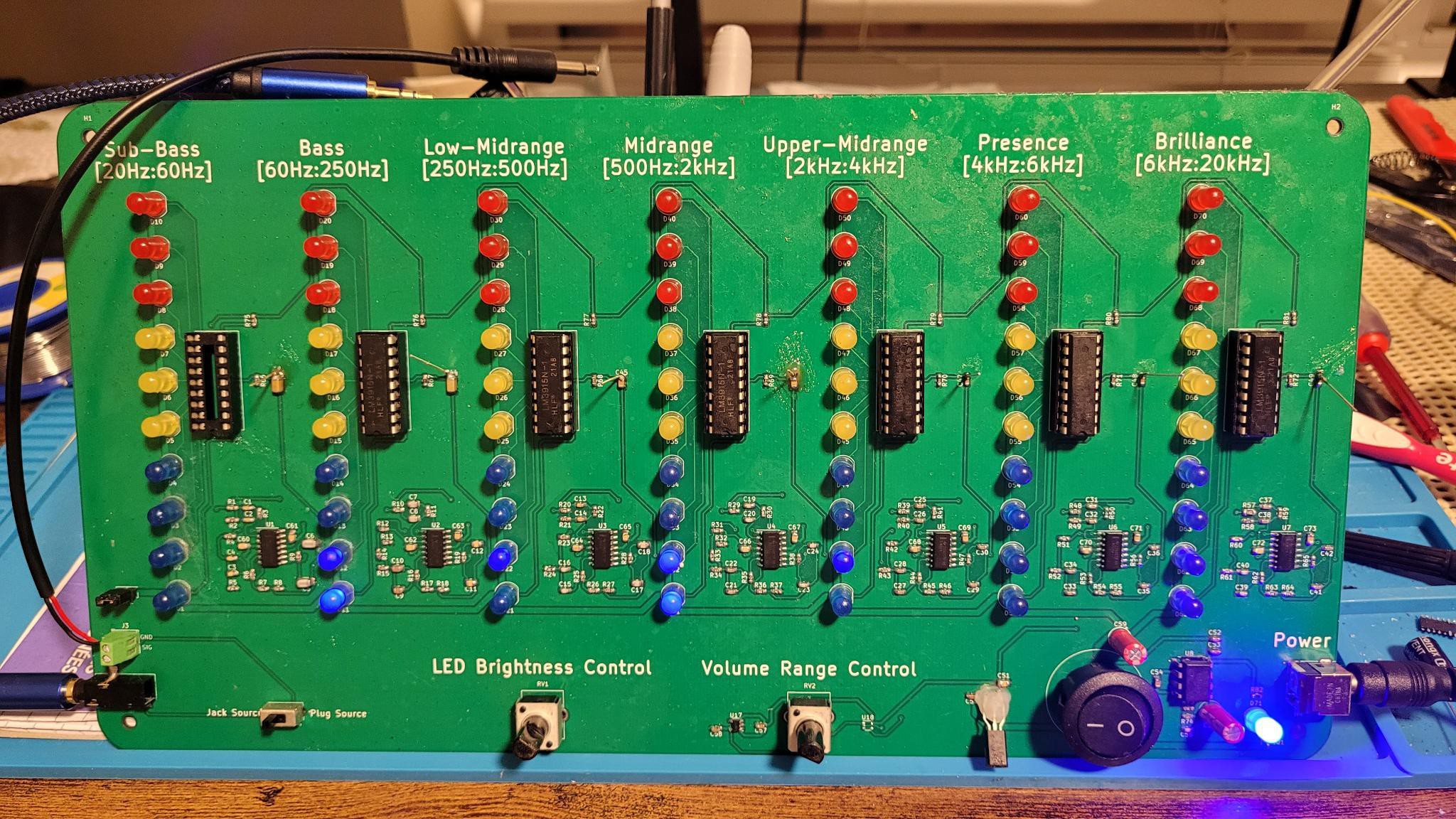
- The device takes in a mono-stereo audio signal from either a jack or a plug, depending on the position of the input switch, and is fed to the Filter Array
- The Filter Array:
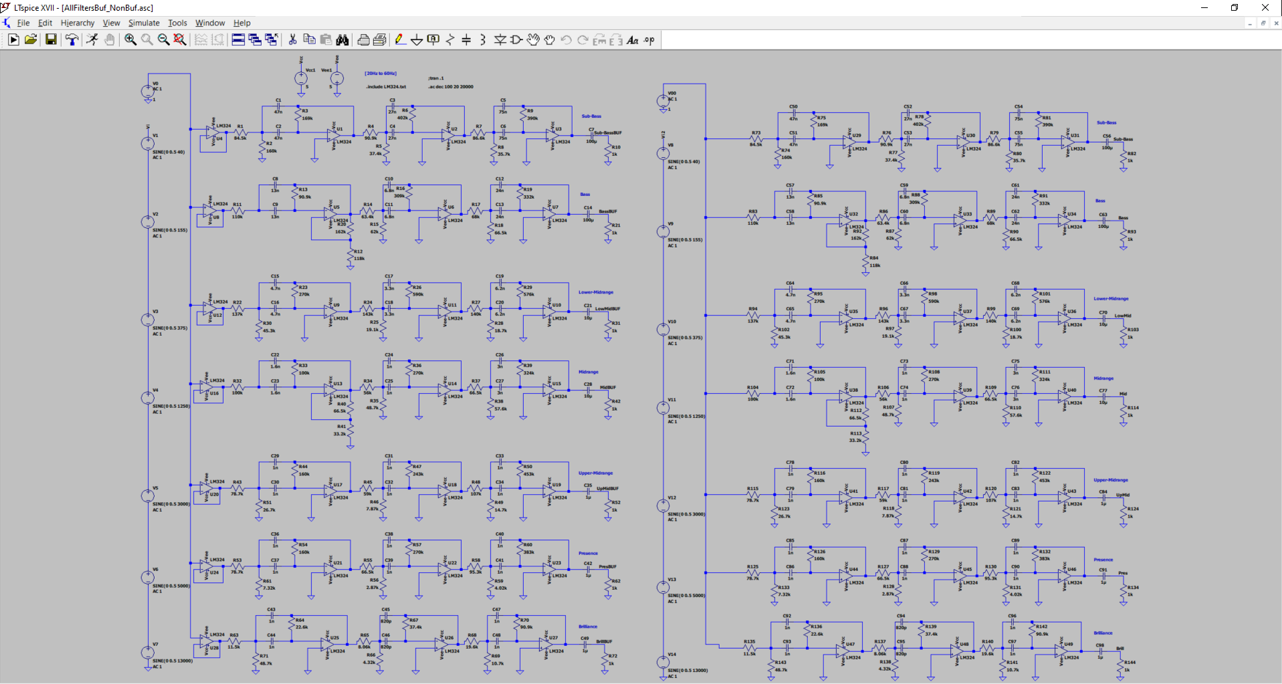
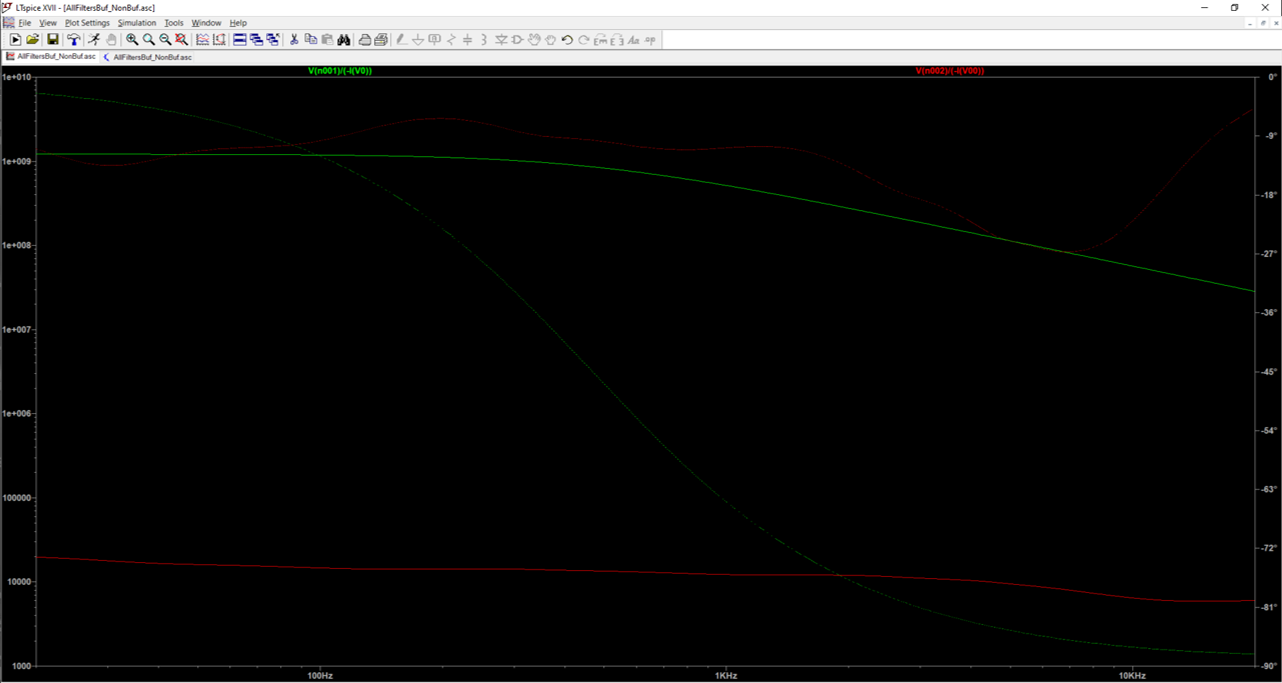
- Is composed of seven 6th degree bandpass filters
- Sub-Bass - [20Hz : 60Hz]
- Bass - [60Hz : 250Hz]
- Lower-Midrange - [250Hz : 500Hz]
- Midrange - [500Hz : 2kHz]
- Upper-Midrange - [2kHz : 4kHz]
- Presence - [4kHz : 6kHz]
- Brilliance - [6kHz : 20kHz]
- Is powered by +5V and -5V
- Can accept analog signals with a magnitude of up to 3.5V without clipping
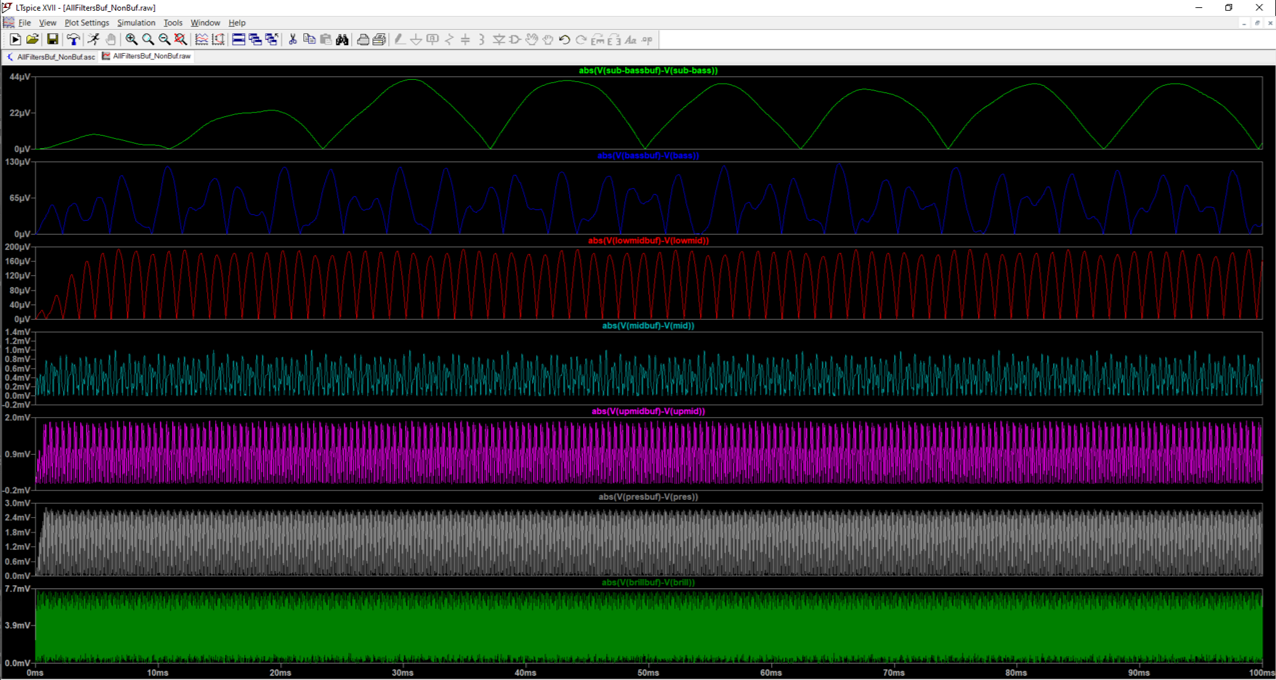
- Once each filter is finished processing the input analog filter, they sound their outputs to the output array
- Is composed of seven 6th degree bandpass filters
- The Output Array:
- Is composed of seven LED drivers, each of which have 10 LEDs that they drive logarithmically
- Each driver receives an input from its associated bandpass filter, based on the magnitude of the received signal, it will pass particular amount current through a certain number of LEDs
- Volume Scale Control:
- An HMI interface, by turning the potentiometer, a user can change the reference voltage (from 0V to 3.5V) that the LED driver uses to decide how many LEDs should be activated
- Brightness Control:
- An HMI interface, by turning the potentiometer, a user can change how much current the LED drivers all to pass in the LEDs when they are activated, from 0mA to 18mA


 Sagar 001
 Bud Bennett
 ElectroBoy
 John Guy
ahahah yeah I underestimated how hard they would be to solder