 lion mclionhead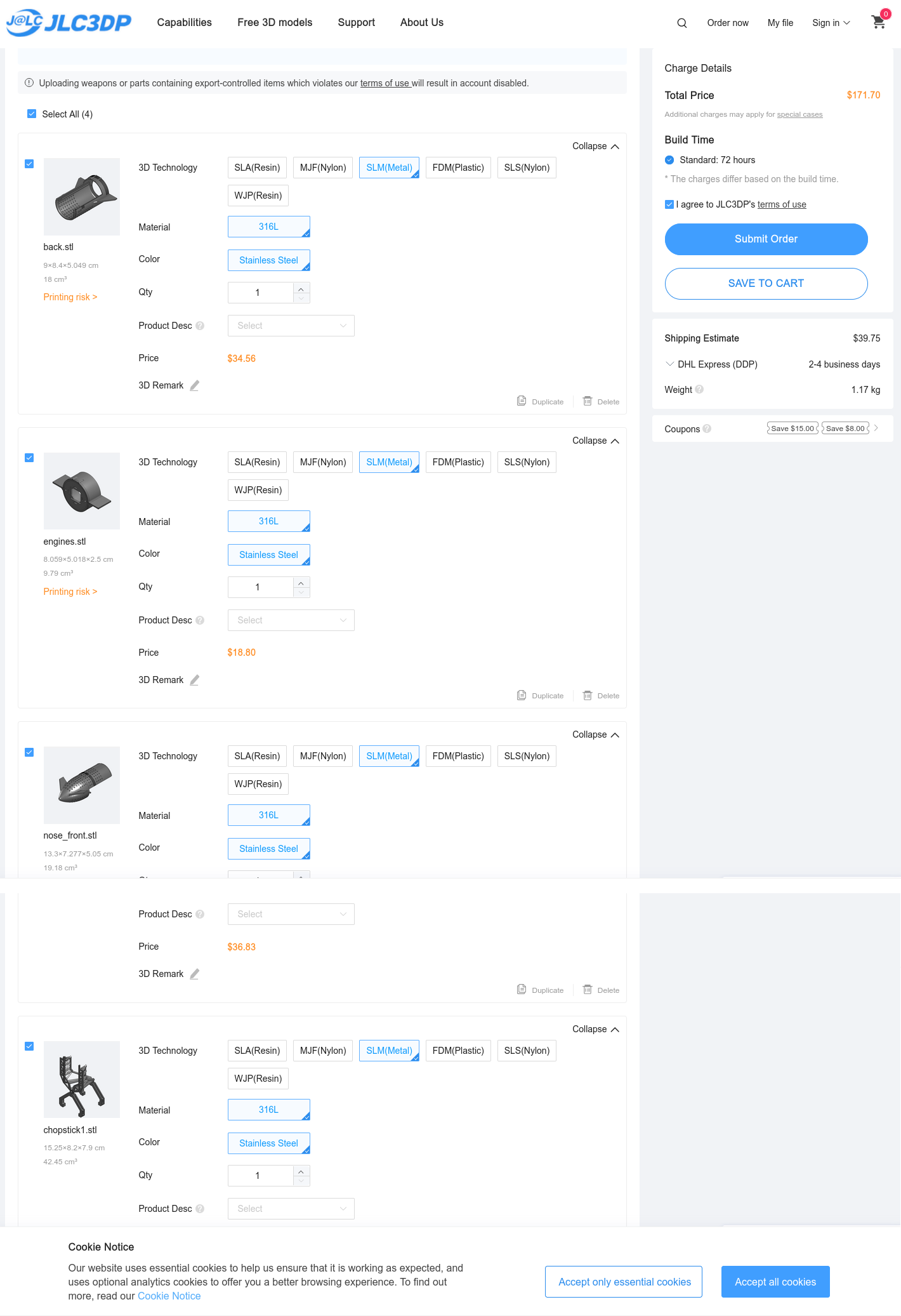
A full metal ship would be ideal. Home SLS printing is a real mess, requiring powder removal, a glove box, respirator. JLC3DP said roughly $172 + $40 shipping to do the 50mm ship & chopsticks in metal. Realistically, the whole chopsticks would have to be metal to dissipate the heat of a metal ship. The whole thing would of course be reduced to 40mm & made more realistic. The weight of steel would require beefing up the tower. It really has to be more practical to spend that kind of money. There are other battles.
The next rung down is a metal combustor liner. That would still require an exhaust hole on top & a way to attach the liner to the exterior.
The next rung is an easily fabricated, easily installed sacrificial layer inside the artistic exterior. Both structures would be PETG. The exhaust still has to get out. It almost requires scrapping all the openings except the nose hole & vents below the cone.
Noted deformation in the chopsticks. The key need is an air layer inside the exterior. The part of the nose supported by the fins held up better than the any other part. The extra material seems to absorb the heat or reinforce it.
Any plastic ship is going to be as consumable as the incense itself.
There are aquarium pumps which could inject air inside the ship & maybe even create film cooling with the right printed nozzle.
---------------------------------------------------------------------------------------------------------------------------------------------------
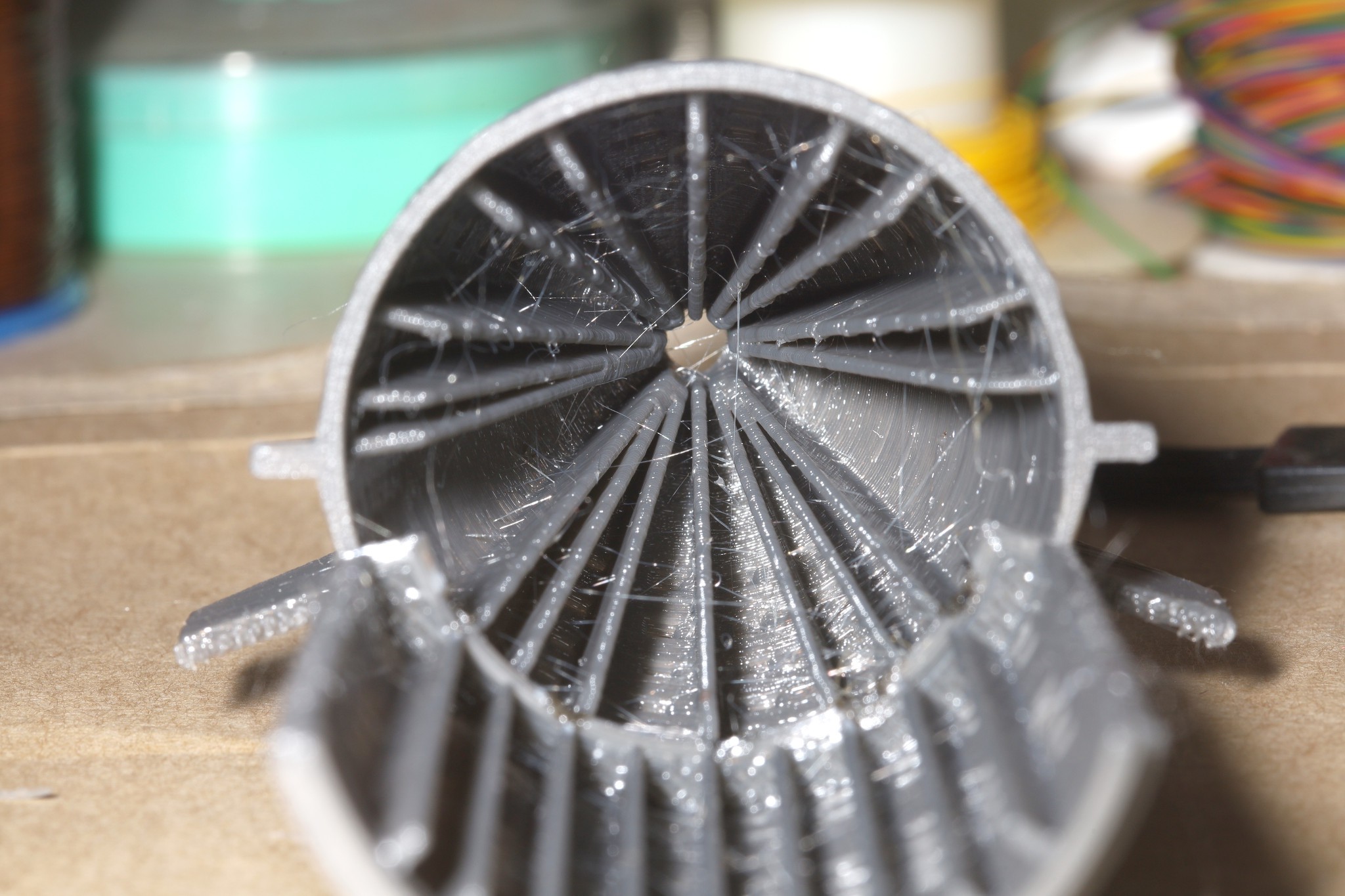
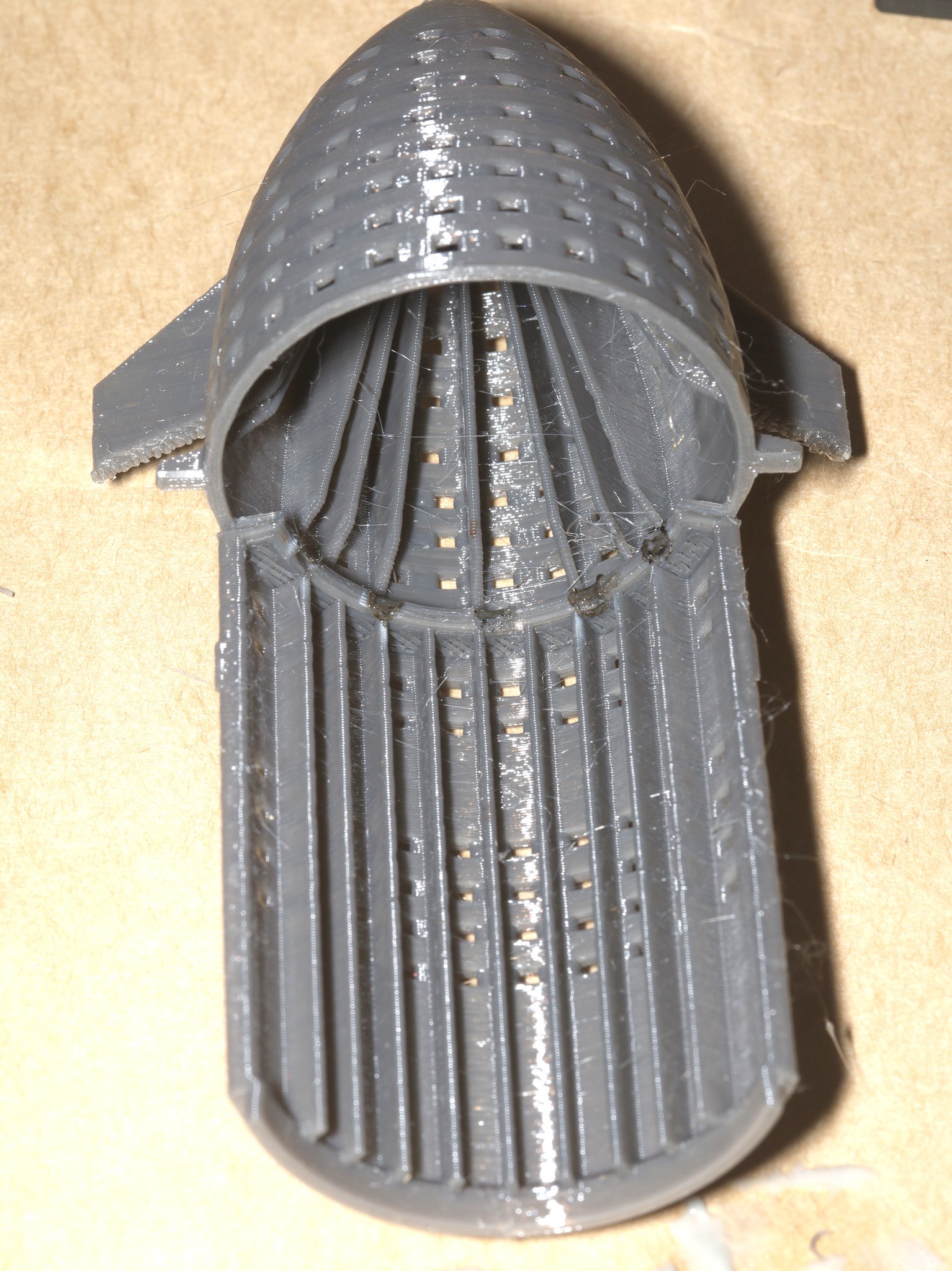
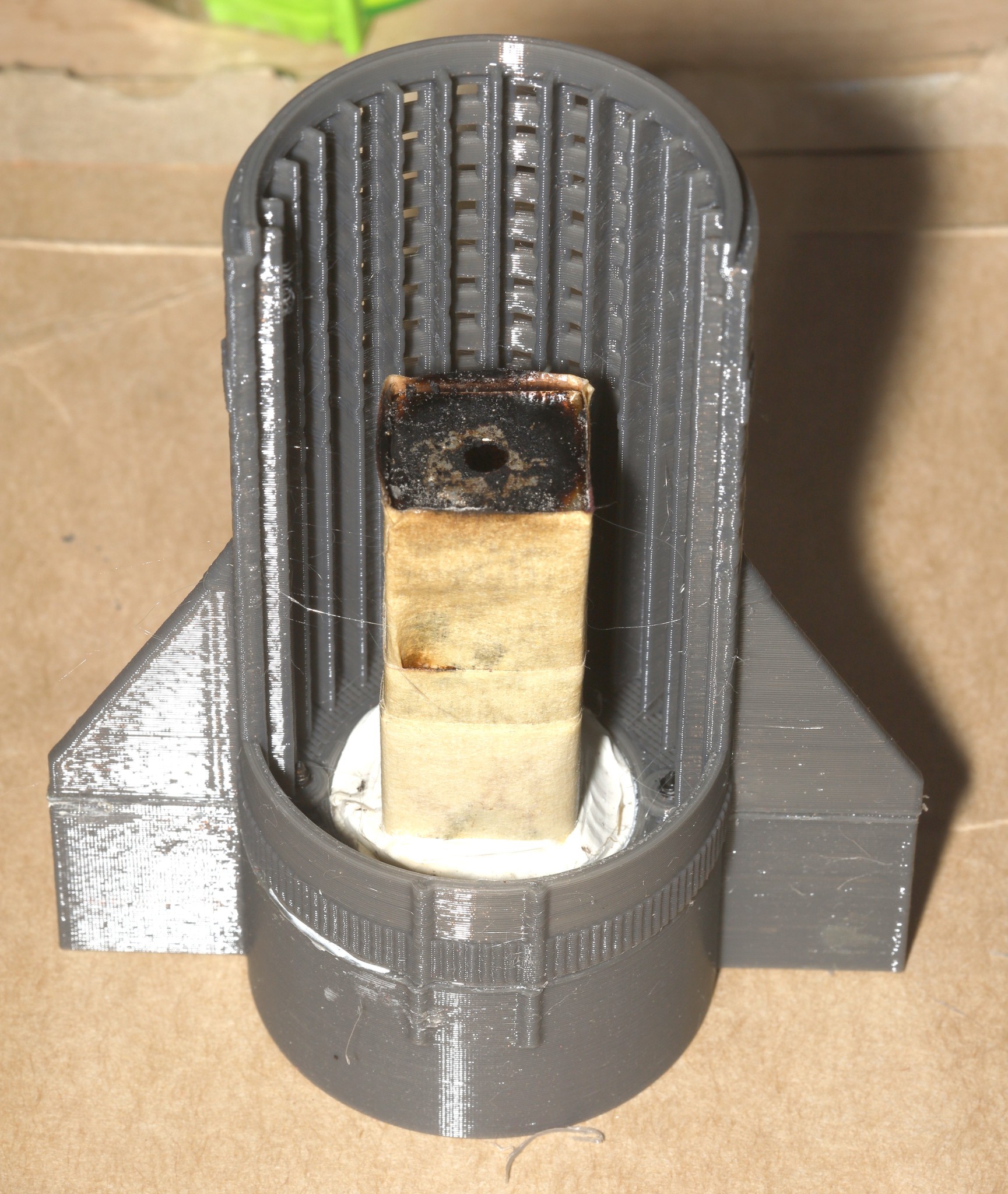
Another PETG ship loaded with stringers emerged. This one had many modeling errors but would show any effect from the stringers. The trend has been adding more PETG. More mass can absorb more heat. The final solution may be 5mm thick walls of solid PETG. It would still be cheaper than metal.
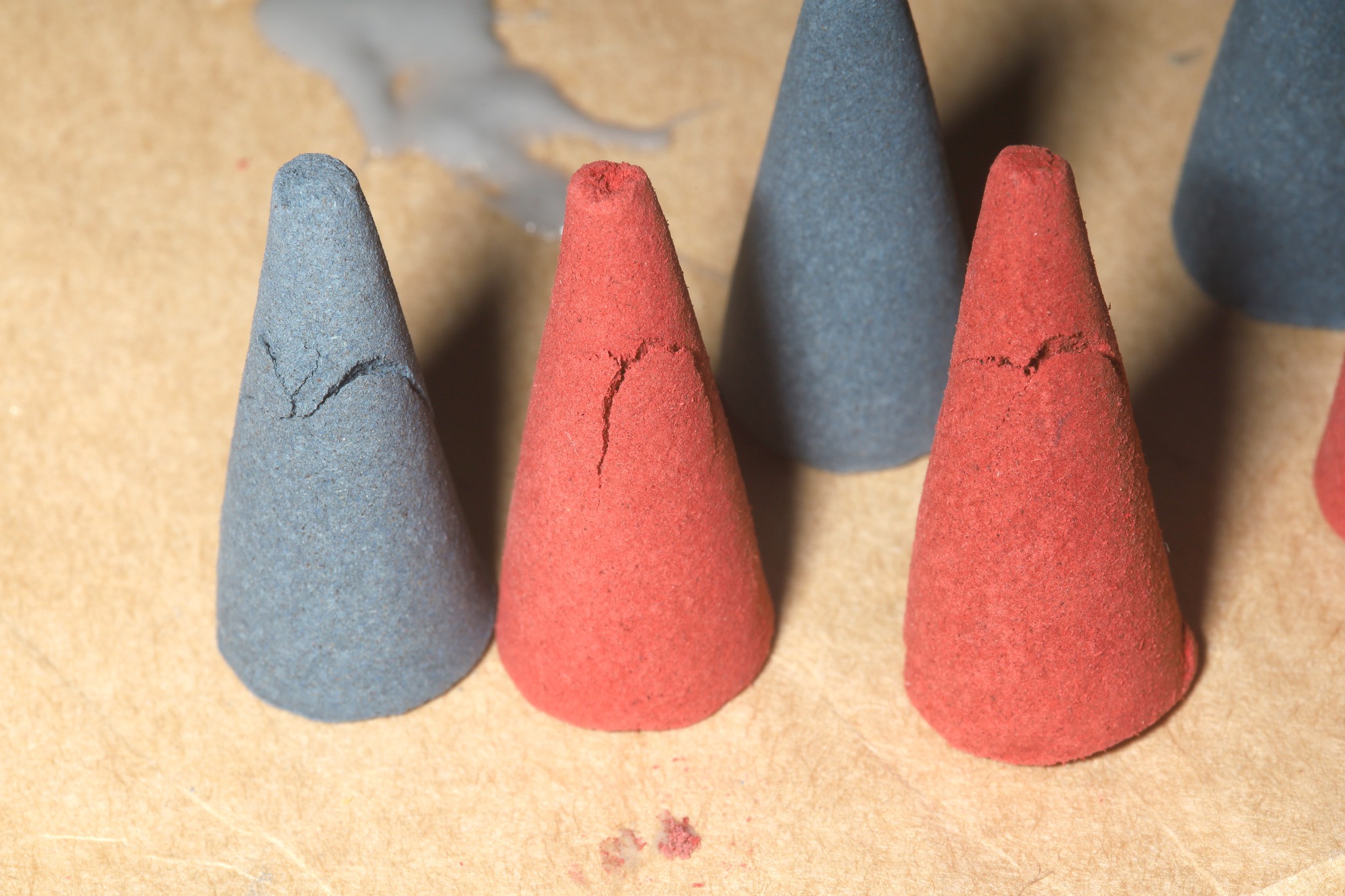
Attempts to drill out stock incense cones with the electric drill were a failure. It creates too much torque. Nibbling at it with the manual drill is the only way.
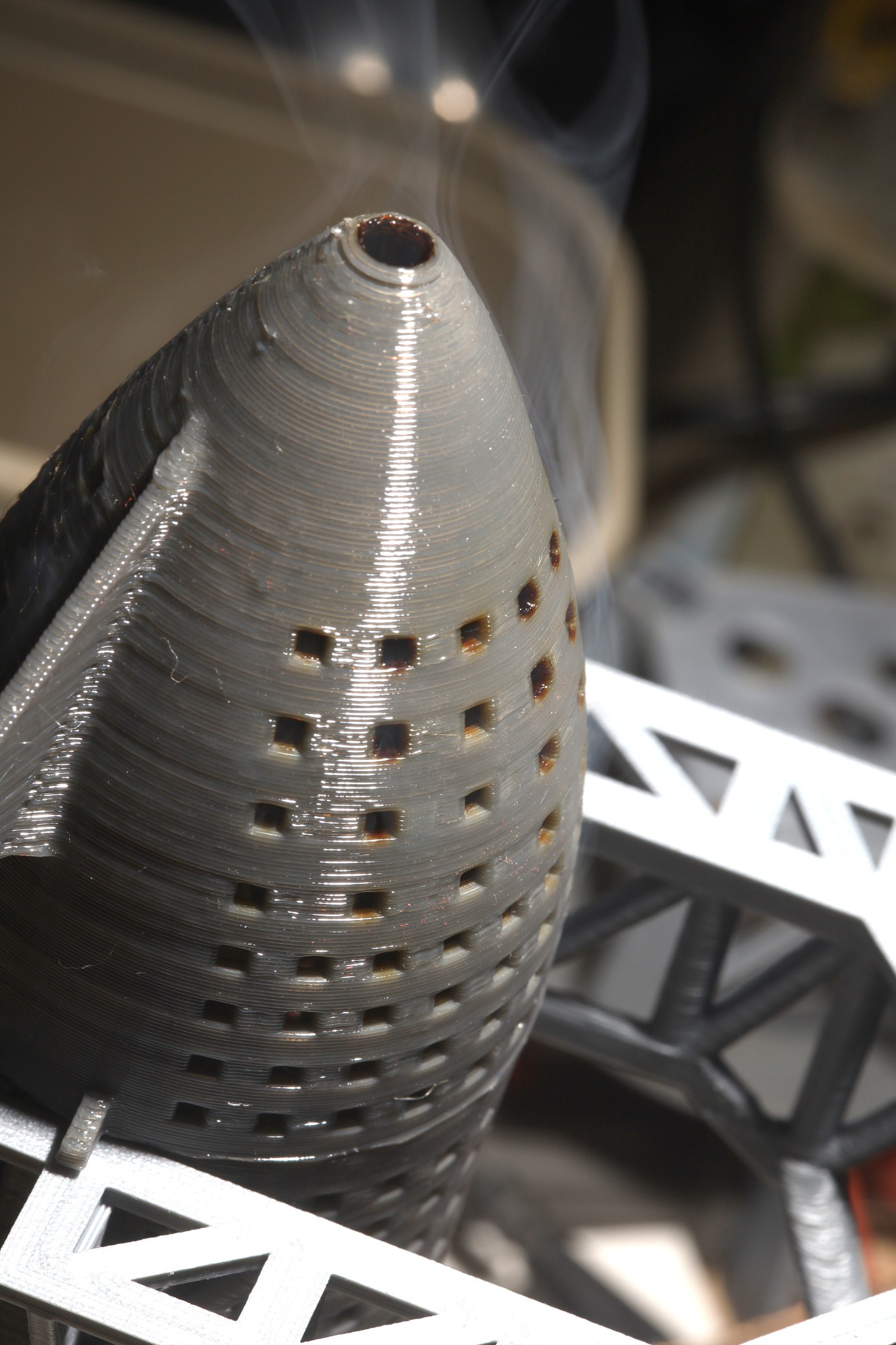
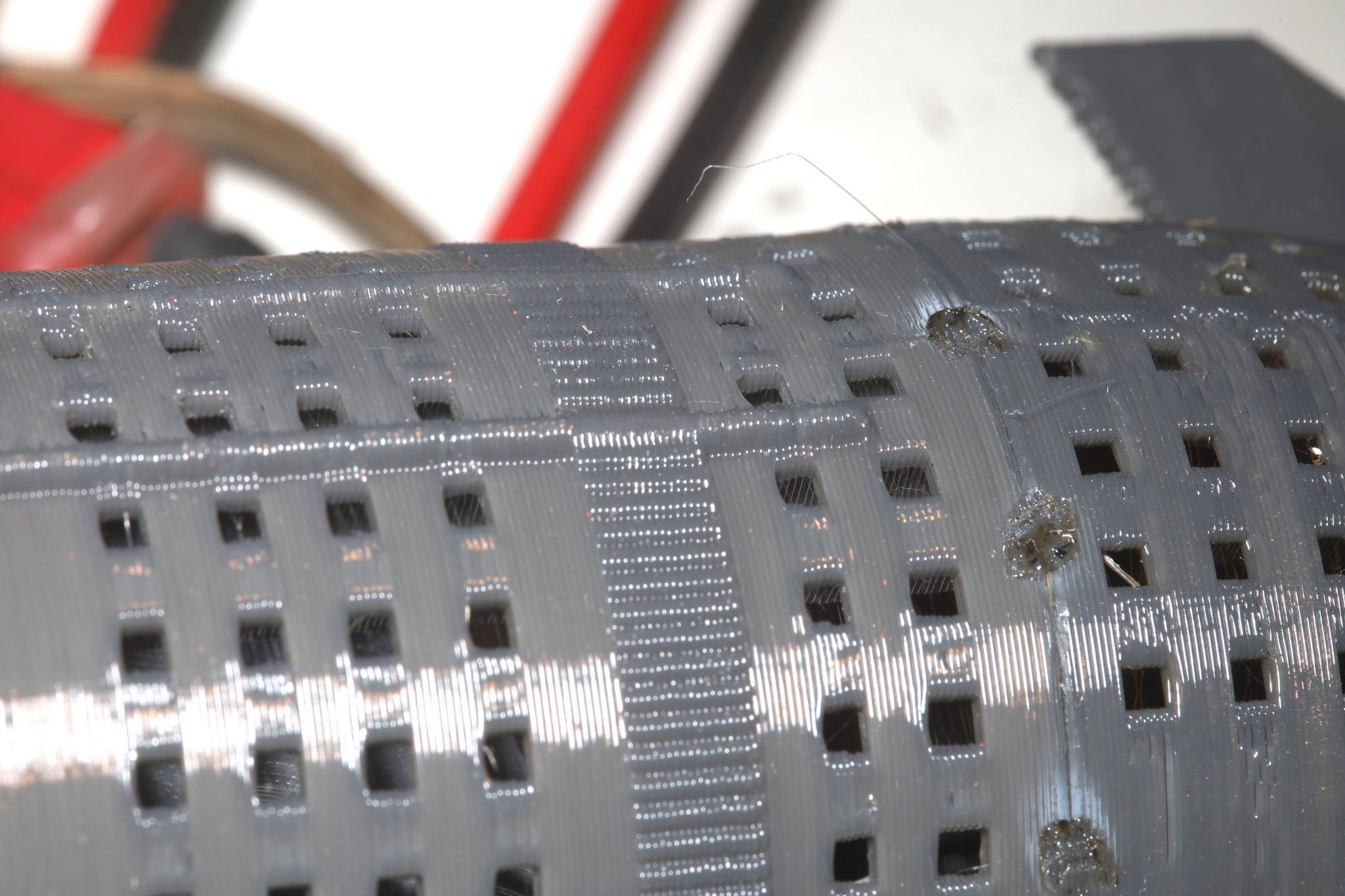
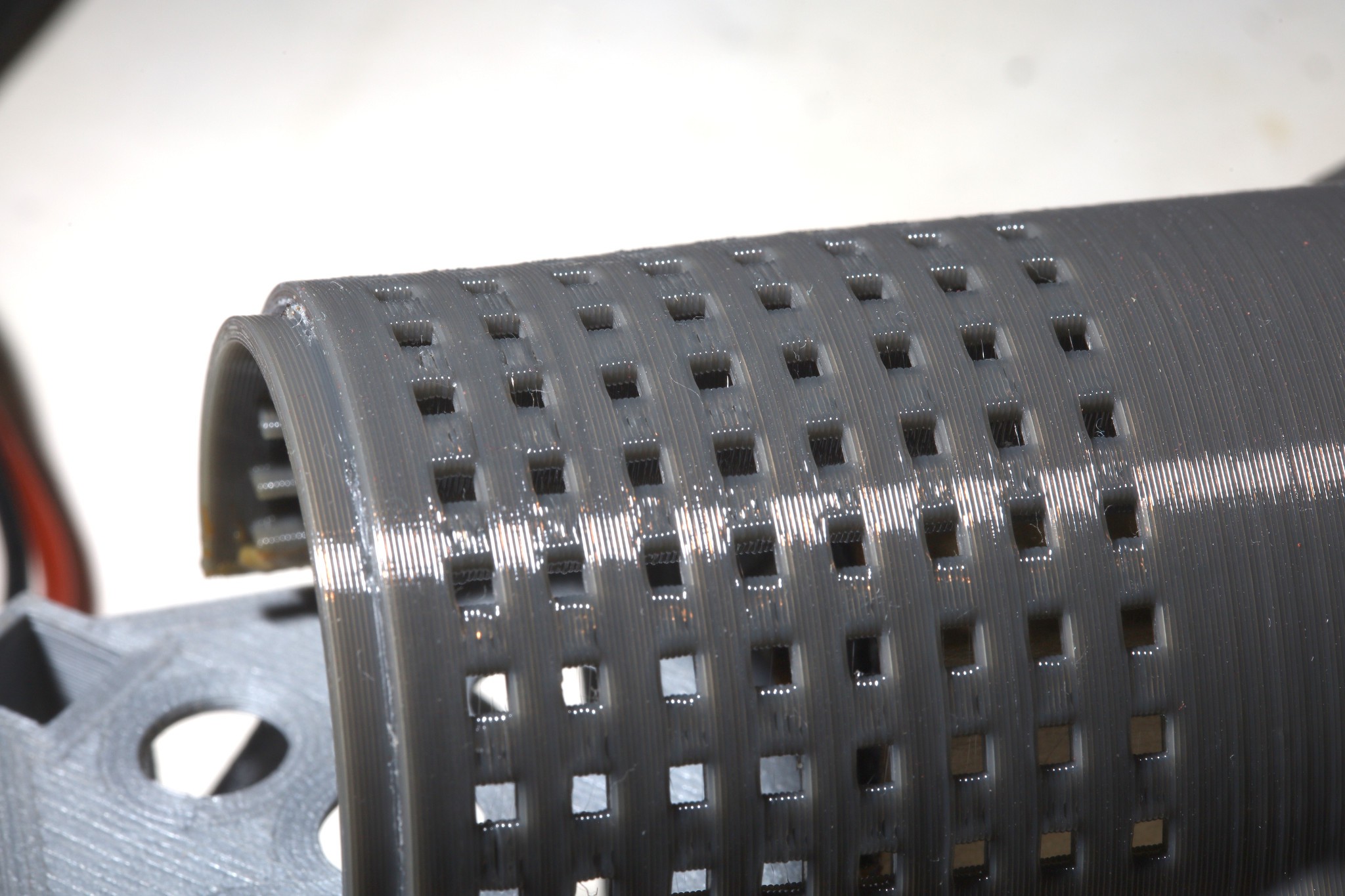
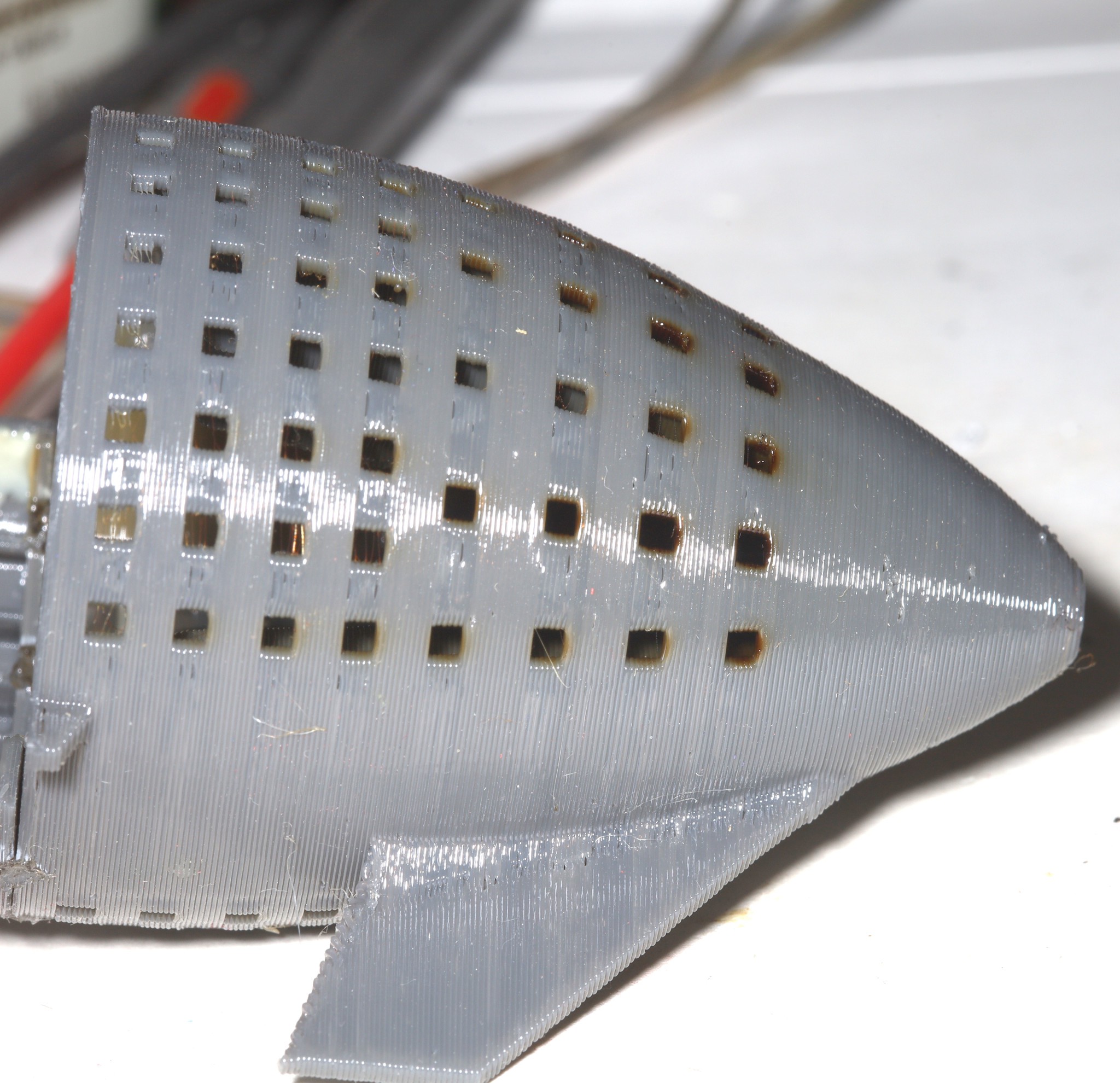
As with the last 3 PETG prints, yet another slight reduction in the melting but still melting in the same spots. The next step would be a full orthogrid on the inside of just the trouble spots, but the overhangs could be difficult & there's not enough room in the nose without making it solid PETG.
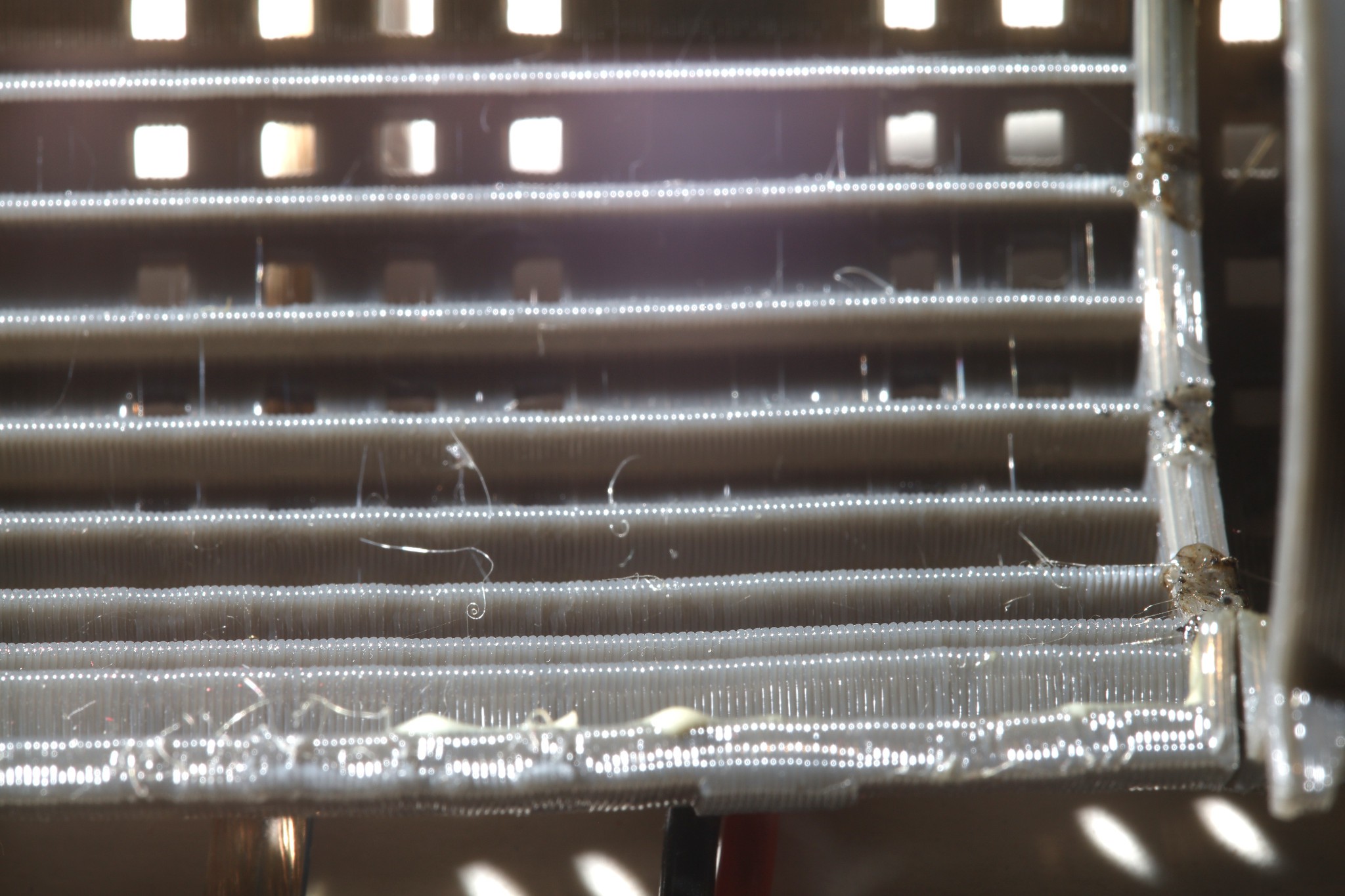
The linear stringers tend to bend in their wide axis.
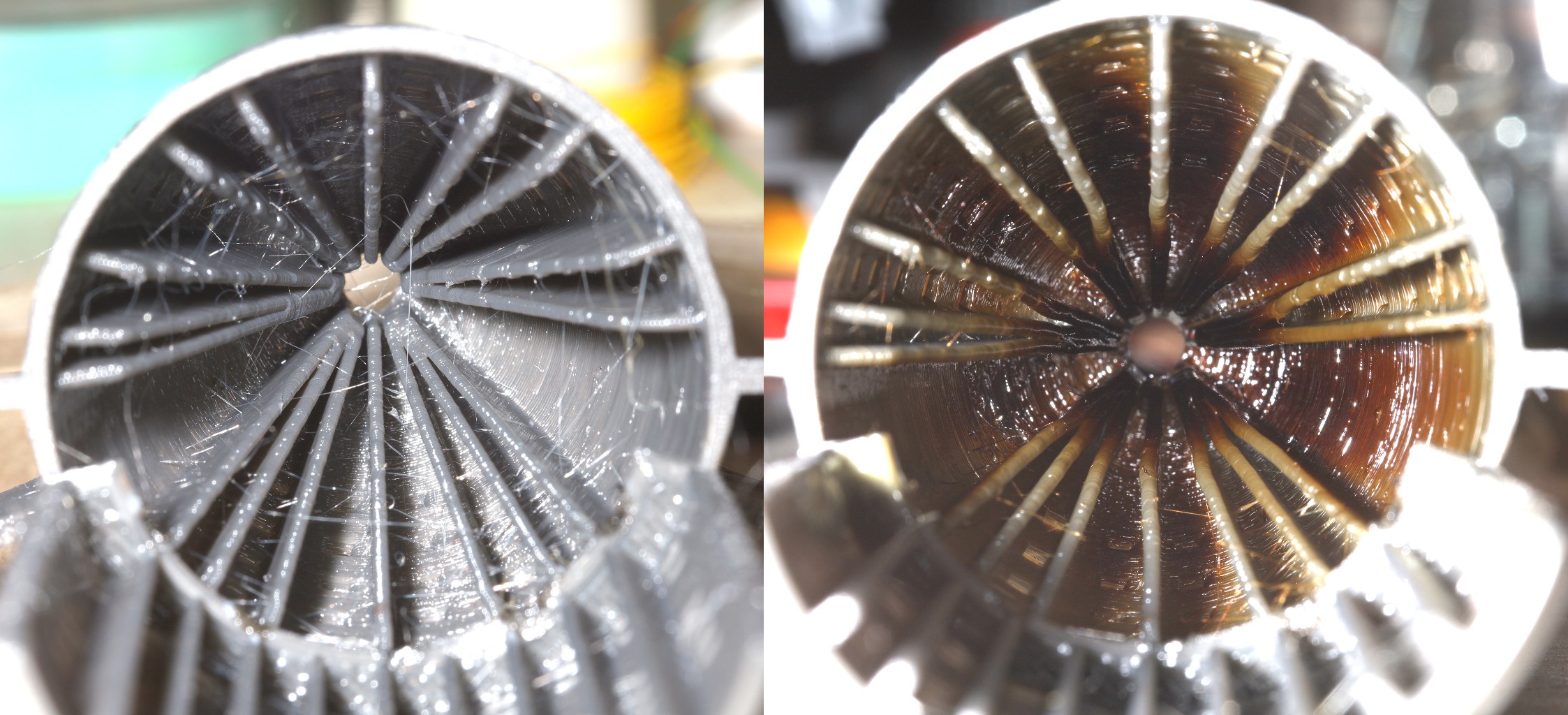
The nose stringers tend to bend in their short axis.
It seems the stock backflow cones create more melting because they get hotter while the drilled cones burn slower & cooler. Cones with no drilling make the most heat because they have the most fuel.
Discussions
Become a Hackaday.io Member
Create an account to leave a comment. Already have an account? Log In.