 kelvinA
So I was wondering how I'd even know how much cooling was enough, and then I realised that the heatsinks I've got already were shown to work, implying that I just need a heatsink with similar surface area:
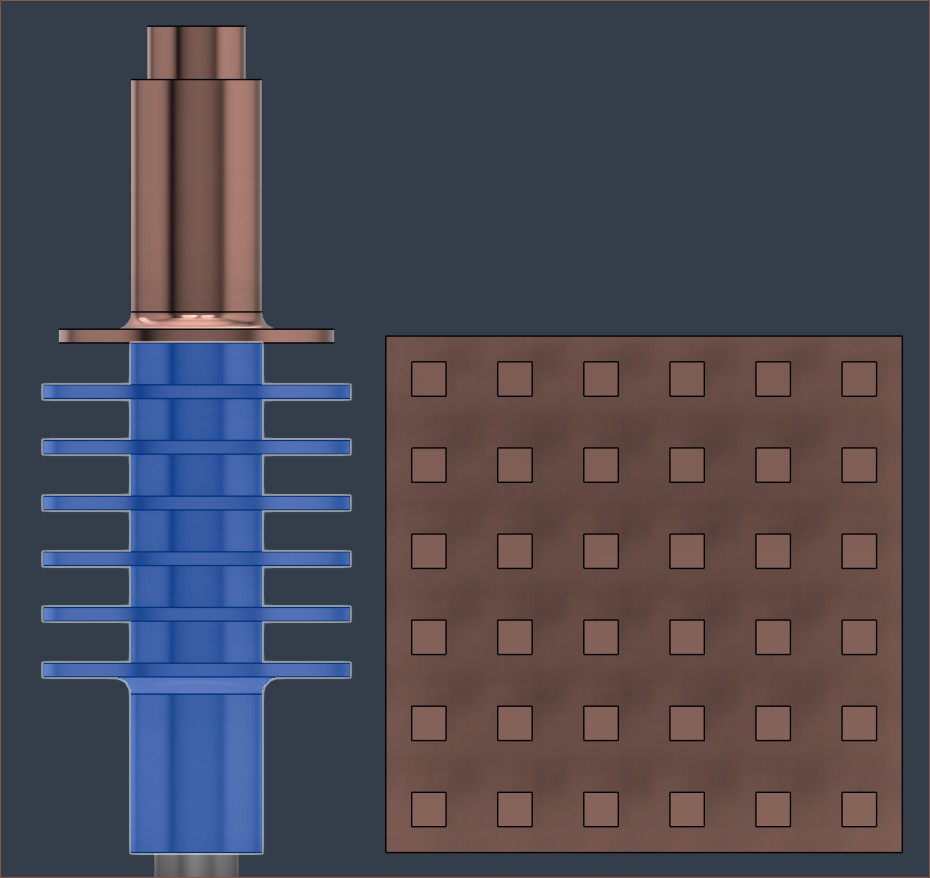
The faces exposed to air in the design are highlighted in blue. I then modelled the 22x8mm and 15x15mm heatsinks.
- Current Heatsink: 865 mm^2
- 22 x 8mm Pin: 836 mm^2 for the top+sides, 716 mm^2 for the top only.
- 15 x 15mm Pin: 1065 mm^2 for the top+sides, 945 mm^2 for the top only.
The price/volume is £4.52/487 mm^3 and £6.20/630 mm^3 for the 22mm and 15mm heatsinks respectively, so the price is proportional to the amount of copper.
I also found out about the RP1010, a 10x10mm ceramic heating element that comes in a range of resistances and only costs £5.50 for 5pcs. As you can see in the graph below, the 20 and 30 ohm options are suitable for 24V, which corresponds to 29W and 19W of dissipation respectively:
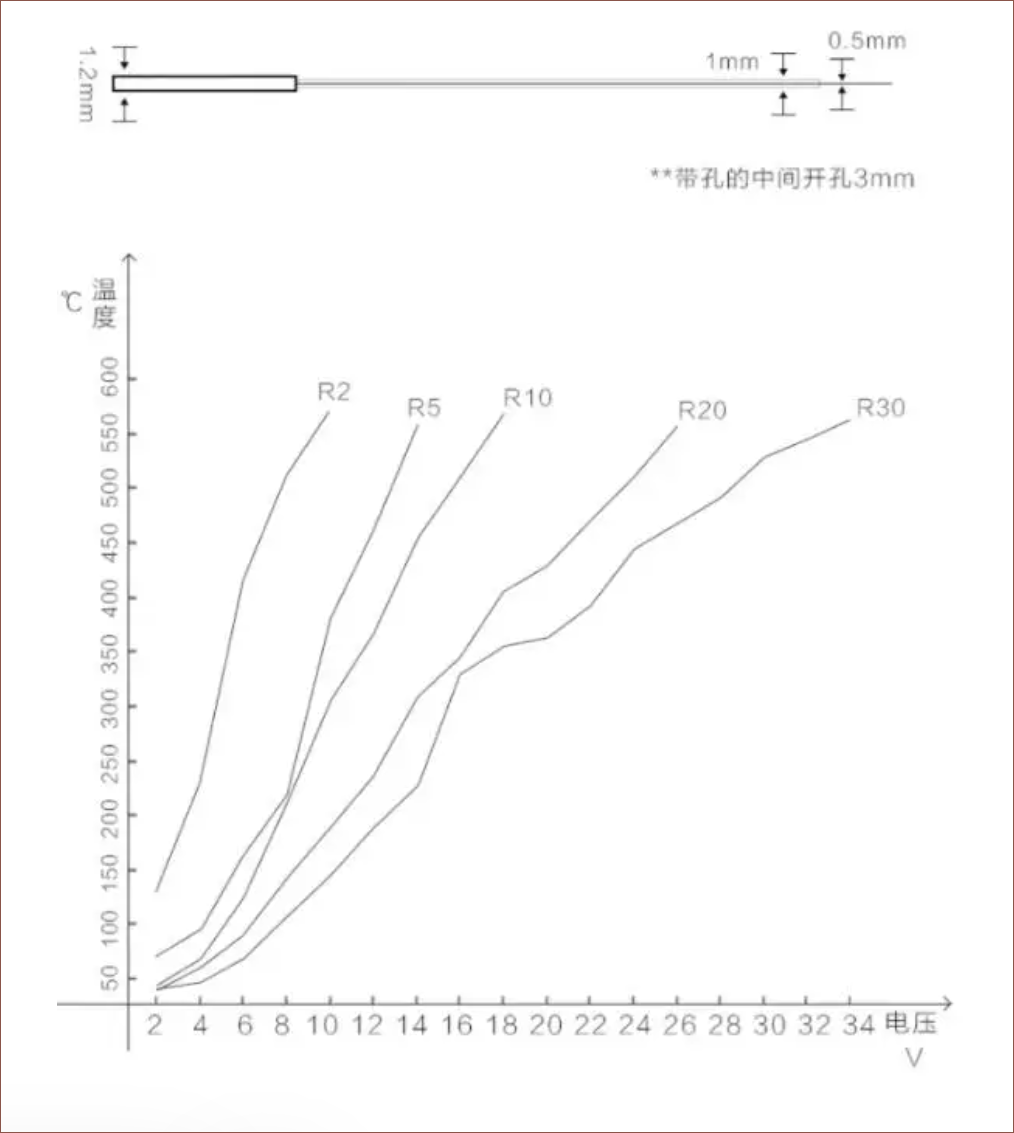
Due to the 15x15mm heatsink having a margin of additional cooling performance, the Flashforge heater is 15mm tall and this RP1010 is a square, it makes the most sense to use it for the next-generation Coaxial8or R4.
Discussions
Become a Hackaday.io Member
Create an account to leave a comment. Already have an account? Log In.
I'm glad to see you back on this project. I wonder if the next revision will be easier to clean out all the 'dust'. I forget if that was resolved or not in the previous revision though
Are you sure? yes | no
Nice to hear.
I assume you're referring to the aluminium dust that was trapped in R1? I hope that issue doesn't return.
Are you sure? yes | no