Hackaday.io Hackaday.io
Projects
Discover Contests Courses Stack
More
Courses Tutorials Events Hackerspaces Hackaday.com Tindie Marketplace
Sign up Log in
Close
0%
0%

Reconfigurable electronics & IO extension

Reconfigurable electronics -- easy to use for Arduino, Raspberry & Co. with a preprogrammed FPGA board.

julianJulian
Following Follow project
Liked Like project

Become a Hackaday.io member

Not a member? You should Sign up.

Already have an account? Log in.

Sign up with Github
Sign up with Twitter
OR
Forgot your password?

Just one more thing

To make the experience fit your profile, pick a username and tell us what interests you.

Pick an awesome username
hackaday.io/
Your profile's URL: hackaday.io/username. Max 25 alphanumeric characters.
Pick a few interests
Projects that share your interests
People that share your interests
We found and based on your interests.

Choose more interests.

OK, I'm done! Skip
Join this project
Similar projects worth following
562 views
2 comments
7 followers
9 likes
  • Description
  • Details
  • Files 0
  • Components 0
  • Logs 5
    • View all
  • Instructions 0
  • Discussion 2
  • The 2017 Hackaday Prize
View Gallery
562
2
7
9

Team (1)

  • julianJulian

Join this project's team
  • Library
  • Project webpage
  • INSTAGRAM
  • Twitter
  • Facebook
hardware
ongoing project
FPGA arduino kickstarter 2017HackadayPrize

Related lists

2017 THP: Digi-Key Parts

Hackaday Prize Entries using Digi-Key parts

This project is submitted for

  • Hackaday.com Tip Line
  • The 2017 Hackaday Prize
  • Design your concept
  • Best Product

This project was created on 01/20/2017 and last updated 9 years ago.

Description

Reconfigurable electronics, and less mess with jumper cables? Need a chainable UART / SPI / I2C IO extender with LOTS of pins? Is it okay if it can output PWM signals as well?
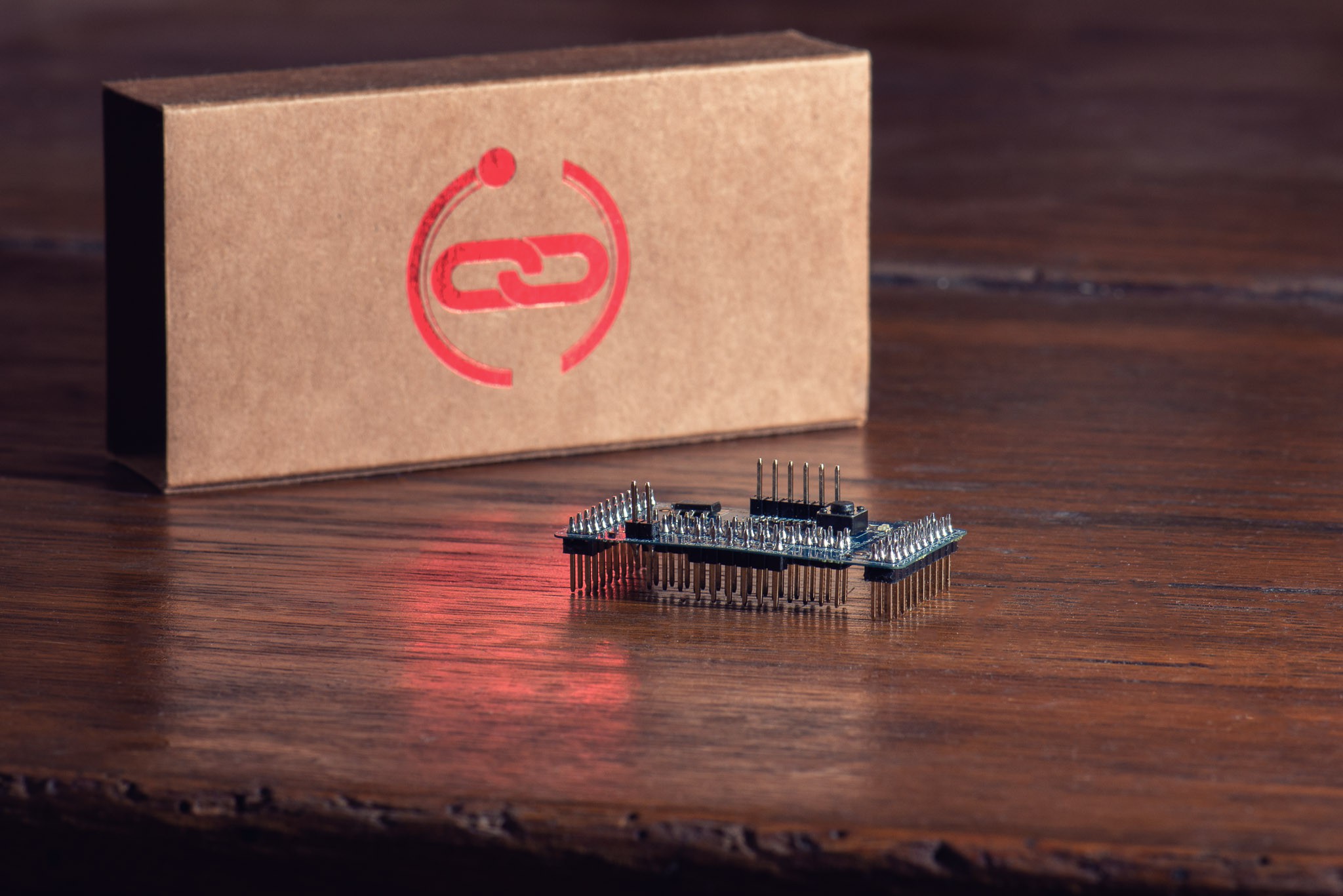
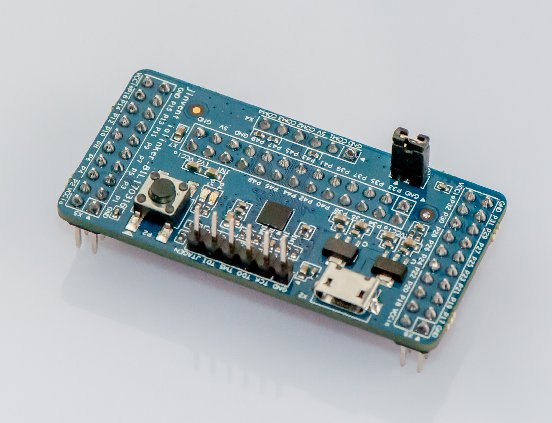
The iolinker FPGA board connects any two pins (signals up to 29.56 MHz) for you, on the fly. Ideal for prototyping, self-testing and designs with many IOs.

Developing time critical embedded software and prototyping embedded solutions a lot -- sometimes with custom PCBs, sometimes without -- I noticed how much time is wasted rewiring digital signals in prototype setups; and in companies, it is costly, too, often wasting time of both a software and a hardware engineer simultaneously.

I wanted a solution that simplifies plug'n'play designs, creates flexibility and keeps my wiring in software -- version controlled. This FPGA project has been on my mind for years, and now I got some help to make it come true.

This is a preprogrammed, low-cost Lattice FPGA board + Arduino adapter.

Project Logs
Collapse

  • Kickstarter funding succeeded

    Julian • 05/18/2017 at 17:30 • 0 comments

    The Kickstarter funding succeeded a while ago!

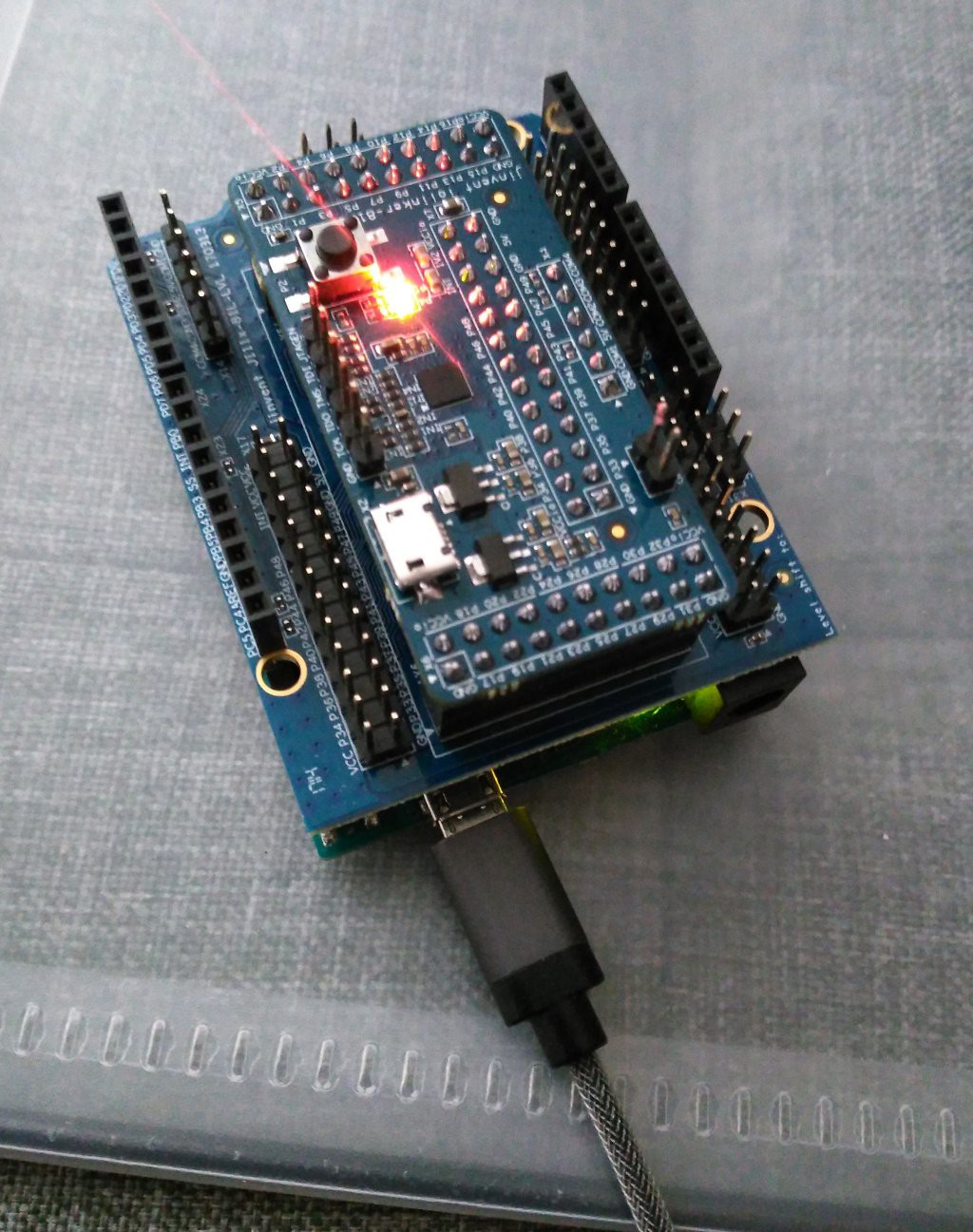
    An improved version of the iolinker board is shipping next week. It's IO mapping is slightly cleaned up and it has a MicroUSB connector for powering it. More comfy to use and test :)

    With the shield adapter and our library on GitHub things are really neat to use now -- via UART, SPI or I2C:

  • We are on Kickstarter!

    Julian • 02/15/2017 at 22:38 • 0 comments

    We are now on Kickstarter and already had a great first day! http://kck.st/2kOJ15v

  • Complete introduction video

    Julian • 02/15/2017 at 22:36 • 0 comments

  • FPGA board soon on Kickstarter

    Julian • 02/09/2017 at 02:13 • 0 comments

    Hi,

    we are going live on Kickstarter next Tuesday! 3pm CEST (= 5am PST).

  • Teaser videos

    Julian • 02/03/2017 at 20:24 • 0 comments

View all 5 project logs

Enjoy this project?

Share

Discussions

Log In/Sign up to comment

Become a Hackaday.io Member

Create an account to leave a comment. Already have an account? Log In.

Sign up with Github
Sign up with Twitter
OR
Julian wrote 05/18/2017 at 13:11 • point

antti.lukats, thanks for your comment. You are correct about that value not making much sense. Internal oscillator clock is 66.5 MHz, so jitter and duty cycle not accounted for we should end up with ~31.6 MHz safe LNK frequency (i.e. 5.5% clock derivation and 50% Shannon-Nyquist subtracted). Not sure how to include the jitter / duty cycle part accurately? I was under the impression that was included in the synthesis constraints.

  Are you sure? yes | no

Antti Lukats wrote 05/17/2017 at 13:21 • point

you say the LNK connection can be used to signals max 29.56mhz (that is 59.12 Mbit/s) but internal oscillator i 5.5% accuracy, also you must count for some jitter and duty cycle distorion, so the limit you set in datasheet, should be either higher or lower than 29.56MHz, the exact number is for sure wrong. If you want to mux 29mhz then you must use 88.67Mhz internal oscilator clock and system clock for the multiplexer, in that case you have at least (hopefully) clock edge per 29mhz signal you mux. But if it works for 29.56, it works equally well for 29.9MHz :) so there is problem in the datasheet.

  Are you sure? yes | no

Similar Projects

An affordable AND useful FPGA board for all. Finally.
Project Owner Contributor

Crystal Board - FPGA Platform for All

chrisChris

Making tools that allow for effortless creation of bootloaders and Arduino support packages for custom SAMD-based boards
Project Owner Contributor

Arduino support for custom SAMD board

alexander-kirillovAlexander Kirillov

Project Owner Contributor

'FleaFPGA Uno' Starter board

valentin-angelovskiValentin Angelovski

Powerful One Stop Arduino Compatible Development and Prototyping Board with ATmega128 at the Core.
Project Owner Contributor

The Winkel Board

rishiRishi

Does this project spark your interest?

Become a member to follow this project and never miss any updates

Going up?

About Us Contact Hackaday.io Give Feedback Terms of Use Privacy Policy Hackaday API

© 2026 Hackaday

By using our website and services, you expressly agree to the placement of our performance, functionality, and advertising cookies. Learn More

Yes, delete it Cancel

Report project as inappropriate

You are about to report the project "Reconfigurable electronics & IO extension", please tell us the reason.

Send message

Your application has been submitted.

Remove Member

Are you sure you want to remove yourself as a member for this project?

Project owner will be notified upon removal.