 Bruno Campidelli
If everything goes right I intend to have a very portable electronic piano accordion with 32 treble keys and 72 (!!!!) Stradella bass keys. The ESP32 board I am using has 32 free pins, potentially less, as there are always some limitations for these ports.
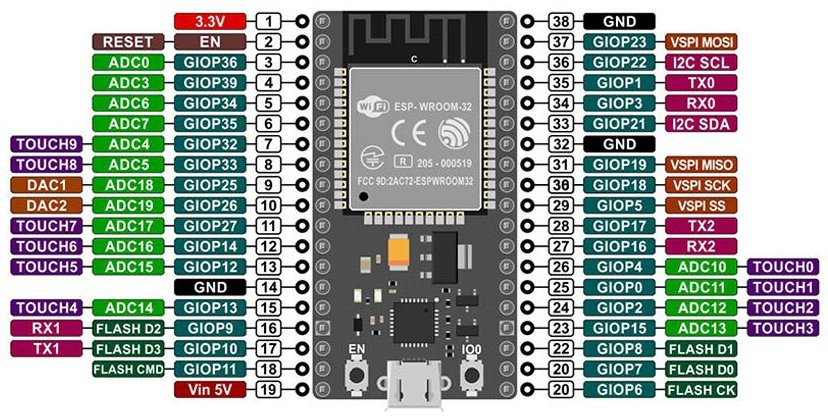
So, I need a matrix (or 2) to multiplex those buttons and use fewer pins.
Therefore, I can have a matrix of 4x8 for the treble keyboard (32 keys) and another matrix of 8x9 for the Stradella bass (72) buttons.
4 + 8 + 8 + 9 = 29 pins! Maybe it is feasible, maybe it is not and I will need an actual multiplexer or use 2 ESP32 boards? Who knows? I will eventually find that out.
It would be something like this, from the brilliant Rafael Corvino, a fellow Brazilian like me (https://www.instagram.com/corvino_acordeonmidi).

But it is not a MIDI accordion, it would not need a computer to generate the sounds.
Anyway, I don't have the Melodica yet (yes, it will be my keyboard) nor the buttons for the bass, I will start small, a 2x2 matrix with diodes to prevent ghosting, this video explains it brilliantly:
This is my little prototype, it looks silly but it was hard for me to get there, I made this mistake https://www.reddit.com/r/ElectronicsRepair/comments/103pfk8/im_building_a_keyboard_matrix_with_a_micro/ but now it is okay!
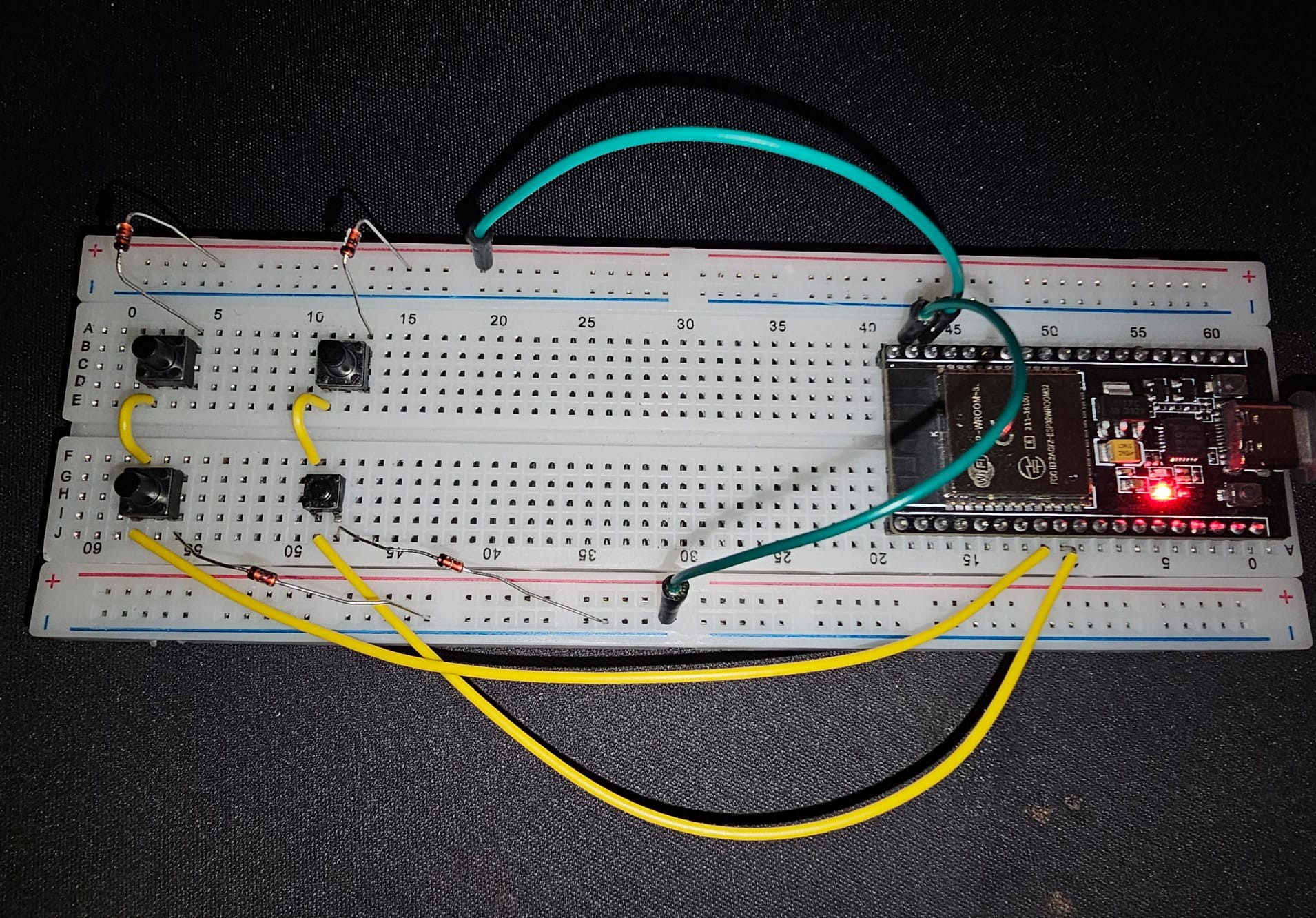
I only have 4 buttons for now (still waiting for the Temu order to get here :)
This very simple program shows the buttons states, you can press them all at once, neat!
#include <Arduino.h>
#include <Keypad.h>

const byte ROWS = 2;
const byte COLS = 2;

char keys[ROWS][COLS] = {
    {'1','2'},
    {'3','4'}
};

byte rowPins[ROWS] = {22, 23};
byte colPins[COLS] = {25, 26};

Keypad keypad = Keypad(makeKeymap(keys), rowPins, colPins, ROWS, COLS);

unsigned long loopCount;
unsigned long startTime;
String msg;

void setup() {
    Serial.begin(9600);
    loopCount = 0;
    startTime = millis();
    msg = "";
}

void loop() {
    loopCount++;
    if ((millis() - startTime) > 5000) {
        Serial.print("Average loops per second = ");
        Serial.println(loopCount/5);
        startTime = millis();
        loopCount = 0;
    }

    // Fills keypad.key[] array with up-to 10 active keys.
    // Returns true if there are ANY active keys.
    if (keypad.getKeys()) {
        for (int i = 0; i < LIST_MAX; i++) {  // Scan the whole key list.
            if (keypad.key[i].stateChanged) {    // Only find keys that have changed state.
                switch (keypad.key[i].kstate) {  // Report active key state : IDLE, PRESSED, HOLD, or RELEASED
                    case PRESSED:
                    msg = " PRESSED.";
                break;
                    case HOLD:
                    msg = " HOLD.";
                break;
                    case RELEASED:
                    msg = " RELEASED.";
                break;
                    case IDLE:
                    msg = " IDLE.";
                }
                Serial.print("Key ");
                Serial.print(keypad.key[i].kchar);
                Serial.println(msg);
            }
        }
    }
}  // End loop
Discussions
Become a Hackaday.io Member
Create an account to leave a comment. Already have an account? Log In.