 Bruno Campidelli
This is my second time writing this, after I uploaded the pictures, Hackaday crashed and I need to write everything again...
Long-story-short: I bought this cheap plastic melodica to be the treble keyboard of my Arduino Accordion. Why? It is cheap, has 32 keys, starts at note F (like most of the 41-key real accordions do) and it is cheap (again).

I disassembled it and here are some pictures:
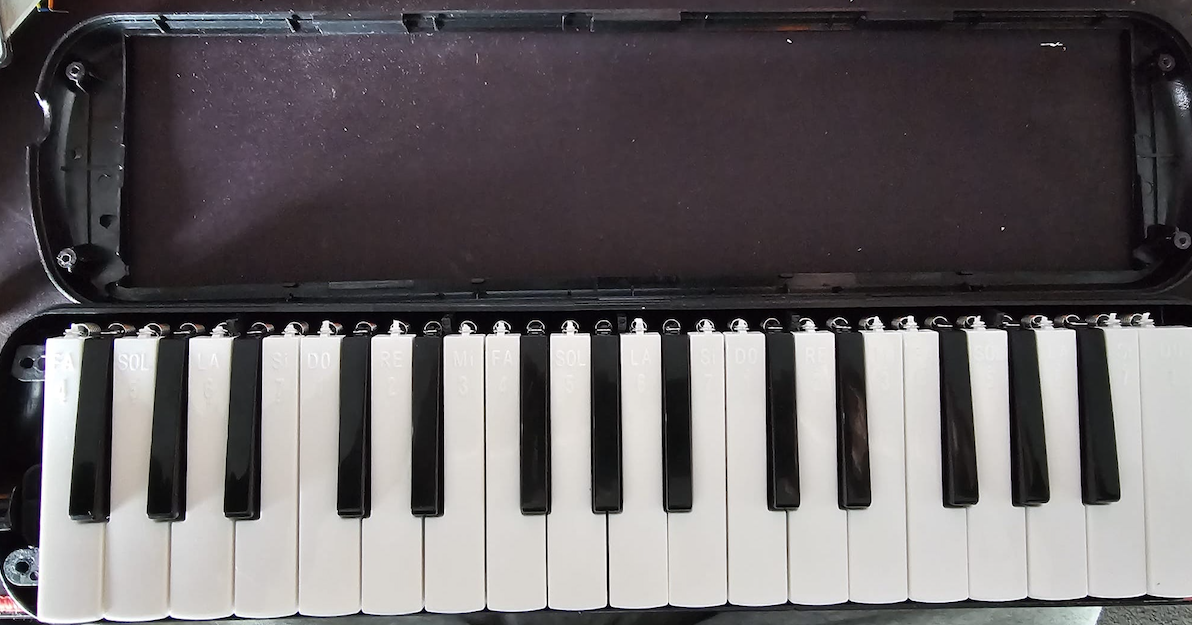
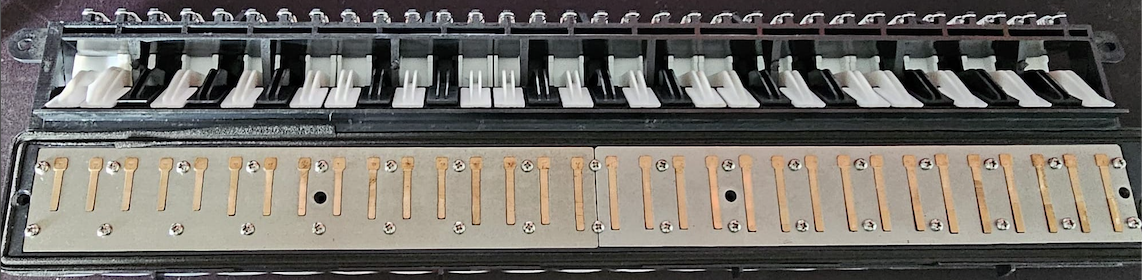
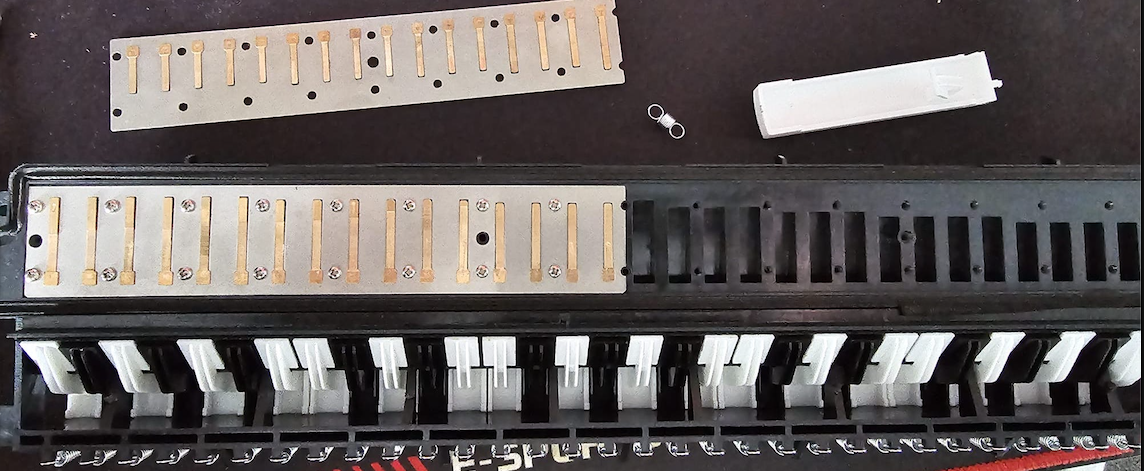
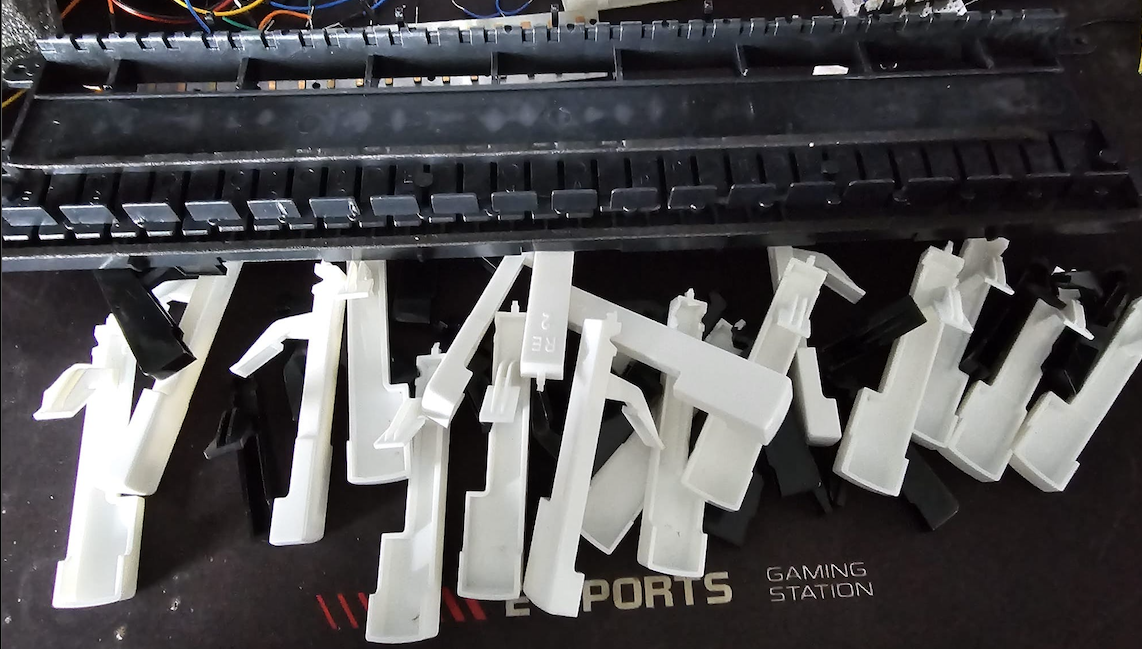
I am genuinely surprised with the build quality, it is sturdy, and it is good! It is not like those kids' keyboards people transform into MIDI controllers, this has individual keys, felts to damp the keys and prevent unwanted keystroke sounds and a very interesting mechanism that could allow me to implement a velocity-sensitive keyboard, although I won't do it on this project, not now at least.
This is the key mechanism in action:
As you can see, two contact points can be used as a switch: the back of the key, where there is a valve that opens when you press it and right below the key tip, which requires you to press the key completely to create a contact. That is why I say you can make it velocity-sensitive, you can have both contacts per key and measure the time between them to calculate the note velocity. But that would require 64 inputs (2 per key) and I am good for now.
I will only use the valve as a normally closed switch, where the key is the negative (ground) and a copper conductive strip is the positive (VCC). It will make sense when I show my proof-of-concept working!
Next step: proof-of-concept for the NC (normally-closed) switches.
Discussions
Become a Hackaday.io Member
Create an account to leave a comment. Already have an account? Log In.