 Jeremy
I was never really satisfied with the connection between the hip motor and the leg.

But it was one of those things that I convinced myself was probably good enough. However, without any additional support, the weight of the leg would likely cause the connection to flex, twist, and pry, possibly leading to failure of the 3D-printed part...
...and I probably would have moved forward, as-is, until dekutree64 left a comment on my last post, reminding me that this could be a problem (thanks dekutree64!).
I marinated on this for a few weeks while traveling, and on my way home, I came up with a solution.
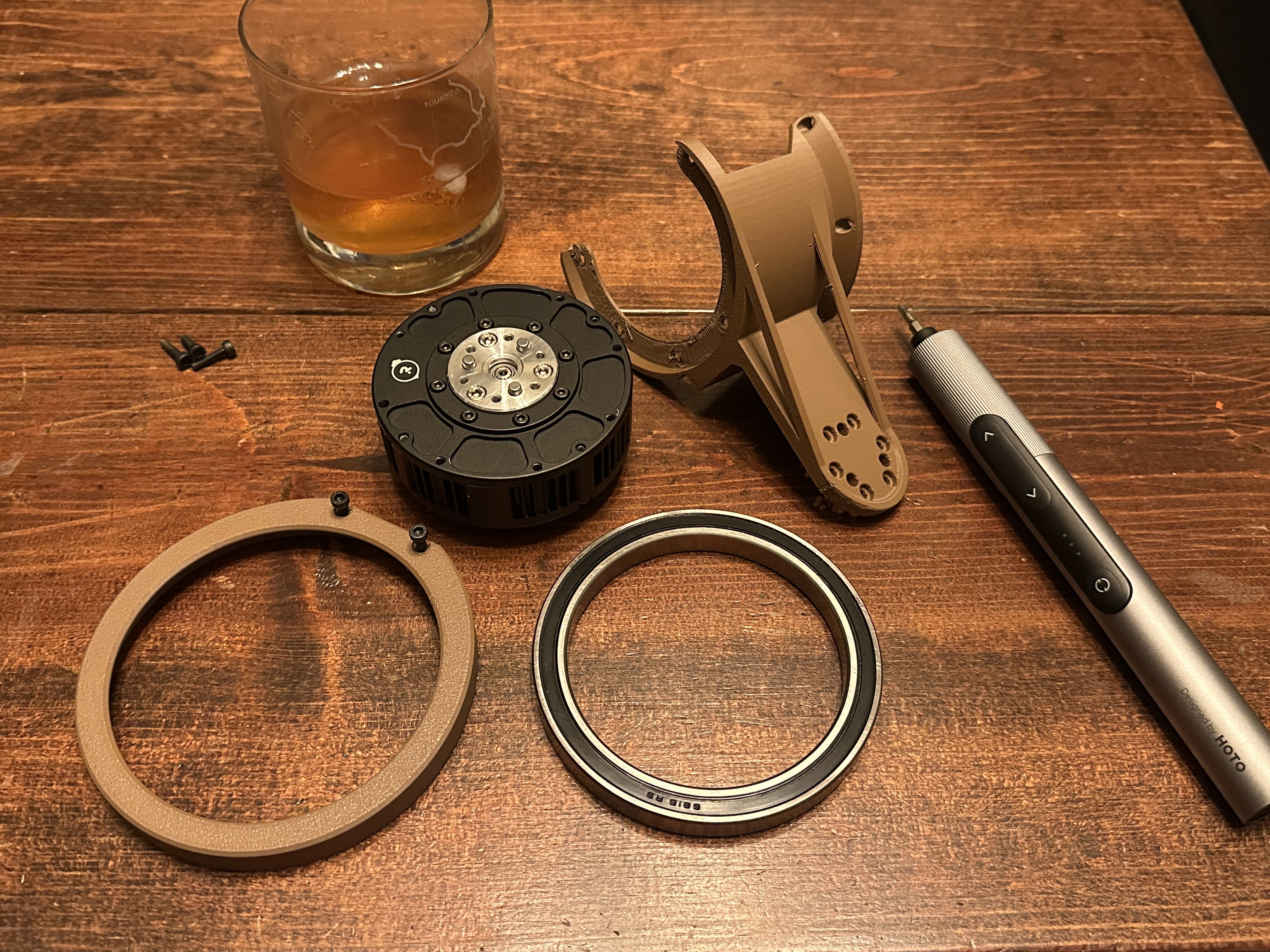
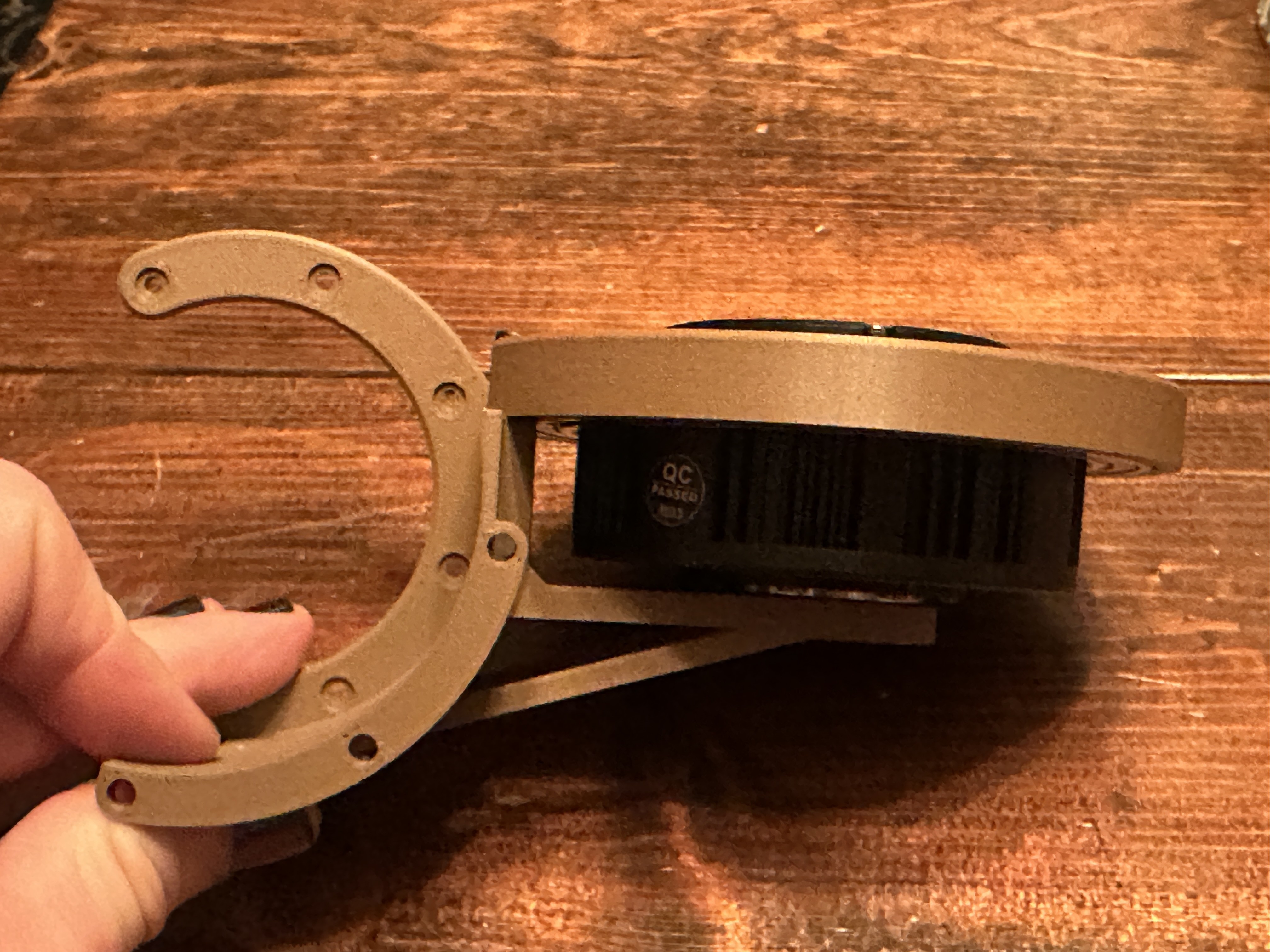
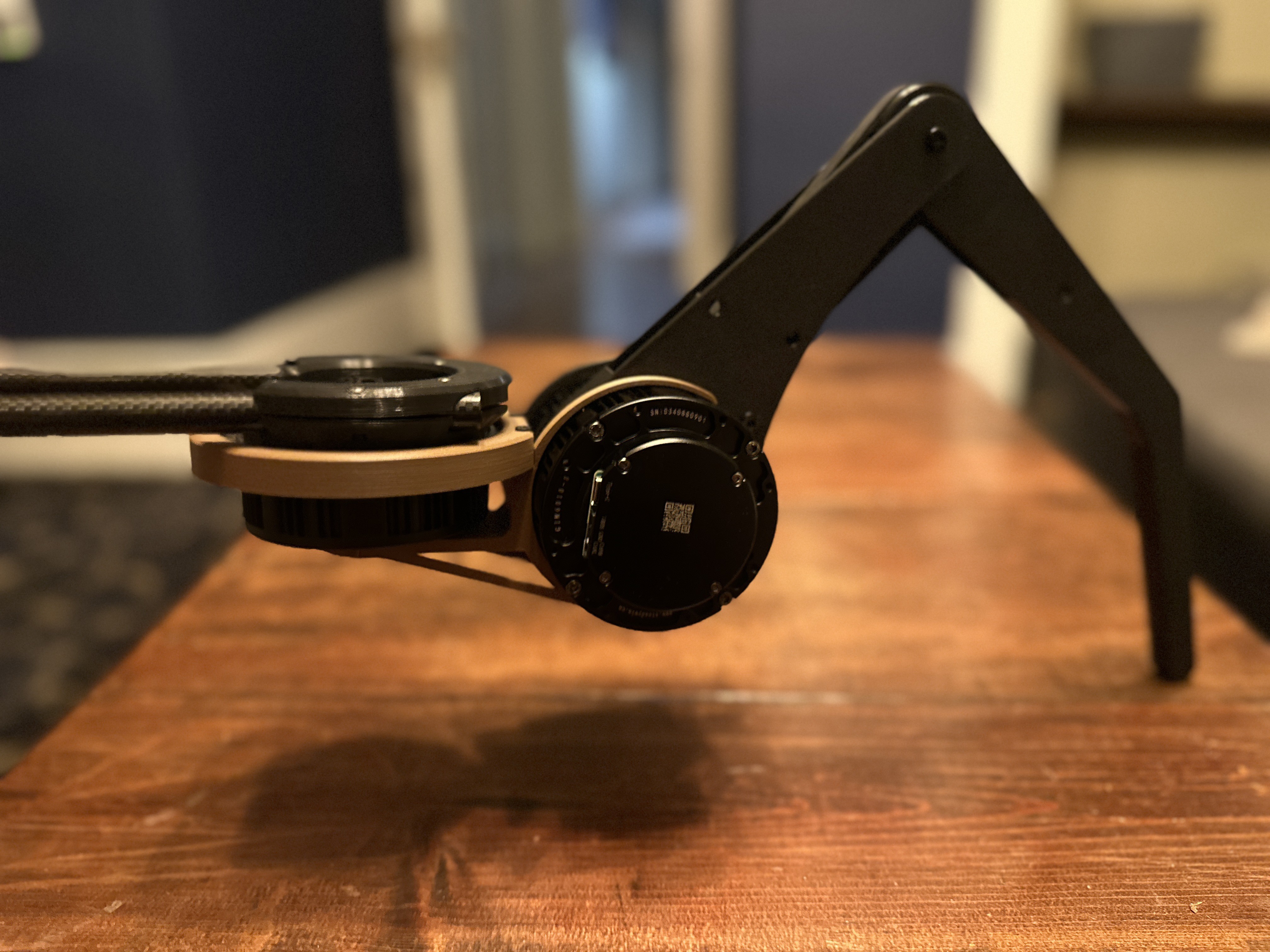
The ideal solution would be to support the hip attachment symmetrically on the motor, so that the motor is essentially centered on the movement arm. In this configuration, the attachment to the motor output would be on one end, and a free-wheeling bearing would be on the other. The additional bearing would help take the strain off the motor output connection.
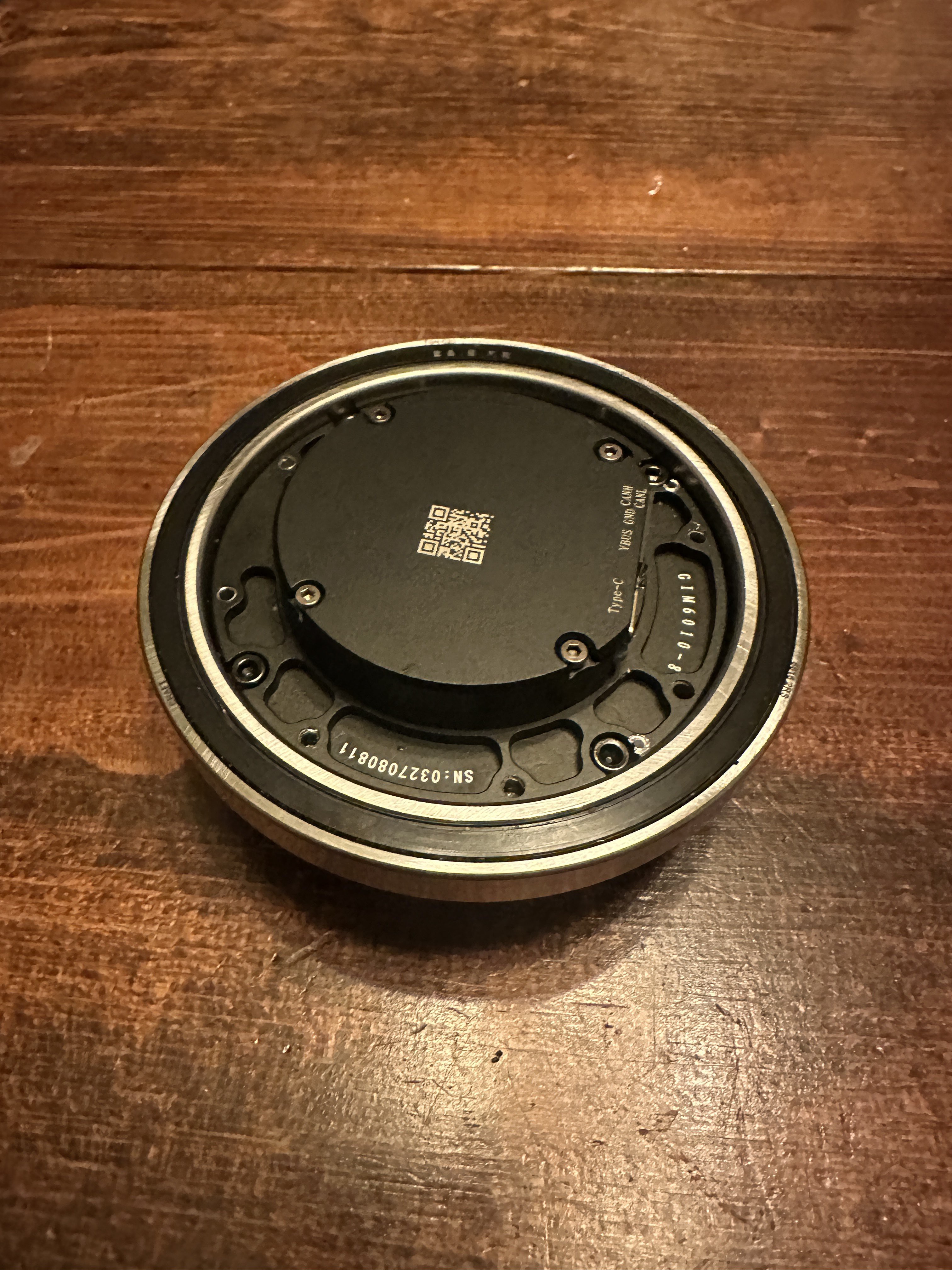
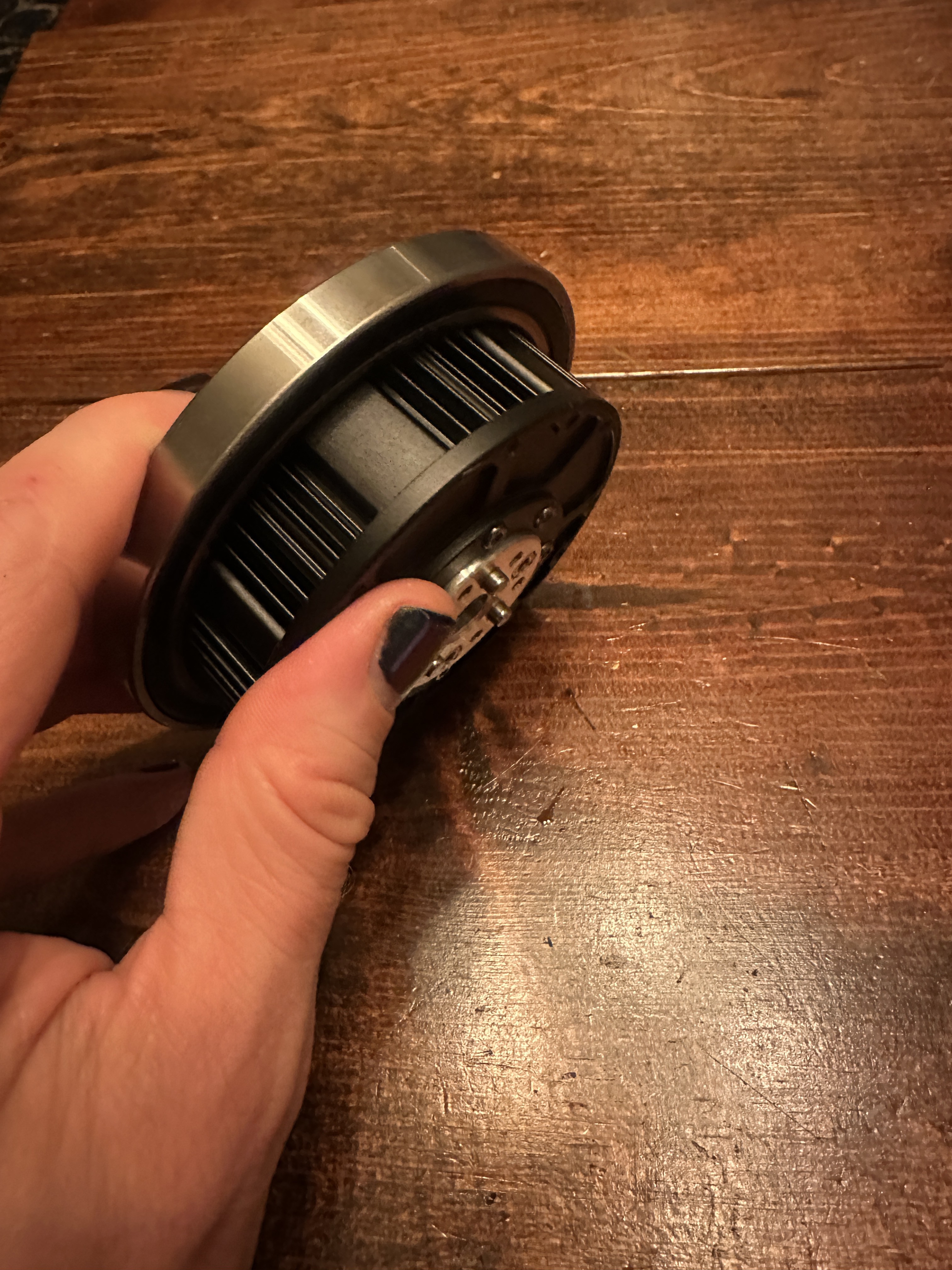
Luckily, I found a bearing that fit perfectly snug around the top of the motor down to the heat sink fins. Then it was just a matter of reworking the model to integrate the bearing.
Here's the assembly of the updated hip section:
All together
Here's what the updated leg looks like.
What's next?
I've also been working on converting my CAD model into a robot simulator format (mujoco MJCF) so I can use reinforcement learning to train it to walk. I found a great Autodesk Fusion plugin called ACDC4Robot, which converts CAD models into robot definitions. I had to modify it (and submitted a pull request) to work for my model, as I'm using nested components and as-built joints.
The next steps are to finalize the CAD export, build the reinforcement learning training code, and start the process of teaching it to walk. Stay tuned...
Discussions
Become a Hackaday.io Member
Create an account to leave a comment. Already have an account? Log In.
For large diameter, low-speed, purely radial bearings like this, a strip of teflon sheet wrapped around will do the job just as well and is practically weightless and costs almost nothing. You can also cut rings from flat sheet for purely axial bearings. It was a revolution for me when I realized I didn't have to design big bulky structures around commercially available bearing sizes.
Are you sure? yes | no