 Tony Francis
Our first step in developing the JASPER FTIR spectrometer is to master the core component: the Michelson interferometer. To begin, we are building a setup using a red diode laser. While a He-Ne laser is a common choice, our long-term goal is to use a ZnSe beamsplitter instead of the hygroscopic KBr. Since ZnSe is not transparent in the visible range where the He-Ne spectrum lies, a red diode laser is a more suitable choice for our initial prototype.
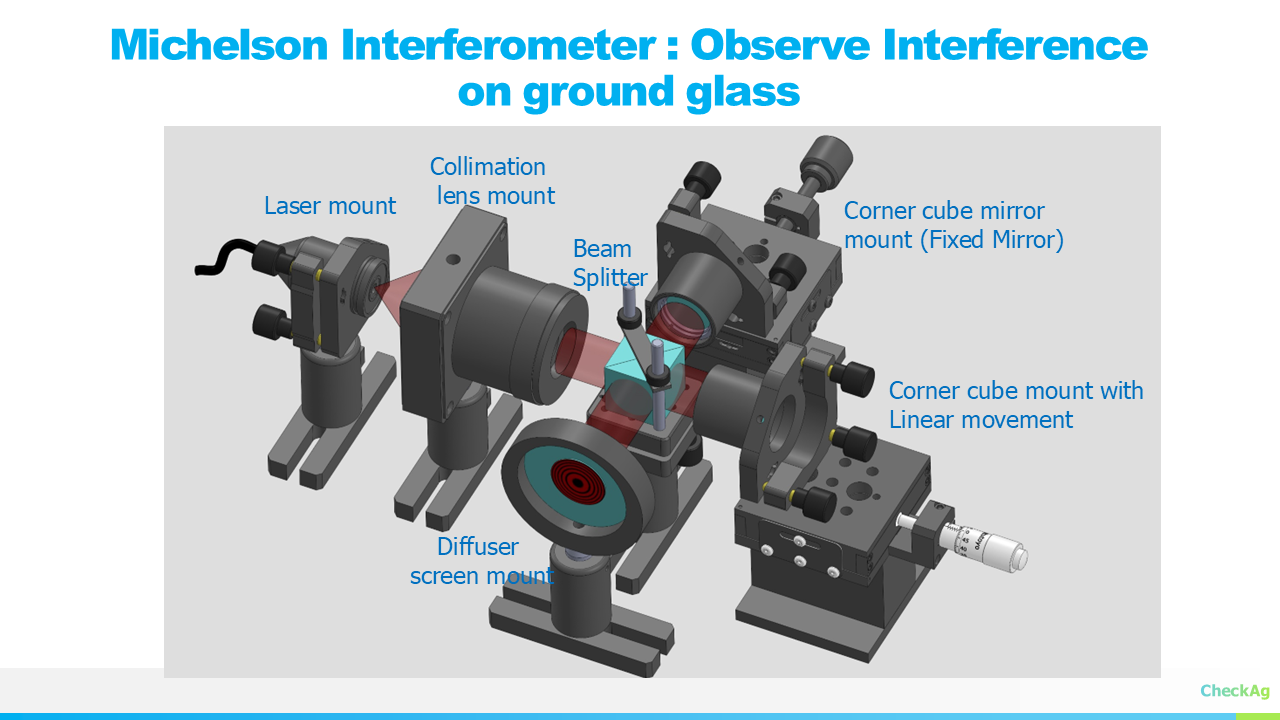
We're using a cube beamsplitter, which simplifies the design by ensuring equal path lengths for the two optical arms. This eliminates the need for a compensating optical window, making our initial implementation significantly easier.
The interference fringes from the red diode laser will be observed on a ground glass screen. We'll start with flat mirrors to achieve our first fringes and later transition to retroreflectors. We are still researching the accuracy requirements for retroreflectors and their limitations in this application.
To validate our components, particularly the retroreflectors and the cube beamsplitter, we've had to take a leap of faith and order them without a clear validation plan. We'll be holding our breath until we have the setup running to see if we can achieve those coveted white light interference fringes. Follow along as we learn, iterate, and (hopefully) succeed!
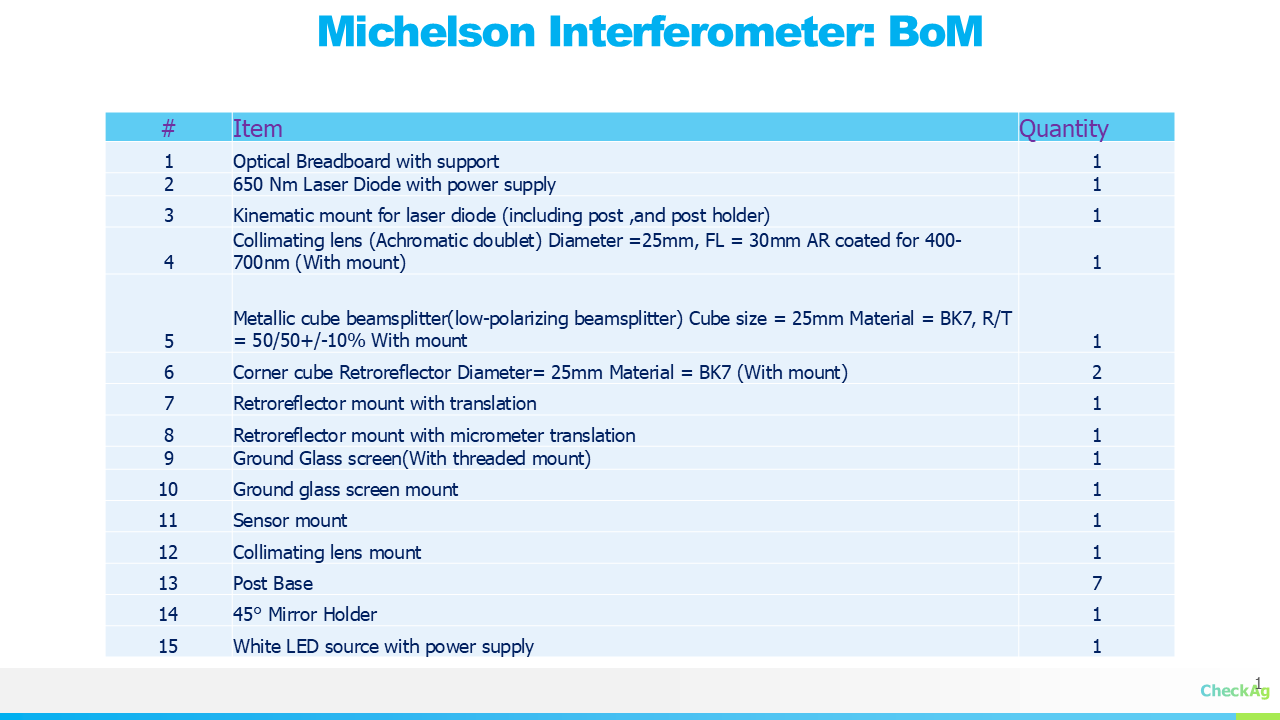
Bill of Materials for the Michelson Interferometer:
3D Visualization of the Setup:
Discussions
Become a Hackaday.io Member
Create an account to leave a comment. Already have an account? Log In.