 Nasser
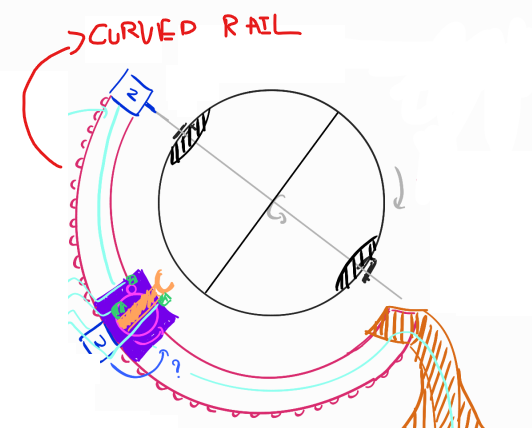
CURVED RAIL
The next major component we tackled was the curved rail.
Due to its large size and the need for durability, we chose to laser-cut it from plywood/acrylic instead of 3D printing it.
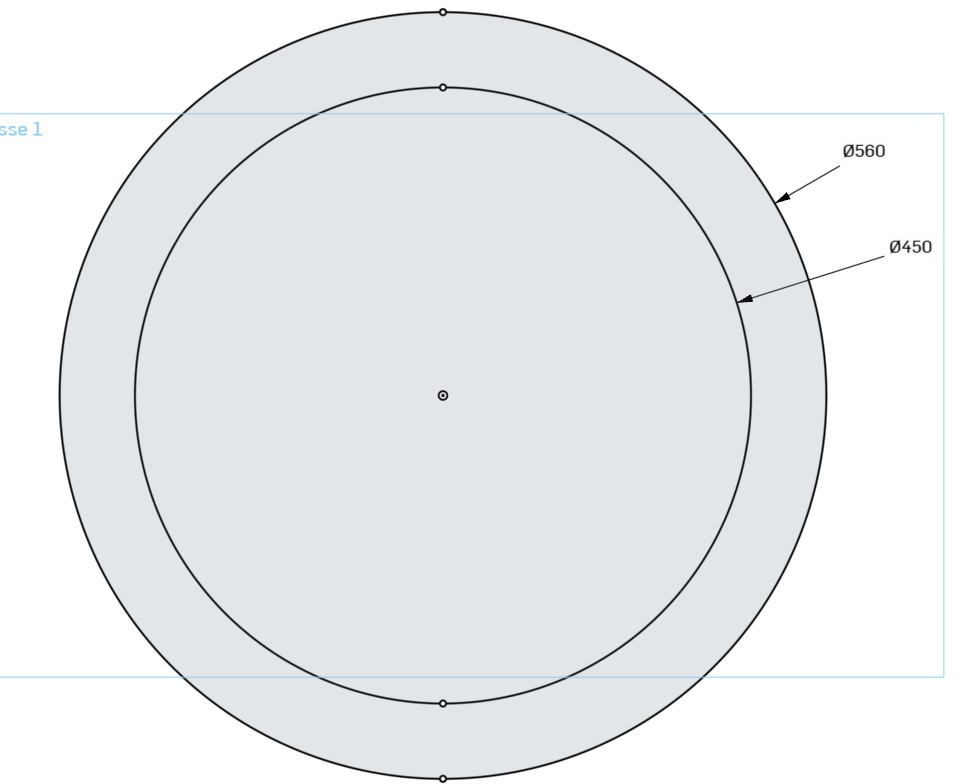
Dimensions:
-
Outer Diameter (OD): 560 mm
-
Inner Diameter (ID): 450 mm
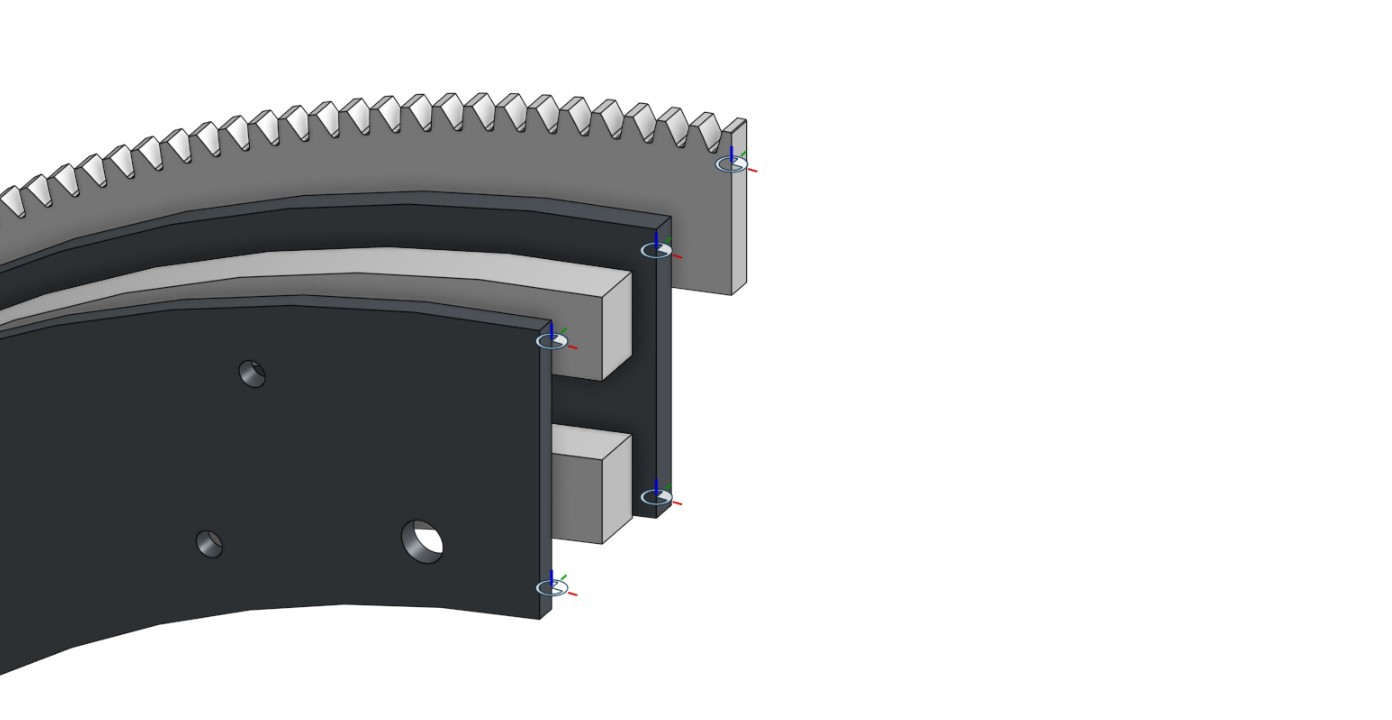
The rail is composed of four layers, all secured together with M5 screws:
-
Two outer planks — 5 mm thickness each
-
Inner plank — 10 mm thick, this is the guide surface where the cart wheels will slide
-
External gear layer — 5 mm thick, this gear will be driven by the cart to move along the curve
-
The design of this driving system is inspired by this mechanism:
-
Rail Support: Feet and Top Part
To hold the rail we designed those two piece :
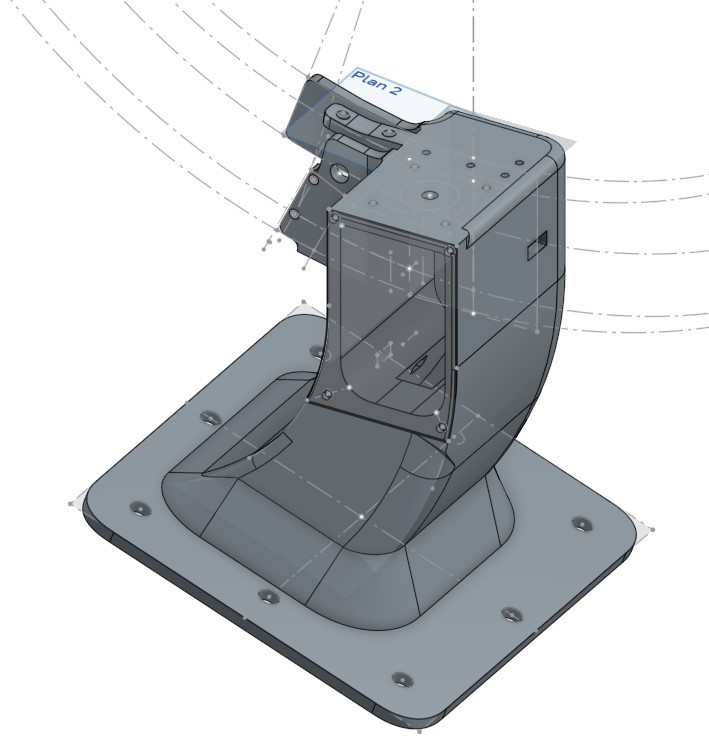 | 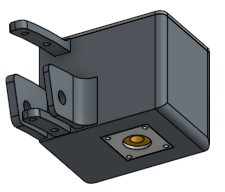 |
Rail feet
The rail "Feet" is a very important part, it house the chessboard stepper motor, the cart and the orb limit switch.
It connects to the rail using a m8 bolt
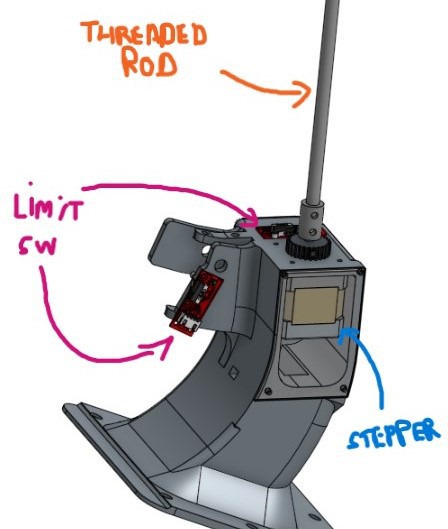
Limit switch
As we're using stepper motors to move the cart and chessboard, we should be able to achieve a high degree of accuracy when moving to a position, but one problem with stepper motors is that, being an open-loop system, they wouldn't know, for example, where they are at start-up.
To solve this problem, we used limit switches in the path of each motor so that they could have a base (reference) position.
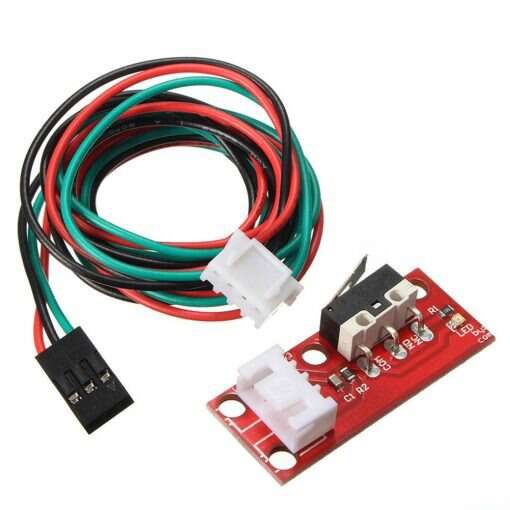
Here's the limit switch for the chessboard and the cart :
CHESSBOARD 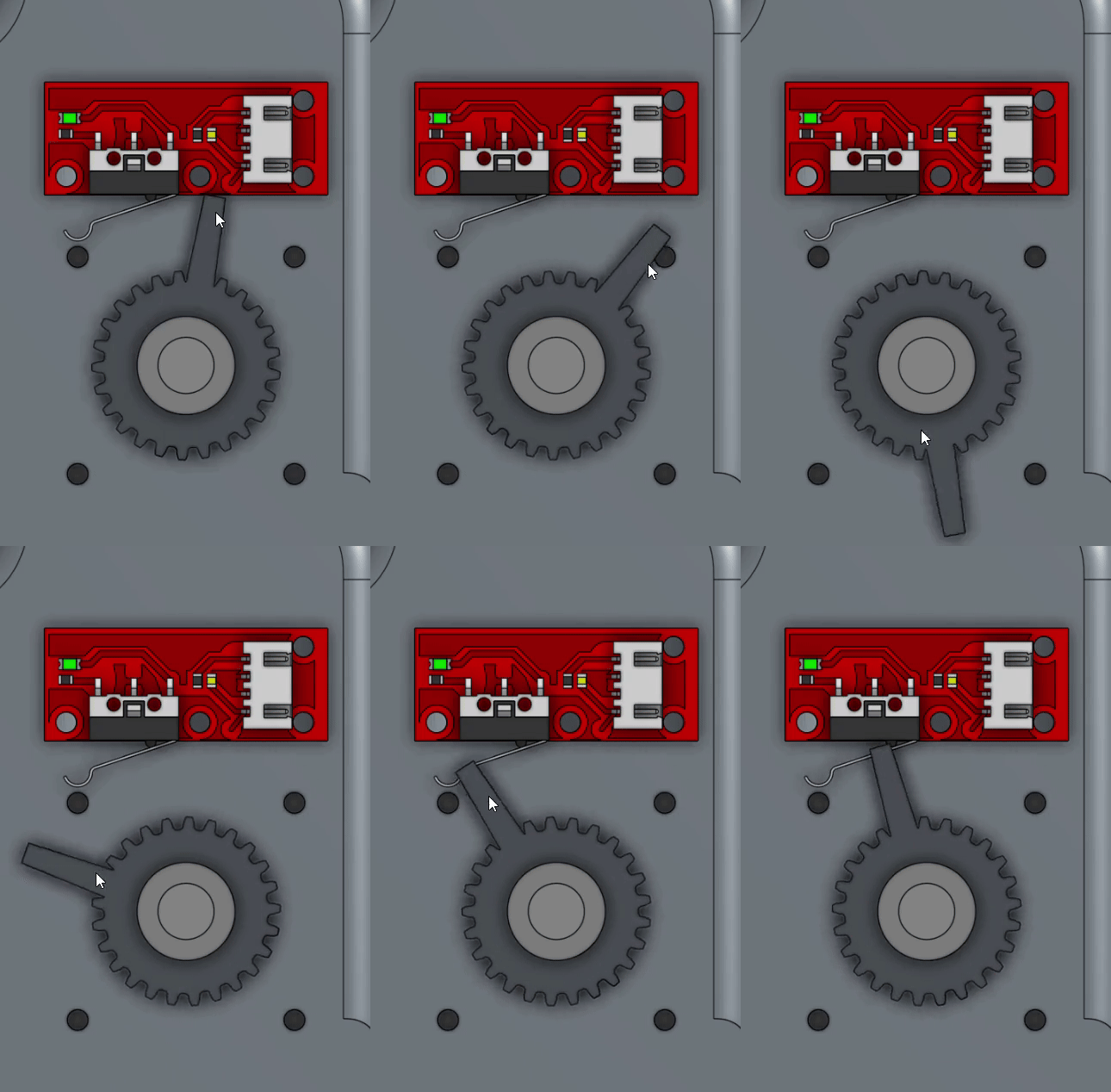 | CART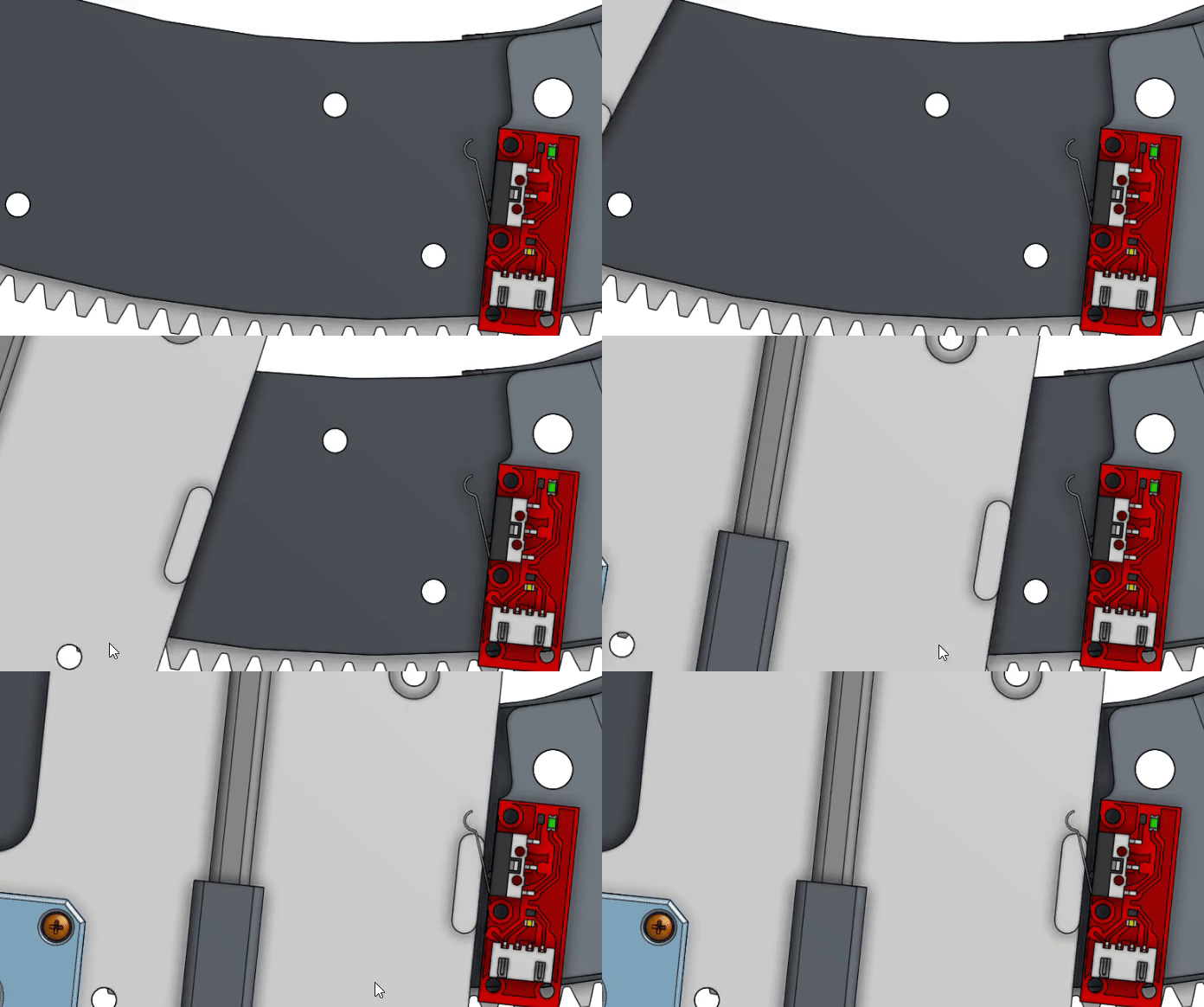 |
Rail Top
The Top part help to complete the assembly
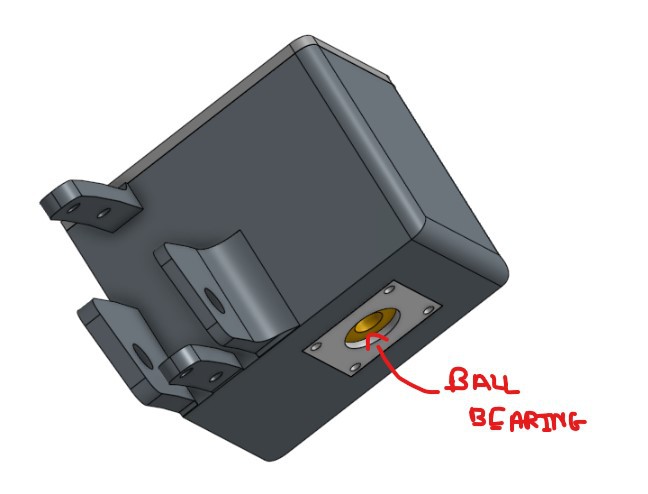
It also connects to the rail using a m8 bolt
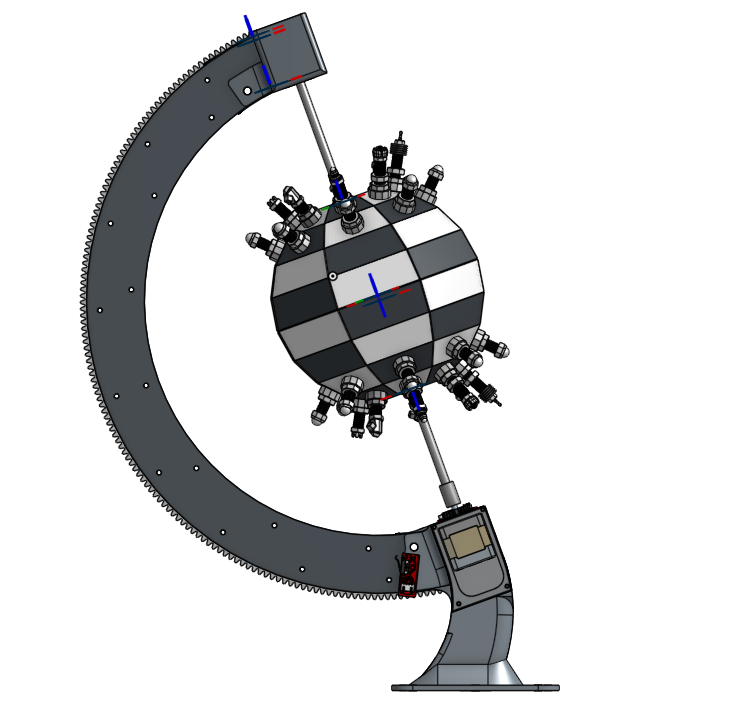
Here is the final assembly showing the curved rail, feet and top parts, stepper motor, the spherical chessboard, and the chess pieces:
Discussions
Become a Hackaday.io Member
Create an account to leave a comment. Already have an account? Log In.