 Bertrand Selva
Eventually, after revisiting the literature, I found another sensor, the PNI RM3100 (a bit more expensive, ~€30 on AliExpress), characterized by:
✅ very low thermal drift,
✅ very low pink noise,
✅ and, most importantly, a native RMS noise of just 13 nT.
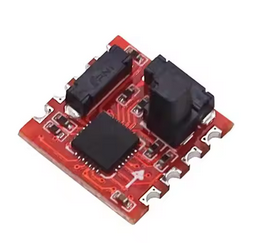
And that reignited the project!
Here’s my plan:
1️⃣ Still use the statistical approach: 1,000 measurements → noise reduced to about 0.4 nT.
2️⃣ Rotate the sensor around the (1,1,1) axis to eliminate internal biases.
3️⃣ Design a waterproof, robust enclosure capable of long-term outdoor measurements.
For points 1 and 2, I plan to implement data fusion with a Kalman filter directly embedded in the microcontroller, like I had already done in this Hackaday project.
Current Status: CAD and Mechanics
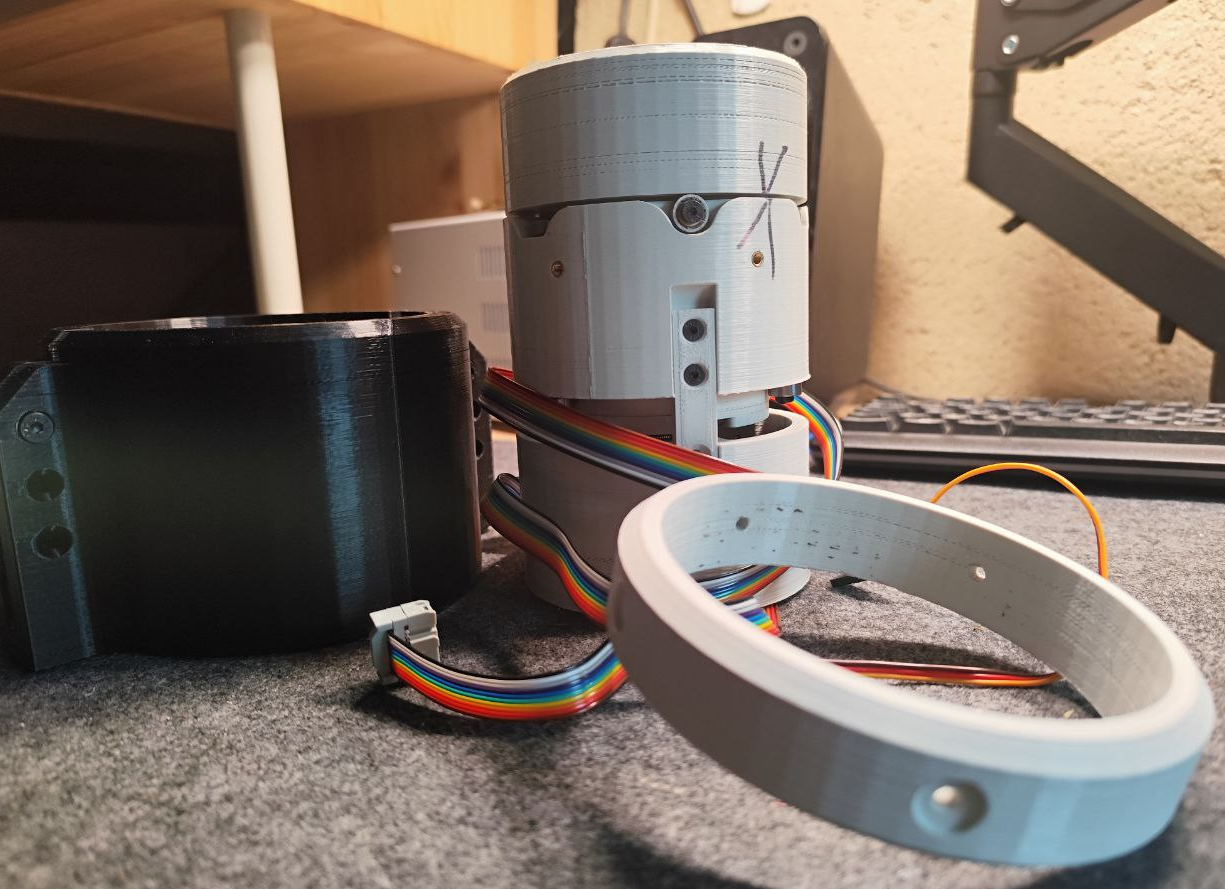
I’ve already purchased the sensor (not yet received) and completed the CAD for the mechanical parts.
The setup is designed to fit inside a 100 mm diameter wastewater pipe, offering both waterproofing and low cost.
Instead of NEMA17 motors (which generate too much magnetic disturbance due to their strong permanent magnets), I chose a GM995 servo, much smaller.
I also took care to minimize metallic parts in the assembly. Remaining metallic components include:
-
small 623ZZ bearings (to relieve the servo and ensure guided rotation),
-
and some metallic screws, but fixed relative to the frame (thus creating a static, acceptable perturbation).
Discussions
Become a Hackaday.io Member
Create an account to leave a comment. Already have an account? Log In.