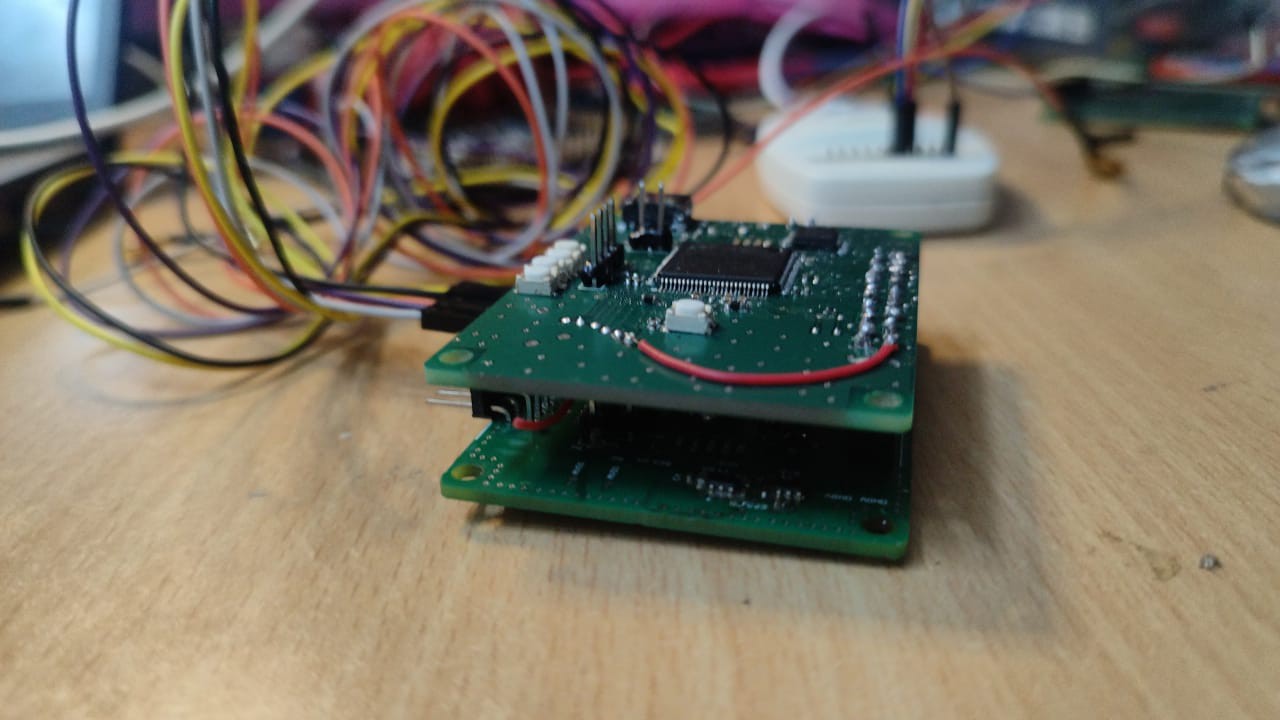
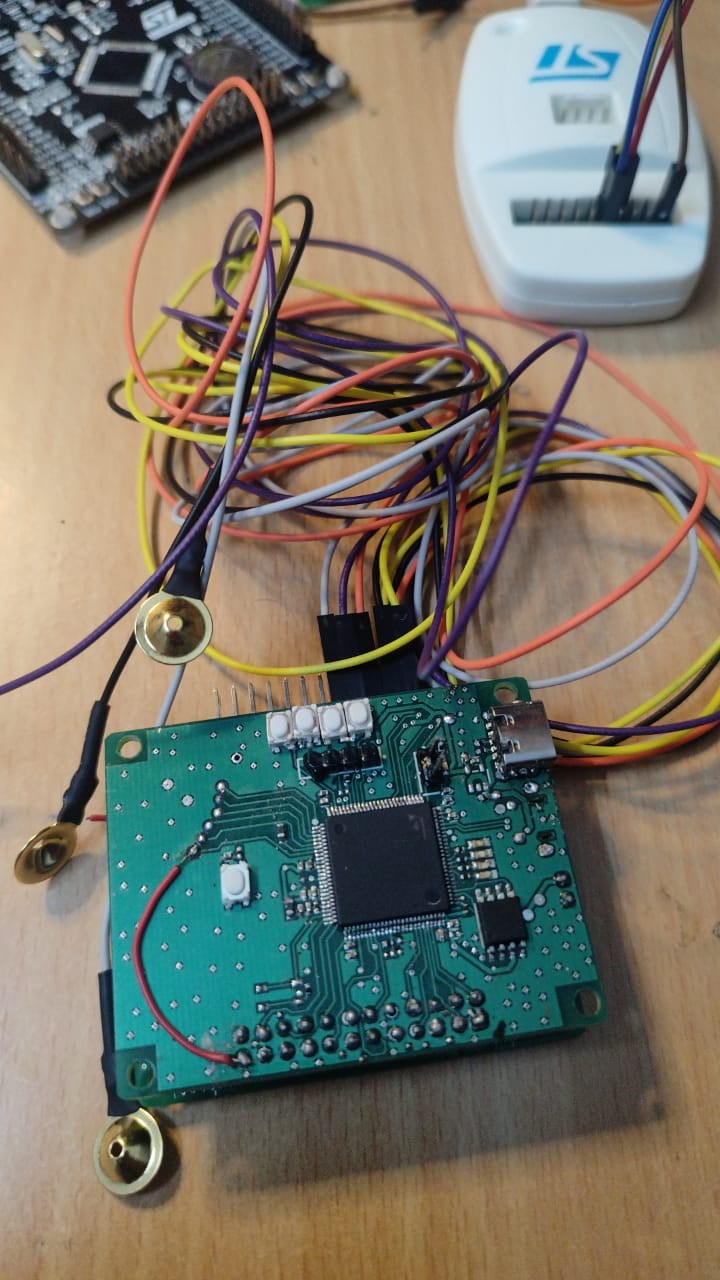
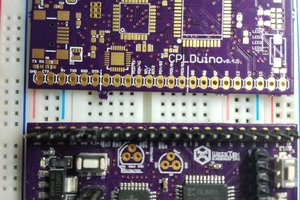
This is my ADS1299 breakout board - just the analog front-end part that I wanted to test first before doing a full integrated design. The female headers break out all the digital pins so I can stack a microcontroller board on top later, kind of like an Arduino shield setup. Right now it's just handling the ADC and power regulation - I'll add the MCU part in a separate board once I'm sure this works properly. The modular approach makes it easier to troubleshoot and means I can try different microcontroller options without having to redesign the whole thing each time. I've already assembled and powered it on, and it's giving proper readings. Since I have experience with ADDS1296 , the firmware for this is almost same.
I've successfully designed and assembled my digital stack board over the past two weeks, featuring an STM32F407VET6 microcontroller paired for the ADS1299 breakout board . The hardware looks solid and the STM32 handles USB data transmission to the host computer well. My firmware is mostly complete and works perfectly up to 4kSPS sampling rates, but I'm running into SPI communication errors when pushing toward the full 16kSPS capability of the ADS1299. There's no particular reason I need the maximum sampling rate, but it seems worth implementing since the hardware supports it. I'm using gold cup electrodes with Ten20 conductive paste and NuPrep for skin preparation, and I'll be diving into proper electrode placement techniques next.