 DiPDoT (Brian)

My relay computer, for the most part, is "period correct" - meaning that it's generally constructed of components that would have been available in the 1940s and 50s. The relays themselves are much smaller than those available at the time, and the LEDs would've been either neon or some incandescent lights, but functionally it could've worked. The big exception is the memory, which is currently based on a modern RAM chip, mostly because I knew that would work (for now) to get things up and running. But my goal is to also build some form of storage more in line with the era that this computer would've been in fashion.
I researched many different memory options from that era, including delay lines (complete with toxic mercury), CRT memory, and even core memory. But all of the above require a lot of high-speed switching capabilities that...well...aren't in line with how relays operate. But capacitor memory stands out as a potential option. In the video above, I experimented with a prototype for a 1-bit capacitor memory, which seems to work well enough.
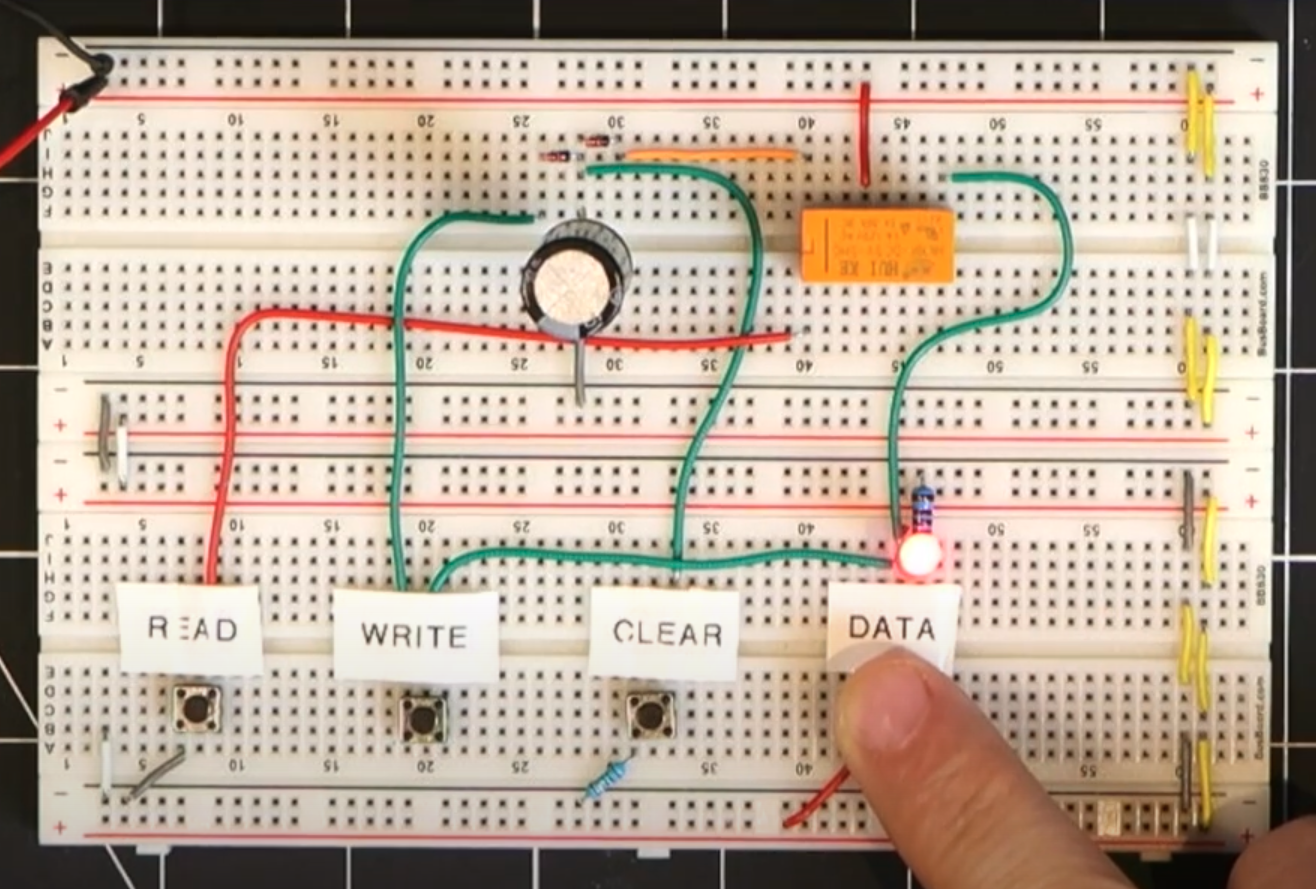
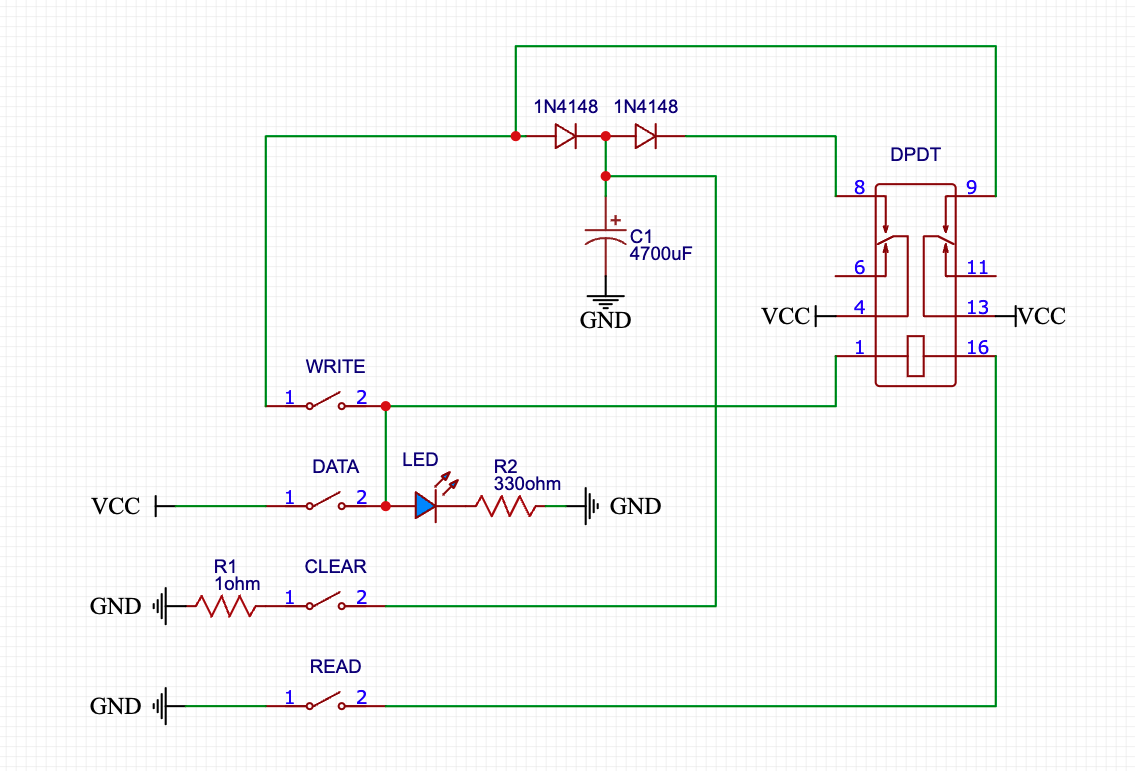
Now 1-bit not's a lot, so the remainder of this project will be to design a larger and more useful form of capacitor memory that can store a small program. Because the physical form factor for this will be larger than a typical card, I'm also thinking it will be some sort of external storage unit that will connect to the relay computer. Stay tuned - more to come on this project!
 Hayden B.

 Blair Vidakovich
 Alexios C
 Peter Birch