This project investigates how small a difference in timing between two tones must be for a person to just notice it. Participants listen to tone pairs with slightly varying intervals and respond when they perceive a change. The system estimates the perceptual threshold.
Components
1×
RaspberryPi Pico
Microcontroller to run the show!
While reading the challenge's description I was reminded of something my fitness tracker monitors: heart rate variability. Obviously it's an important concept. I was wondering if a humans would be able to detect such small variances in the hart beat. And that's exactly what the goal of this project is: explores the just noticeable difference (JND) in human perception of time gaps between tones. I want to build a device which plays tone pairs with varying delays and records user responses to estimate perceptual thresholds.
I am using the pico because I'd like to have the option to use PIO if the normal GPIO intoduces to much jitter but it probably will work fine. The fear of jitter is also the reason for Rust as programming language. I think it produces conde whose timing is much more consitant (no garbage collector, ..)
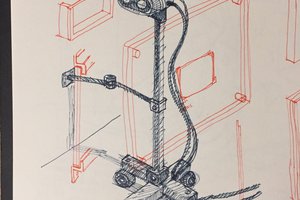
I want a simple, sleek handheld device with just two buttons. Sketch in the gallery. It should be easy to print in a 3d printer
p. s.: For the design phase I used al little help from AI, as you might have noticed.