 mihai.cuciuc

Why
Ever since I read about Lord Vetinari’s clock I wanted to build one that is driven by radioactive decay. But I’ve been struggling with coming up with a mechanism that is both reasonably accurate and also sufficiently insensitive to background interference to call it a clock. As Dave also figured with his Gammaclock this is not trivial, however the "Atomic" Clock by alnwlsn has been using radioactive decay to track time for more than a year.
How
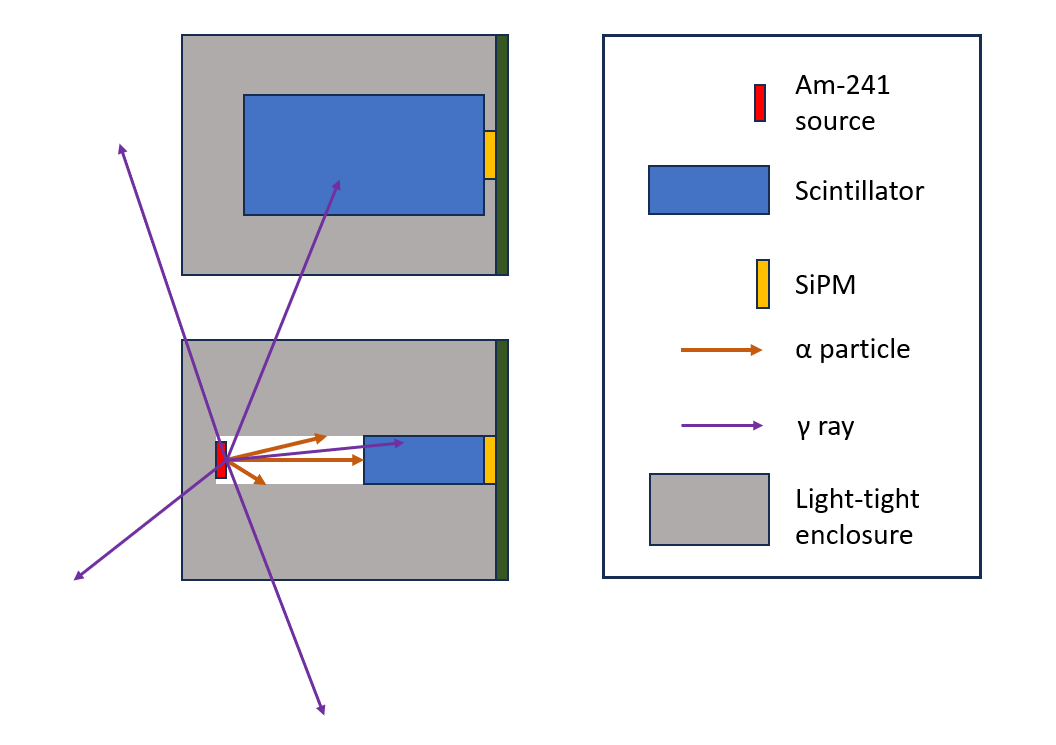
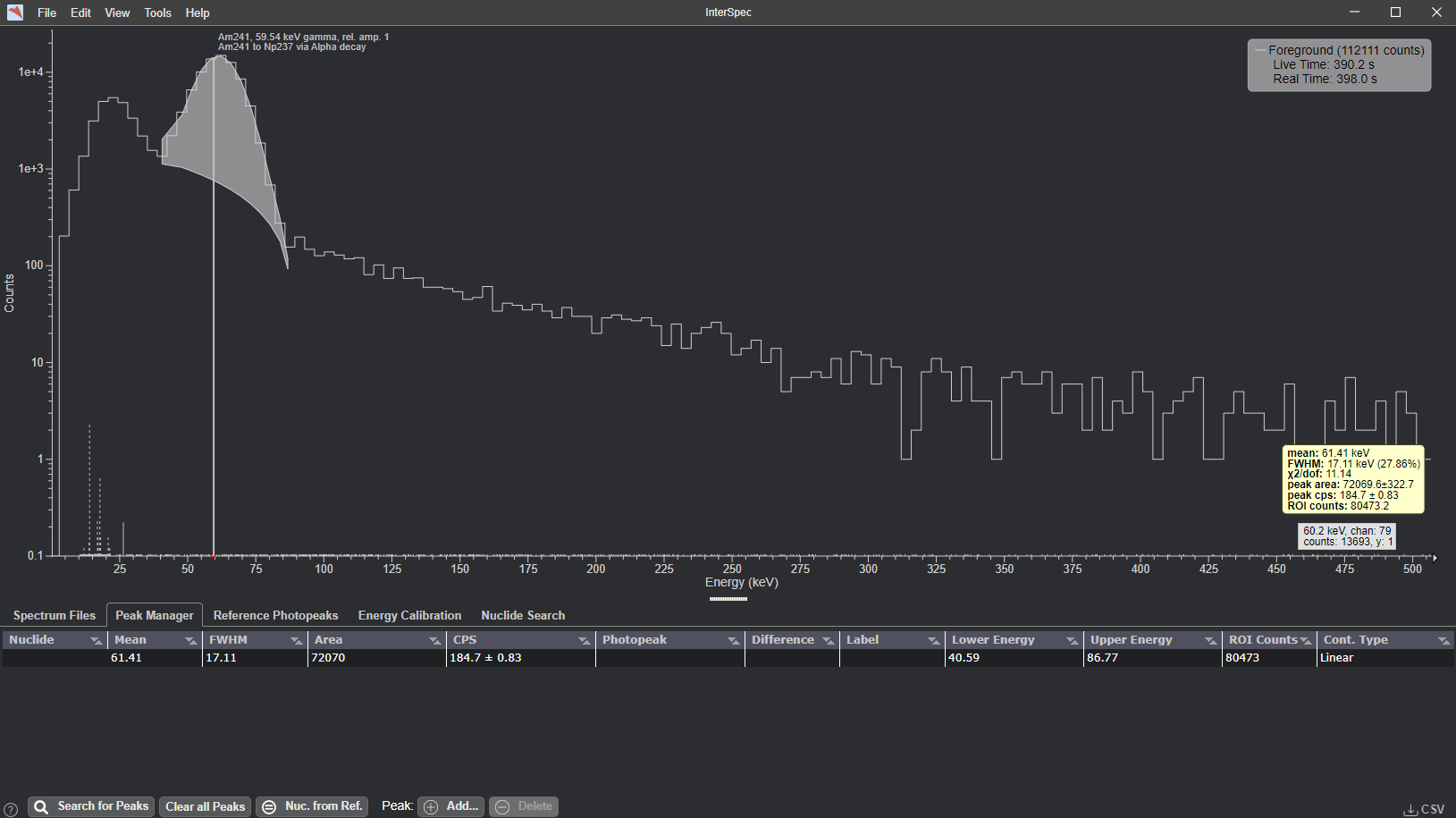
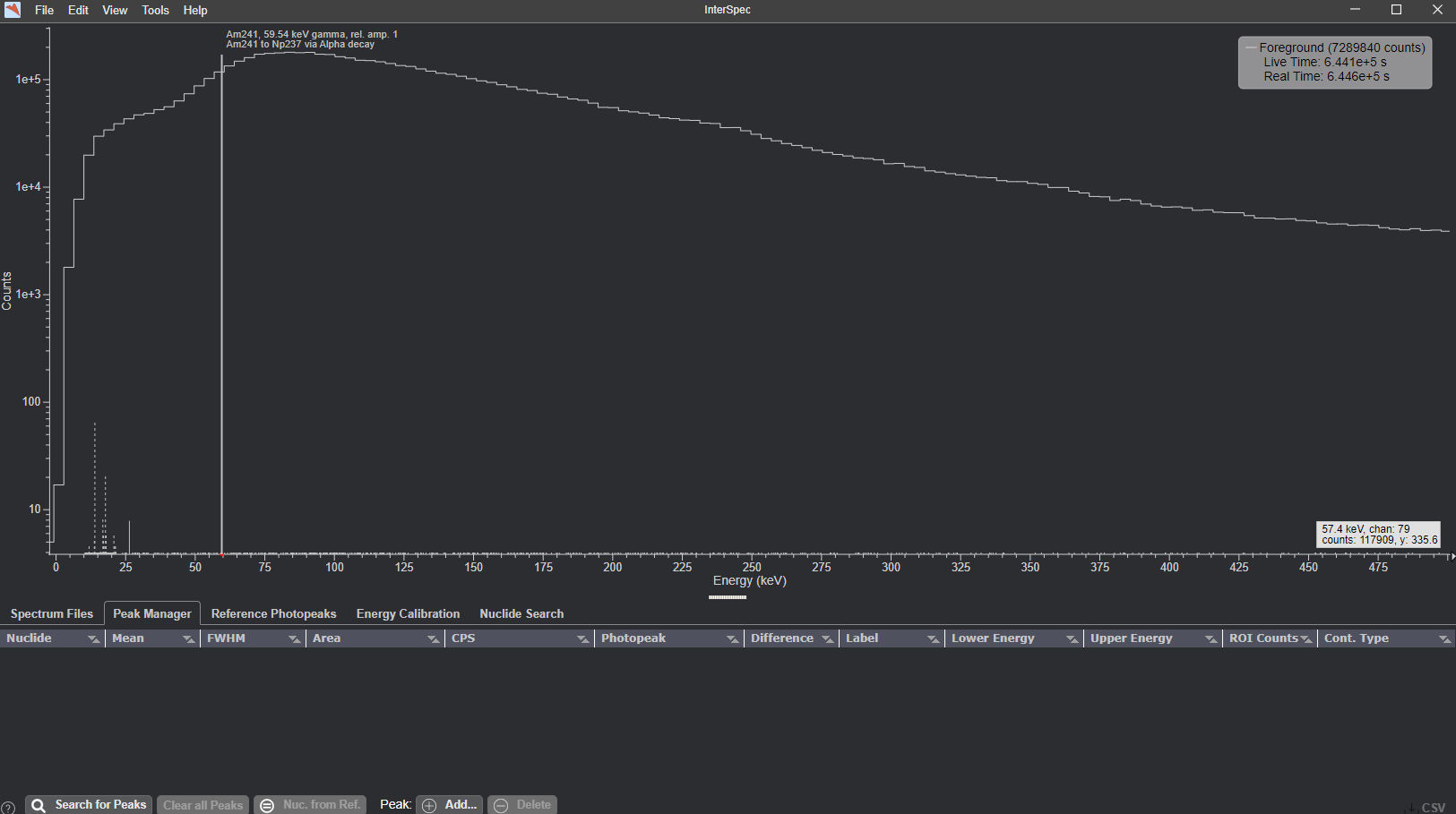
In order to have some immunity to background radiation I used a coincidence measurement of the most common two products from Am-241 decay: an alpha particle and a 59.5 keV gamma. When an Am-241 nucleus decays it emits an alpha particle (two protons and two neutrons) and turns into Np-237. Most of the time the Np-237 has some left-over energy that it quickly emits as a gamma ray. If we detect an alpha and a 59.5 keV gamma ray appearing at the same time we can be fairly sure this came from our Am-241 source, not some background radiation that we have no control over. Adjusting the geometry of the setup one can change the rate of these coincidences until an average of one event per second is detected. On a long timescale this can be used as a timebase, as Physics is very kind in that regard. But on a short timescale events have the characteristic randomness of radioactive decay. Perfect for Lord Vetinari's clock.
What
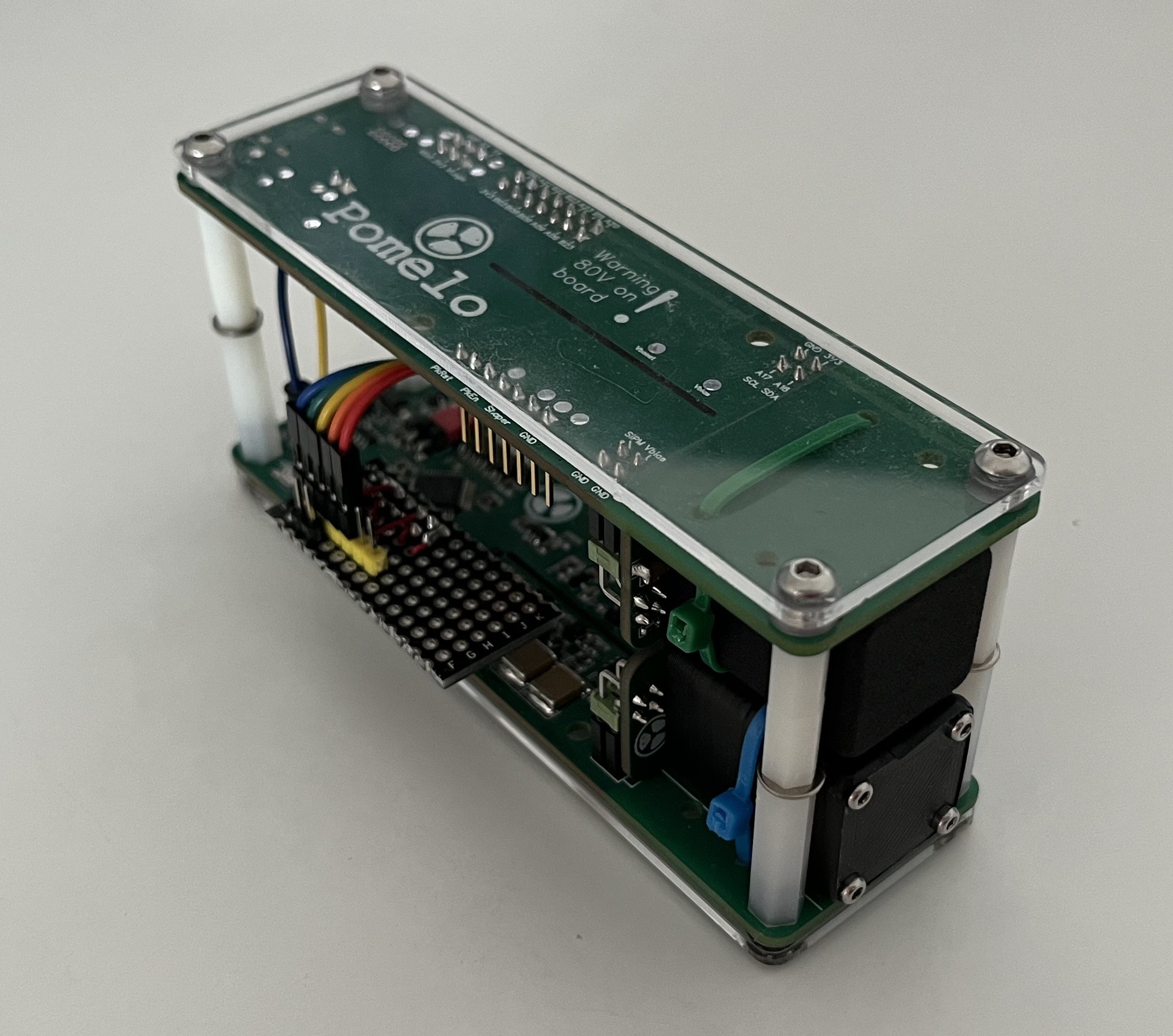
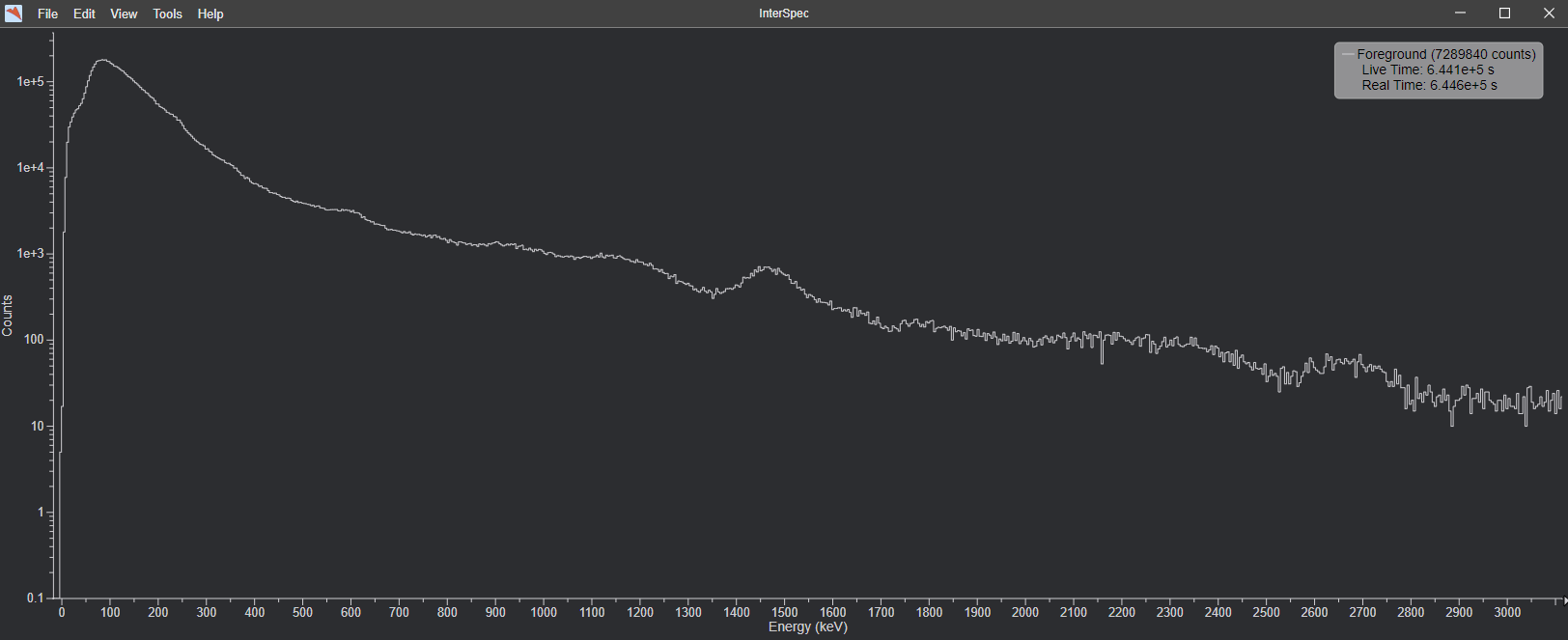
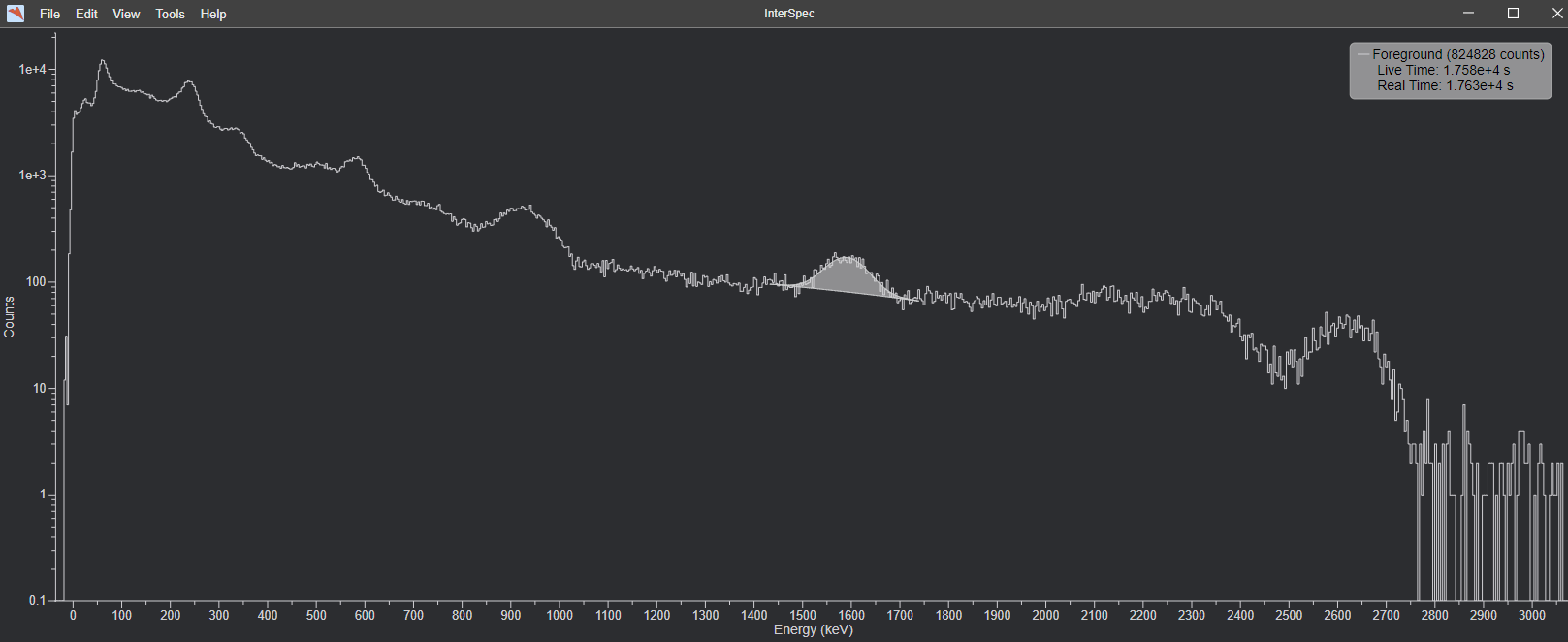
Two of the Pomelo detectors I'm working on are run in coincidence, such that they deliver a pulse output only when both fire. One of them detects gamma rays, whereas the other detects the alpha particles from an Am-241 source. The second detector is made sensitive to alphas by having the radioactive source fixed inside the scintillator housing with a clear path for the alphas to hit the scintillator.
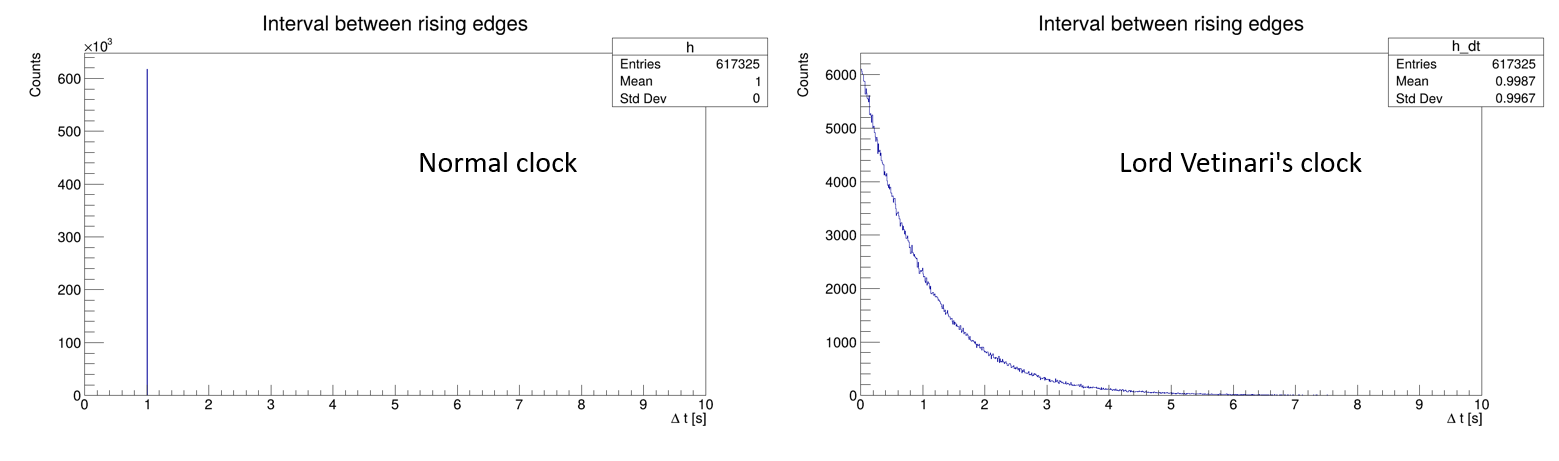
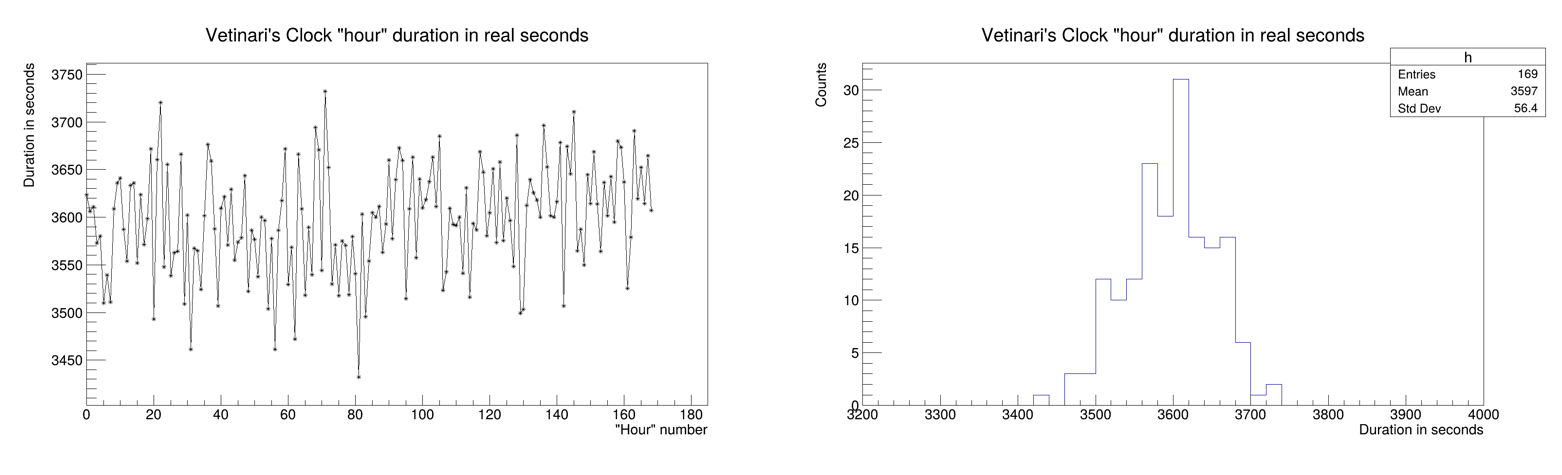
Adjusting the distance between these two detectors changes the number of gamma rays detected and in turn the coincidence rate. With some careful tuning this was brought to an average of one coincidence per second, with the characteristic exponential distribution of time intervals of radioactive decay.
This "one becquerel" pulse is then fed into an Arduino that advances the seconds on a loud clock to produce the desired functionality of Lord Vetinari's clock.
 Andy
Andy
 Dave Ehnebuske
 Sam
Sam
 alnwlsn