 hayday

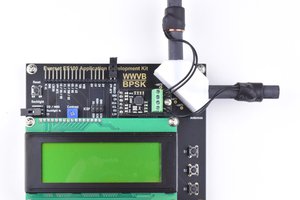
The DCF 77 receiver module receives an impulse every second. (This is sent from an antenna near Frankfurt and generated from an atomic clock.) A short pulse of 100ms is defined as a zero, 200ms a one. After one minute (max < 2 minutes), decent reception permitting, you should have collected a complete binary telegram which gives you time, date and some other info, including leap seconds and an encrypted weather forecast...
I hooked that up to the Voja with the help of a transistor and a pullup (or pulldown, I keep forgetting) resistor to invert the signal. There was a good reason for that on that day; I believe the DCF module signal level is low, and I wanted it to be high so there was less current pulled by the module. I might quite well have done the opposite, though.
Next task was getting acquainted with the Voja 4, dusting off my even back in the day very mediocre assembler (at least it must have been 16 bit, since I hacked the Wing Commander copy protection like everyone else) and whittled it down for the Voja 4.
This, in passing, led to another first: Making a pull request on GitHub! The great emulator by Tom Nardi, MS3FGX, lacked the implementation of user sync, an internal clock derived from the system clock setting a bit in a configurable interval.
(Of course, last 231.555 times I looked, that pull request wasn't yet pulled. Smart guy, probably, but hope never dies.)
The fourth picture tries to be an animated png, but that probably doesn't work for most people.
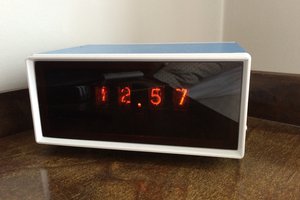
In the files is a small movie showing the badge collecting antenna bits, and switching to the time register page and showing the time when it's complete. If you tilt your head, you might recognize 18:20.
Then it's showing some rather very fast moving seconds. - I mean, it's a one hertz challenge; don't the fastest seconds win? I sure hope so.
(Okayokay, the seconds indicator was a last minute addon and isn't quite done yet I'm afraid.)
Whatever! Blinkenlights!
 Tobias Rathje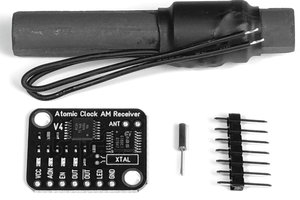
 UNIVERSAL-SOLDER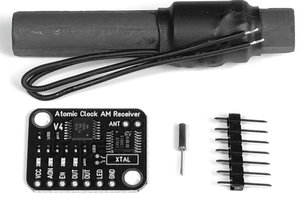
Great! Can you share the code? Thanks.