 Pedro Manuel Martín
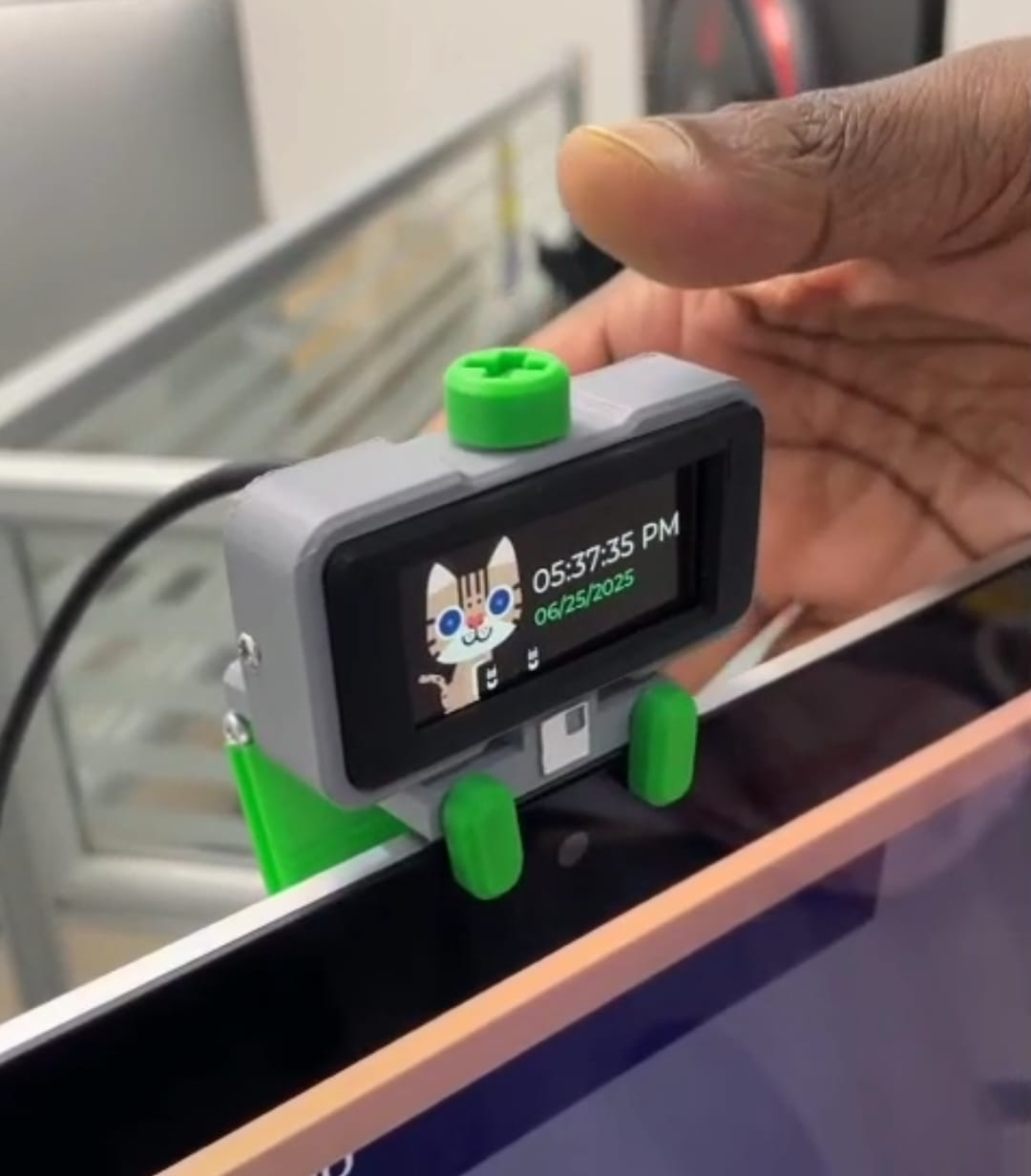
From day one, WebScreen was conceived not as a mere second screen, but as a finely engineered embedded display, built with precision and intent. It houses a powerful ESP32‑S3 microcontroller at its core, fluidly handling connectivity, processing, and control. Driving a vibrant 240 × 536 pixel AMOLED panel capable of rendering 16.7 million colors, WebScreen delivers sharp visual feedback with minimal lag and high contrast, making it ideal for notifications, IoT dashboards, and user-defined widgets.
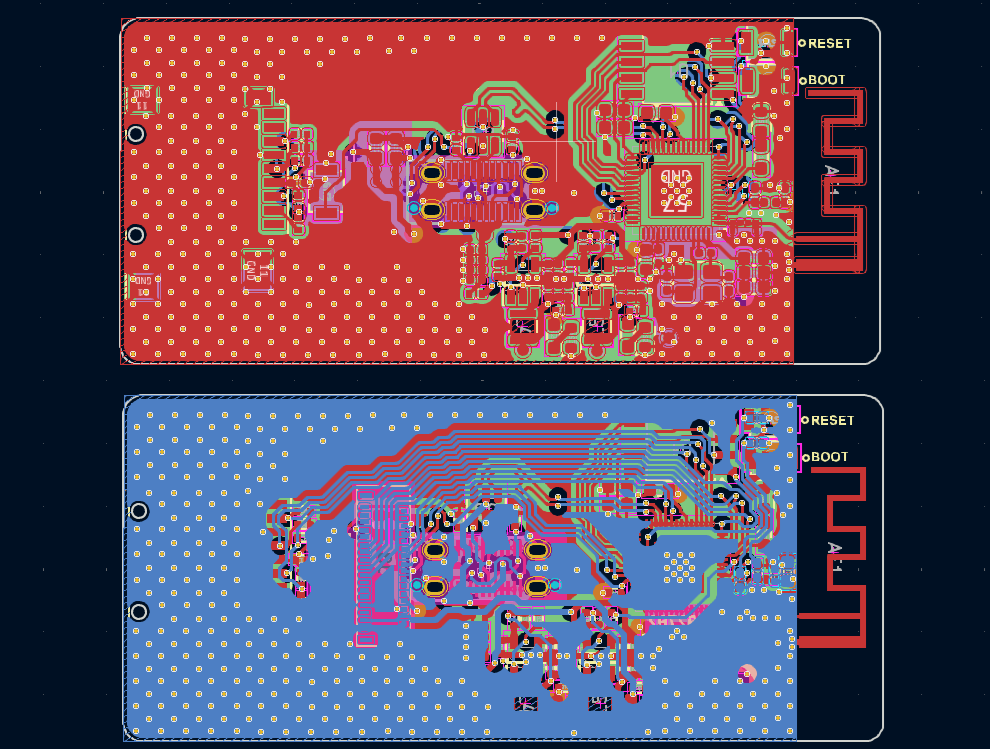
The electronics were meticulously designed with signal integrity in mind. All high-speed traces are routed with matched lengths and series termination resistors, while ground pours and decoupling capacitors help reduce RF noise generated by the ESP32‑S3. A 128 MB serial flash memory module ensures ample room to store firmware, configurations or custom JavaScript applications loaded via the microSD slot.
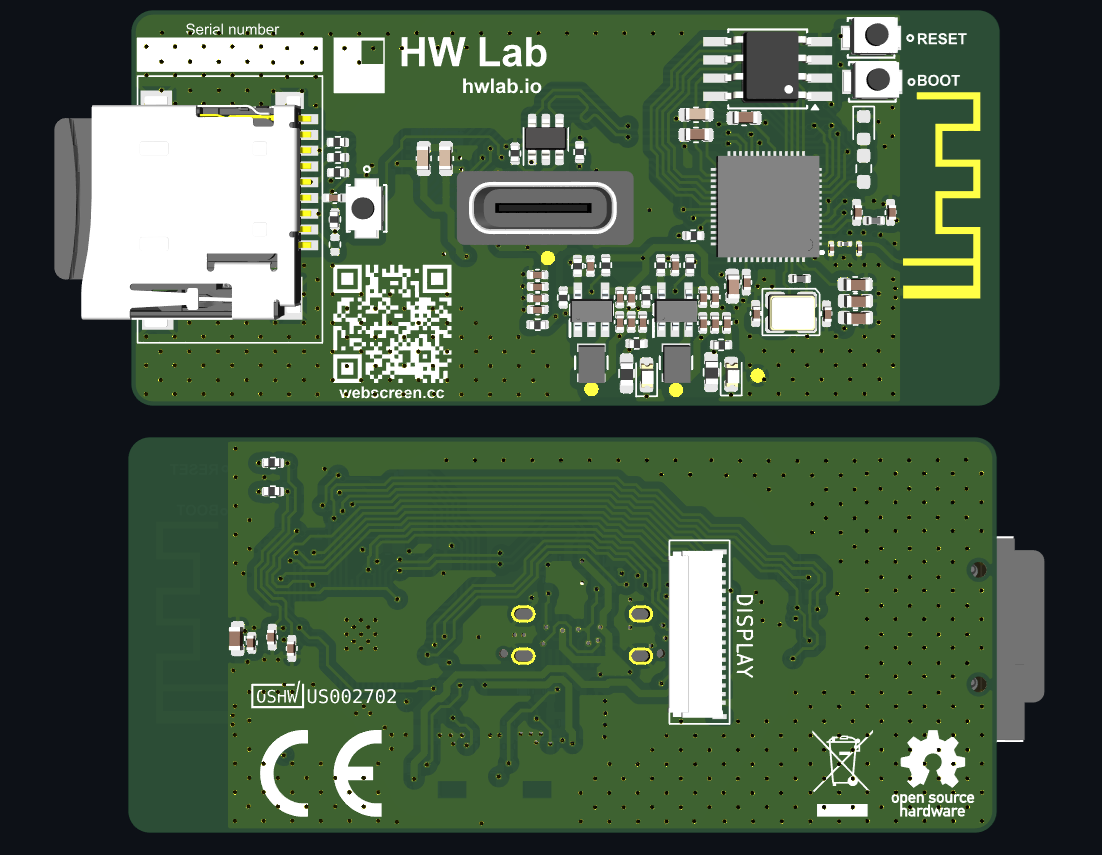
Power and configuration are handled via a USB‑C port, which also supports WebSocket-based configuration, allowing users to push updates or change settings over Wi‑Fi while maintaining a clean, reversible connector interface. Connectivity through Wi‑Fi and BLE is baked directly into the ESP32‑S3 module, facilitating seamless integration with smart home systems, desktop apps, or notification bots.
Mechanically, WebScreen measures just 74 × 80 × 53 mm and weighs a mere 53 g, reflecting a purposeful minimalist design. It snaps securely onto the top of monitors using internal clamps, and includes standard ¼‑inch threaded holes on both top and bottom surfaces—perfect for mounting a webcam or stacking multiple units.
WebScreen embraces true open source philosophy. All its design artifacts—including PCB schematics, gerbers, bill of materials, 3D-printable files, desktop companion app, and firmware—are released under MIT license, and the hardware is certified by OSHWA. This transparency enables anyone to inspect, modify, or fork the design to suit their own project vision.
Software architecture is equally flexible: scripts written in JavaScript can be placed on a microSD card and executed directly on the device—no complicated toolchain required. This lets users prototype custom dashboards, habit trackers, crypto tickers, or even minimal assistant UIs. Setup is simplified with a companion application compatible with Windows, macOS, and Linux, enabling dynamic customization without flashing firmware.
WebScreen operates reliably in environments ranging from 0 °C to 35 °C, and can withstand storage conditions between –20 °C and 45 °C. ABS enclosure materials were selected to strike a balance between durability and manufacturability, ensuring resistance to splashes and dust while allowing optional PLA-based prototyping.
This project is intended to be more than a product: it is a robust platform for community-tailored interfaces and automation. In upcoming logs, we will demonstrate use cases like connecting WebScreen to Home Assistant as a micro-dashboard node, displaying system statistics from a desktop app over WebSocket, and building a minimal streaming companion for Discord or Twitch notifications.
We invite you to inspect the GitHub repository (WebScreen PCB), (WebScreen Software), (WebScreen Enclosure), remix the hardware, craft your own JavaScript modules, and contribute improvements. Build your version or join us as we progress toward a Crowd Supply campaign. Let us know what you’d build with WebScreen.
— Pedro, HW Lab
Discussions
Become a Hackaday.io Member
Create an account to leave a comment. Already have an account? Log In.