 Alec Probst
Hello everyone!
This is a quick update about my decision on the 5V and 3.3V regulators.
Recap
Last time I mentioned a couple methods for regulating the 5V and 3.3V which were:
- LDO's
- Inefficient and doesn't work for 5V
- Buck Converters
- Efficient but lower than 5V for 5V
- Buck and Boost Converters
- Two options: Combined Buck-Boost of 5V or Boosting 3.3V after using a buck converter
- Buck-Boost Converters are the most efficient but are expensive!
- Boosting 3.3V to 5V is reasonable but inefficient!
I mentioned last time that I was planning to go with one of the Buck Booster options. However, I've changed my mind! Instead I'm going to just use Buck Converters
Reasoning
After thinking about these solutions for a while, I realized that the drop in voltage on the 5V pin when the input voltage is 5V is ok with my design choice for now. The reasons for this are:
- Design Simplicity
- It is much easier to design around two bucks of the same type with different voltages
- Cost
- It is much much cheaper to just accept the lower voltage when you compare the cost difference
- A combined Buck-Boost converter that has acceptable voltage range and amperage for what I want is close to $16!
- Current Buck solution costs less than $0.50
- Efficiency
- The dual Buck design is the most efficient conversion solution of the ones I listed
- Less wasted power here means more for the other voltages we want to play around with!
- Flexibility
- If I'm not happy with the lower than 5V Buck voltage, I will redesign it with a additional Boost converter to bring it up to a constant 5V
Conclusion
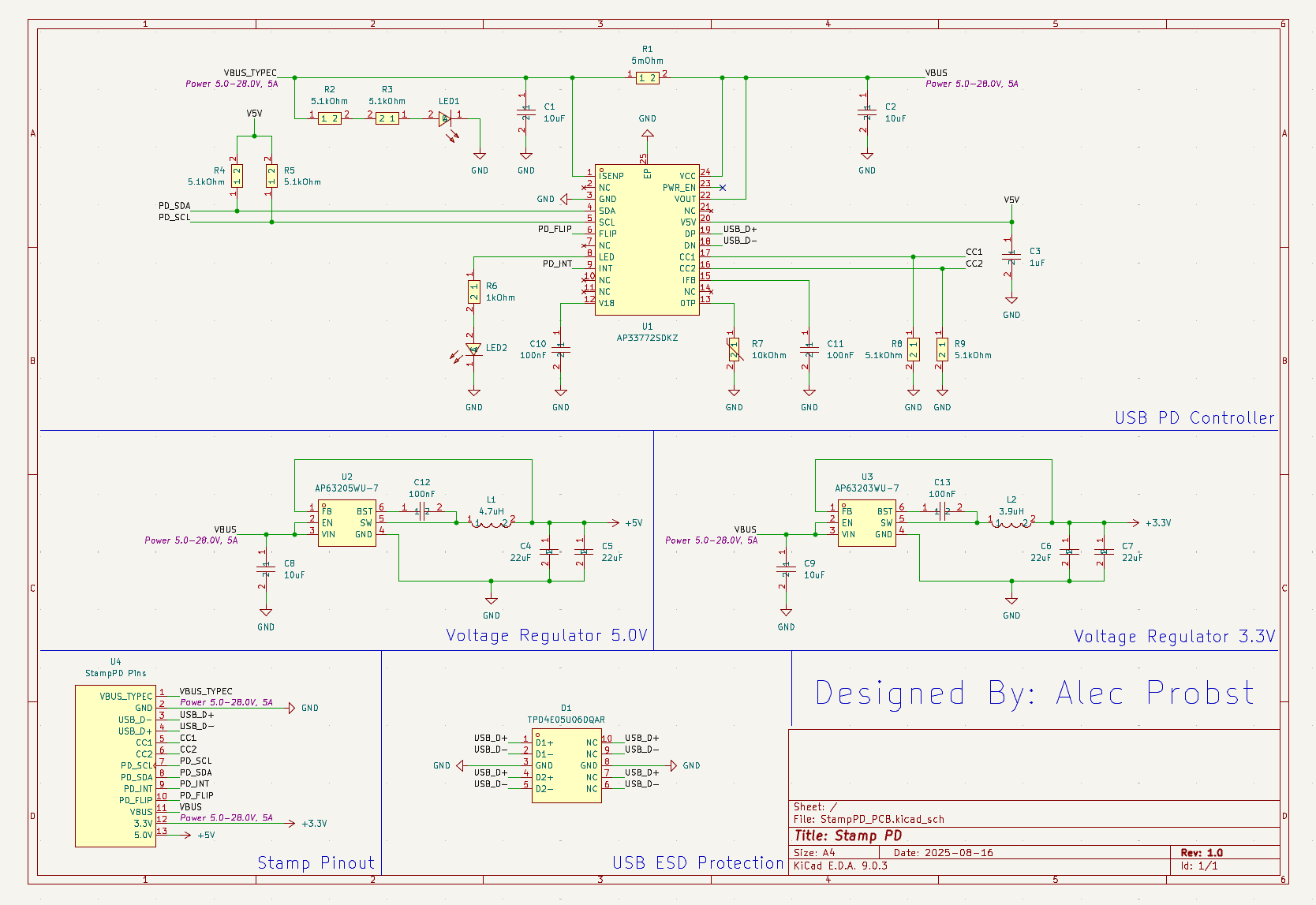
For now I think simplicity and cost are more important than sacrificing a little bit of voltage here. I plan to test the 5V rail to see how much voltage drop we get and am leaving the door open on adding a Boost converter later. As a little bit of a sneak peak for next time, here's where the current KiCAD design stands!
Discussions
Become a Hackaday.io Member
Create an account to leave a comment. Already have an account? Log In.