• XRUIOS Update: New Tech, Evangelion and Demos

    WalkerDev03/17/2026 at 01:06 0 comments

    Tools and Supporting Systems

    Alongside the core tech, I’ve created a few supporting tools:

    Keeper of Tomes – Tracks changes in directories over time, helping identify added, removed, or renamed files

    Secure Store – A cross-platform, per-session secure storage system with OS-level access control

    The XRUIOS continues to evolve as a cross-platform XR operating system and development framework focused on secure, device-agnostic communication. This update covers recent demos, new tooling, and architectural changes.

    To begin, let's look at where the XRUIOS is right now!


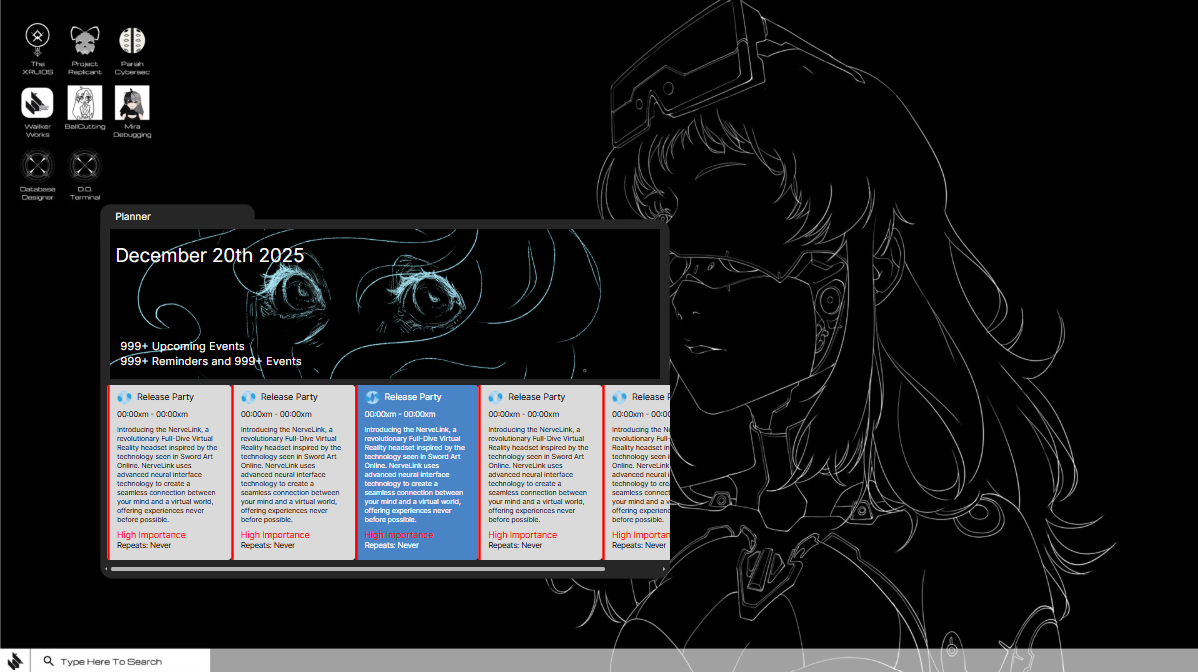
    This demo was recently presented at Future University Hakodate as part of a research publication. The main goal was to show that XR needs a real purpose beyond just looking cool; something that actually makes people want to use it. The Evangelion-inspired theme isn’t fully complete yet, but it helped visualize the direction I’m going in.

    On the development side, I’ll be moving away from Unity and switching to Stride. Unity was mainly used for the demo due to time constraints, but Stride gives me more control and fits better with the long-term vision.


    CORE CONCEPTS

    I’ve also been building out the foundation of XRUIOS with a few key components:

    XRUIOS.Barebones

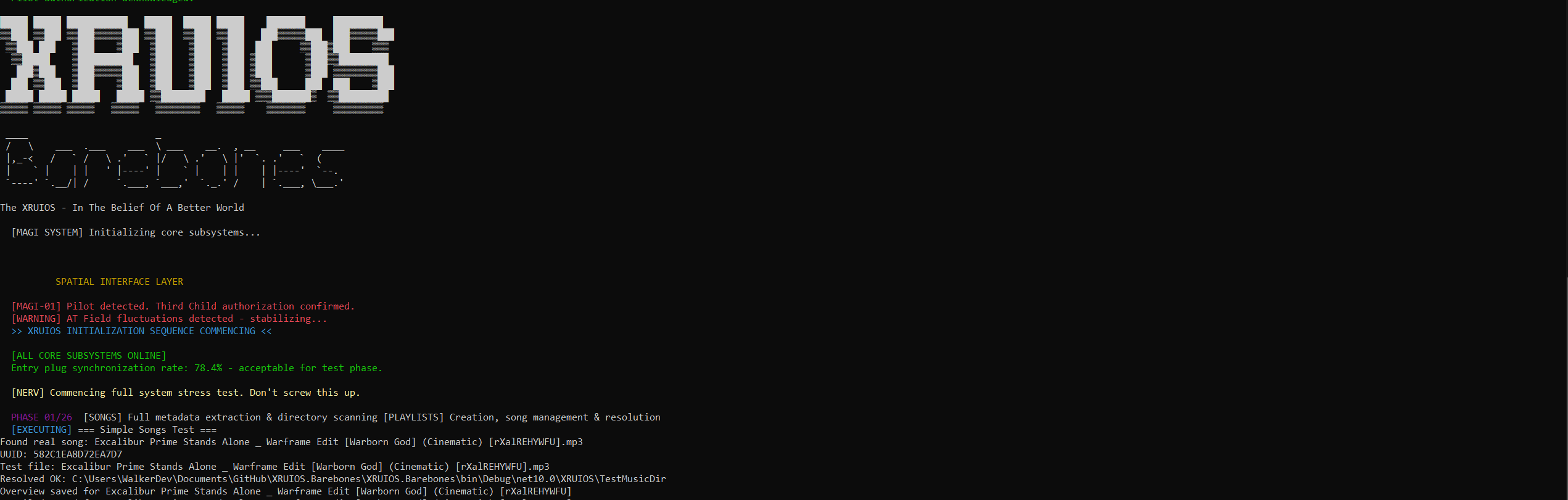
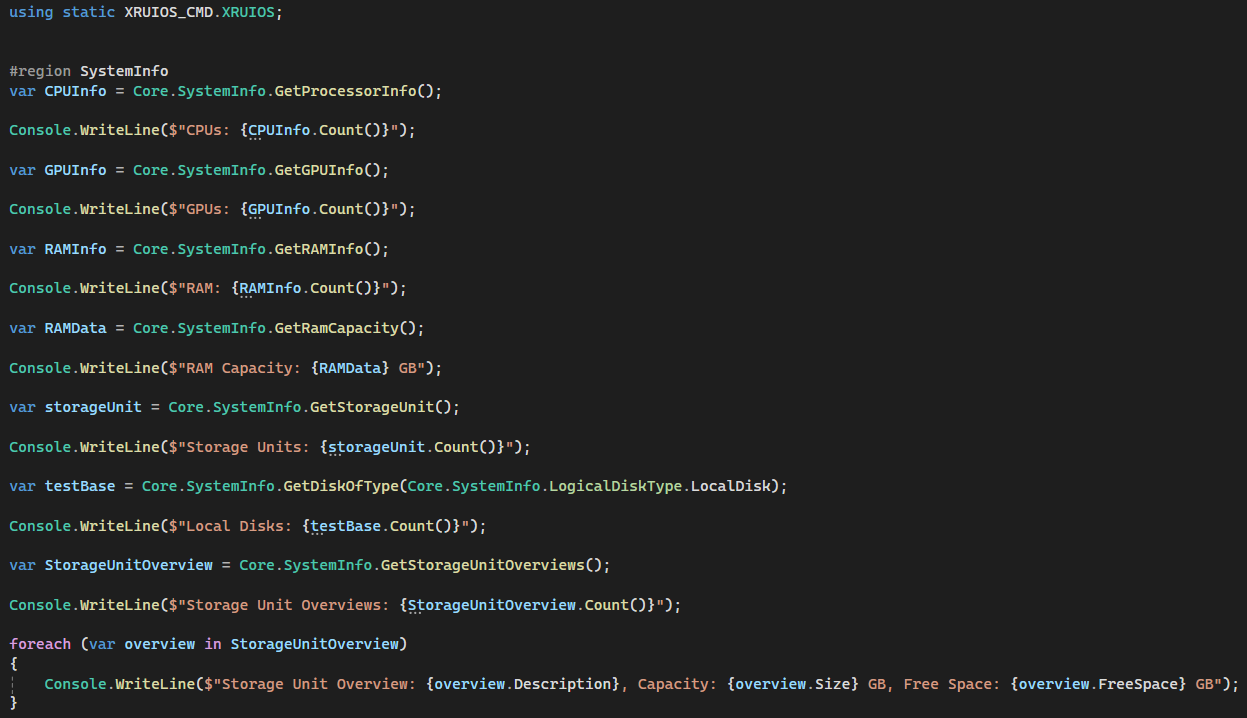
    This is a growing library (400+ functions so far) that standardizes how devices communicate and share data. The idea is to have a consistent base across different operating systems, making cross-device interaction much easier. There’s also a simple CMD test in the project if you want to see it in action.

    https://github.com/Walker-Industries-RnD/XRUIOS.Barebones

    I highly suggest reading the readme on the page, there is a lot of information there, especially on Yuuko Protocol!

    Beyond this, there is also a version of the XRUIOS which runs the XRUIOS with Unity + The Dirac!

    https://github.com/Walker-Industries-RnD/XRUIOS.Unity

    Finally, a version exists as well which uses the Dirac alone!

    https://github.com/Walker-Industries-RnD/XRUIOS.Dirac

    Eclipse’s Sea of Dirac (Dirac)

    Dirac is a C# library that allows different programs to securely communicate with each other. It’s designed to simplify and replace a large portion of Plague’s Protocol, while making the system easier to scale by splitting functionality into separate workers.

    You can learn more below;
    https://github.com/Walker-Industries-RnD/Eclipse/tree/main/EclipseProject

    Yuuko Protocol

    This will be split into its own repository soon, but I want to finish proper documentation first. It builds on top of Dirac to handle higher-level communication between systems.

    This will be located at
    https://github.com/Walker-Industries-RnD/YuukoProtocol

    Tools and Supporting Systems

    Alongside the core tech, I’ve created a few supporting tools:

    • Keeper of Tomes – Tracks changes in directories over time, helping identify added, removed, or renamed files WITHOUT needing a constant listener

    https://github.com/Walker-Industries-RnD/Keeper-Of-Tomes

    and

    • Secure Store – A cross-platform, per-session secure storage system with OS-level access control

    Keeper Of Tomes - Can take a screenshot of a directory and compare since last time to estimate added, deleted and renamed files

    https://github.com/Walker-Industries-RnD/Secure-Store

    Modding System (HangarBay)

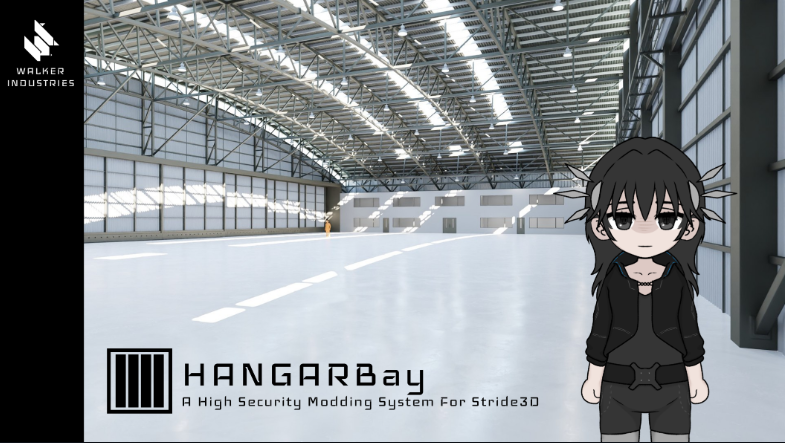
    I also developed HangarBay, a modding system for Stride3D. It supports multiple mod types, includes encryption and signature verification, and handles both assets and code in a unified way. The goal is to make modding powerful without sacrificing security.

    https://github.com/Walker-Industries-RnD/Hangar-Bay

    That’s where things are right now. There’s still a lot more coming, especially around documentation and refining the overall architecture, but the foundation is starting to come together!

  • XRUIOS Basics

    WalkerDev12/11/2025 at 14:35 0 comments

    Releasing two libraries for the XRUIOS!

    🔒 Secure Store: A tiny, cross-platform, per-user key/value store designed for simplicity and security. Perfect for developers needing lightweight, reliable data persistence without the bloat.

    🛡️ Plagues Protocol: A zero-trust, fully local RPC system that handles privileged operations. It splits every task into isolated, self-verifying workers—built to be PQC (Post-Quantum Cryptography) resistant for future-proof protection.

    Secure Store: https://lnkd.in/ek3ijq5A
    Plagues Protocol: https://lnkd.in/eeuTJxPt

    A XRUIOS Github will be online soon!

    No alternative text description for this image

    No alternative text description for this image

  • So What "Is" The XRUIOS?

    WalkerDev08/15/2025 at 15:25 0 comments

    The XRUIOS is (In short) one of my longest endeavors, originally starting out as a small concept; that concept? Being able to use UIs in 3D but in a way that adds value to our everyday lives. 

    This is an idea I had years ago, but it only recently culminated in a prototype I was developing and close to releasing! That is, until the SSD it was on died.

    This led to me asking how I could increase the quality of the project and what I could do differently. At this time, I built the UIs within Unity and had the backend API built atop Unity as well.

    However, what if I didn't need Unity? What if I could instead work atop the base system itself? What if the XRUIOS could do more not just for headsets but ubiquitous computing in general? What if you weren't limited to an OS?


    What if I didn't even need a display?

    And thus the new XRUIOS was born!


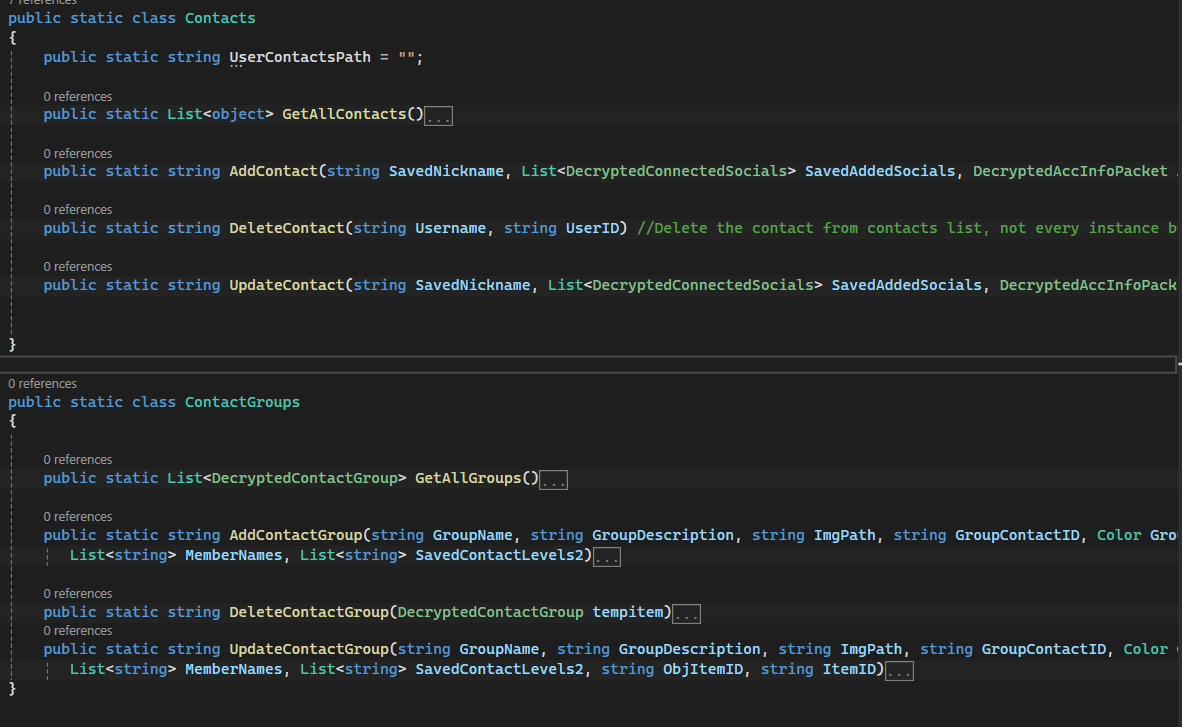
    First off is the base layer; this handles both abstraction and data handling; for example, in some cases the program focuses on ensuring data returned is the same between operating systems.

    At other times, it handles custom data types

    All of this will later be local APIs with IOT capability! In general, calling on these in one platform means you will get the same data structure elsewhere (AKA they're all Cross Platform)!

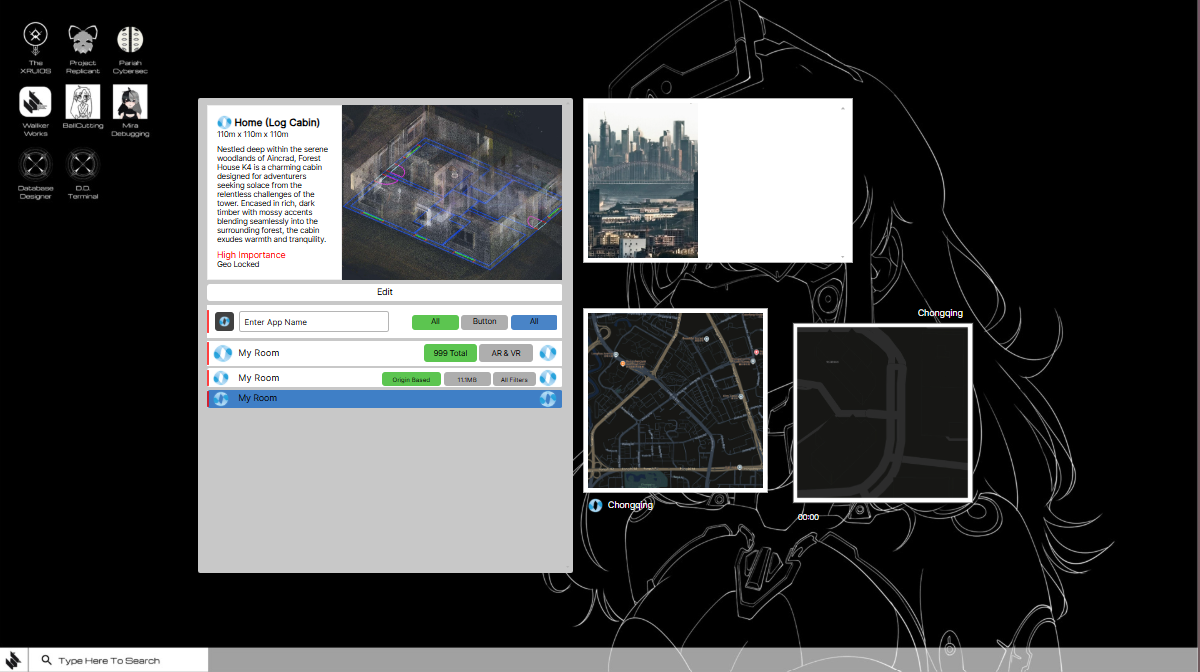
    Next is the application layer; this is how you actually use the XRUIOS! For example, the main application usage of the XRUIOS on my end is through a Linux Distro (Called the XRUIOS (for now)) that runs a software suite I made!


    *Area Manager


    *Planner UI

    This realistically can be as simple or advanced as you want; you can decide to use apps, terminal prompts, an LED matrix and anything else you can think of! You can also go the headless route if you prefer that as well.

    Finally, there is the Renderer (AKA what I have touched the least so far)! This handles rendering the apps in 3D, while having apps exclusive to the renderer as well! I'm hoping to focus on this more with Stride3D in the upcoming weeks!

    All in all, this is meant to be open source and free to use!