 Daniel Balsom
New 386EX boards have arrived from OSH Park.
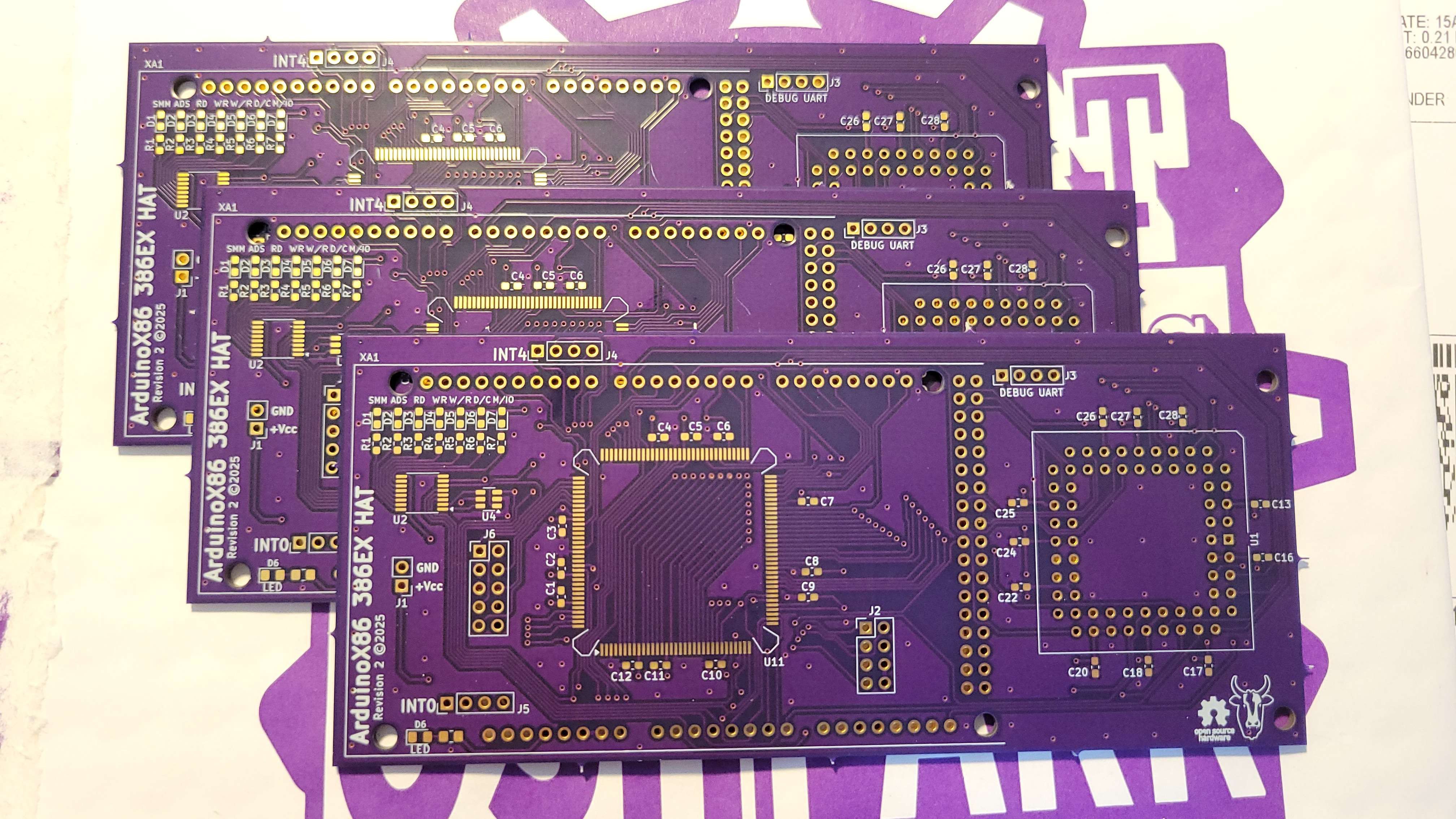
These add the SMI and SMIACT pin connections needed to capture the internal register state for test generation that I had to bodge in on the previous board. While I was at it, I ran headers for the 386EX's JTAG port, asynchronous serial port 0, and external interrupt lines 0-7.
And of course, I've added some bus-status blinkenlights. Gotta have blinkenlights.
The biggest addition is a PLCC68 footprint for adding a 387SX FPU. The 387SX was never advertised as a static core, but it is a CHMOS design - will it function at 150KHz? I guess we'll find out!
I'm using some small 386EX Single Board Computers as CPU donors.
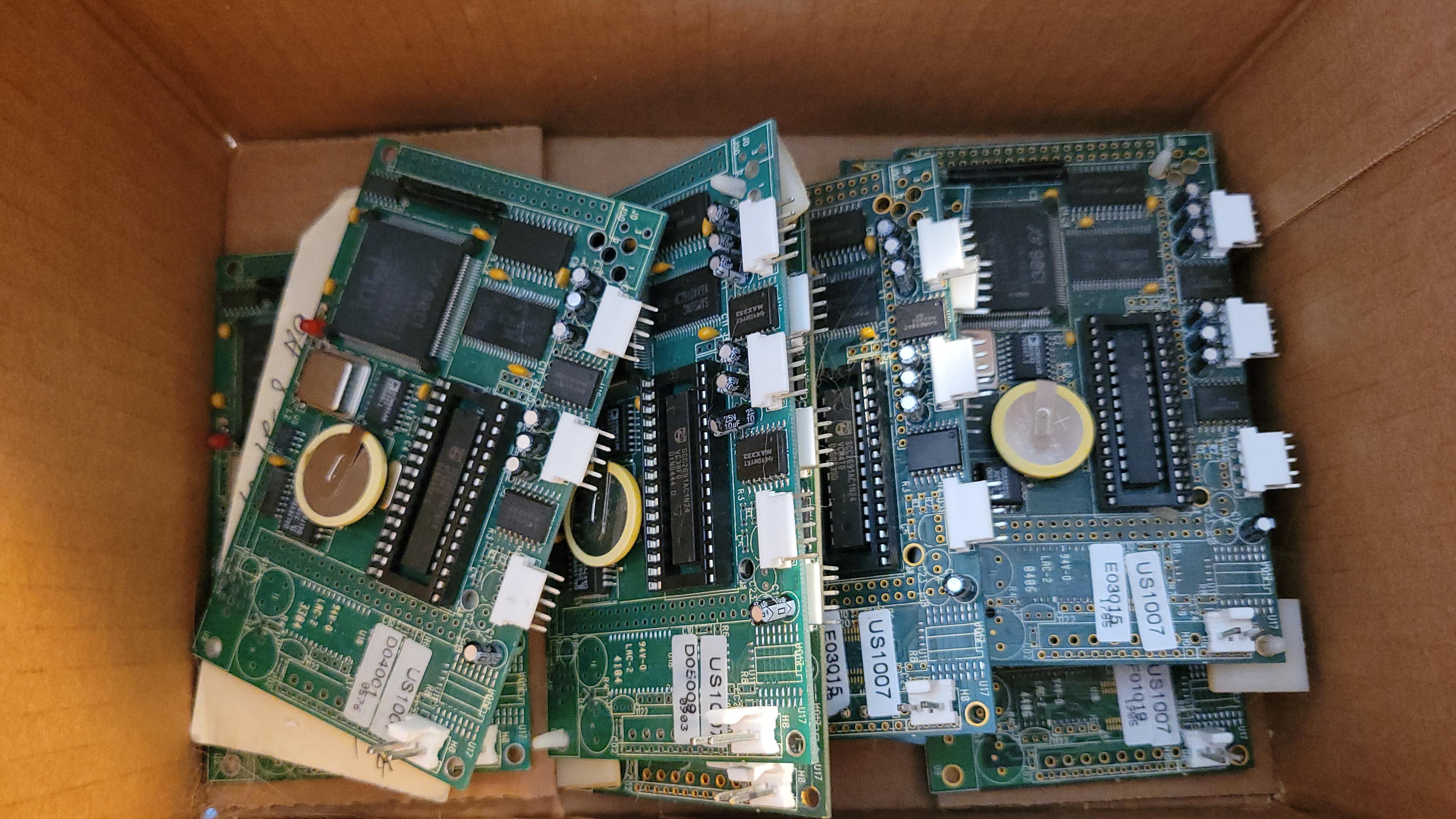
These are i386-Engine-M boards from Tern, Inc. They lived their previous lives as serial interface boards in gambling machines. 386EX's aren't exactly growing on trees these days, so when I had the opportunity to acquire the lot I jumped on it.
Getting the CPUs off is a simple matter of applying hot air for about five minutes until the PCB is hot enough to melt the solder itself. Patience is key.
Meanwhile, progress on the GUI for ArduinoX86 continues.
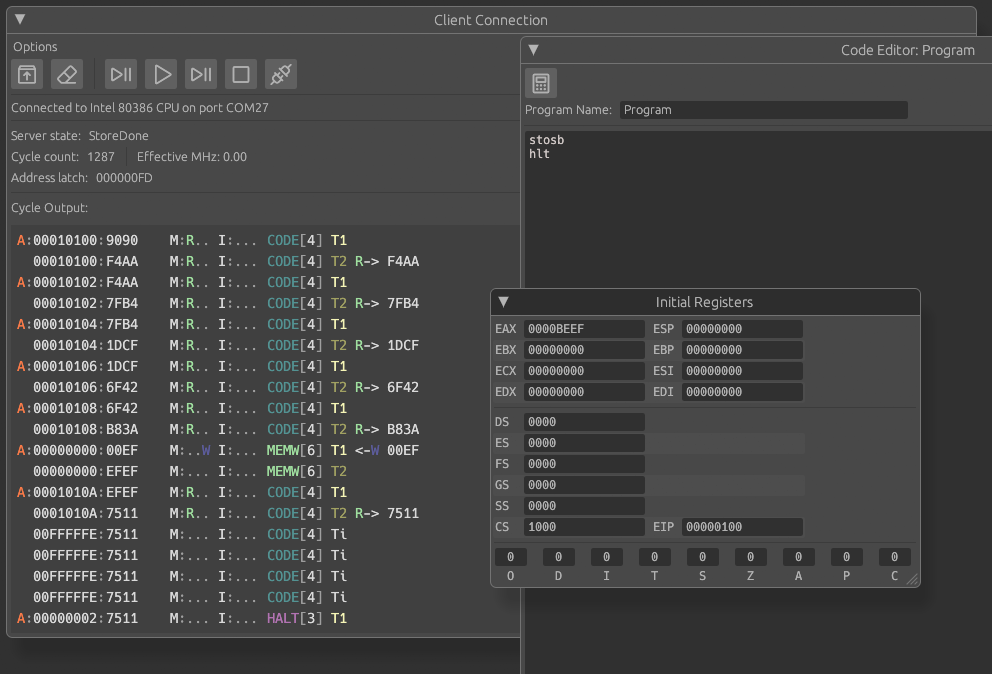
We can assemble x86 programs in NASM-syntax, set up a desired initial register state, then execute the code on the 386EX and receive traces showing each cycle of execution and all bus activity.
It would be really cool to be able to add floating-point instructions to our repertoire.
Discussions
Become a Hackaday.io Member
Create an account to leave a comment. Already have an account? Log In.