 Benny Cheung
As a project focused on integrating the flexibility of electronics prototyping platforms with real-world deployment, the selection of a casing is crucial, as it determines the overall form factor of the entire system.
Some prototyping platforms do provide enclosures, such as the RAK Wireless WisBlock platform. Although these enclosure systems offer various mounting methods, they are not always user-friendly. For example, a temperature sensor may not be able to measure ambient temperature accurately, and buttons cannot be accessed by the user without opening the enclosure. For other electronics prototyping platforms, casings are less of a priority, such as the MIKROE Click board system or Digilent Pmod. These systems support boards of varying sizes, making it very difficult to design a universal casing that can accommodate all potential modules. There have also been some attempts to address both the development platform and casing needs. I came across TinkerForge, which is a solid system, but I believe I can improve upon it by offering a better case design at a lower cost.
DIN rails have always appealed to me greatly. They seem highly versatile for a wide range of electrical applications. I think most of us are familiar with the circuit breaker form factor. In my view, it's an excellent starting point, as it satisfies the following requirements: user interaction, a pre-existing form factor, and expandability. Let me explain further below.
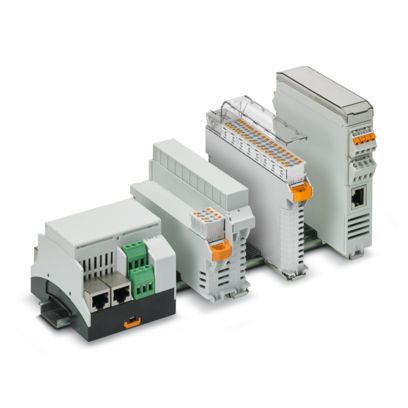
User interaction is key. From LED indicators to buttons, users often require various physical interactions to check the device's status and control it (without relying on the internet, which I consider especially important). The front cover allows users to interact with the device and retrieve useful information.
This form factor also enables the use of circuit breaker enclosures, which saves a lot of time in sourcing the right casing. Most users are familiar with it, and it's commonly available at an affordable price. The wide array of auxiliary components and modules provides great flexibility for different applications. Users can also plug in multiple modules to scale up their systems as needed.
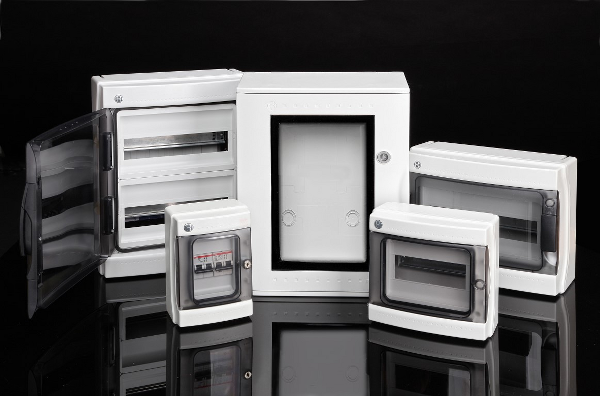
Wrapping things up, going with DIN rail casings—like the ones from Phoenix Contact—feels like the sweet spot for this Modular Micro PLC. It mixes modularity, easy access for users, and solid real-world setup without all the hassle of custom boxes. This way, we get something expandable, familiar, and tough enough for the field. Can't wait to whip up some prototypes and show off the early designs—keep an eye out for how it all ties in with the connectors and modules we've chatted about. What do you reckon? Got any ideas for tweaks or other form factors? Hit me with your thoughts!
Discussions
Become a Hackaday.io Member
Create an account to leave a comment. Already have an account? Log In.