 DeepSOIC
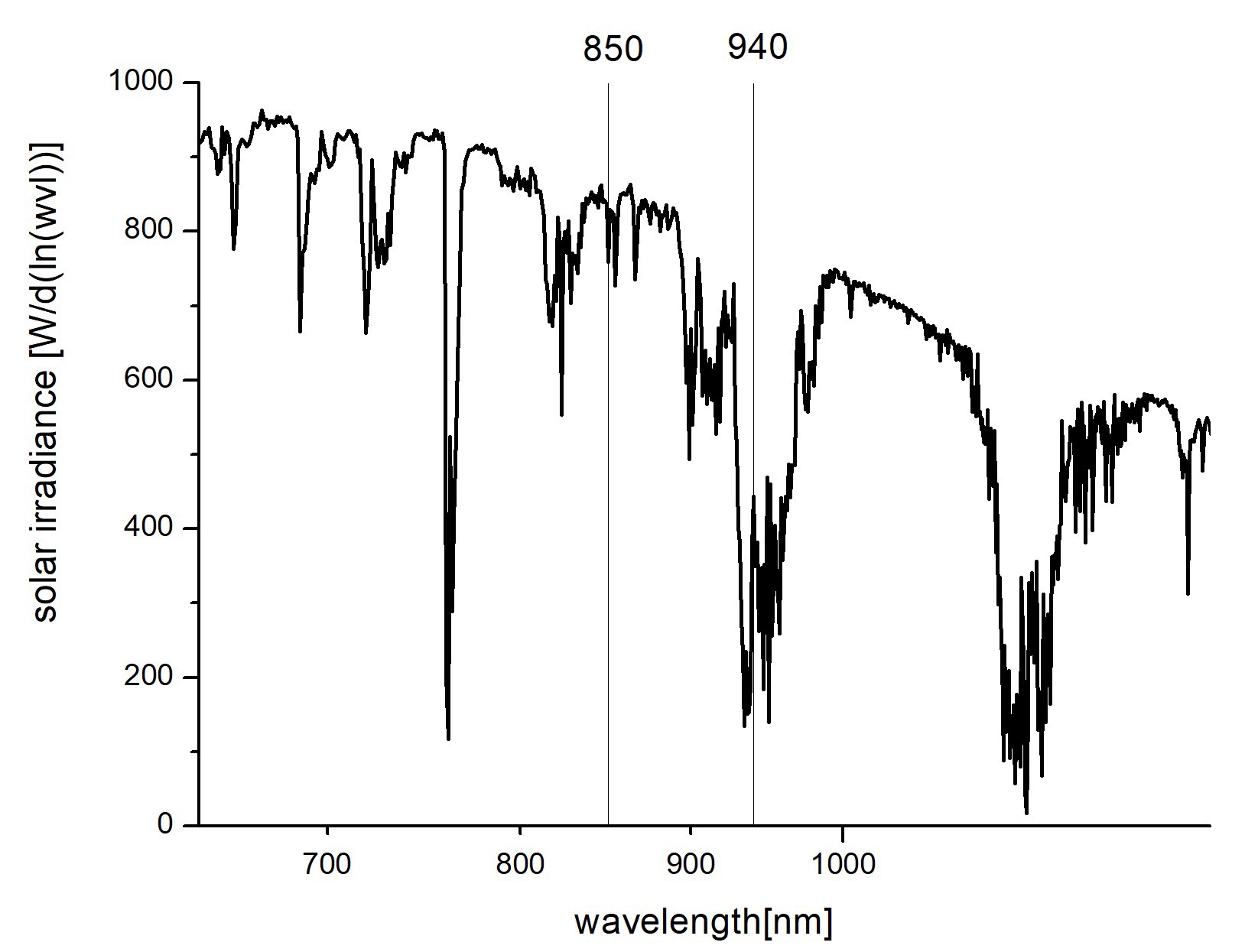
We have recently decided to switch our bee tracking system from 850nm to 940nm. The main advantage of 940 nm is that there is about 3 times less daylight there, due to atmospheric absorption.
I've chosen VSMA1094400 because it is rated to 5A pulse current, and it is also slightly smaller than the previously used SFH4715, so these can be packed tighter on a pcb.
This time, i've recorded the overcurrent test on video.
The results are, the LED has failed while i was raising the current from 10 A to 12 A. This time i was using 100us-long pulses (because that is set to be the safety limit in the driver board, so that the leds are not blown if the camera exposure is set too long by accident). This is more than twice as long as i was testing the old LEDs at. So i conclude that the new LEDs have basically the same peak current capability as the old ones, despite being rated to higher currents by the manufacturer. And i've decided to run the new lights at the same 5-6A to each LED.
The lights did survive the day of test flights, and we were able to successfully chase an asian hornet with our drone (after a few failed attempts though). The lights remained on (pulsing 50 us / 10 ms, as they normally do) for the following night by accident. Nothing failed, except that the lights have unglued themselves (they seem to be running a bit hotter than the old 850nm ones).
The oscilloscope trace has an interesting feature when the LED was about to fail.
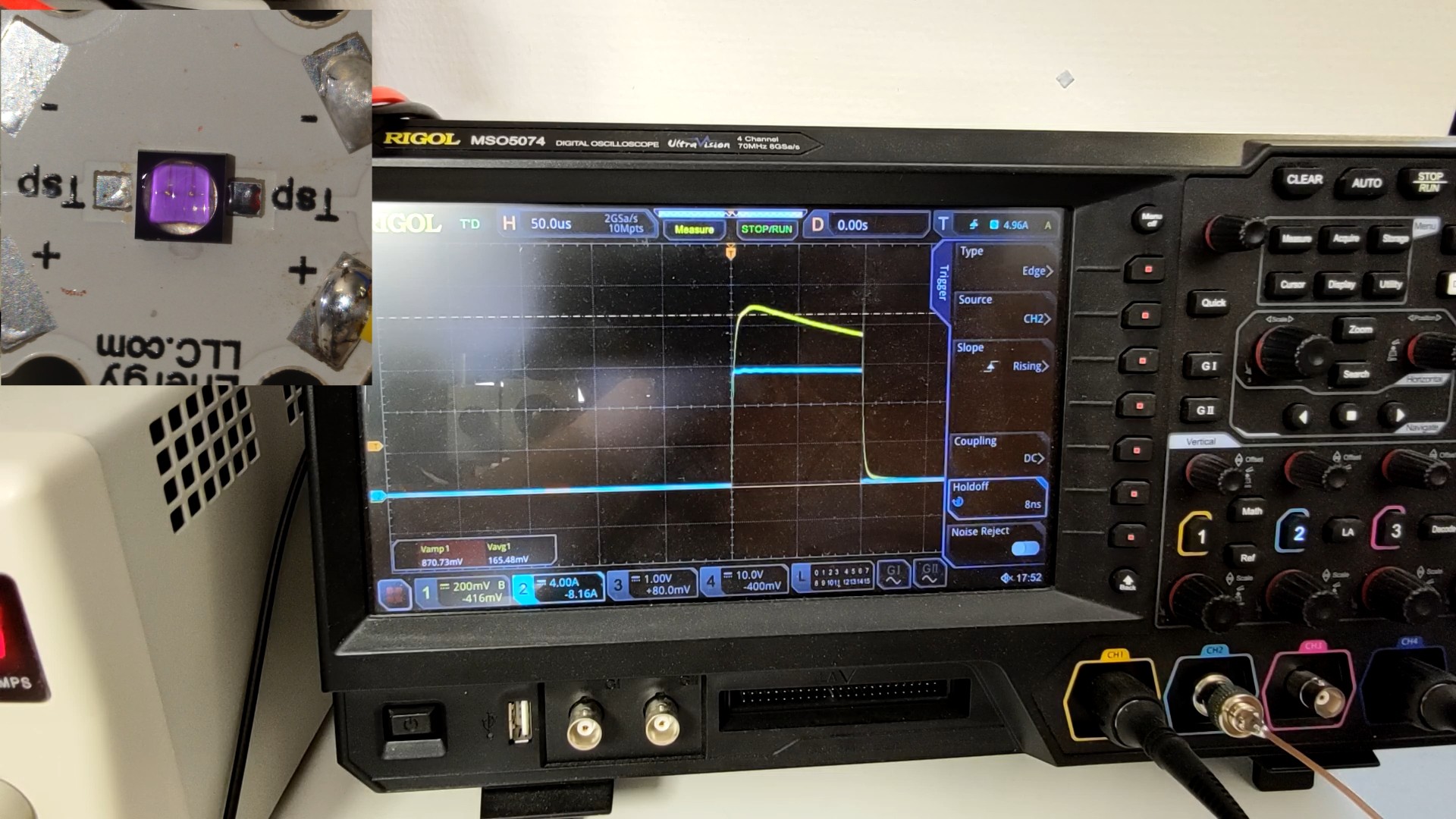
The blue trace is current, the yellow trace is light output.
Note how the light output is decreasing significantly during the course of the pulse. I suppose it is the junction getting extremely hot, which reduces the quantum yield of emission. If that is the case, i can estimate the junction temperature from this drop. This drop is about to 84% of initial, so by the plot from the datasheet, the junction temperature at the end of the pulse is approximately 110 degC.
Discussions
Become a Hackaday.io Member
Create an account to leave a comment. Already have an account? Log In.