 Alex Xia
Efficiency Tests
Making a portable device this small comes down to conversion efficiency. Two output channels of 100W crammed within the size of a credit-card, and possibly powered by a powerbank... let's put it this way: it better be efficient. Excessive heat beyond passive cooling capabilities, or the rapid drainage of a battery as a power source are problems to be mitigated.

The setup for efficiency tests. I've tried various loads, including a single RPI-PICO 2040, 22R and 10R resistors, Peltier modules, different motor loads, and random circuits. The input power is measured by means of a USB-C tester, while the output is measured internally by the power supply, and confirmed via an external multimeter.
Multimeter in the Wild
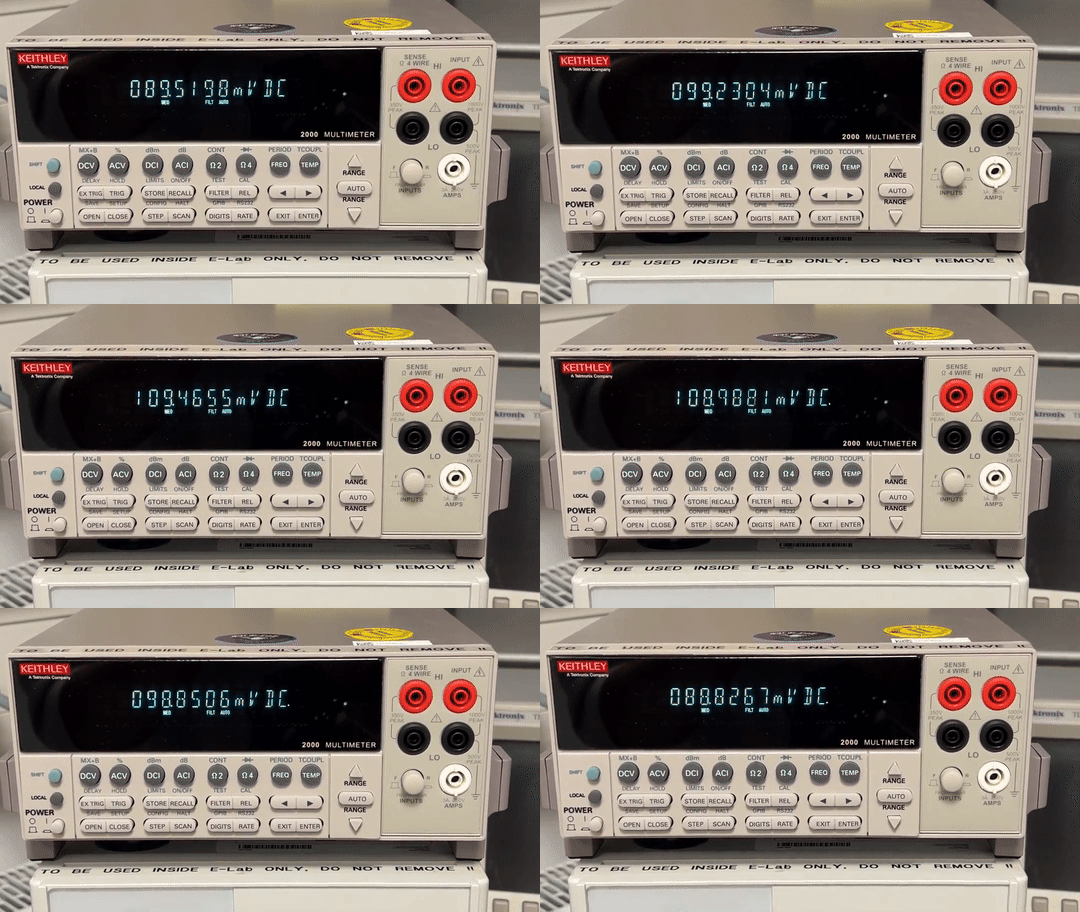
A Keithley 2000 in the ELAB at DESY particle accelerator. Hamburg, Germany. I had a short chance to take a few measurements with it...
Now, with 6 and 1/2 digits acquired, let's move on to some actual testing. Its (surprisingly) loud fan accompanies the tests hereafter.
Four-Wire Measurements
Now, I'll be the first to say, the experimental setup composed of more than four wires. Many sets of four-wire Kelvin connections, for that matter.
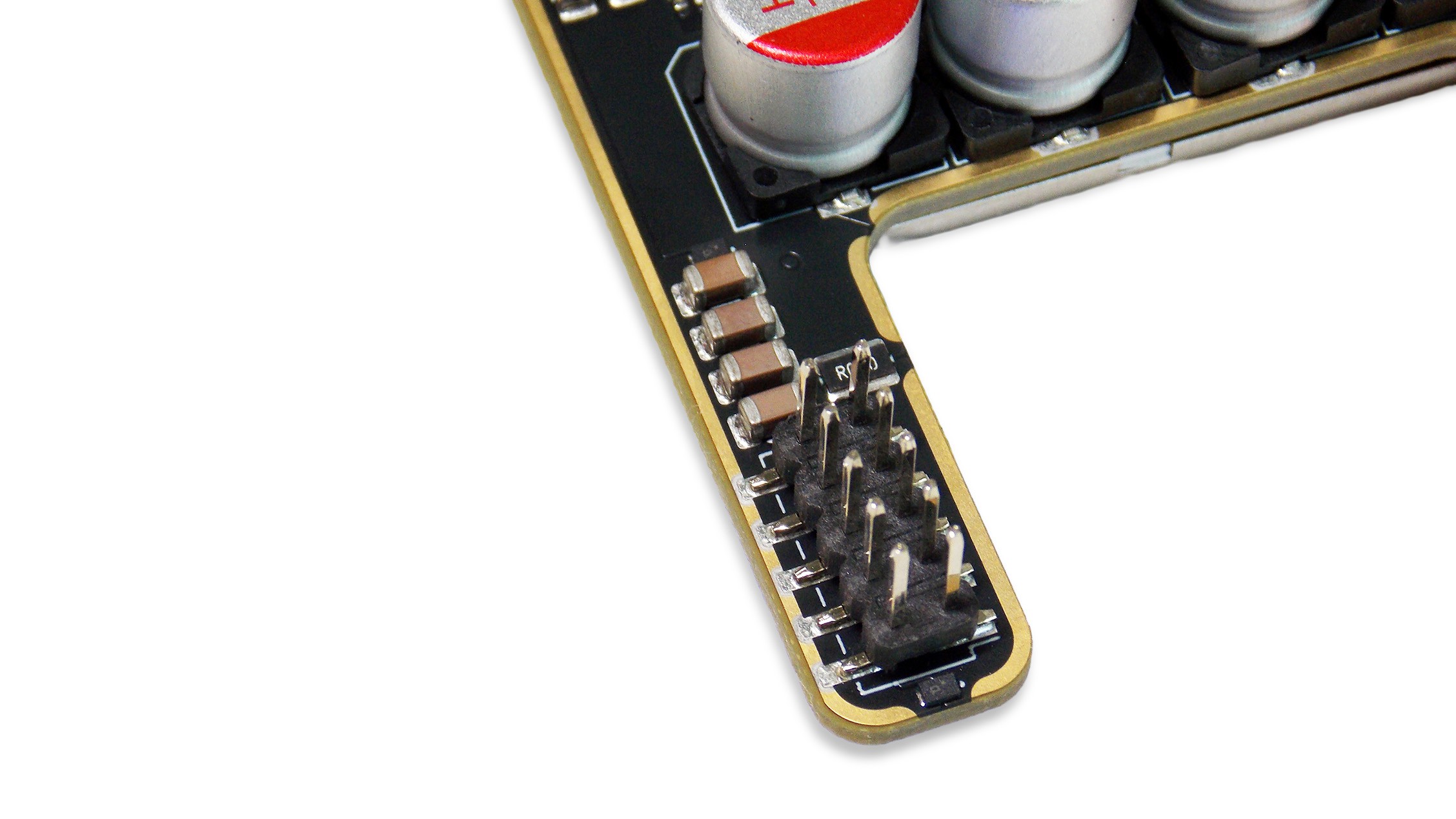
The connector of ProtoV to the breadboard. Next to the four ceramic capacitors is the internal current measurement shunt for one channel, placed as close as possible to the output connector, and sampled via a 4-wire Kelvin connection.
The 2x5 pin headers are designed to plug directly into the power rails of standard breadboards, and inject power directly into them.
Some Preliminary Results
With different loads attached (<1W) to the output, and measuring both the input and output power, voltage and current, I can do a little graphing.
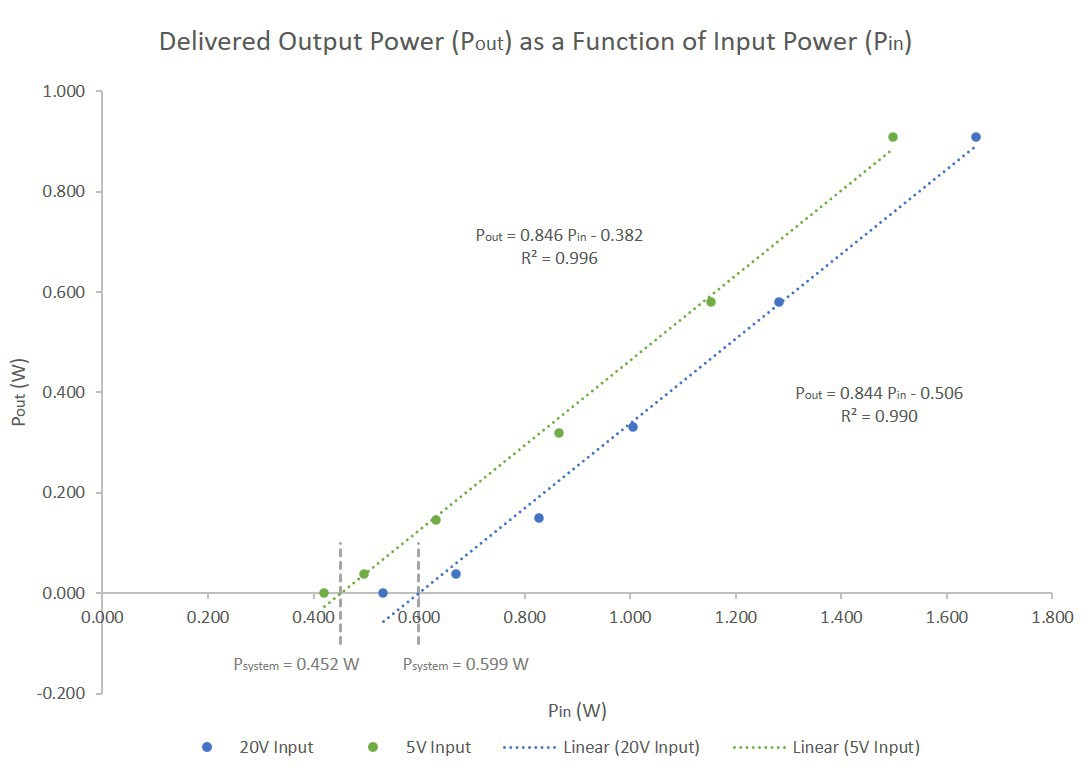
Fig. 1. Delivered output power to the load as a function of USB Type-C Power Delivery input power supplied by a standard 100W phone charger.
Pretty neat, and pretty linear. 84.6% efficiency at a 5V input; 84.4%, 20V. Calculating the x-intercept yields the minimum power required for the MCU, display, and control systems to run. Pretty happy with <1W consumption for those, considering the MCU needs to run a whole power supply system, and its user interface.
Higher power tests will definitely come after. I've just gotten around to get it to output 24.918W at 11.995V output, and 27.06W USB Type-C at 19.53V input, as a short test. (That's the values shown on the first image of this update.) Subtracting the 0.599W needed at 20V to run the system, and dividing yiels 94.2% efficiency! That's not too bad at all. Definitely, I'll need to get a variable electronic load to sweep through a range of output powers to test further.
Next Up
More data coming soon: thermal behavior, ripple measurements, and dynamic response. Also, some explanations relating to switching architecture, power sequencing, and software reliability notes.
Take a look at the Github for more details about the design, and please do sign up for launch updates on CrowdSupply!
- Alex Xia
Discussions
Become a Hackaday.io Member
Create an account to leave a comment. Already have an account? Log In.