 Marco
MarcoDescription
With the purpose of having a common core on which to base different projects inside the Sushi IoT firmware, I worked on the Sushi Board.
This board performs a simple, basic connection to different components that are usually built on a breadboard.
The idea is to share the hardware and then work on specific projects that will also be shared here.
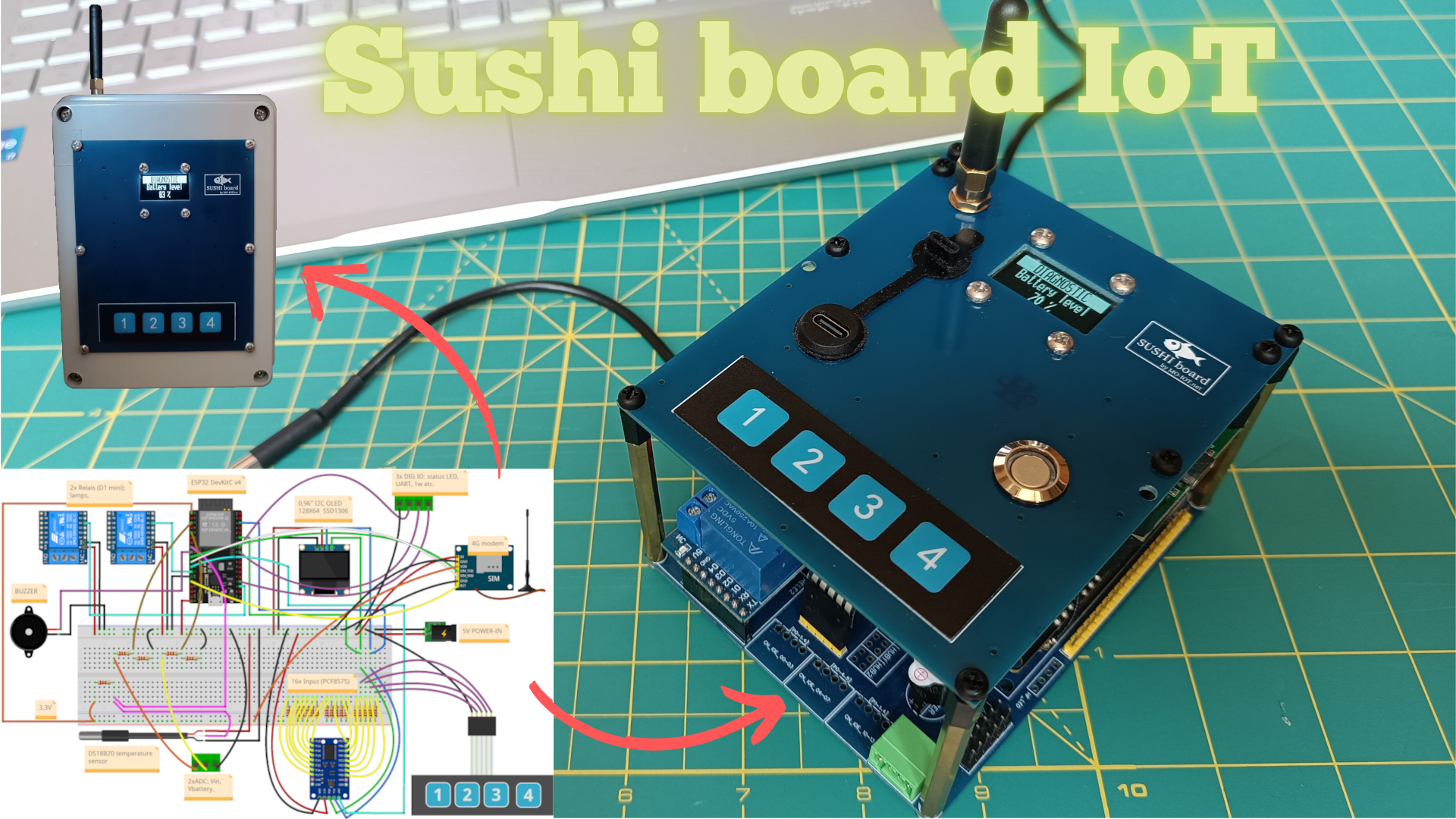
Sushi Board is an ESP32-based programmable modular embedded system for general-purpose IoT, suitable for STEM education and DIY electronics projects.
100% based on widely available commercial modules, making it cost-effective and easy to source.
For MAKERs
- A carrier board that connect all the essential components needed to create a complete IoT unit, suitable for various applications, minimizing the complexity of assembling different components and boards without requiring extensive soldering or wiring.
- Only the CPU is mandatory; then you simply plug in the modules you need for your specific purposes.
For students and educational purposes
- Sushi Board offers a modular system that can be shared across multiple projects, from simple setups to more complex, DIY electronics systems.
- It’s not just for desk experiments; you can build something practical and functional.
Advantages
- Based on ESP32 SoC: a reliable choice in the IoT field. You have access to a powerful ecosystem with numerous resources available online.
- 100% based on very common commercial modules widely available online for Arduino and DIY electronics projects. Sushi board just help you connect them all together.
- You can code with your favourite compiler : Arduino, microPython (even without a PC), Scratch, ESP-IDF, etc.
- Open source hardware: both the CPU module and the Sushi Board come with wiring diagrams provided.
Applications
- Generic IoT & sensors educational experiment
- Fast prototyping
- Home automation systems
- IoT central units
- Alarm systems
- Domotics servers
- Remote monitoring and data sampling systems (example weather centrals)
- Local and remote devices control (by local user interface, web interface, modem interface)
Hardware features
All the ingredients that are needed for a myriad of applications:
- ESP32-DevKitC V4
- 16x digital GPIN
- 2x Relay OUT (10A 250V AC)
- 5x digital direct GPIO, 1 x GPO , 2 x GPI (LEDs, extra UART, etc.)
- Physical keyboard
- OLED Display
- Connectivity: Wi-Fi, Bluetooth, modem 2G/3G/4G, UART, I2C
- Power supply modes: 5V (USB adapter or wired) ; Battery only ; 5V + backup battery (for when grid power is missing)
- Backup battery
- Power status and battery level acquisition
- Buzzer for audio alerts
- Temperature sensor
- Size: 90x110 mm (both carrier and TOP boards)
Hardware guide and schematics
https://github.com/sushi-iot/sushi-iot-board
Example & projects
https://github.com/sushi-iot/sushipython/tree/main/examples
Instagram demo
https://www.instagram.com/sushi_board_iot/
Projects pictures
Follow some picture of a project done using this board. All details will follow in separated posts.
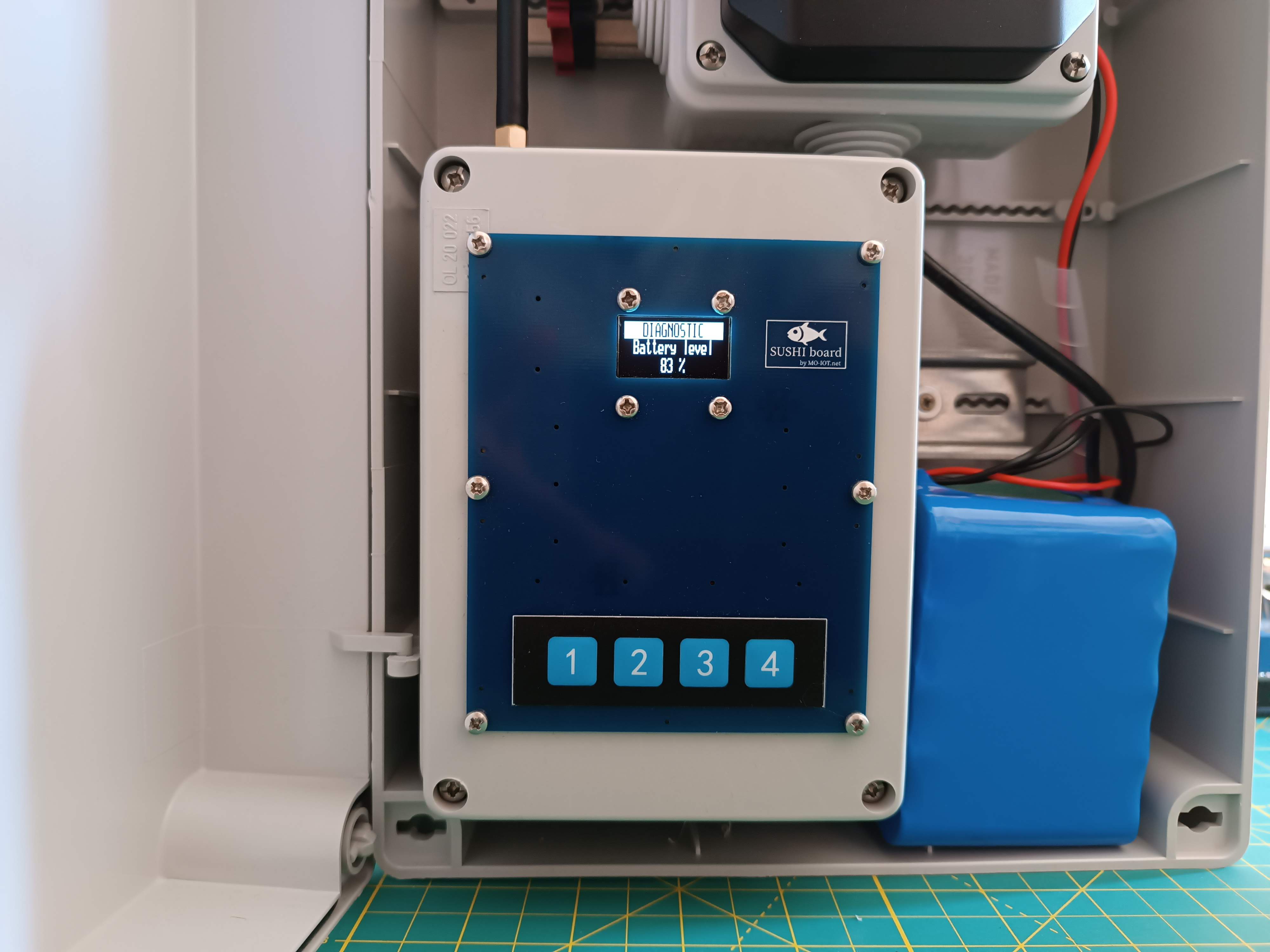
This is a Sushi board mounted in a junction box and installed inside an electrical panel. It functions as a weather data acquisition center, reading data from external sensors and sending it to the cloud via GSM. The same hardware can also serve as the central unit of an alarm system.
The case is made from a standard electrical junction box. There is a cut in the cover that stays hidden behind the top Sushi board, so the closed box looks neat even if the homemade cut isn't perfect.
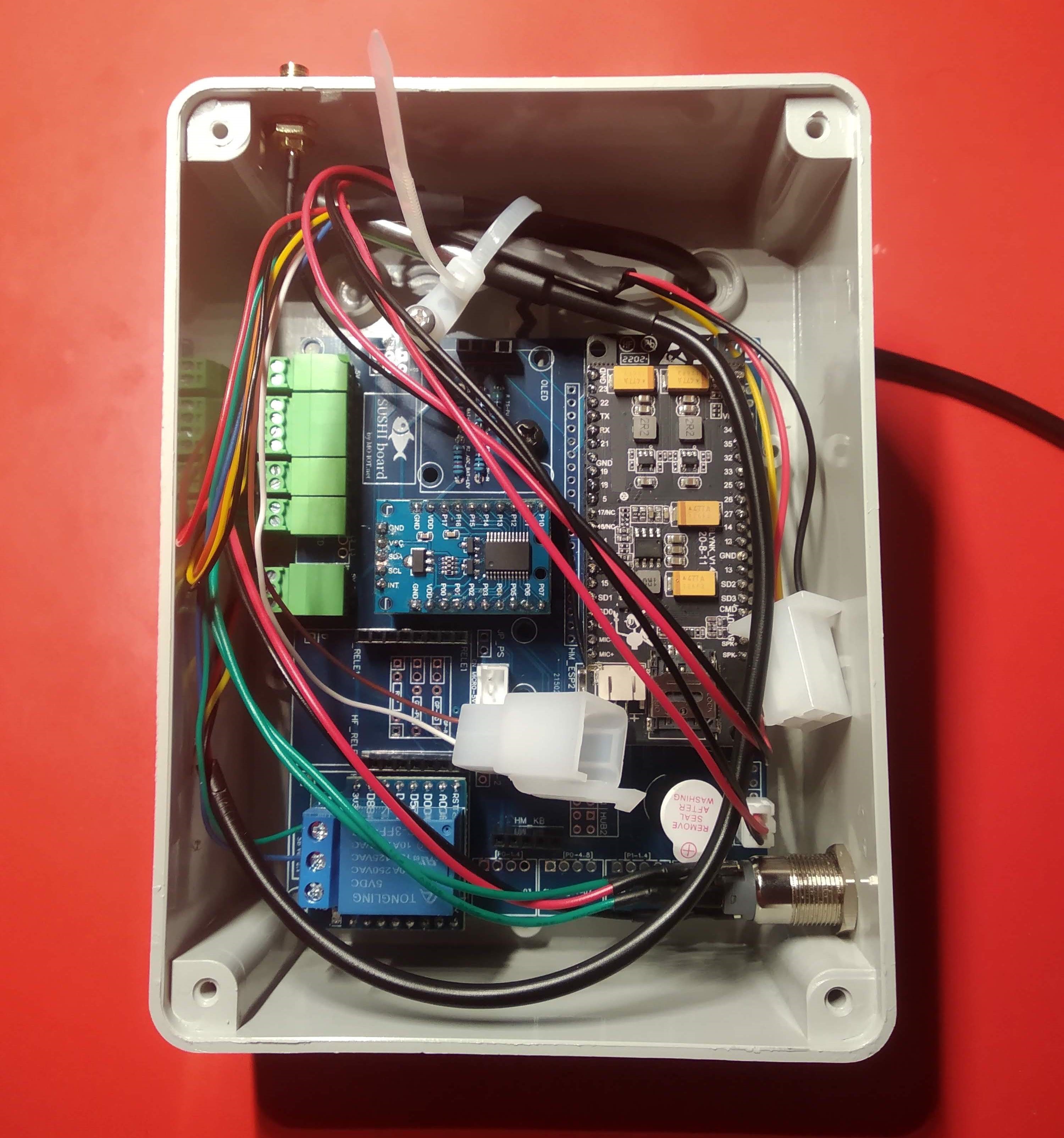
The wiring inside the case
Discussions
Become a Hackaday.io Member
Create an account to leave a comment. Already have an account? Log In.