 Colin Pate
As soon as I got the light together, I realized the headlight was even chunkier than expected, coming in at almost exactly 400g. I'm no weight weenie, but almost 1lb is a bit on the hefty side to have hanging off the front of the handlebars. Plus, the more weight, the more stress on my 3D printed mount.
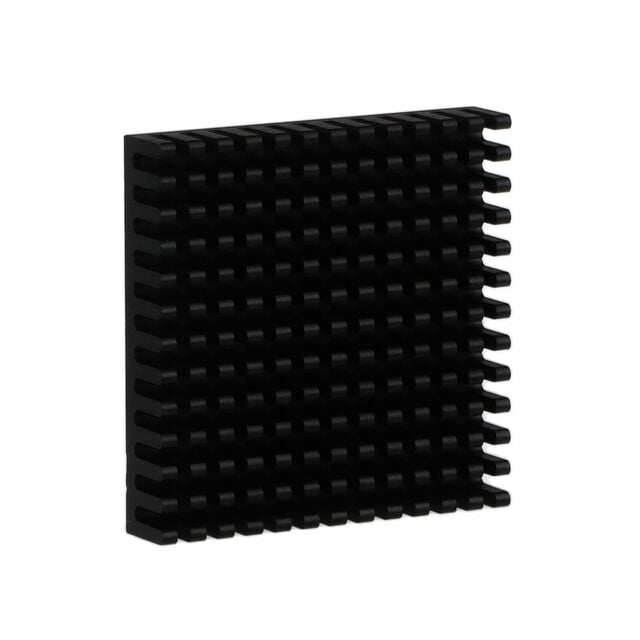
The most obvious suspect was the LED heatsinks. These are two off-the-shelf aluminum 46mm x 46mm chip heatsinks that I placed on the back of the aluminum plate. This part was one of the few heatsinks that I could find with a spec'd thermal resistance @ 0 airflow, but unfortunately no weight info was provided in the datasheet. They ended up being about 24g each, making up 12% of the total weight of the headlight. These are farther from the handlebar mounting point than the batteries, which at 140g are the other main contributor to weight. This means the heatsinks will have a larger moment of inertia about the mount axis and the steer tube axis, which translates to more stress on the mount and heavier steering.
I looked around at other commercially available heatsinks and it seems like there aren't many that are designed to optimize for weight. I figured most engineers working on weight-optimized designs end up designing their own heatsinks, so I decided to do the same! Here's the current status.
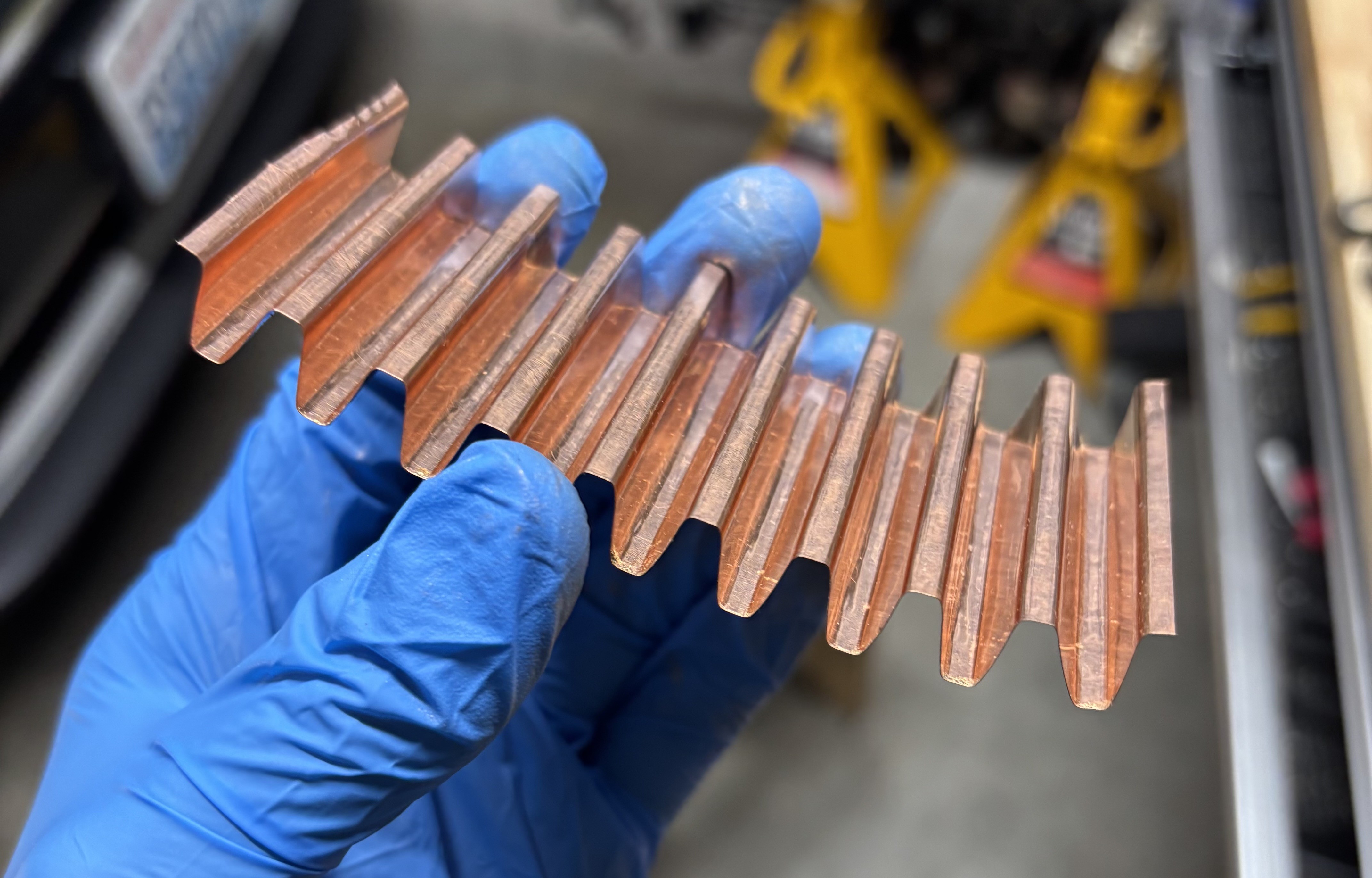
I did the math and figured that a folded sheet of aluminum or copper, at least 0.1mm thick, should be thermally conductive enough and provide enough surface area to match the performance of the heatsinks currently in use. I conveniently had some 0.1mm copper sheet laying around from spot-welding my eBike battery cells. It's not gonna be very durable out in the open, but thankfully it safely resides in the cavity between the LEDs and the enclosure.
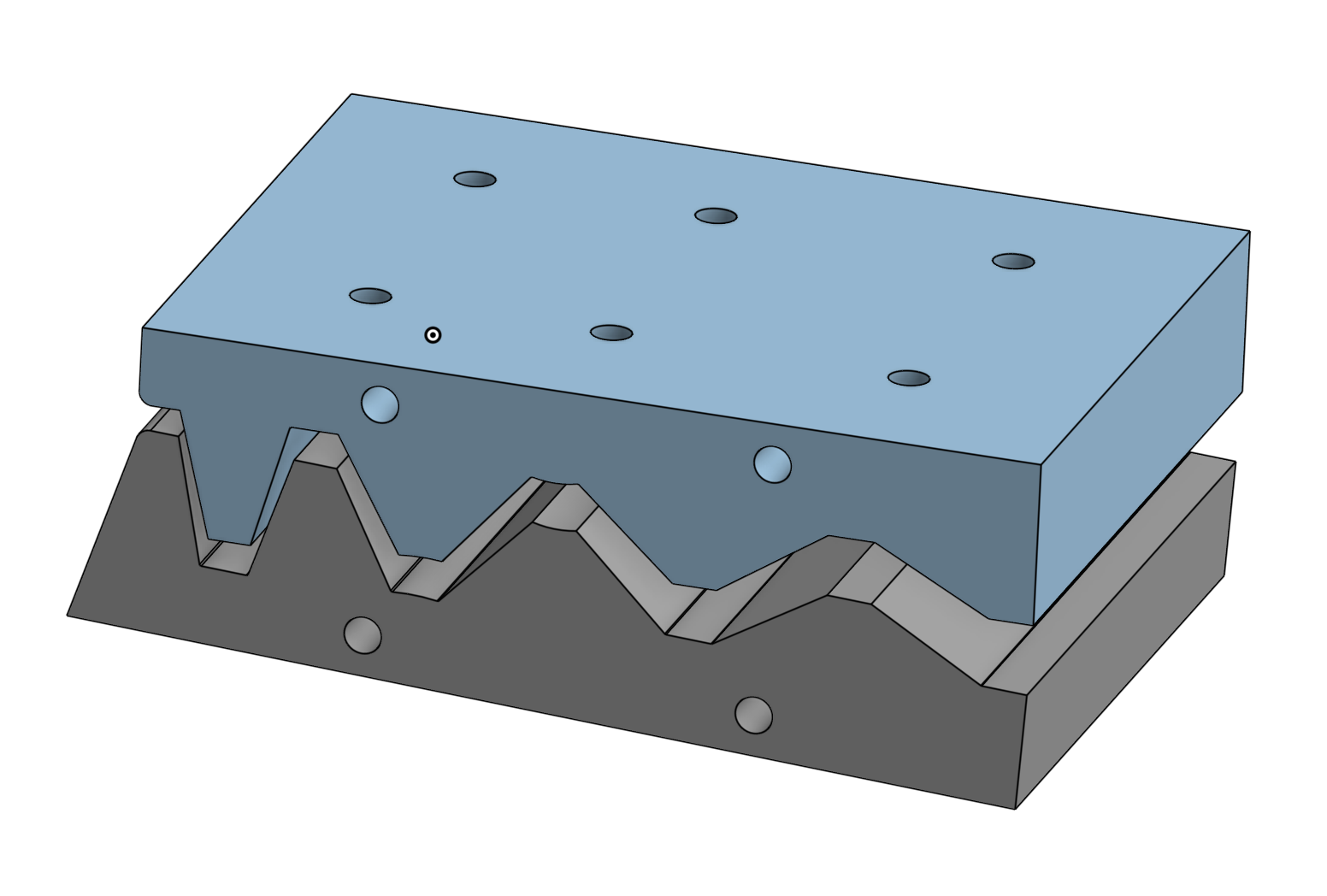
To keep my sponsors happy, I had to find a way to incorporate 3D printing, so I made a 3D printed die and stamping rig with leftover aluminum extrusions from the first version of the light.
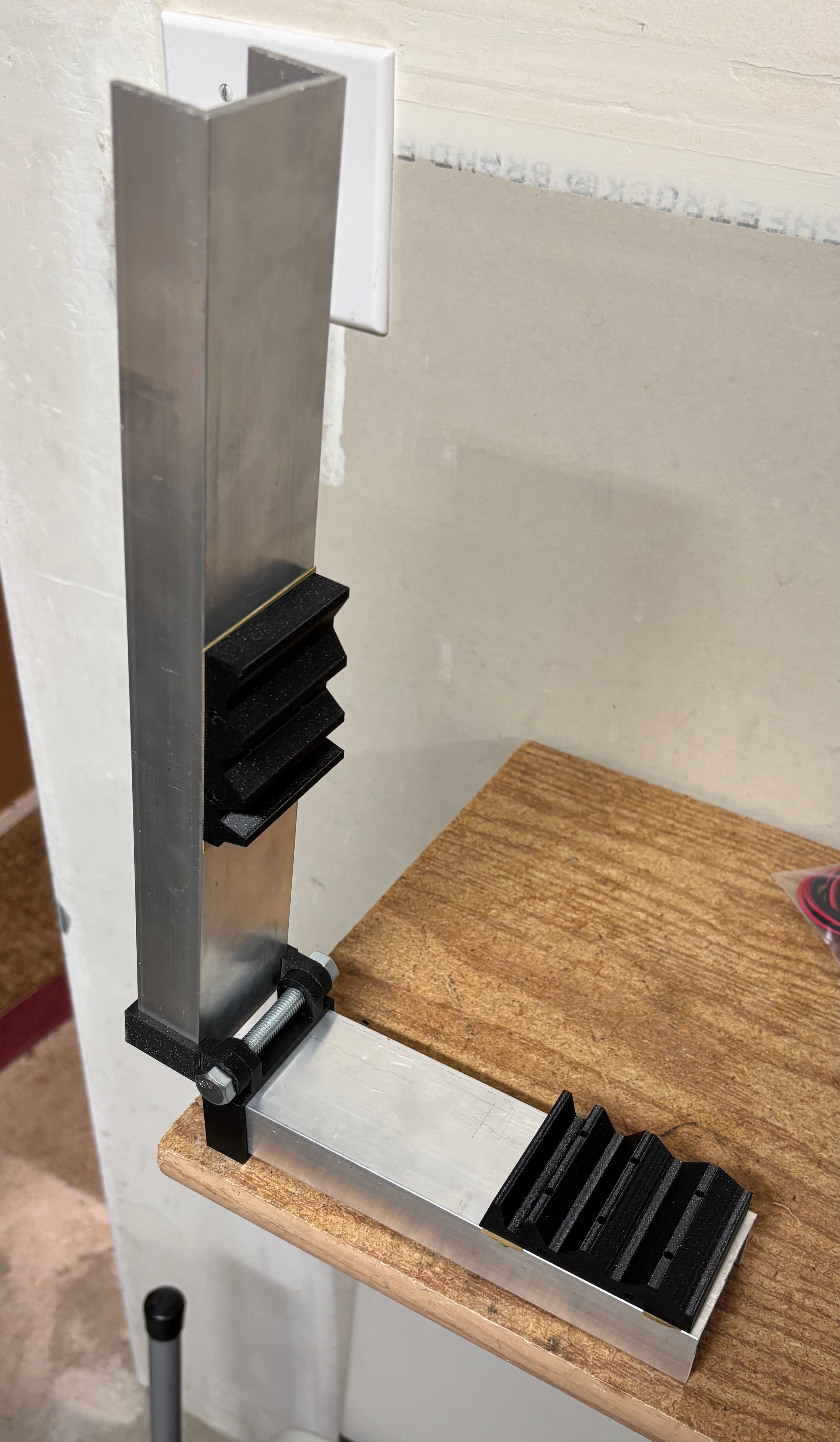
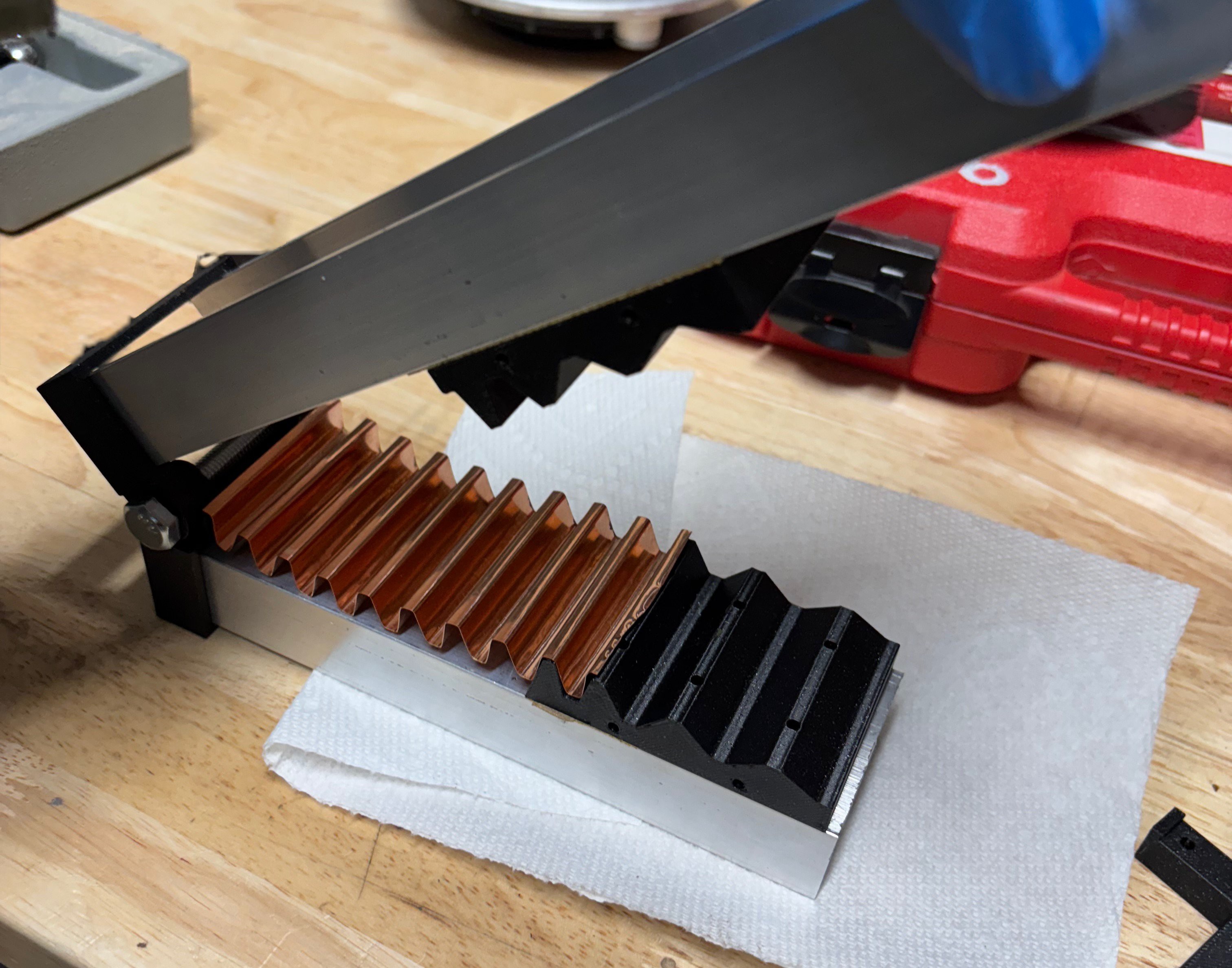
Once I'd turned my copper sheet into a weird cardboard looking thing, it was time to test it. I superglued a couple power resistors and a TMP36 analog temp sensor to the aluminum plate and put it all in a spare enclosure that I had.
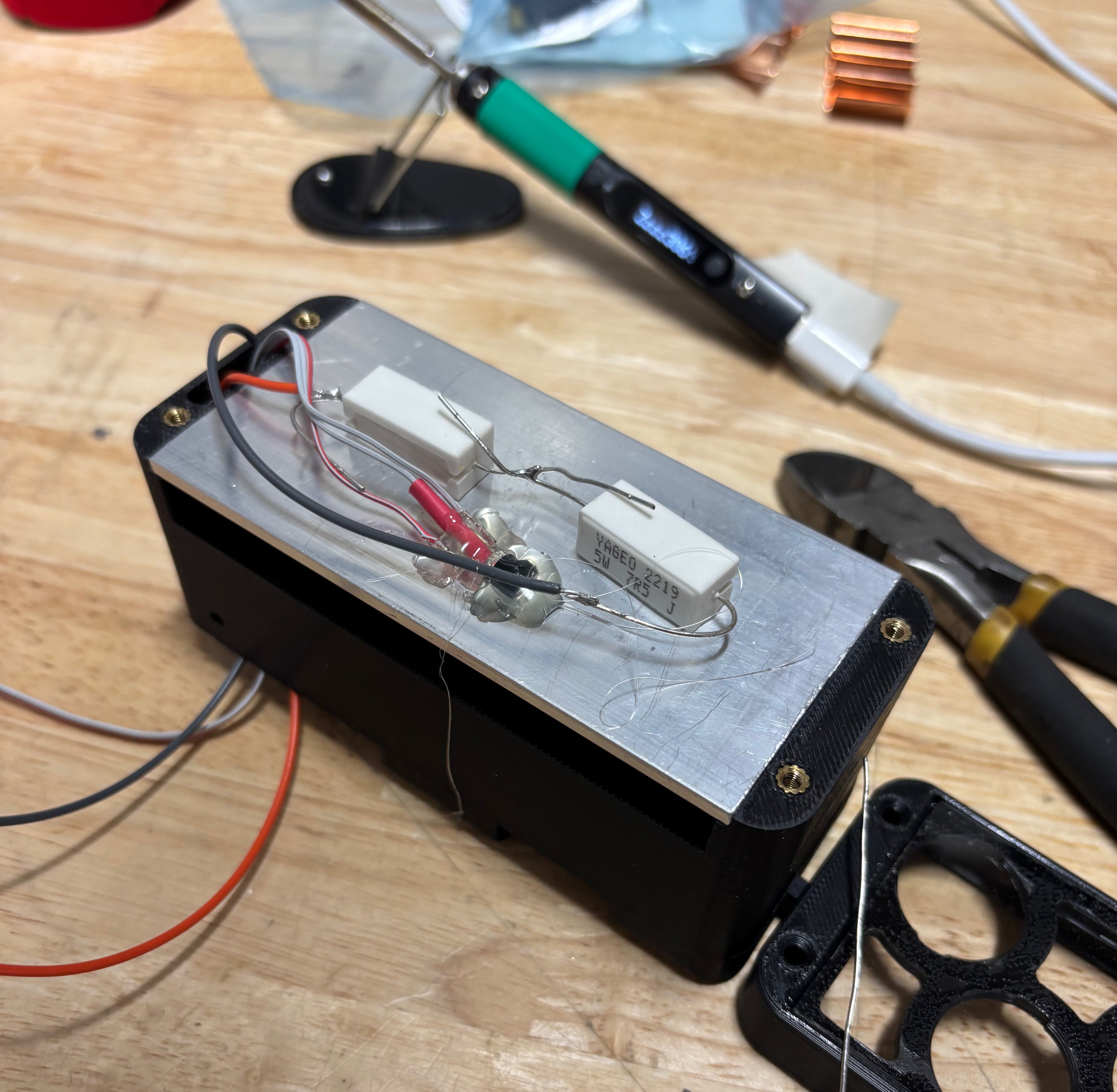
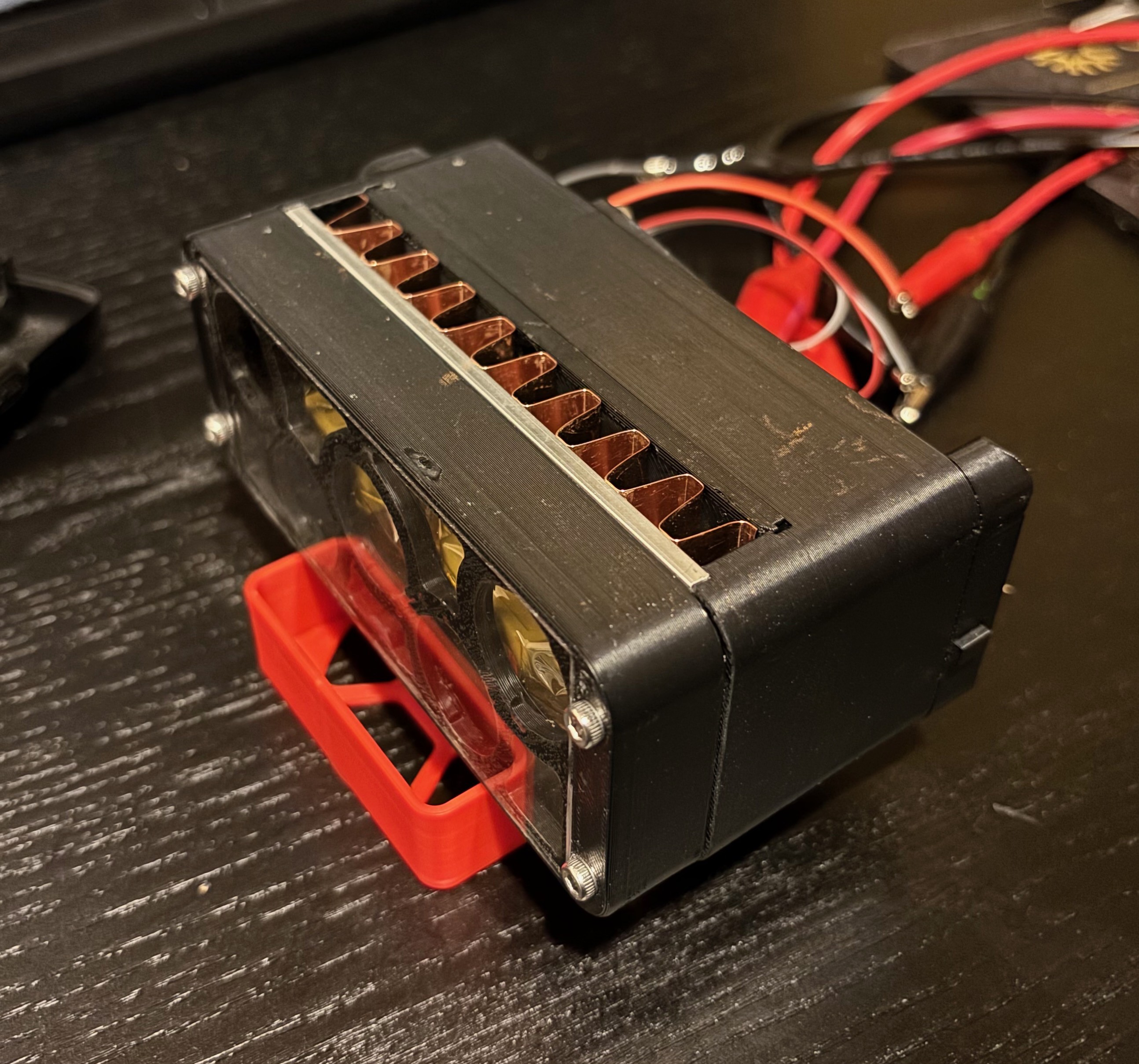
Thermal Resistance Measurement Results
The data was pretty interesting. My number to beat was 5.4K/W, which was the spec'd thermal resistance of the two off-the-shelf heatsinks, and would give me a max LED junction temperature rise of around 120˚ C at 15W dissipated. Somehow, my DIY heatsink ended up measuring almost exactly the same as what I was replacing, at 1/3 the weight!
| Heatsink type | Surface area (cm^2) | Measured K/W |
|---|---|---|
| Aluminum plate, bare | 52 | 9.5 |
| Aluminum plate with copper heatsink | 217 | 5.6 |
| Aluminum plate with copper heatsink bonded with thermal compound | 217 | 5.4 |
Here's a google sheet with all my test data
There were two surprises here:
1. Thermal compound made almost no difference. I guess that either the coupling between the aluminum and copper is so poor that it couldn't be filled, or so good that thermal compound didn't help?
2. The copper reduced the overall thermal resistance by less than half, implying that it has a higher thermal resistance than the bare aluminum plate, despite having more than 3 times the surface area.
I have a few theories to explain the second surprise.
1. A significant amount of heat is radiating out the other side of the aluminum plate and through the front of the light. This would effectively give it more surface area.
2. The thermal contact between the copper and aluminum is really bad. I might try thermal epoxy or adhesive to remedy this.
3. The copper slows down the ambient air currents that keep the aluminum cool.
Discussions
Become a Hackaday.io Member
Create an account to leave a comment. Already have an account? Log In.