 WJCarpenter
We have two electronic bathroom scales along with the one I just bought. I was hoping that at least one of them would be easy to disassemble so I could poke around and reverse engineer some stuff in order to interface an ESP32 or something. No such luck. All of them seem to be stuck together with some kind of strong double-sided foam tape or something. Not a single visible screw.
For a while, I was thinking about taking my Dremel to the plastic casing and hoping that inside would be something wonderful (for me). I'm now changing my mind for a different approach. In all of the scales, there is easy access to the gadgets on the four corners. They all look like pretty generic load sensors similar to this one (available from Sparkfun and many other places):
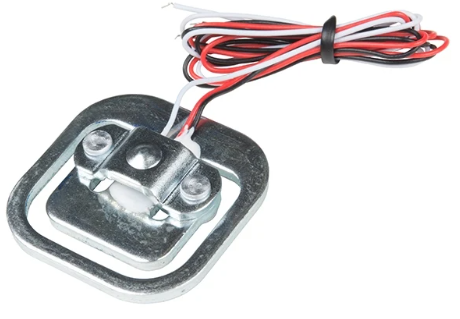
The folks at Sparkfun have also provided some straightforward information for interfacing to load sensors, singly or in a quad setup.
My new plan is to use one of the bathroom scales to be the source of the load sensors and also the mechanical platform to sit under the litter box. I'm still pondering what electronics components I'll use, but it will almost certainly be:
- Some kind of combiner board to take the separate load sensor input and provide a single output, to....
- A load sensor amplifier board. This seems to be a practical necessity due to the tiny electrical differences being measured. The output of that amplifier board will go to....
- Some ESP32 variant.
This new plan means I can trigger the measurements as often as I want. The ESP32 gives me plenty of ways to feed data to my Home Assistant server. Hacking bathroom scale load sensors seems to be a well-trodden path, so not too much work for me there. The interesting parts will be the dynamic detection of the tare weight and the detection of "cat is present".
One unknown for me is the accuracy of the load sensors for small weights. Our cat weighs about 15 pounds. The litter box and contents probably weigh less than 10 pounds. That's way less than the expected use case for bathroom scales. Will the sensing be linear at the bottom of the range? I guess I'll have to do some calibration steps to find out. Calibration steps will be needed in any case as part of the circuit fun.
Discussions
Become a Hackaday.io Member
Create an account to leave a comment. Already have an account? Log In.