 Jake Wachlin
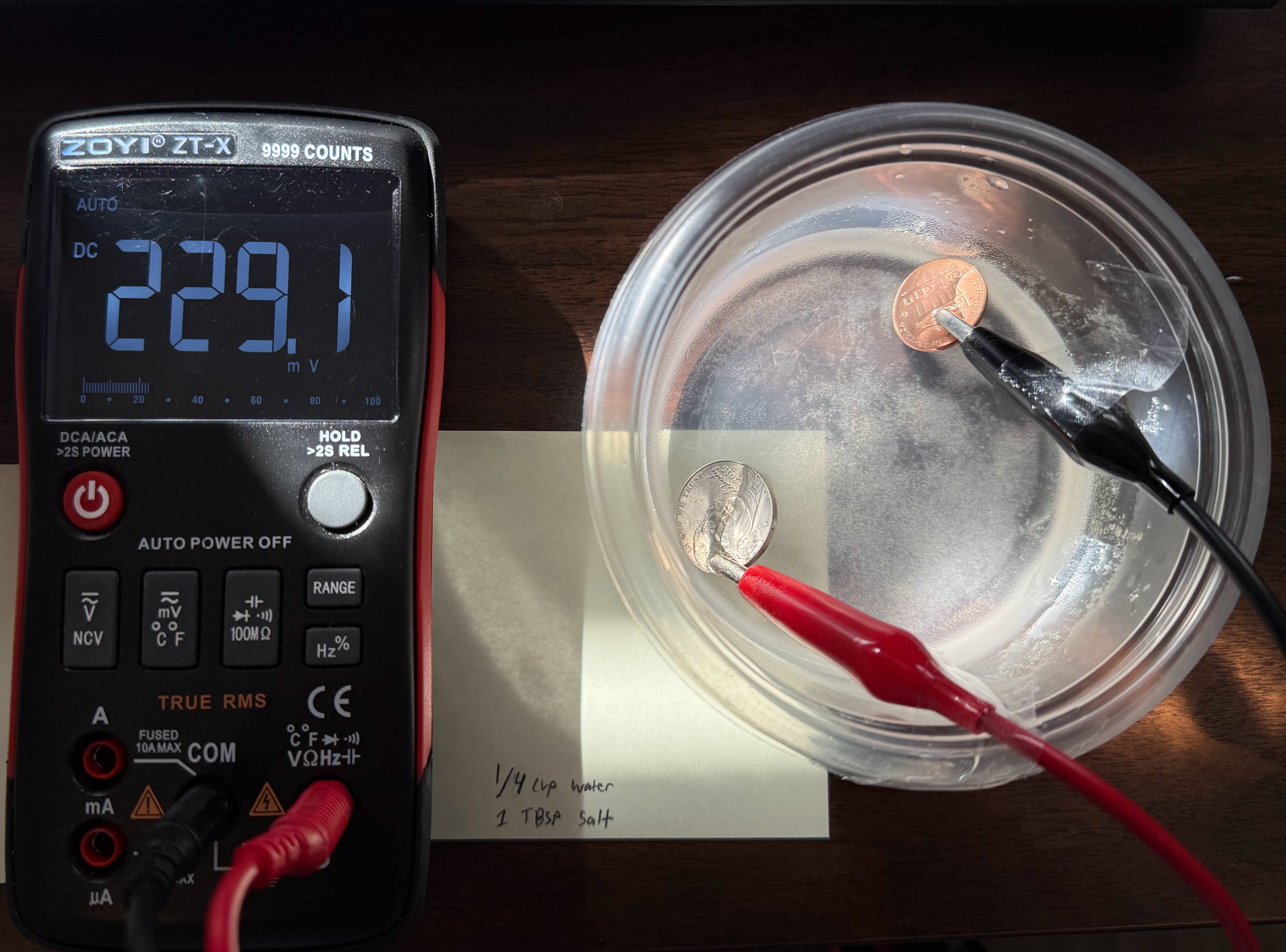
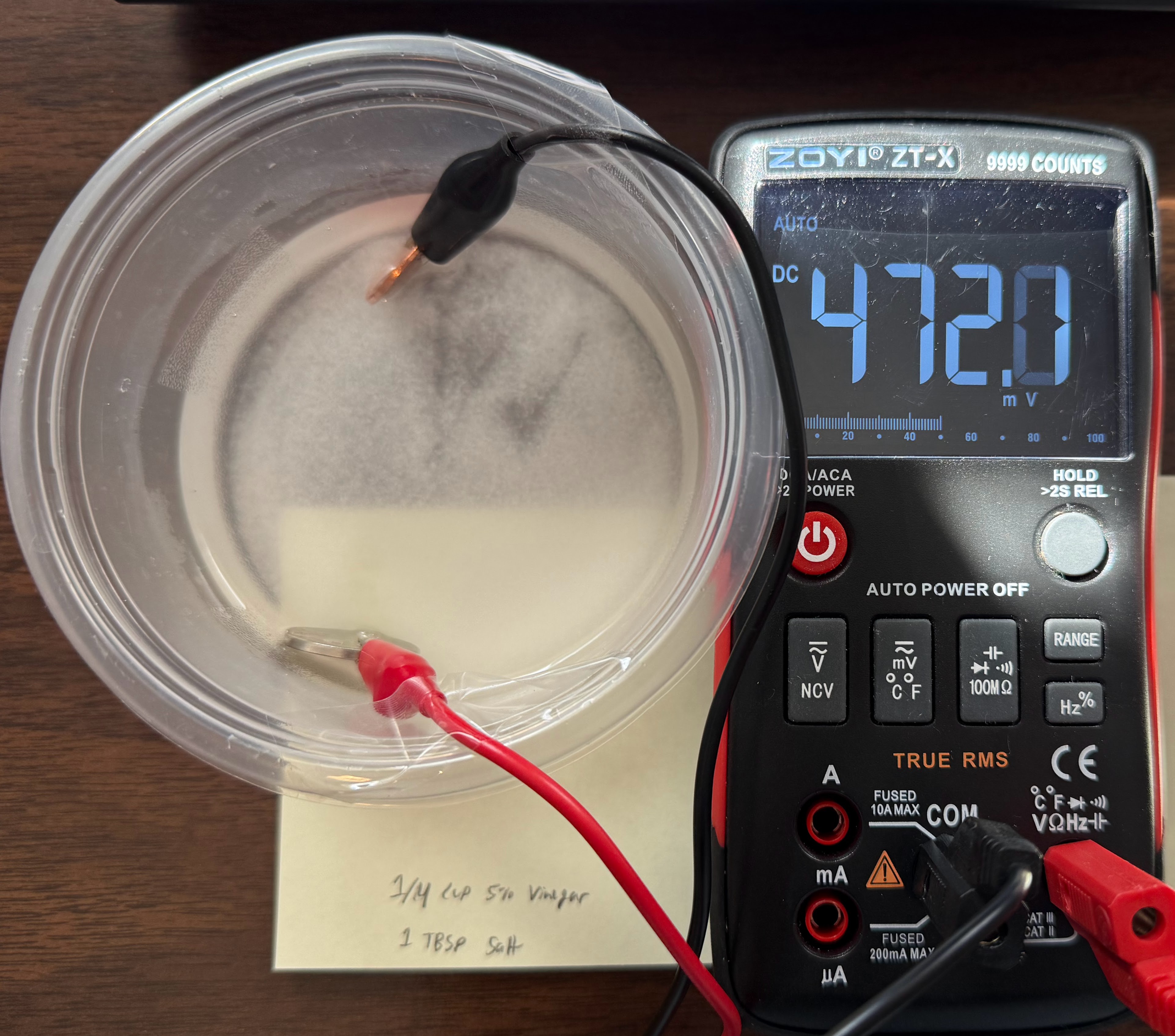
My first testing for this idea was to use pennies (for their outer copper layer) and nickels (which are mostly made of nickel) as the electrodes, with saltwater or salty vinegar as the electrode.
The first tests were to evaluate the open circuit voltage of such batteries. The images below show the results: with saltwater an open circuit voltage of 229mV was seen. With salty vinegar as the electrode, a higher open circuit voltage of 472mV was seen.
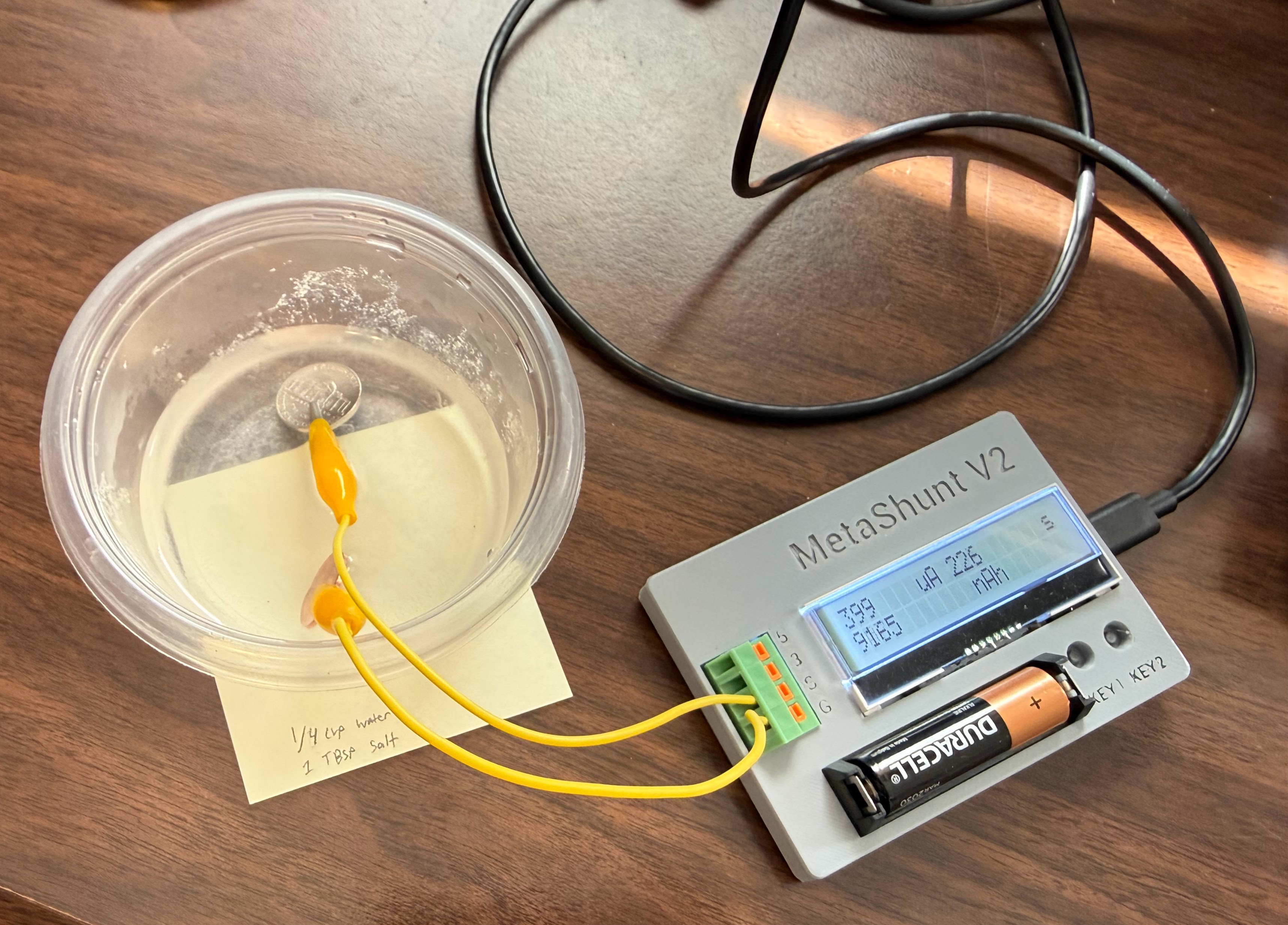
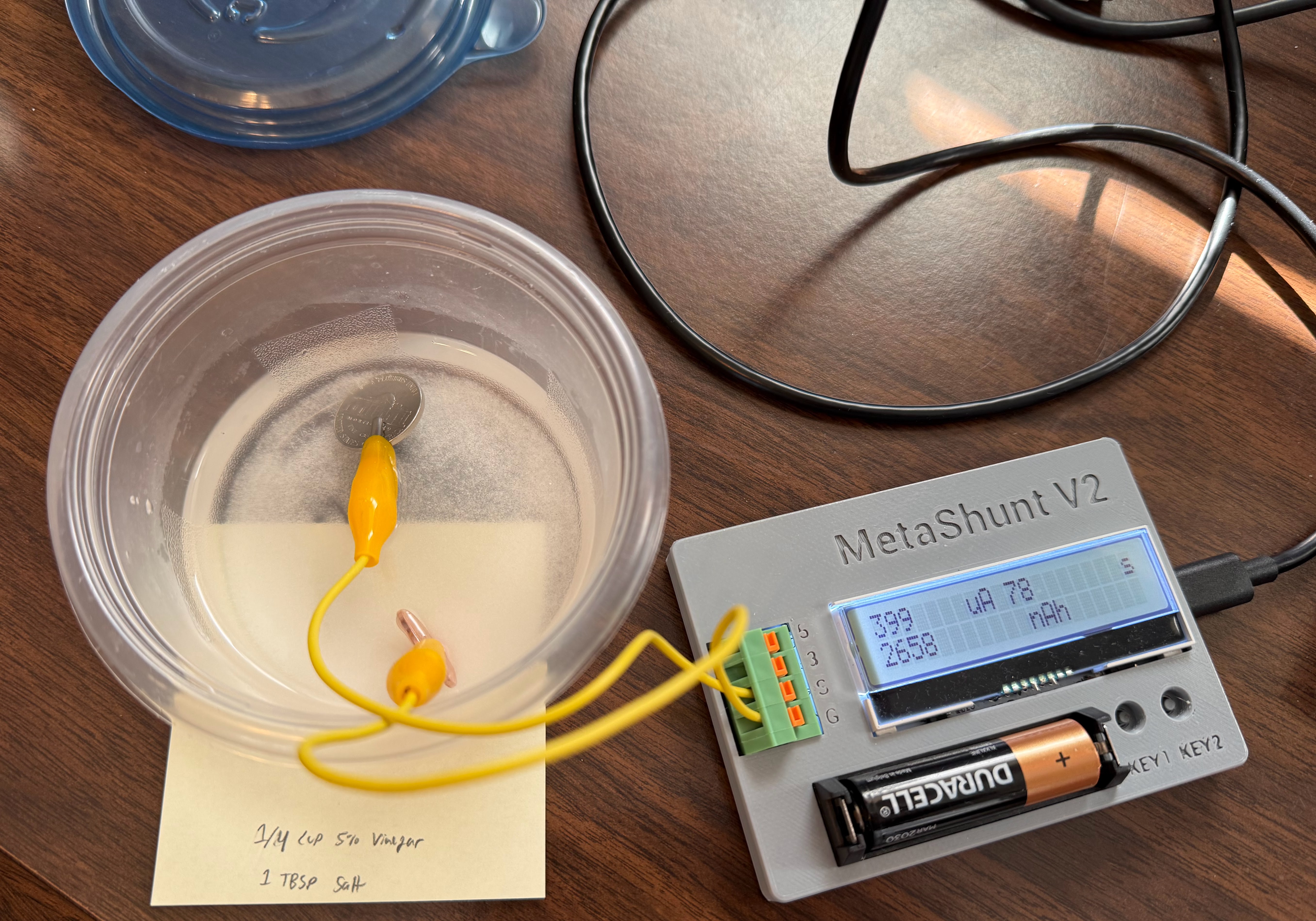
I then performed some testing to determine the short circuit current possible from these cells. With both saltwater and salty vinegar, the cell achieved an short circuit current of 399uA, as seen below.
These initial results were promising. I have a development board design of the TPS61200, which is a 0.3V input boost converter with 55uA quiescent current, and Nanosleeper could easily require an average of <150uA to operate significantly on. While these two measurements don't tell us the IV curve of the cell, it seemed in the ballpark to be able to run Nanosleeper from the TPS61200, especially if some capacitance is included to help with buffering power.
I assembled a battery consisting of three layers of penny/vinegar-soaked-paper-towel/nickel cells, and connected that to a 2.5F supercapacitor. This supercapacitor was initially charged without another load on it. Then, I connected the TPS61200 development board, which boosted the roughly 0.6V output from this battery up to 2.1V, which was then provided to Nanosleeper. Nanosleeper was set to be awake with LEDs on for several seconds, then on with LEDs off for several seconds, then entering deep sleep for several seconds. The average current was roughly 250uA. The video below shows the Nanosleeper waking up, powered only from energy from this battery. However, this battery cannot provide enough power to keep the system on, so more tests to come!
Discussions
Become a Hackaday.io Member
Create an account to leave a comment. Already have an account? Log In.