A VOC filter that adapts to your space. Dual SGP30 sensors, baseline tracking, drift compensation, and filter health prediction on ESP32-C6.
To make the experience fit your profile, pick a username and tell us what interests you.
We found and based on your interests.
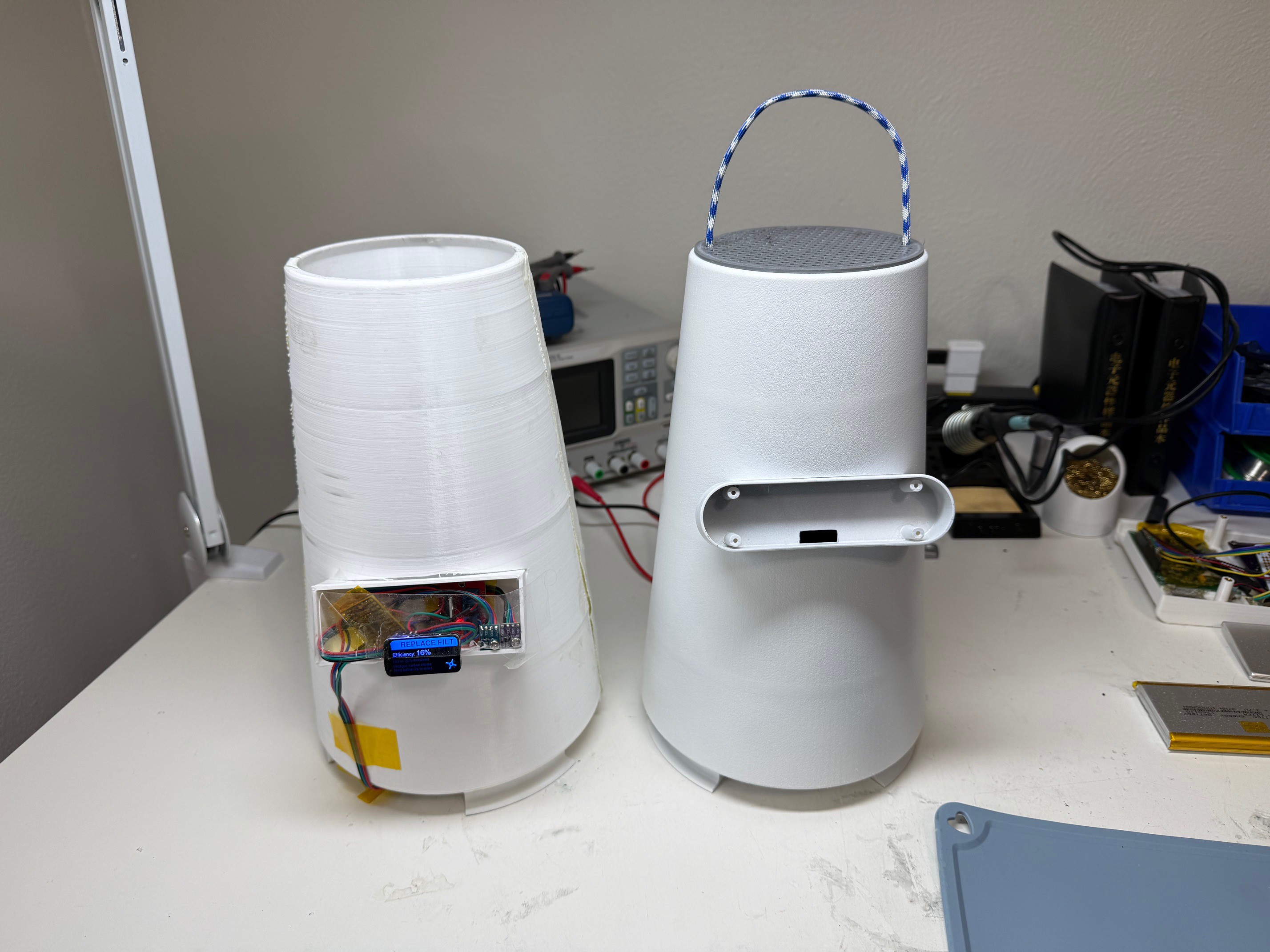
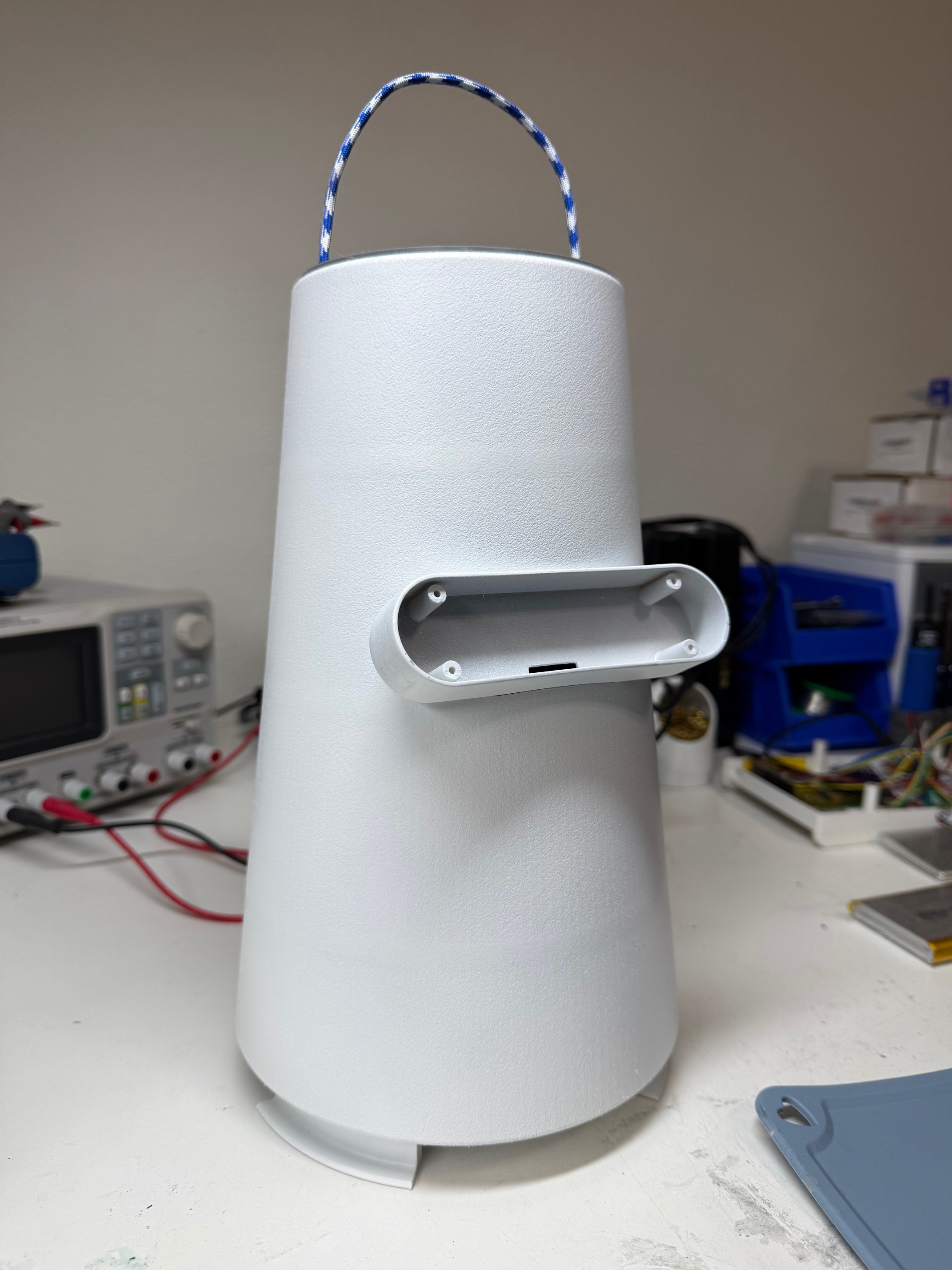
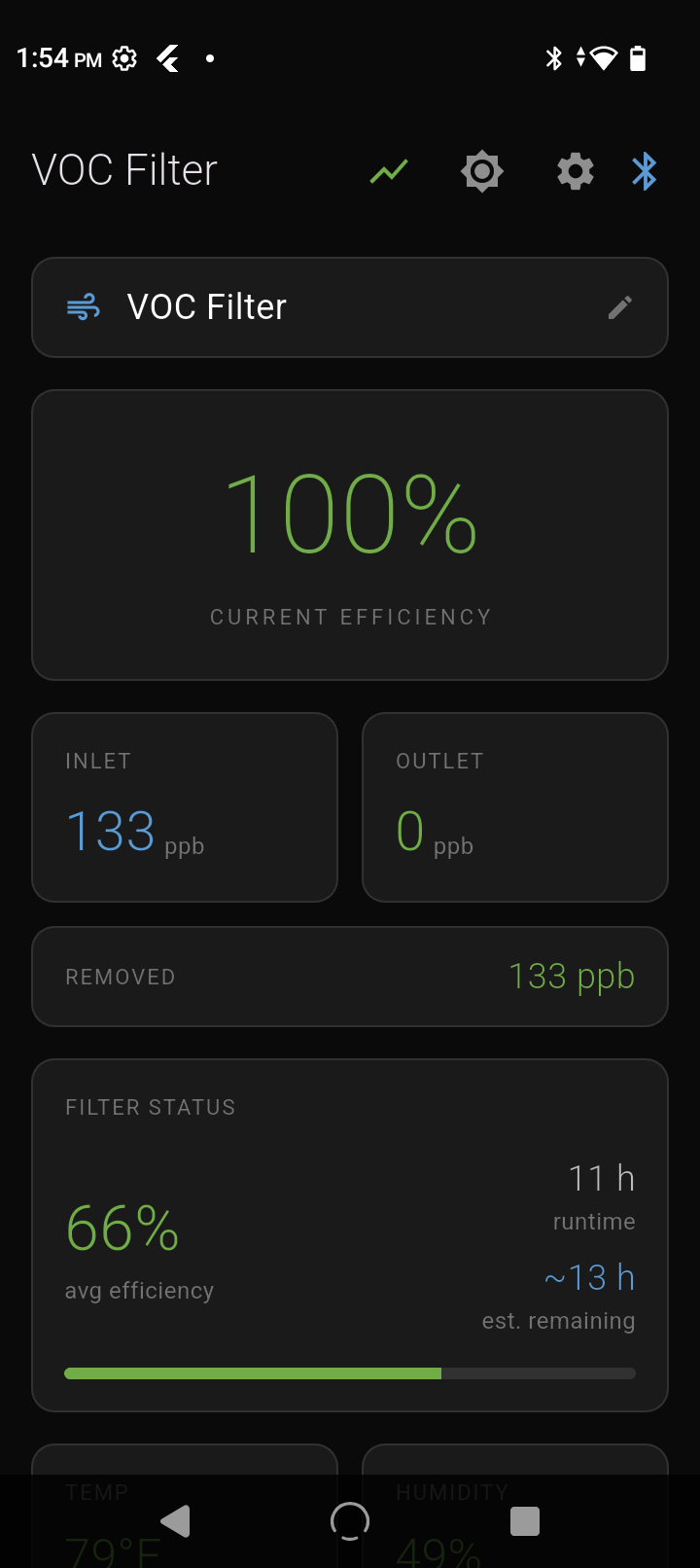
Was not supper happy with the original square electronics bay, it was good for prototyping, but I need it to be more product looking.
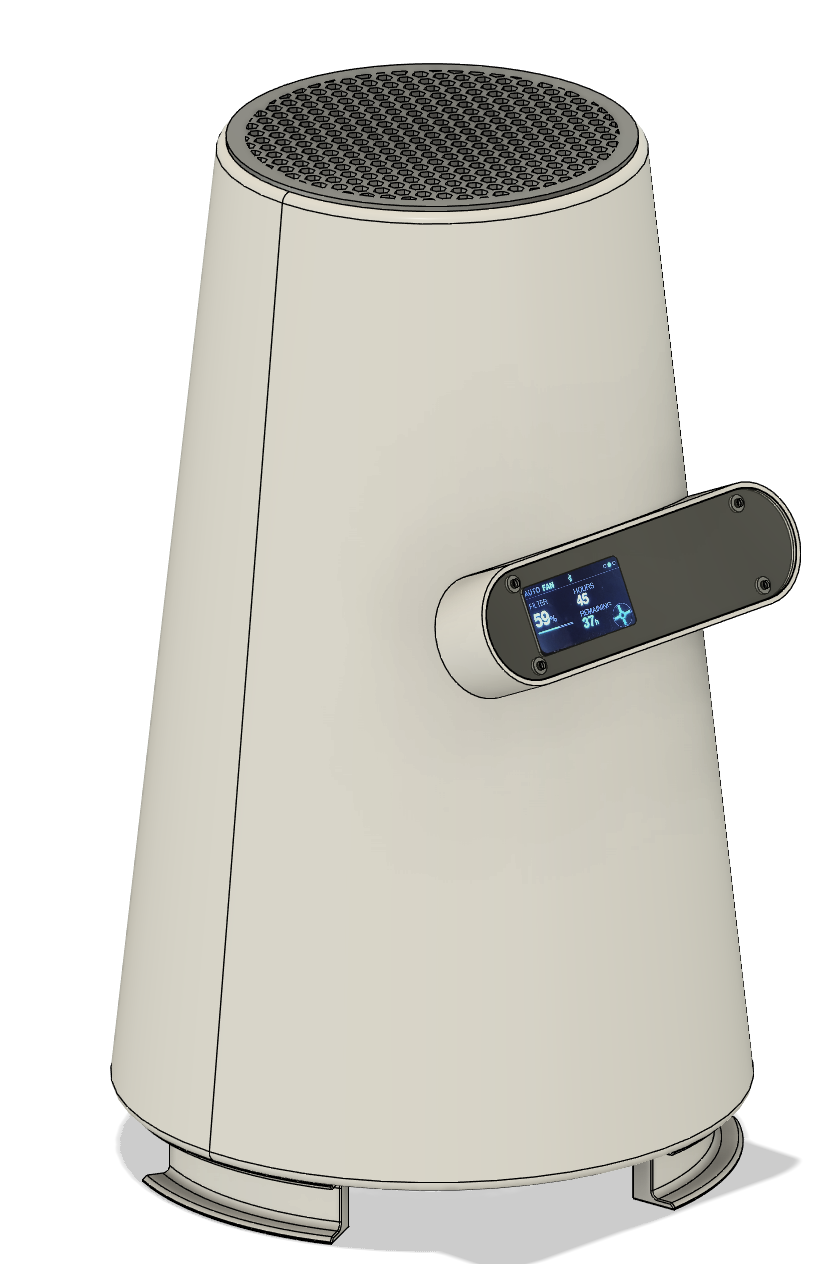
I loaded up Fusion and worked out this version. The PCB will be colored black and be visible under a 1mm plexiglass cover. I have a schematic/PCB design going and when that is done I will send off for samples. The PCB will have all sensors and the JST connectors on it except for the outlet VOC sensor. The new electronics bay is a much more pleasing shape and is smaller since I plan on going with a custom PCB. The bay is also higher on the unit and will help the inlet VOC sensor on the board be closer wit the inlet air.
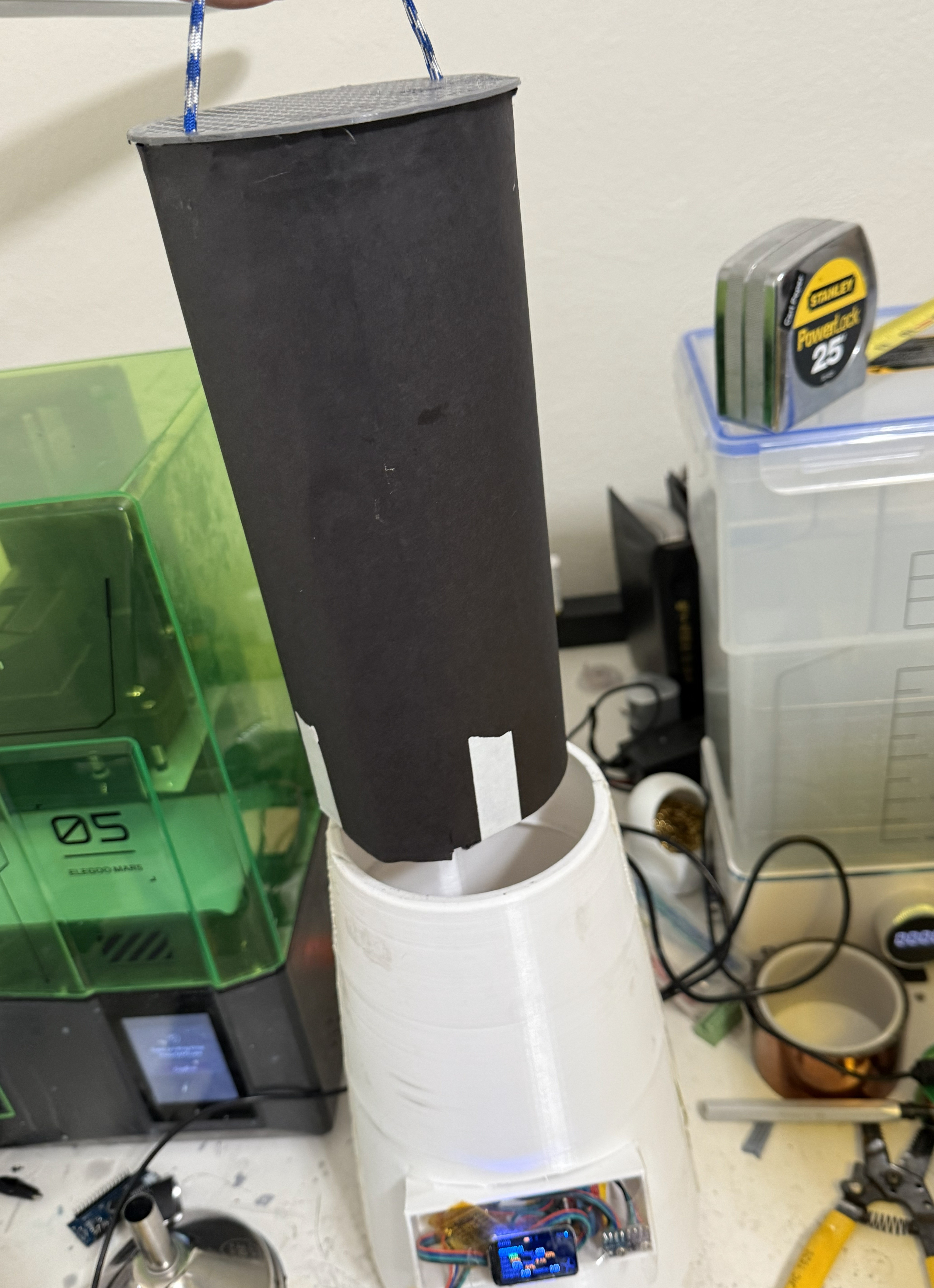
Also got around to making the fast swap filter that will be used for it. It is quite large and features a honeycomb prefilter/inlet and 1.5-2 cups loose activated carbon and then spiral of carbon mat, all wrapped in black paper.
Before building a real app, I validated everything with nRF Connect first. Scan, connect, discover services, send commands, verify response. This caught firmware bugs before I ever touched Flutter - saved hours of debugging the wrong layer.
Once the device protocol was solid, I moved to Flutter. The BLE part was actually easy. The fight was Android itself: permission handling across OS versions, background scan behavior, and write/notification timing quirks. Classic mobile pain.
My approach: get scan + connect + one confirmed write working reliably before building anything else. Once that foundation was solid, the rest was normal app development - state management, UI, logging, graphs.
This was also my first Flutter app. Figured I'd learn on something real instead of another tutorial project.
What the app does:
Nothing fancy, but it works because I didn't skip the nRF validation step.
Software Architecture (how I actually built it)
Three-module setup... clean, simple, and it does what it needs to do:
This handles the display, BLE stack, fan control, button input, and sensor polling.
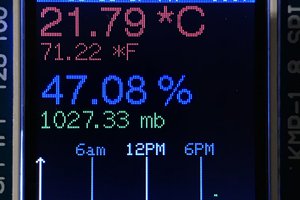
The UI cycles through four pages: main readings, filter status, environment, and a scrolling diagnostics page where I can literally watch what the adaptive system is thinking in real time.
This is where the system gets smarter instead of just spitting out raw numbers.
Signal filtering smooths the sensor noise (because VOC sensors are drama queens).
Calibration learns the relationship between inlet/outlet sensors (because they never match perfectly).
Environmental compensation corrects for temperature/humidity changing the readings over time.
Baseline tracking watches the “floor” shift and flags when a sensor starts acting suspicious.
This tracks what’s happening in the real world and turns it into useful outputs:
Detects events like active printing vs idle
Calculates true filter efficiency (not the naive inlet/outlet ratio)
Tracks filter health over time
Learns usage patterns and predicts remaining life
Efficiency math is way harder than it looks.
My first pass was the obvious approach: inlet vs outlet. Super clean. Totally wrong.
Because if your room baseline is already garbage (or already clean), the raw ratio is misleading. Once I accounted for baseline air quality and what’s realistically removable, the numbers started matching real filter performance.
Sensors drift. Hard.
VOC sensors don’t “measure truth.” They measure vibes.
They can get stuck reporting the wrong value for hours like they’re gaslighting you. So I added drift detection + compensation logic instead of trusting raw readings.
Calibration isn’t optional.
Two “identical” sensors won’t read the same in identical air. Ever.
So the system has to learn the offset between the pair, or you’re just building a fancy random number generator.
Persistence matters.
All learned parameters save to non-volatile memory so it doesn’t forget everything after a power cut.
But you can’t write constantly or you’ll wear out flash/EEPROM… and you can’t write too rarely or you lose learning when power drops at the worst time. So yeah, balancing save frequency was a whole thing.
Dual VOC sensors (inlet + outlet)
Temperature + humidity compensation
Sensor calibration routine (pair-specific learning)
Adaptive baseline tracking
Drift detection + correction
Event detection (printing vs idle)
True filter efficiency calculation (baseline-aware)
Filter health tracking over time
Remaining life prediction
PWM fan control + auto mode
Color display w/ multiple info pages + diagnostics view
BLE app for logging + graphs
Learned parameters persist across power cycles
Create an account to leave a comment. Already have an account? Log In.
Become a member to follow this project and never miss any updates