 Profe Tolocka

Introduction
E-paper displays (EPDs), also known as e-ink screens, were for a long time reserved for very specific applications, such as e-readers.
However, technological advances in recent years have greatly expanded their possibilities, allowing EPDs to now be found in digital signage, electronic shelf labels, IoT devices, information panels, and many other uses.
In addition, the arrival of new display models and controllers has brought this technology into the maker world, making it much more accessible for experimentation and personal projects.
This tutorial, divided into two parts — fundamentals and applications — is designed as a practical, step-by-step guide to help you navigate the fascinating world of EPDs. In the first part, we’ll explore how they work and what’s behind their unique behavior; in the second, we’ll see how to apply this knowledge to real projects and use cases.
The Magic of EPDs
Take a look at the image below: an e-paper display (EPD) showing color graphics. At first glance, it doesn’t seem all that special, does it?
But look again closely. Do you notice anything unusual? The display is completely disconnected! The flexible cable on the right isn’t attached to any control board or power source. So how is it still displaying an image?
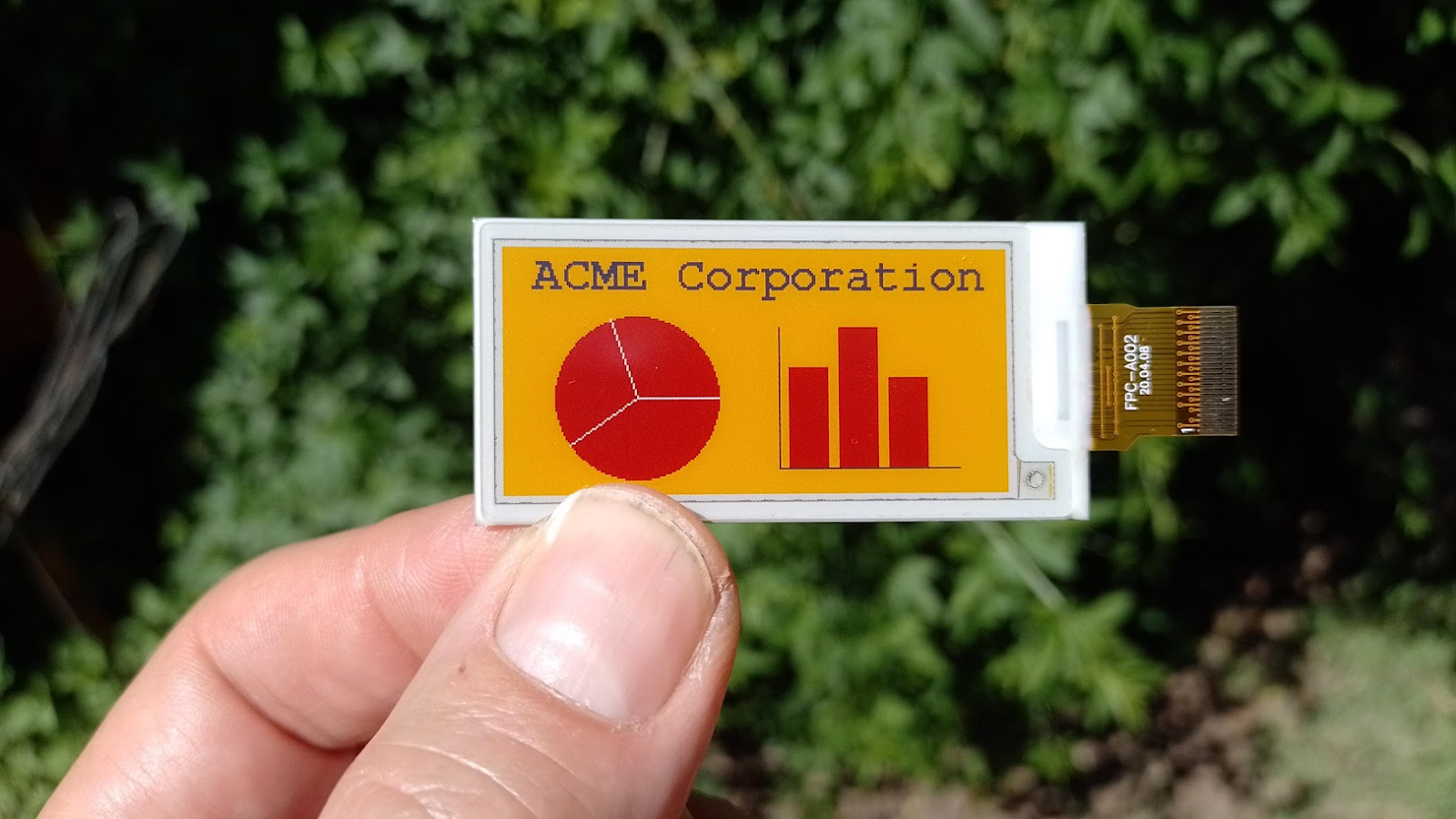
Here’s another amazing fact: I used this display a year ago, and since then it’s been stored away in a box, completely unpowered. How is it possible that a display can keep its content intact after a whole year without any energy at all?
No other display technology can achieve such a feat. It’s precisely this remarkable ability to maintain an image with zero power consumption that gives e-paper its truly unique and almost magical quality.
Features and Applications
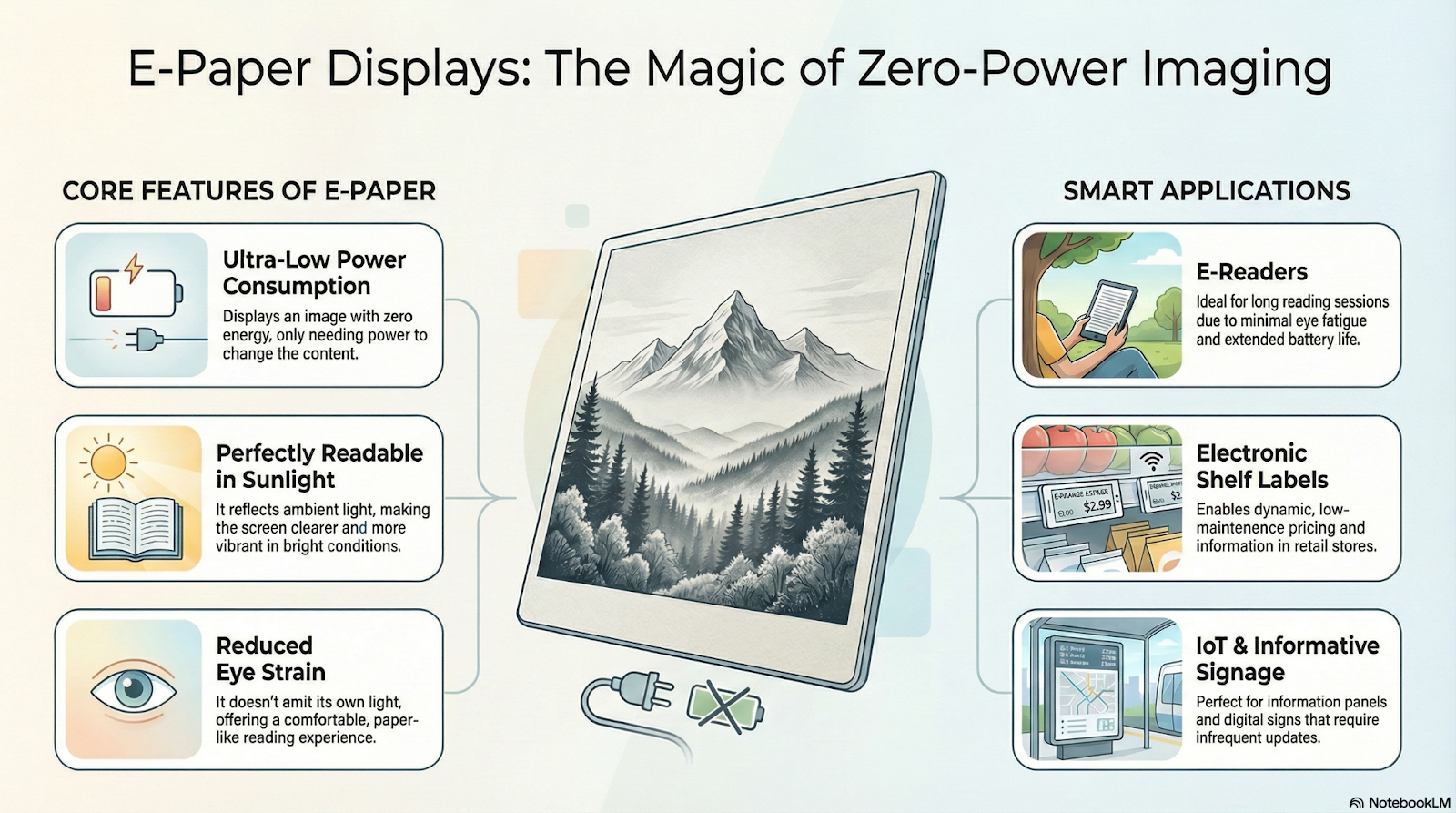
This ability to retain an image without power isn’t the only standout feature of EPDs:
- They don’t emit light; instead, they reflect ambient light.
- They offer excellent readability, displaying sharp images even in brightly lit environments.
- Since the image doesn’t need constant refreshing and there’s no backlight, they cause significantly less eye strain than other types of displays.
- They’re environmentally friendly, thanks to their extremely low energy consumption.
This unique combination of features has not only made EPDs the go-to technology for e-readers, but has also driven their adoption in a wide variety of other applications.
The Science Behind the Magic
The “Daily Prophet” newspaper that the magical community reads in the Harry Potter movies—a sheet of paper able to display animated photos—clearly works thanks to magic.

EPD screens, on the other hand, operate based on science. Their operation relies on a physical principle known as the electrophoretic effect.
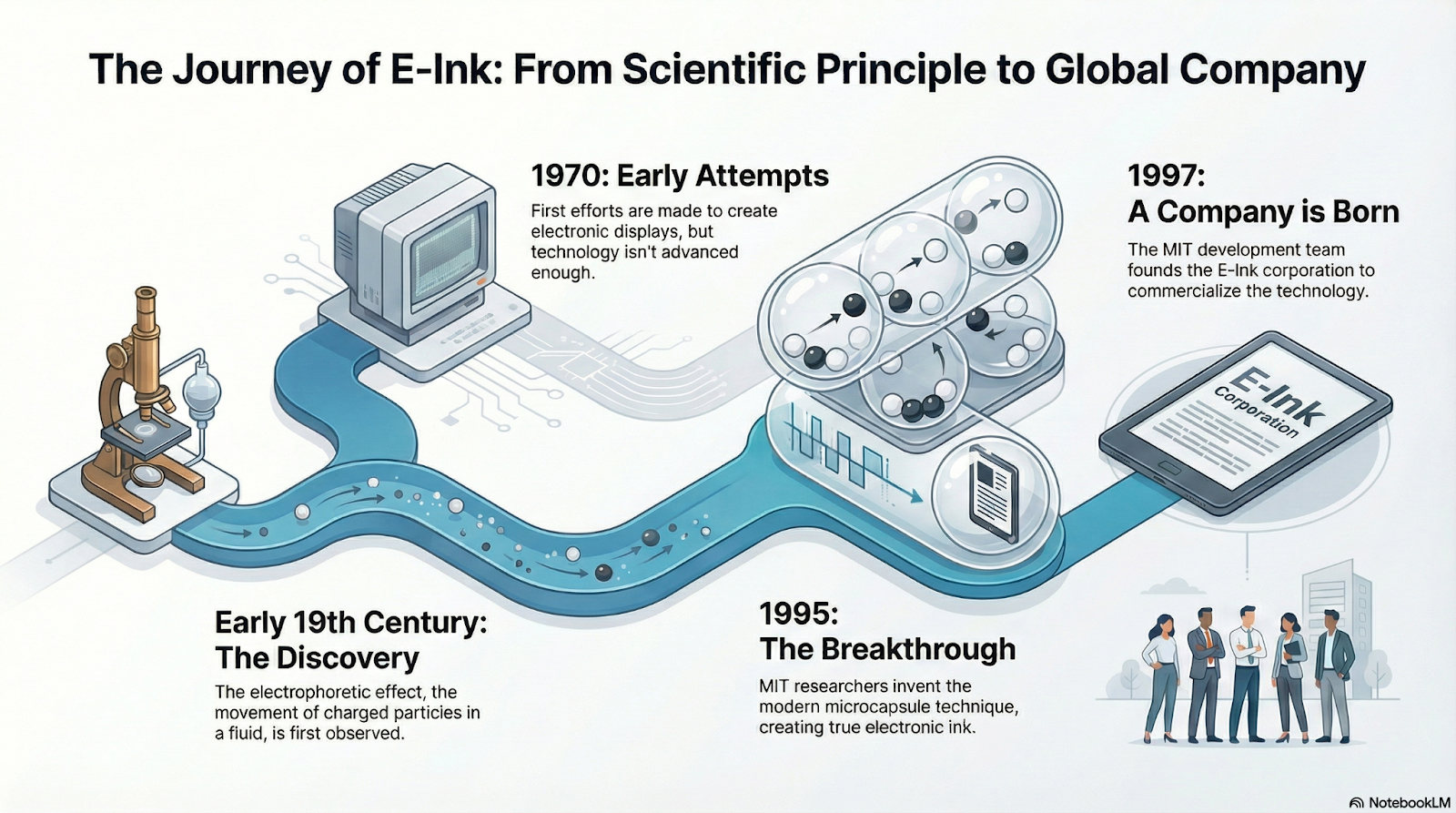
The electrophoretic effect refers to the movement of electrically charged particles within a fluid when an electric field is applied. It was first observed in the early 19th century, but it wasn’t until the late 20th century that the technology needed to use it for electronic displays was developed.
In 1997, following the work of a group of researchers at MIT, the company E-Ink was founded. E-Ink went on to own many of the key patents related to electrophoretic and e-ink technology. Since then, E-Ink has established itself as the main leader and global supplier of EPD screens, driving the development and widespread adoption of this technology in all kinds of devices.
Writing with Electronic Ink
Let’s take a closer look at how electronic ink is used in an EPD. Inside their structure, EPD screens contain millions of tiny spherical microcapsules, each filled with electrically charged pigments of different colors, suspended in a liquid.
The image below is a zoomed-in view of an e-reader screen, where you can see this microcapsule structure.
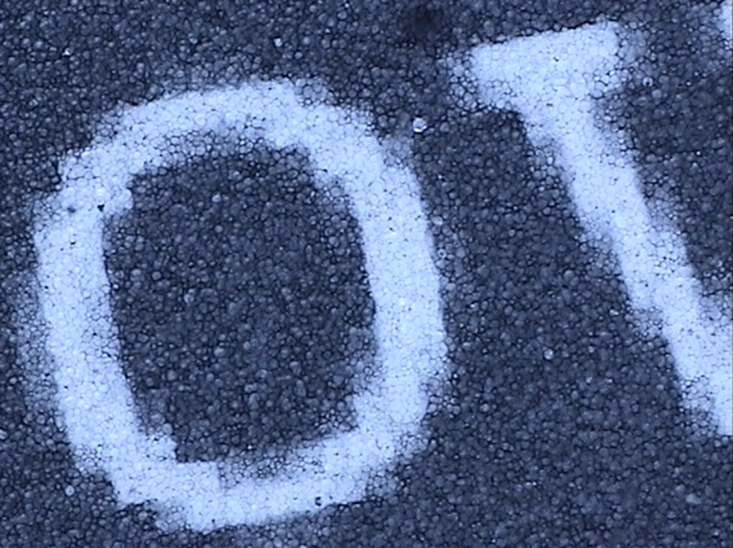
In the case of a monochrome display, each microcapsule contains black and white pigments that have been given opposite electrical charges during...
Read more »