Close
0%
0%

Hybrid MicroElectronics-Factory 3D Printer

In-Situ Synthesis of Conductive Nanomaterials via Tool-Changing system on an FDM corexy 3D printer.

Public Chat
Similar projects worth following
As a Mechatronics student in the Dominican Republic, I wanted to build an Ion Drone which required a custom planar flyback transformer and later attempted to miniaturize a pair of AR glasses for my university capstone project. In both cases, I hit a wall: getting a custom PCB meant waiting 3 weeks for shipping from China. That delay kills creativity.

In underdeveloped countries, innovation is paralyzed by logistics. While we study advanced concepts like Quantum Computing and Plasma Physics, we lack the nanotechnology facilities to build the hardware. Existing solutions like NanoDimension or Voltera are priced for Fortune 500 companies ($50,000+), not for students. I realized that to solve this, I couldn't just buy a printer; I had to build a platform capable of manufacturing custom electronics locally, instantly and cheap.

The Solution:
I am building an open-source Hybrid Tool-Changing Platform that integrates six distinct manufacturing processes into a single automated workfl

Hybrid Tool-Changing Platform 

Consisting in a 3d printer that integrates six distinct manufacturing processes into a single automated workflow by using a toolchanger for printing/assembly electronic hardware:

  1. Structural FDM 3d Printer extruder: High-temperature extrusion of engineering thermoplastics (ASA/PC) to create the chassis and dielectric layers..
  2. Laser Sintering (10W): used for the in-situ reduction of metal-oxide inks, synthesis of Laser-Induced Graphene (LIG), and precision cutting/engraving of masks.In-situ reduction of Copper Oxide inks and synthesis of Nickel-Graphene sensors (LIG), laser engraving and cut.
  3. (Future goal/ outscope / pending) Direct Ink Writing (DIW): Precision dispensing of conductive pastes using syringes or inkjet cartridges.
  4. Wire Embedding: Automating the embedding of twisted-pair copper wire for high-current power rails and data lines.
  5. (Future goal/ outscope / pending) Pick & Place: SMD placement of commercial silicon components.
  6. (Future goal/ outscope / pending) In-Situ Etching: Laser-masked acid etching for high-precision copper PCBs directly on the bed.
  7. Drag knife tool / Pen Holder: for cutting copper foil if used or painting silk mask over tracks.

Real-World Impact: Active Composite Structures 

This platform brings a new idea to life: electronics where the circuit is the structure. It enables:

  • Academic / Scientific Hardware: Printing multilayer PCBs, custom RF antennas, Graphene Oxide P-Bit arrays for Quantum emulation, electrodes for Hydrogen electrolysis, mems microfabrication and sensors.
  • Consumer Goods: Creating prosthetics with intrinsic geometry motors and batteries embedded inside the plastic, or smart wearables with sensors printed on fabric.

Furthermore, this hardware lays the foundation for Generative AI to not just design, but physically manufacture complete electromechanical devices without human assembly. My goal is to deploy this technology at the INTEC University Mechatronics lab, creating a pilot Micro-Fabrication facility that allows students to bring unique designs to life immediately.

Material Science Innovation (The "Open Ink" Initiative)

A core component of this project is the development of open-source chemical recipes that replace expensive consumables with synthesized "Reactive Inks." These materials are designed specifically to interact with the machine's laser and dispensing architecture:

  • Copper Oxide Ink (The "Liquid Wire"): A low-cost formulation of Copper(II) Oxide nanoparticles, Ascorbic Acid (Vitamin C), and binders. When exposed to the 450nm@10W laser, the Vitamin C reduces the oxide, instantly transforming the black paste into highly conductive Pure Copper traces.
  • Nickel-Sugar Ink (The "Graphene Generator"): A composite of Nickel powder and Sucrose. Upon laser irradiation, the Nickel acts as a catalyst to convert the sugar into high-quality Graphitic Carbon/LIG. This material is optimized for printing sensors, supercapacitor electrodes, and thermal noise sources for quantum emulation.
  • Graphene Oxide (GO) Ink (The "Digital Switch"): A specialized ink used for create memresistors, mosfets, diodes and transparent electronics. 
  • Etching Chloride Gel (The "Subtracter"): A modification of Ferric Chloride using Xanthan Gum. This transforms liquid acid into a stable, printable gel. It allows the printer to selectively etch copper foil directly on the build plate without risking damage to the motion system, enabling high-resolution subtractive manufacturing.

More info can be found in the following white paper in progress>

Project Overview

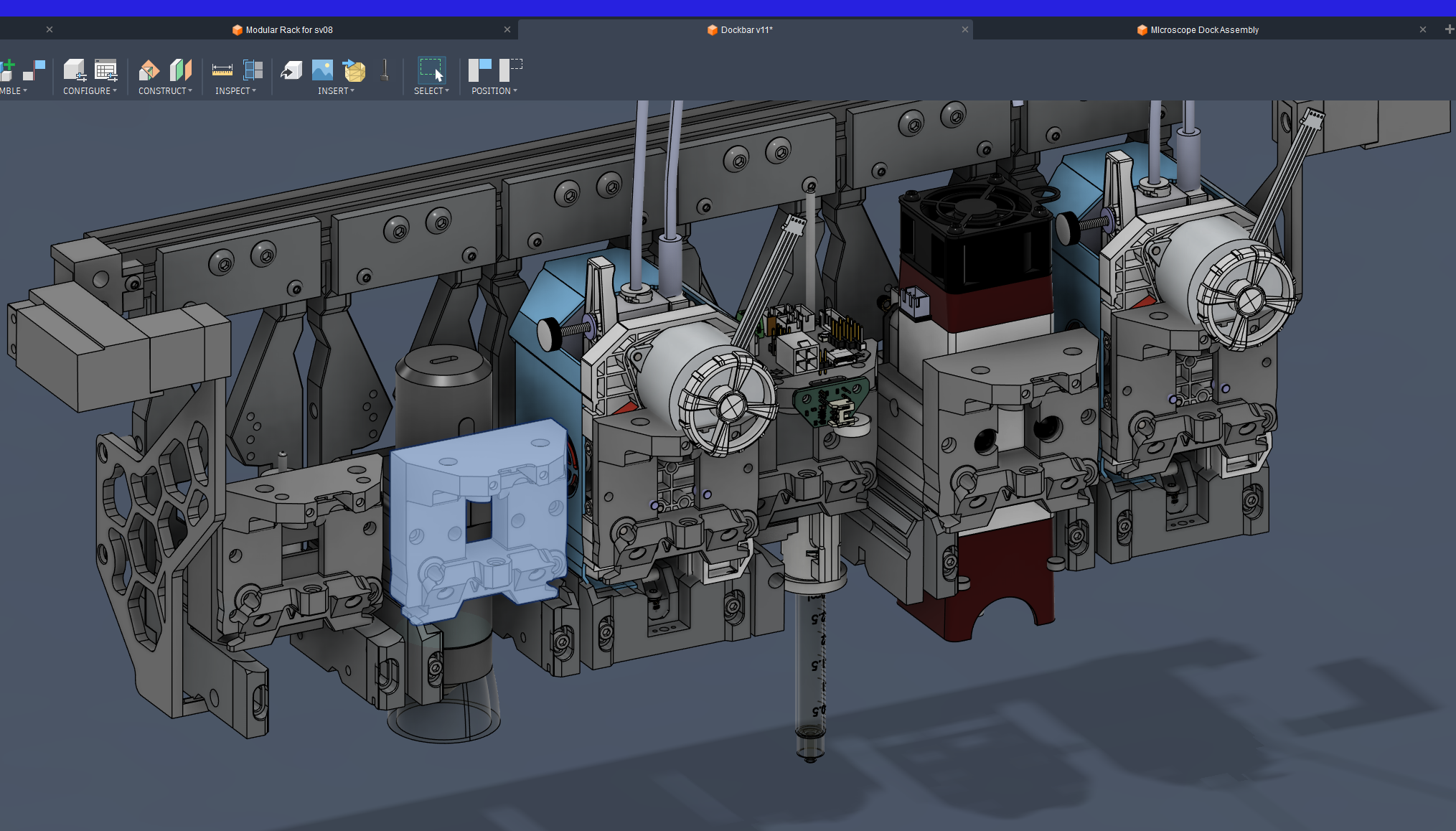
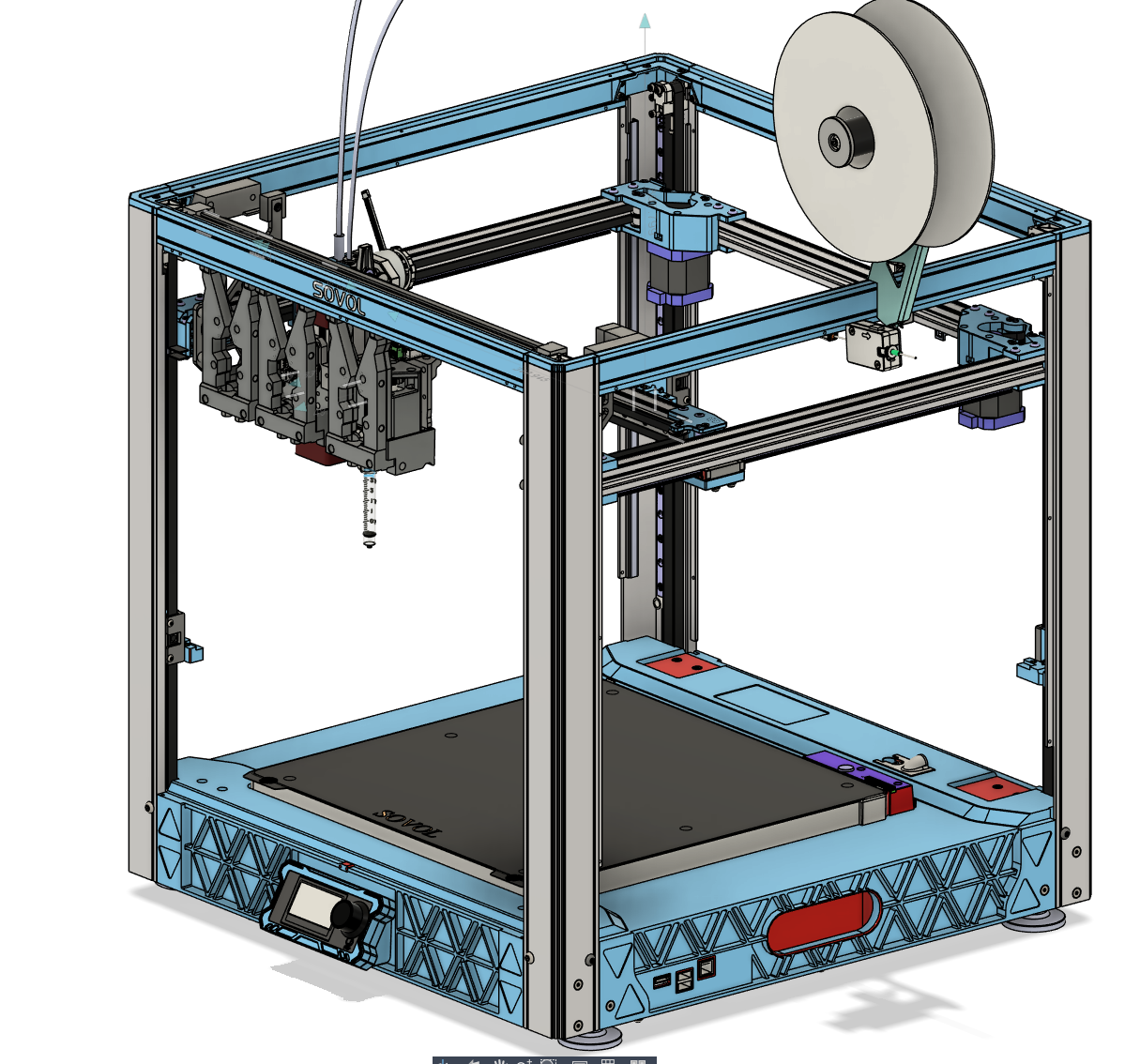
Fusion 360 file here> https://a360.co/4shNm0m

Modular Dock File here> https://a360.co/4rANtCX

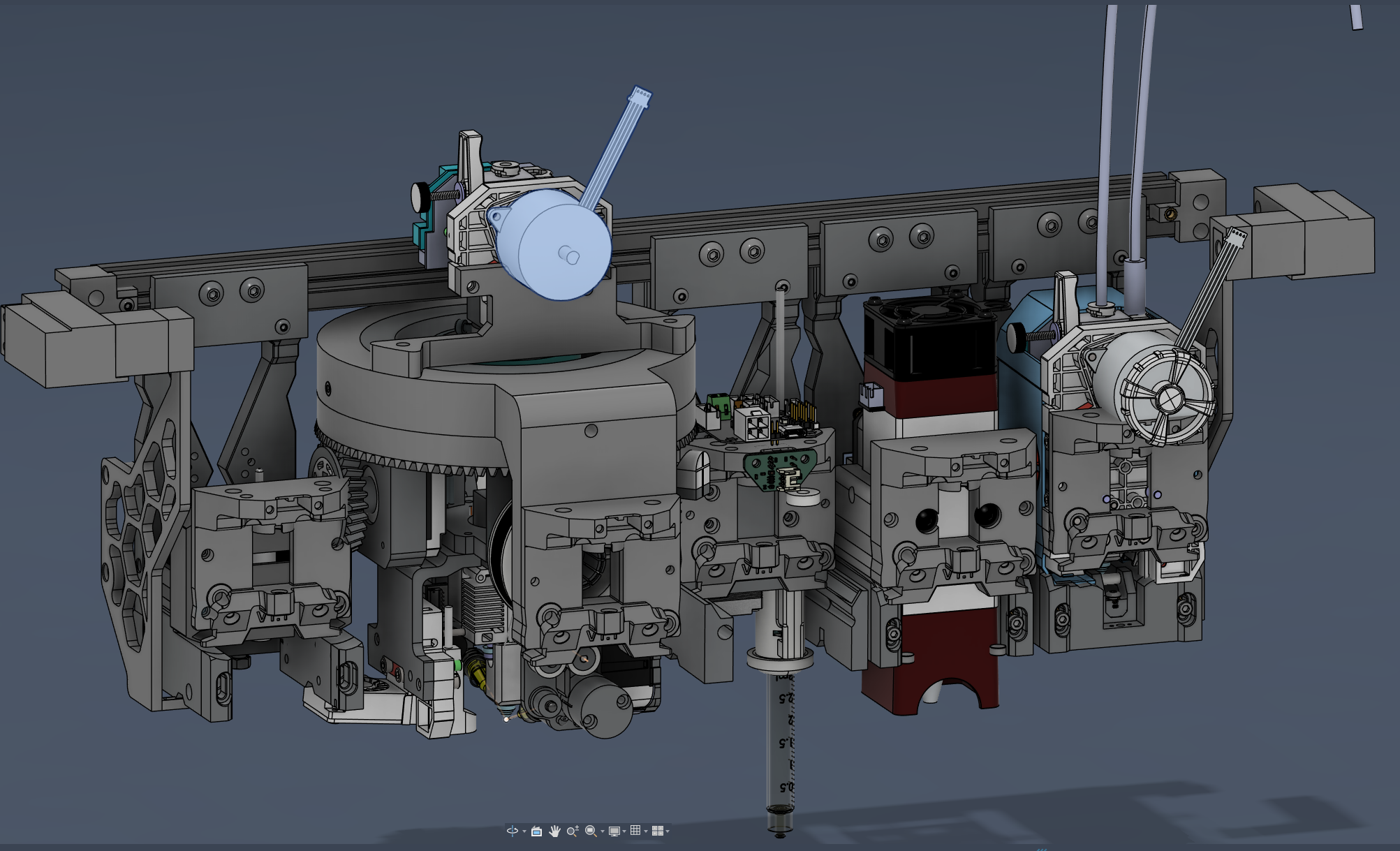
This version is with the wire embedder, but the microscope dock and second extruder is hidden.

This version is> https://a360.co/4cQAOYY

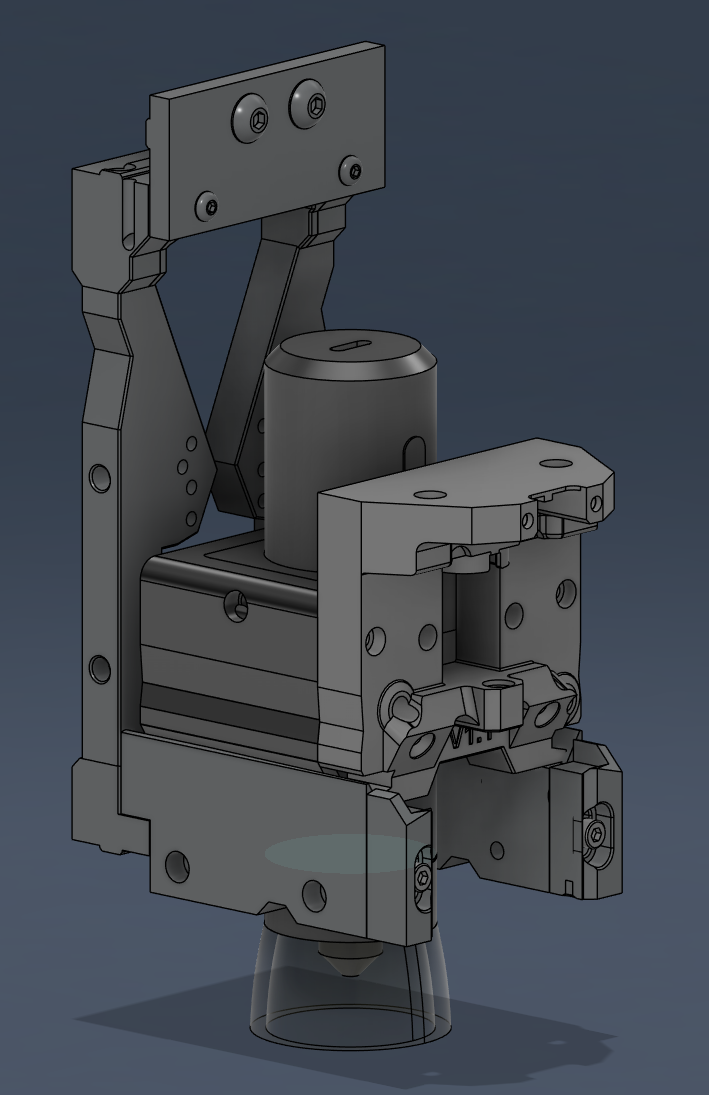
Wire Embedder model here> https://a360.co/4bsdkH0
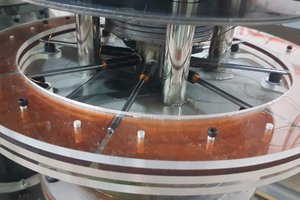
  • 3D Files for the Mechanical Design

    Joanbelk4 days ago 0 comments

    Note: Some screws and heat inserts are left.

    Fusion 360 file here> https://a360.co/4shNm0m

    Modular Dock File here> https://a360.co/4rANtCX

    This version is with the wire embedder, but the microscope dock and second extruder is hidden.

    This version is> https://a360.co/4cQAOYY

    Wire Embedder model here> https://a360.co/4bsdkH0
  • Wire Embedder Tool Update

    Joanbelk5 days ago 0 comments

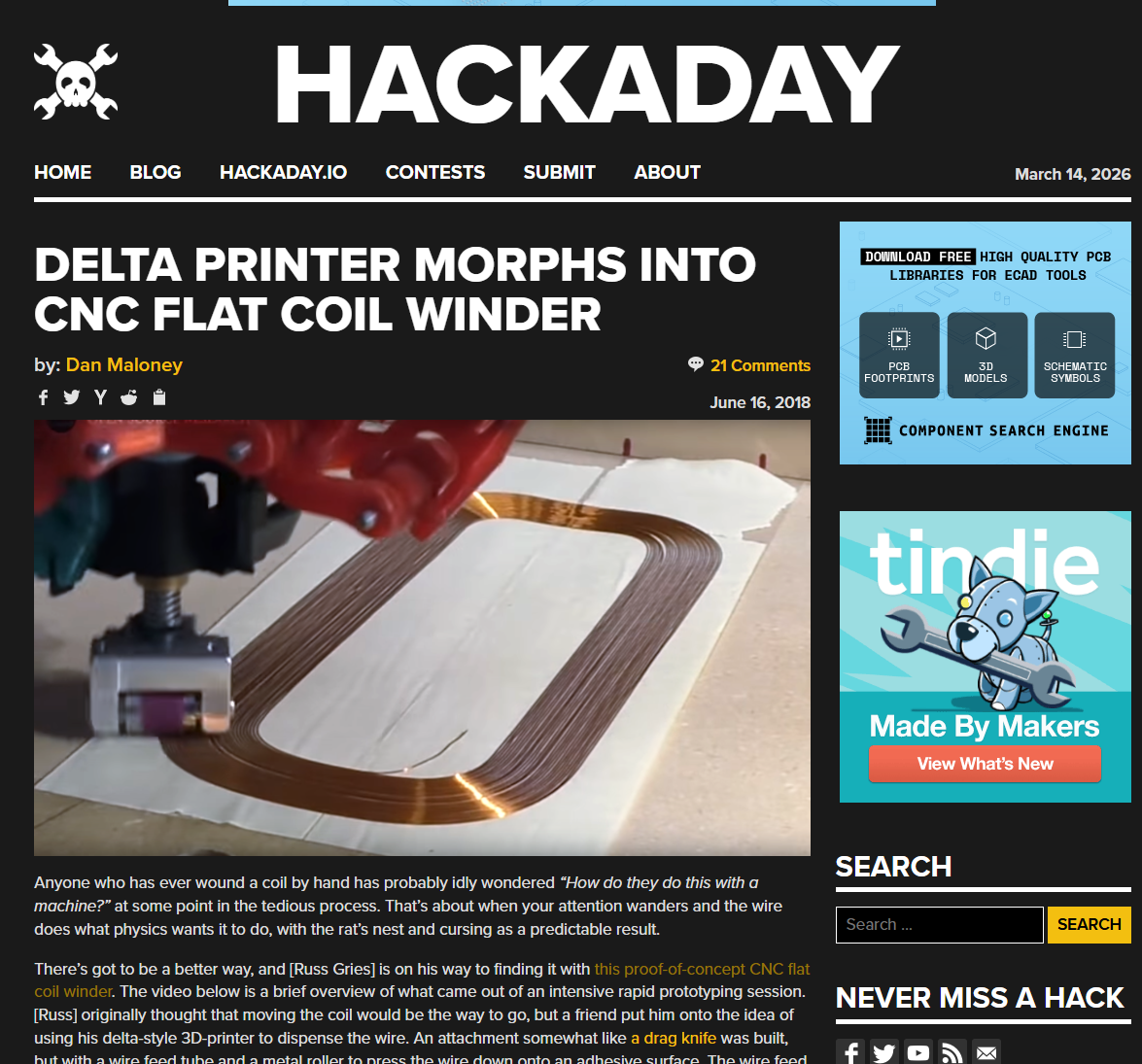
    Creating a wire embedder tool that fits into the toolchanger using this technique looks more promising that the previous one I was designing>
    Delta Printer Morphs Into CNC Flat Coil Winder | Hackaday

  • Next Steps for the project.

    Joanbelk6 days ago 0 comments

    In the following weeks, I will be focused on:

    0. Uploading the 3d files as i have for you to check if you want on github.

    1. Assembling the entire 3D printer enclosure.

    2. Mount the toolchanger.

    3. Upgrade the printer with an Eddy Current Sensor for bed leveling.

    4. Try to wire the Laser tool.

    5. Fabricate a power distribution PCB for connecting the tools to Power and USB. 

    Sad news is that I will have to look for a full-time job as my savings are depleting in the last 5 months, but I thought this project was going to be faster. At the same time, will be a good chance for taking time to build it better, experimenting and save some money for buying more parts for this project.

    I am very grateful with God allowing me to pursue this path.

    Thanks Jesus, thanks Mary for the inspiration, motivation, guidance and the means to make all this!

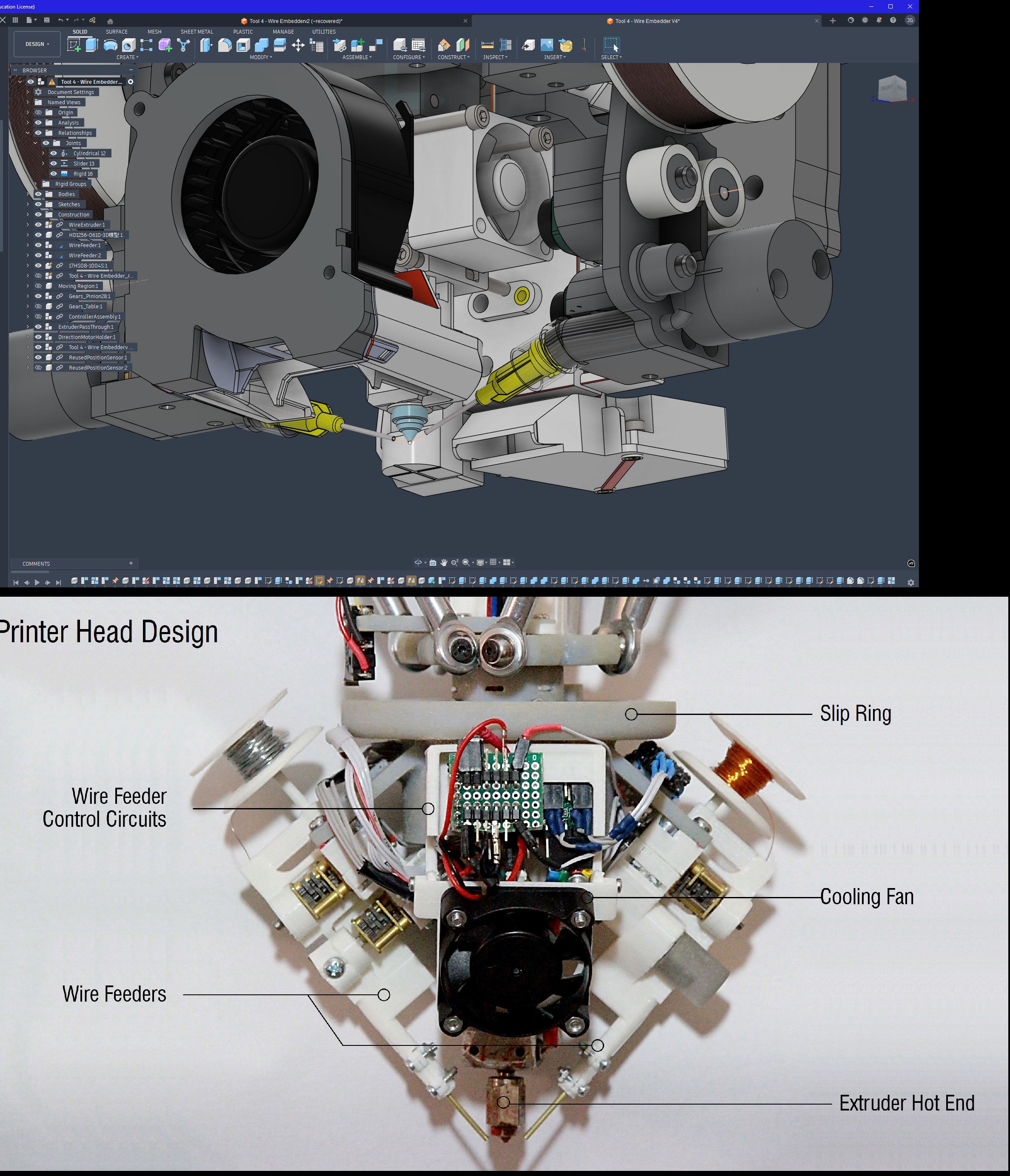
  • Designed first version prototype mechanical design for the Wire Embedder

    Joanbelk6 days ago 0 comments

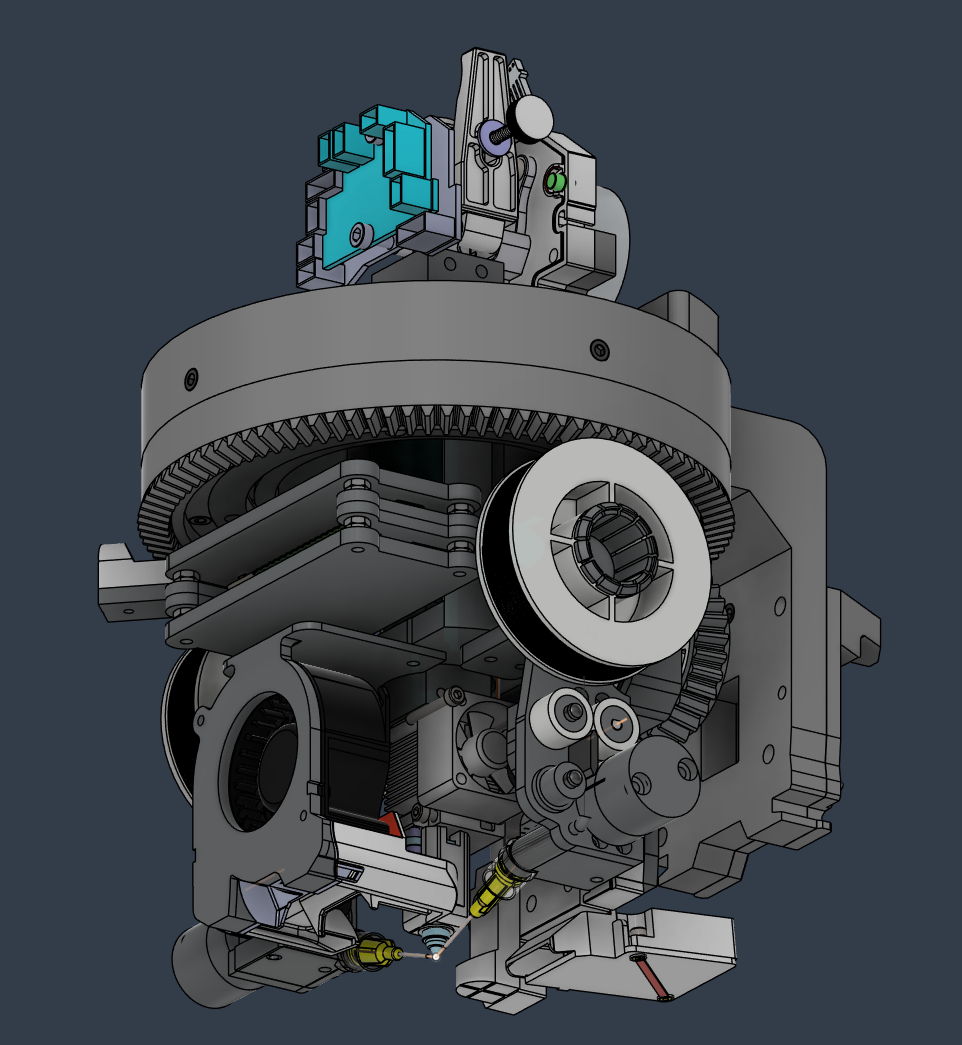
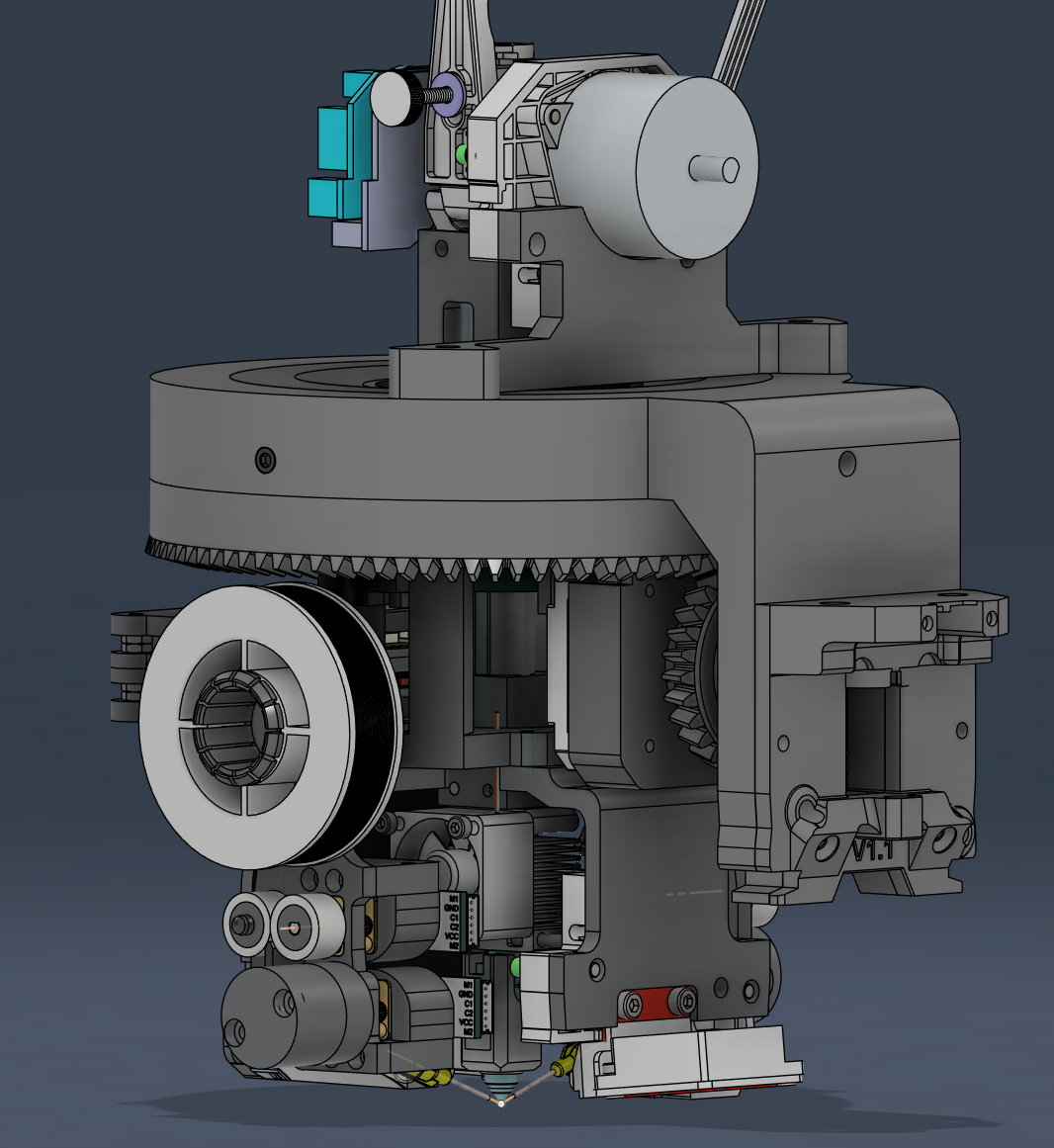
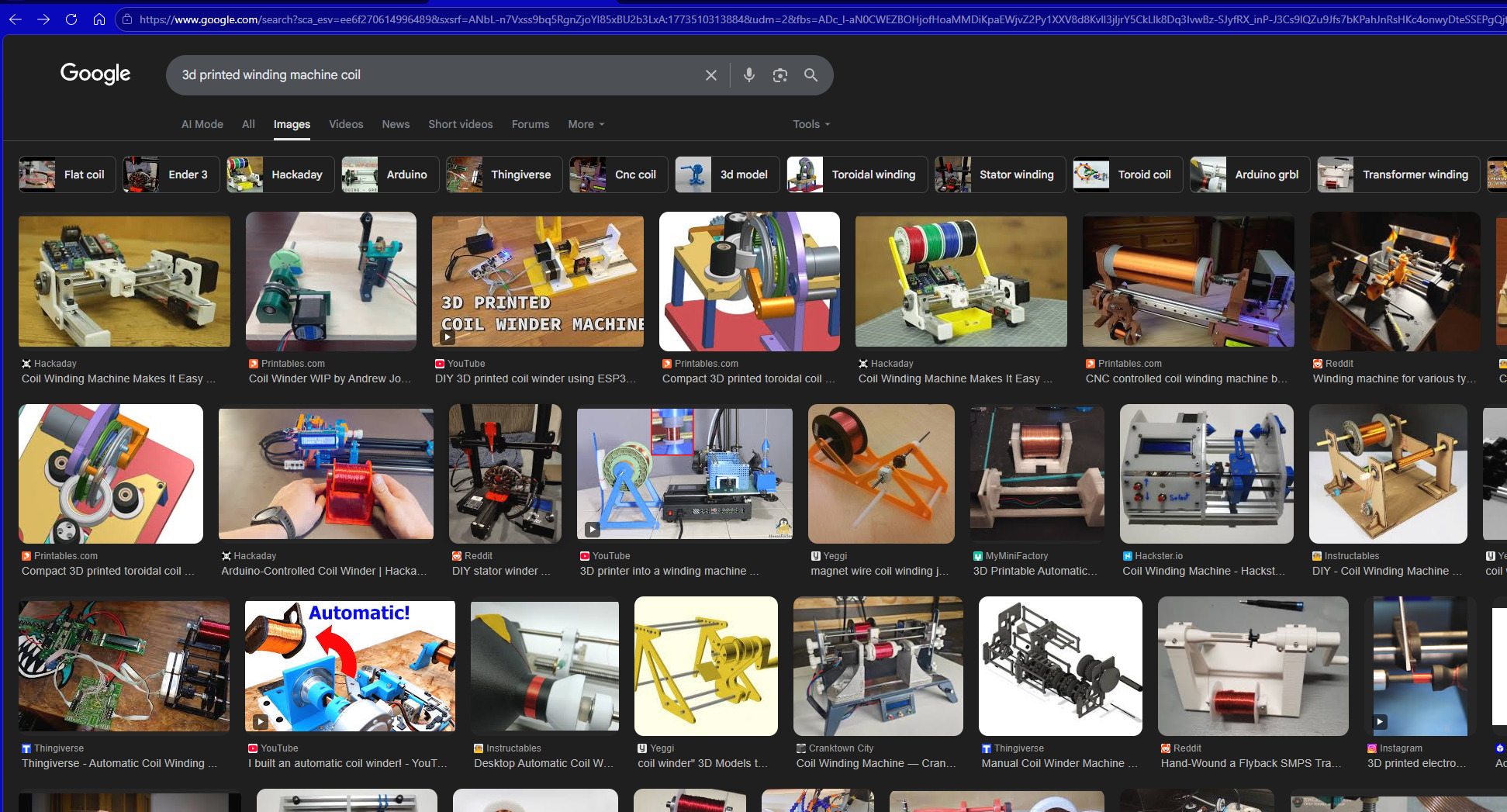
    In the last weeks, most of the time, I ran a designing marathon to draw the most complex design I ever had (although, truth is most of my designs can be counted with one hand). At the end, after "finishing" I realized that a custom coil winding machine might be what I really needed from the beginning, or I machine like a wire embedder i saw someone made on hackaday long ago. Like this machines>

    At the end, the wire embedder tool got so big, I cant fit in the toolchangers. Maybe I will have to put manually in the projects that involves some custom coils.

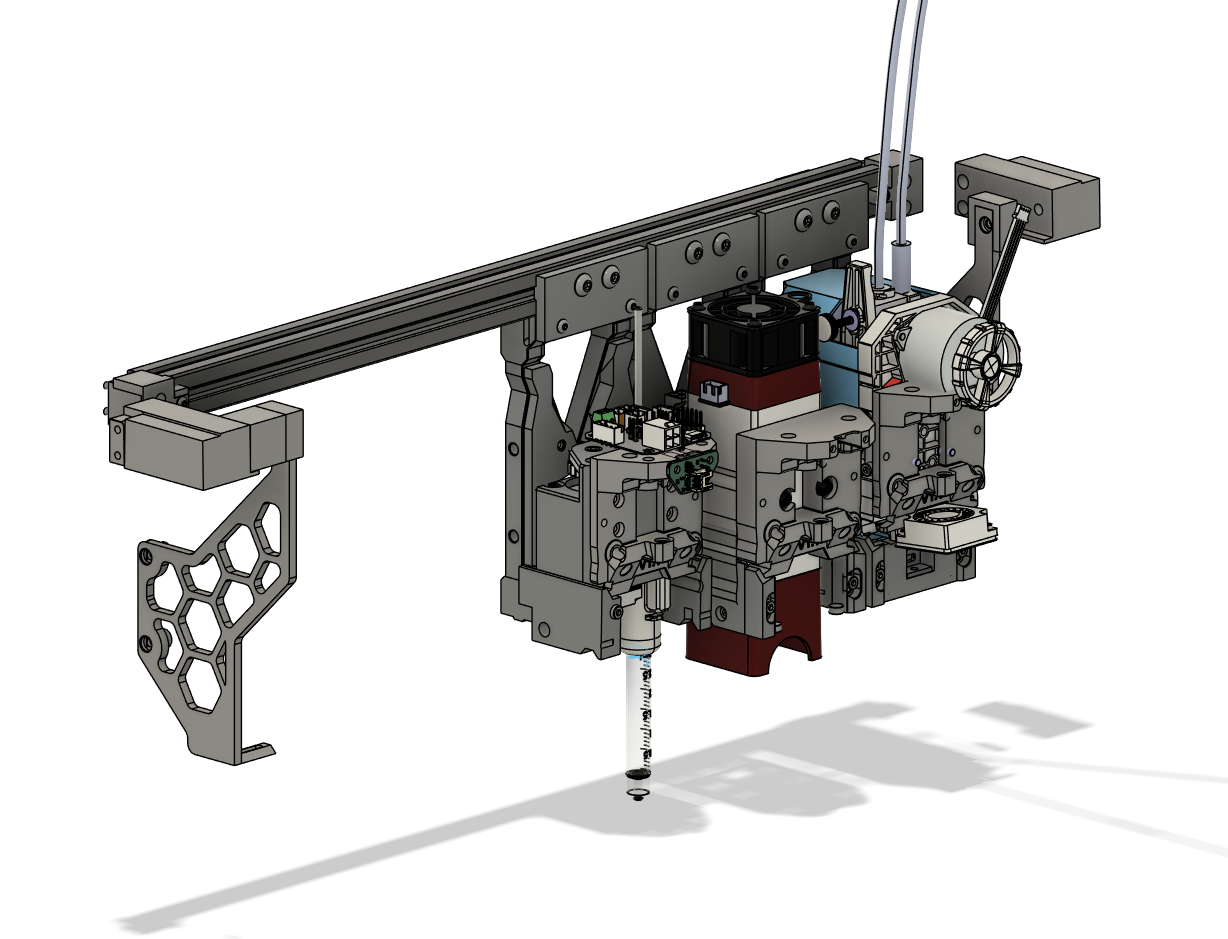
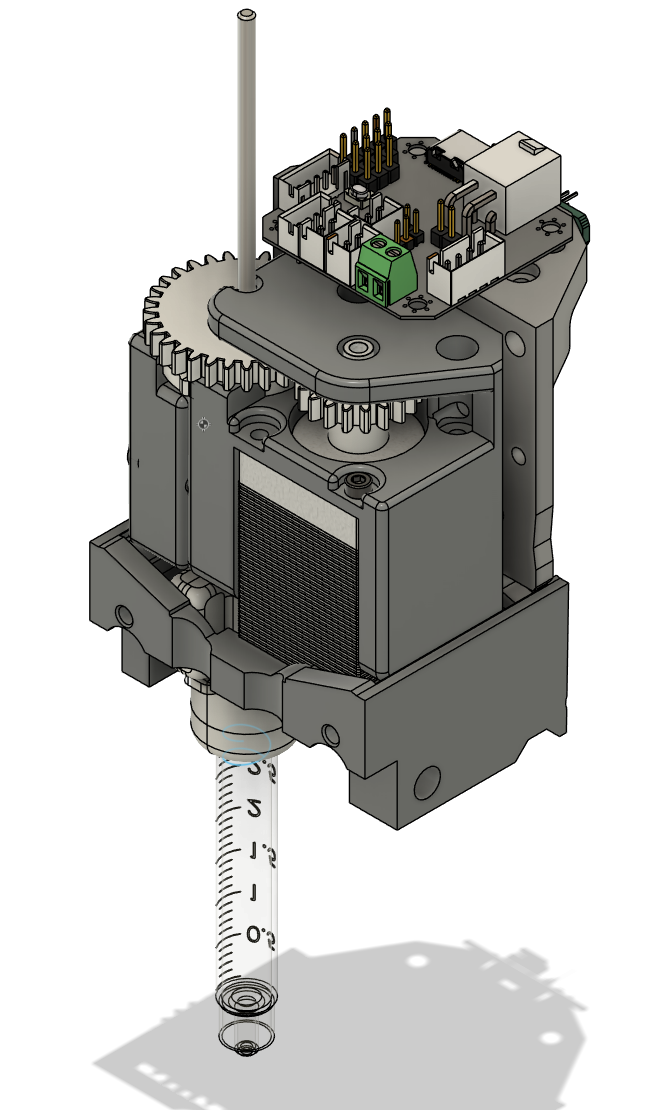
    This is a view of  the design:

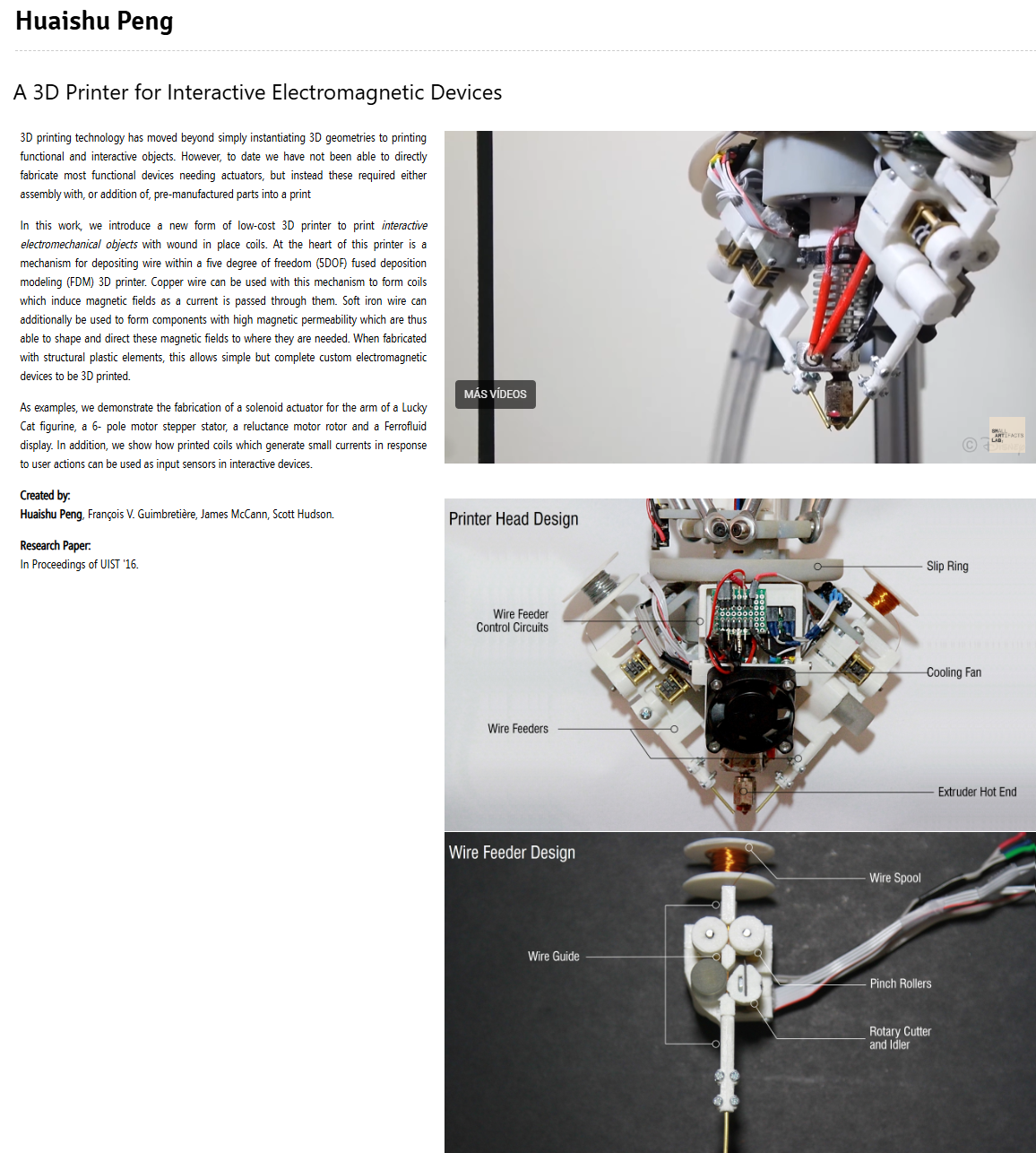
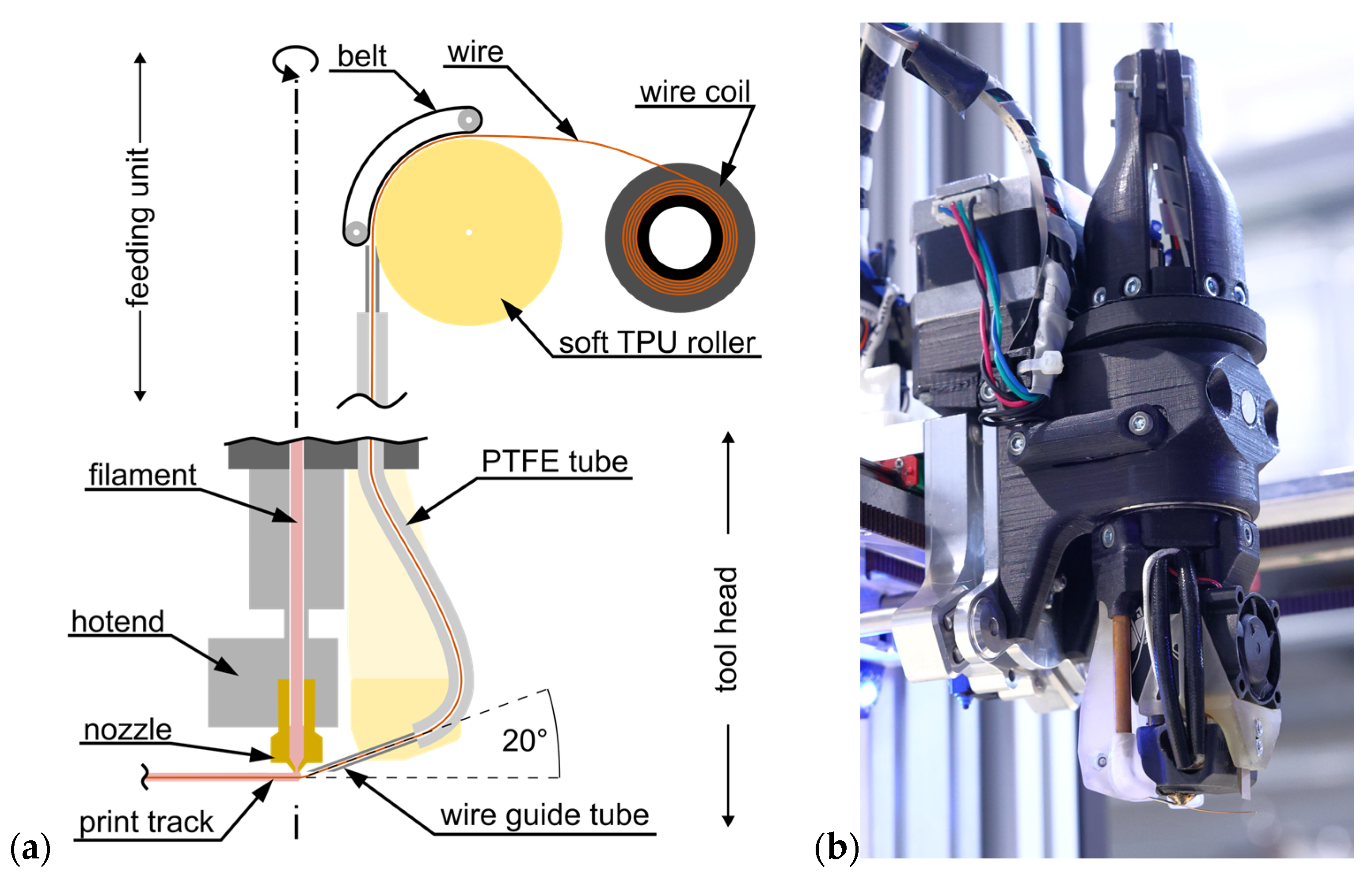
    For reference, used the following research papers from Disney and Fraunhofer Institute:

    A 3D Printer for Interactive Electromagnetic Devices

    Development of a Stable Process for Wire Embedding in Fused Filament Fabrication Printing Using a Geometric Correction Model

    Here you can see how they compare. I aligned the syringe Tips with an angle of 20degres.

    I wish I had enough to buy the Sovol SV08 Max, or a Voron Kit with CNC parts, but at the end the first prototype of the wire embedder is massive and will not be able to fit for auto toolchange on the toolchanger. Maybe I can allocate another space inside but will need manual change. Similar to the problem with the DragKnife tool.

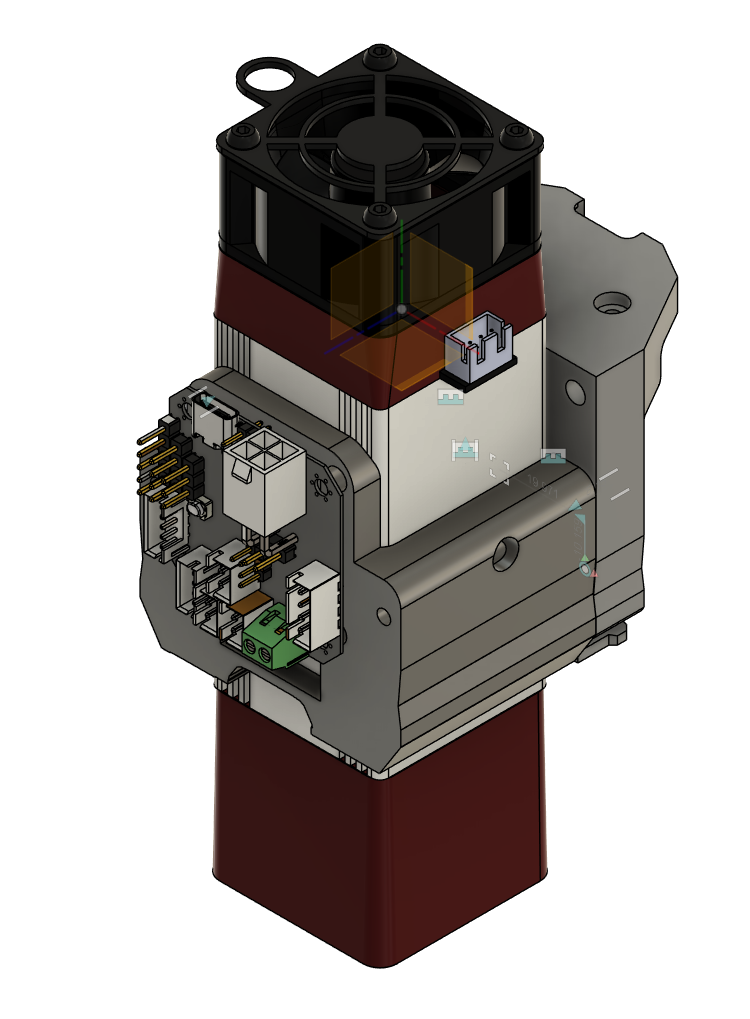
  • Added a Microscope for surface scanning and zeroing.

    Joanbelk6 days ago 0 comments

    In the last weeks, were working in the following:

    1. Add a cheap microscope tool for surface scanning in the 3d printer bed:

    I realized that due to my time constraints, anxiety and philosophy of build as fast as possible while you think, the process of creating the PCB will likely need some etching, this means I will have to mount and unmount or rotate as I don't have a 4th axis on the printer. This will involve the constant need of finding the new reference point zero or inspecting the job with the scanner.

    The adding of this microscope had a space cost, now the profile if all full of tools and there is no space for the wire embedding. This let no option to interchange tools according to the jobs and storing outside the printer. (Microscope on amazon)

    Follow on part 2.

  • Interesting news research

    Joanbelk02/19/2026 at 14:51 0 comments

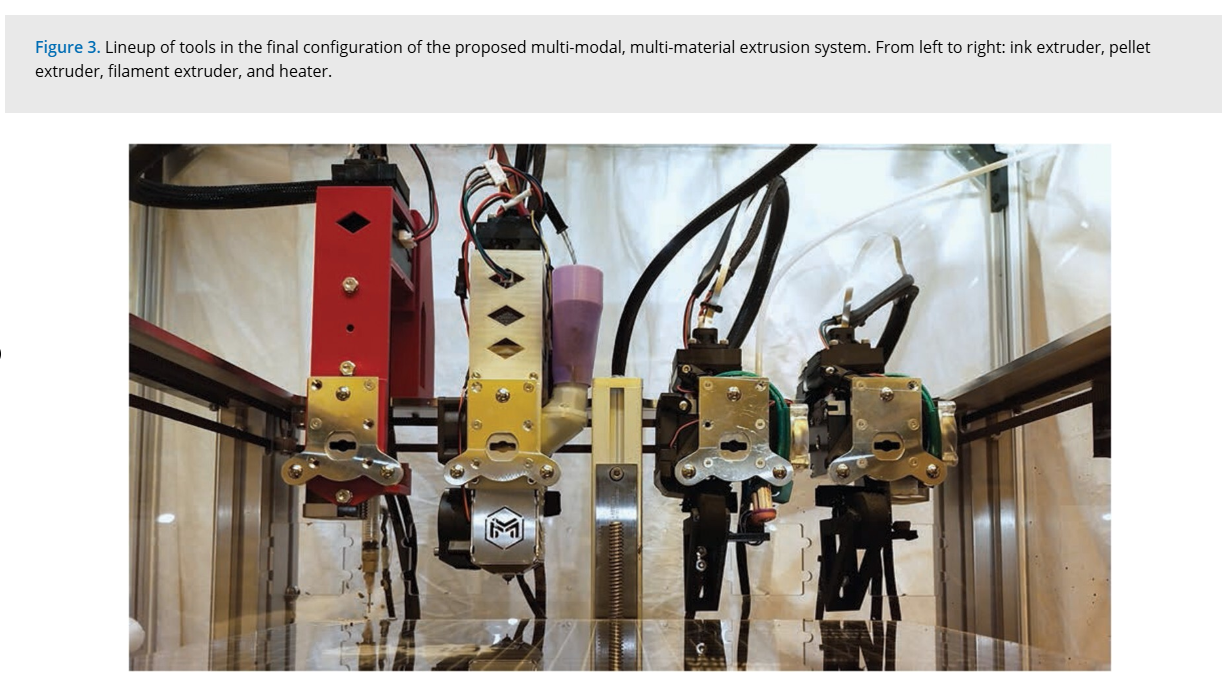
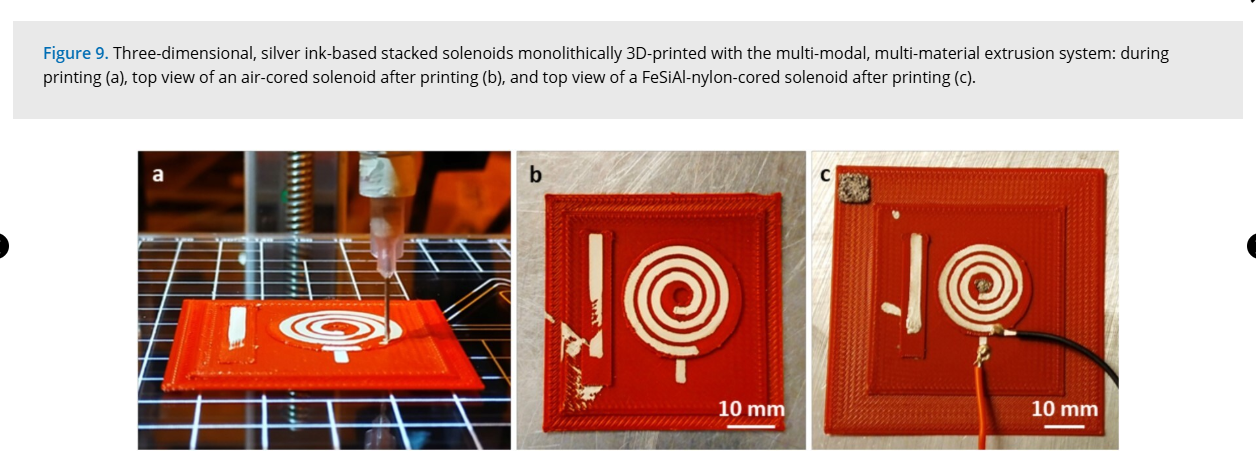
    Yesterday I was very glad to see a new research paper published by people of the MIT with a machine very similar to this project. 

    Paper> Fully 3D-Printed electric motor manufactured via multi-modal, multi-material extrusion

  • Dock and Toolchanger Assembly

    Joanbelk02/19/2026 at 14:38 0 comments

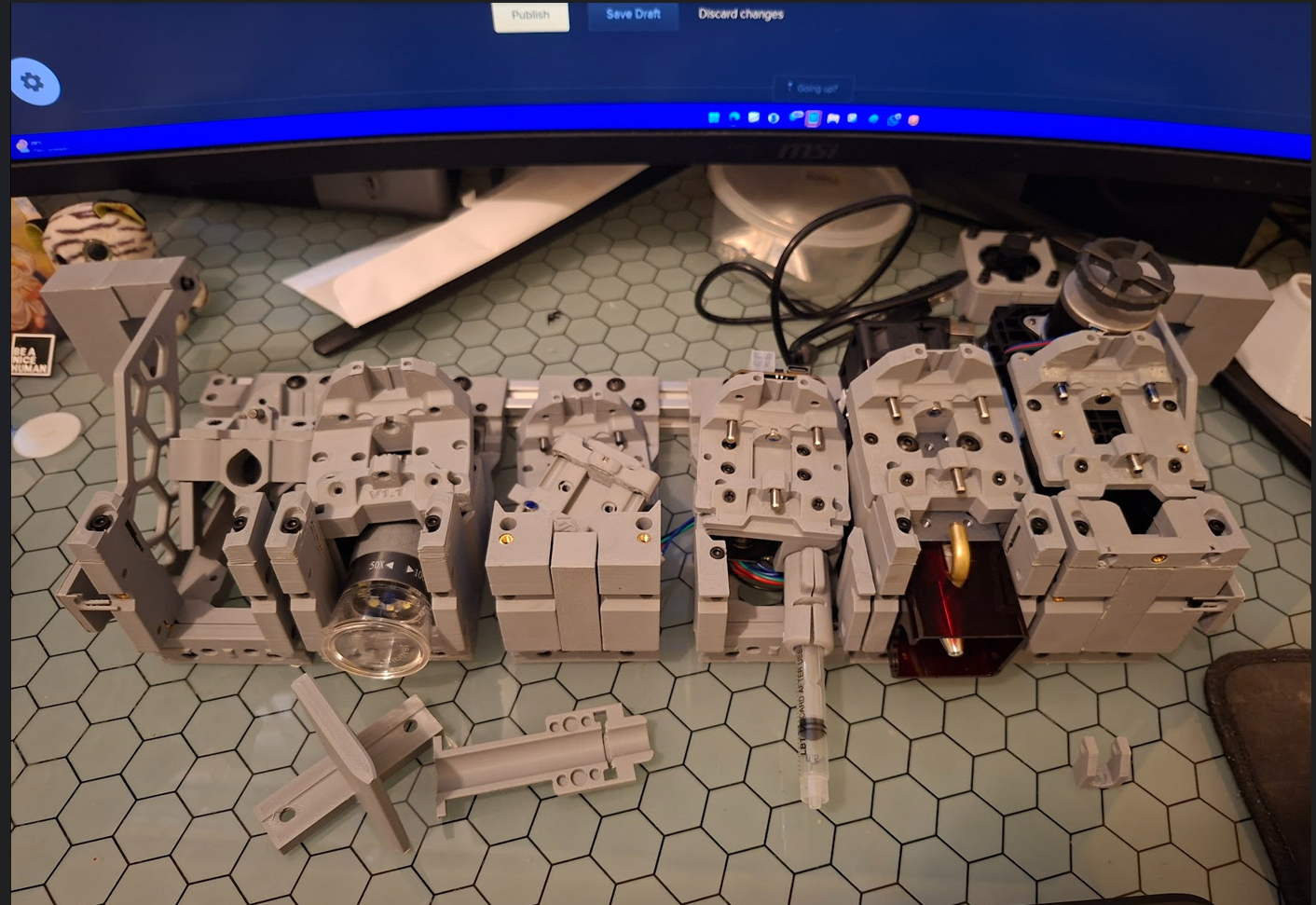
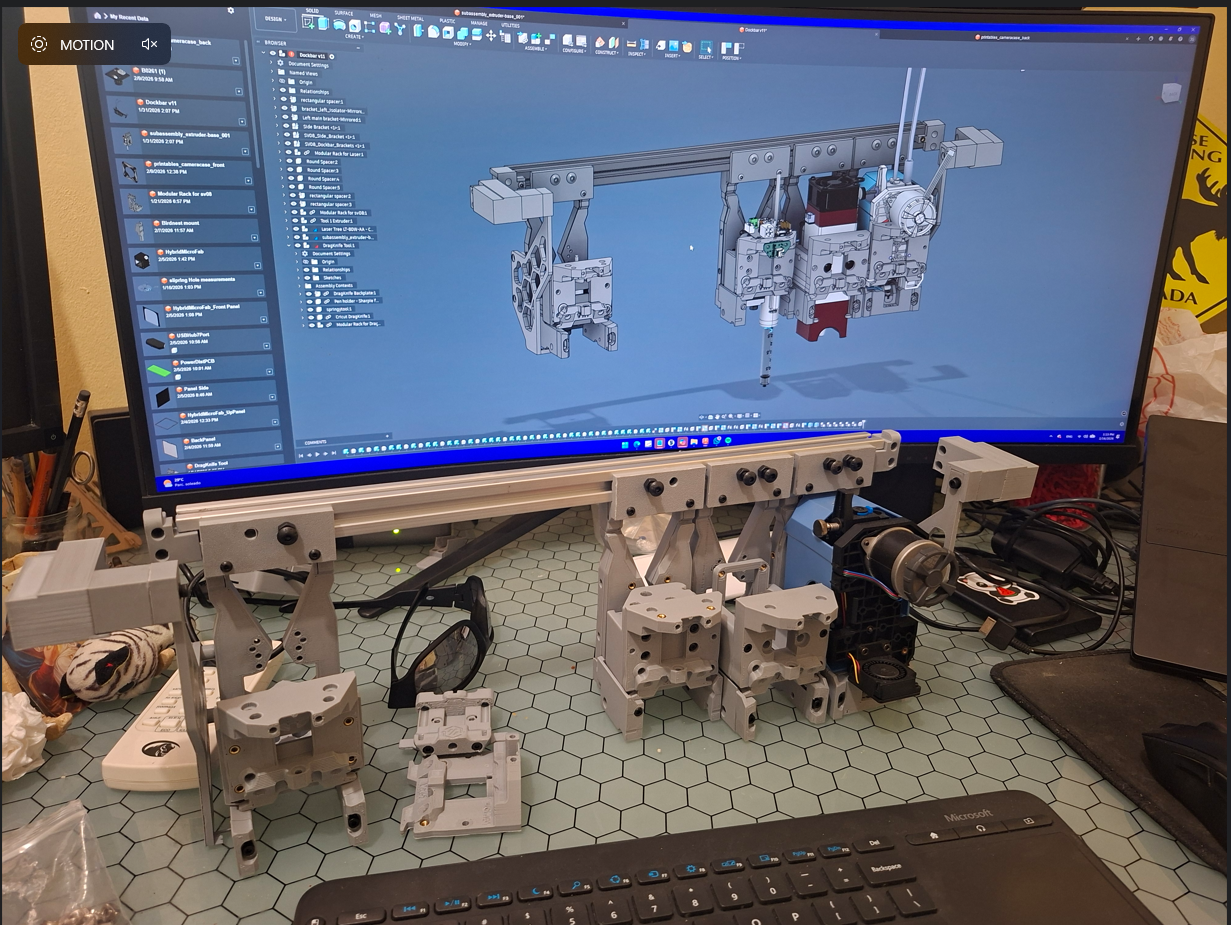
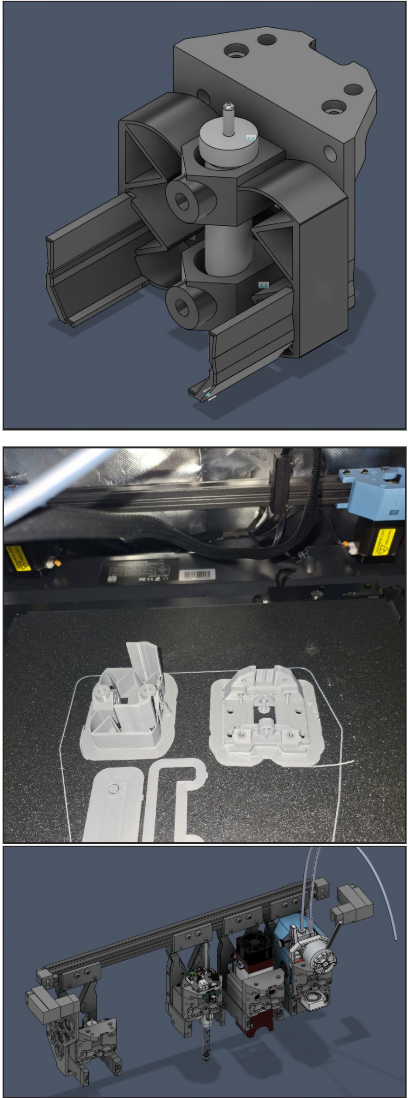
    This week I have been assembling the docks for the toolchanger. I have encountered some issues, mainly with the stealth toolchanger coupling mechanism. I had to order new threaded dowel pins and more M5 screws for the profile... will have to wait some days :(. Meanwhile here is a photoshoot>

  • Printing dock parts and enclosure redesign

    Joanbelk02/19/2026 at 14:17 0 comments

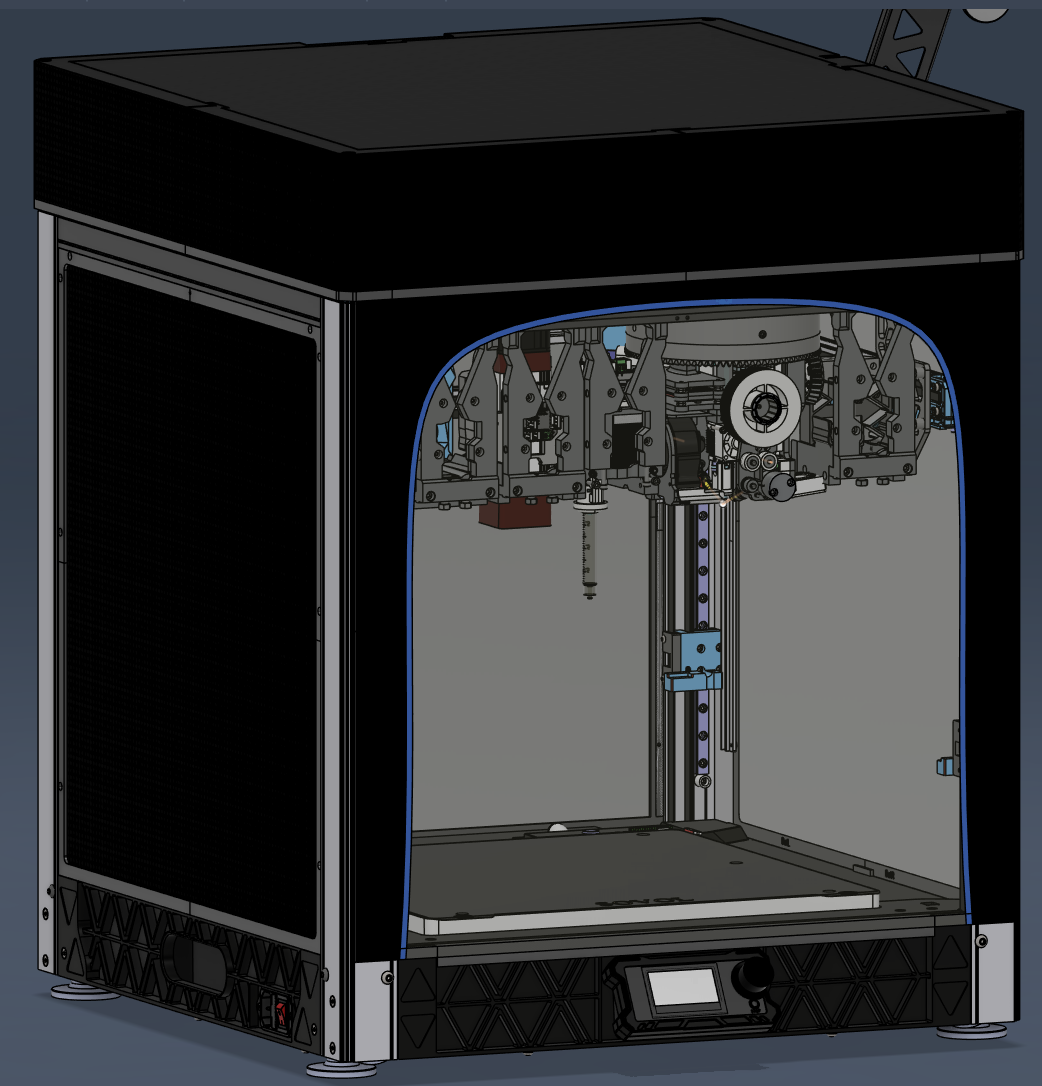
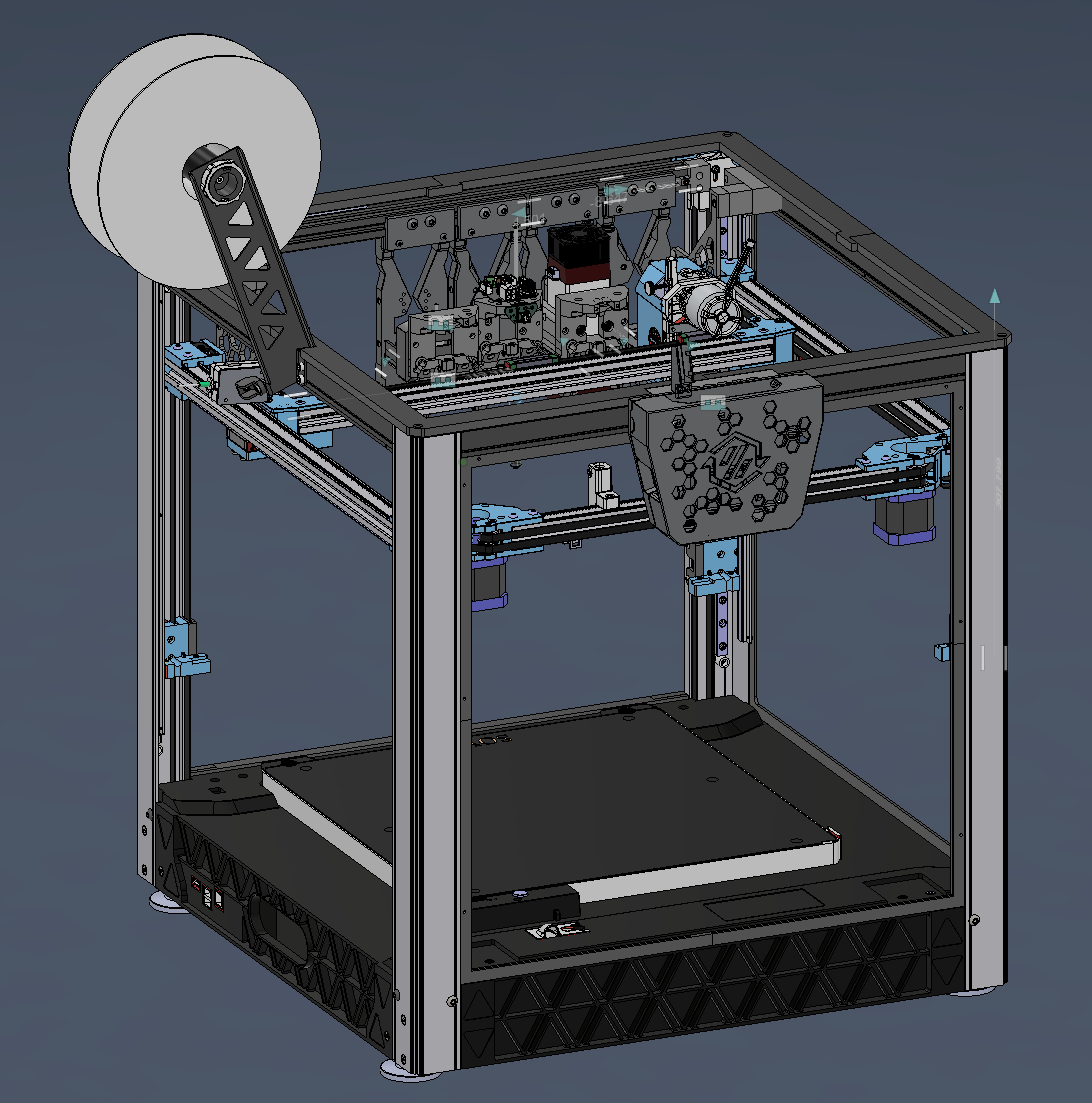
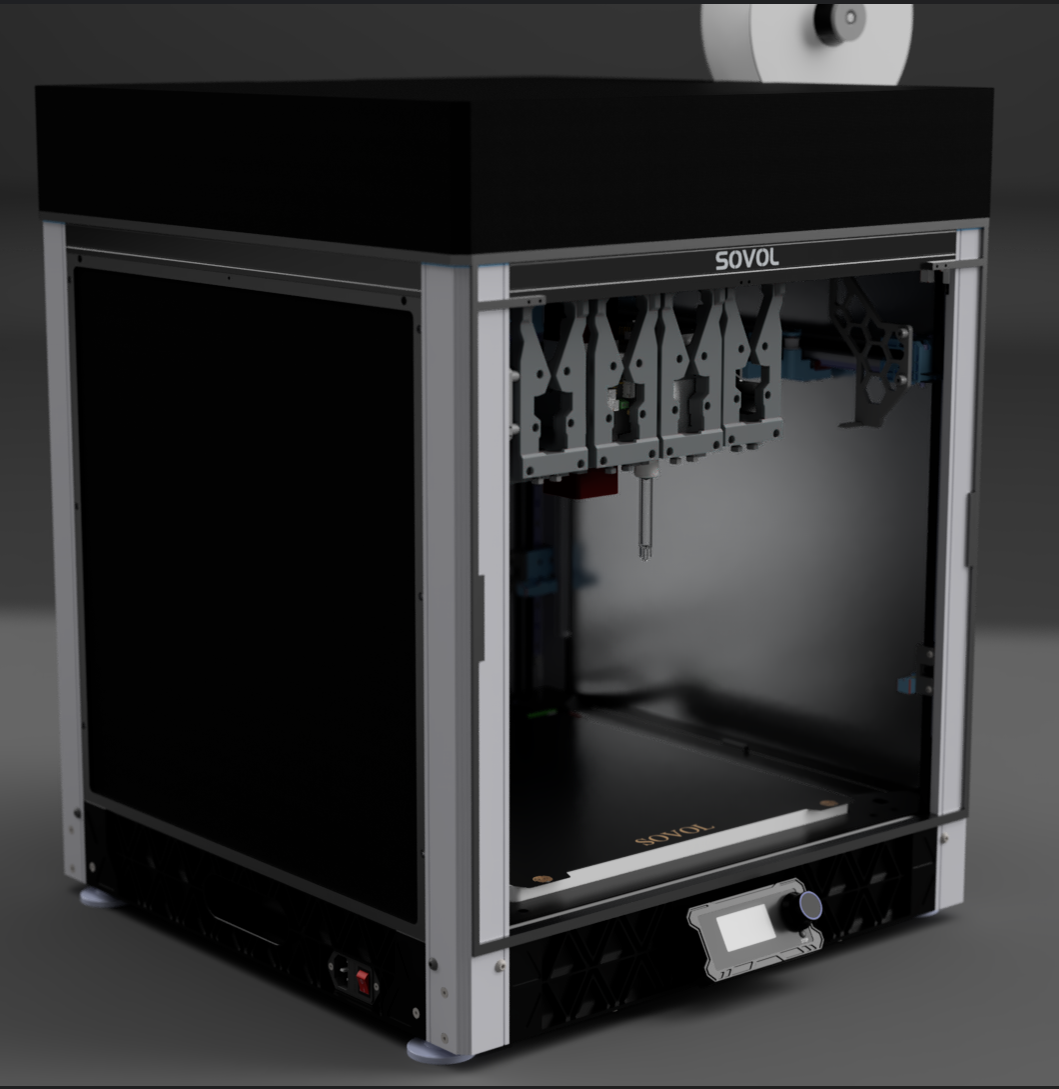
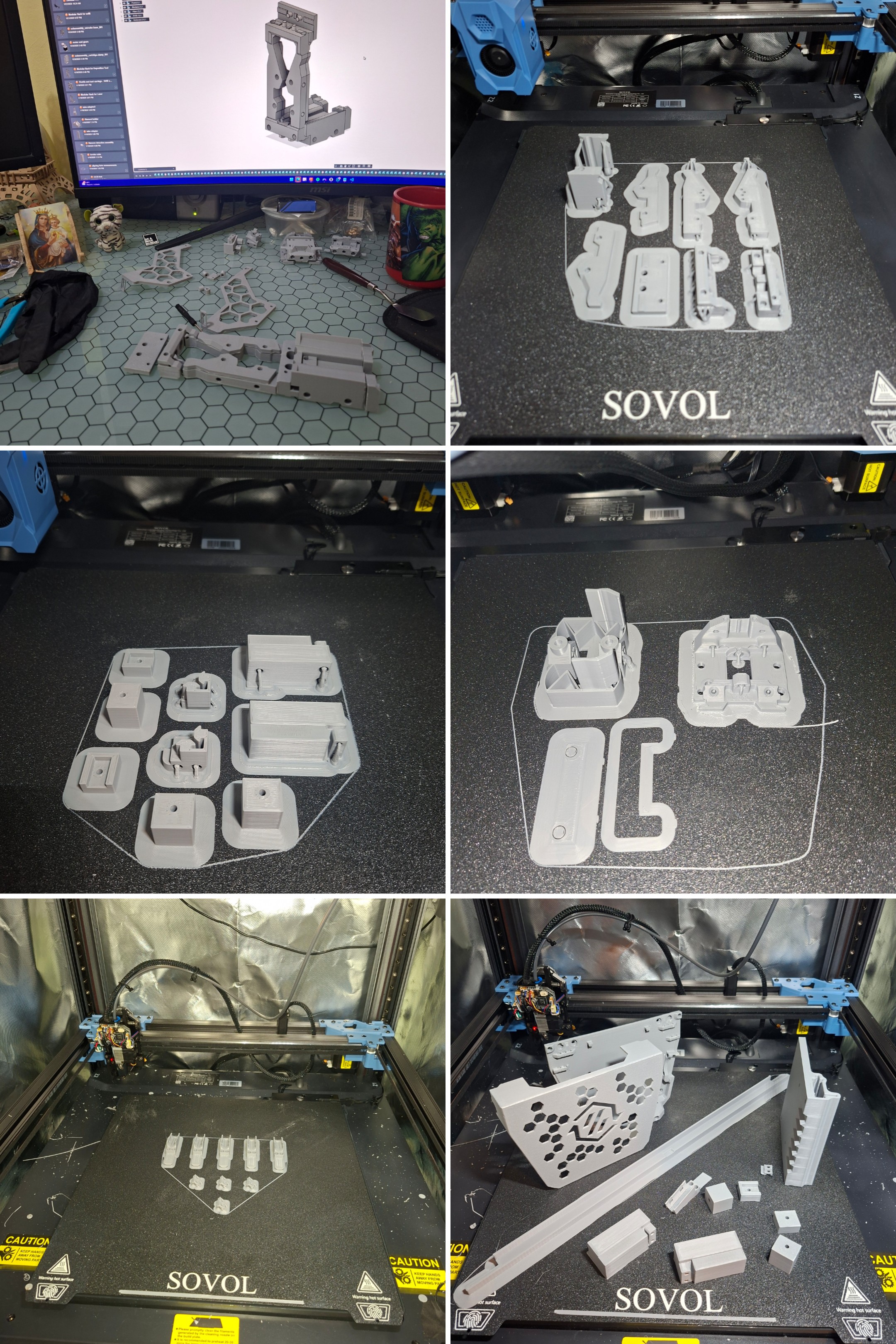
    In the last weeks, I have been printing many parts of the project and working ASAP with the fear of being taken for a full time job. Also designed an enclosure for the printer and shifted the design of the Wire Embedder tool activity for the end. I have also ordered the chemicals for mixing the reactive copper ink.

  • ASAP Designed and printed the DragKnife and PenHolder tool.

    Joanbelk01/30/2026 at 02:21 0 comments


    Yesterday, I designed and printed the DragKnife and PenHolder tool. I used the Springy pen holder for 3D printer by arpruss. Next I hope can design the enclosure and the final tool until then... the Wire Embedder!

  • Partial Designing Phase

    Joanbelk01/27/2026 at 17:52 0 comments

    From January 2 to January 21, I designed the docks and tools, with the help of the StealthChanger open source project, OpenPnP and cad models available in grabcad.

View all 12 project logs

Enjoy this project?

Share

Discussions

Similar Projects

Does this project spark your interest?

Become a member to follow this project and never miss any updates