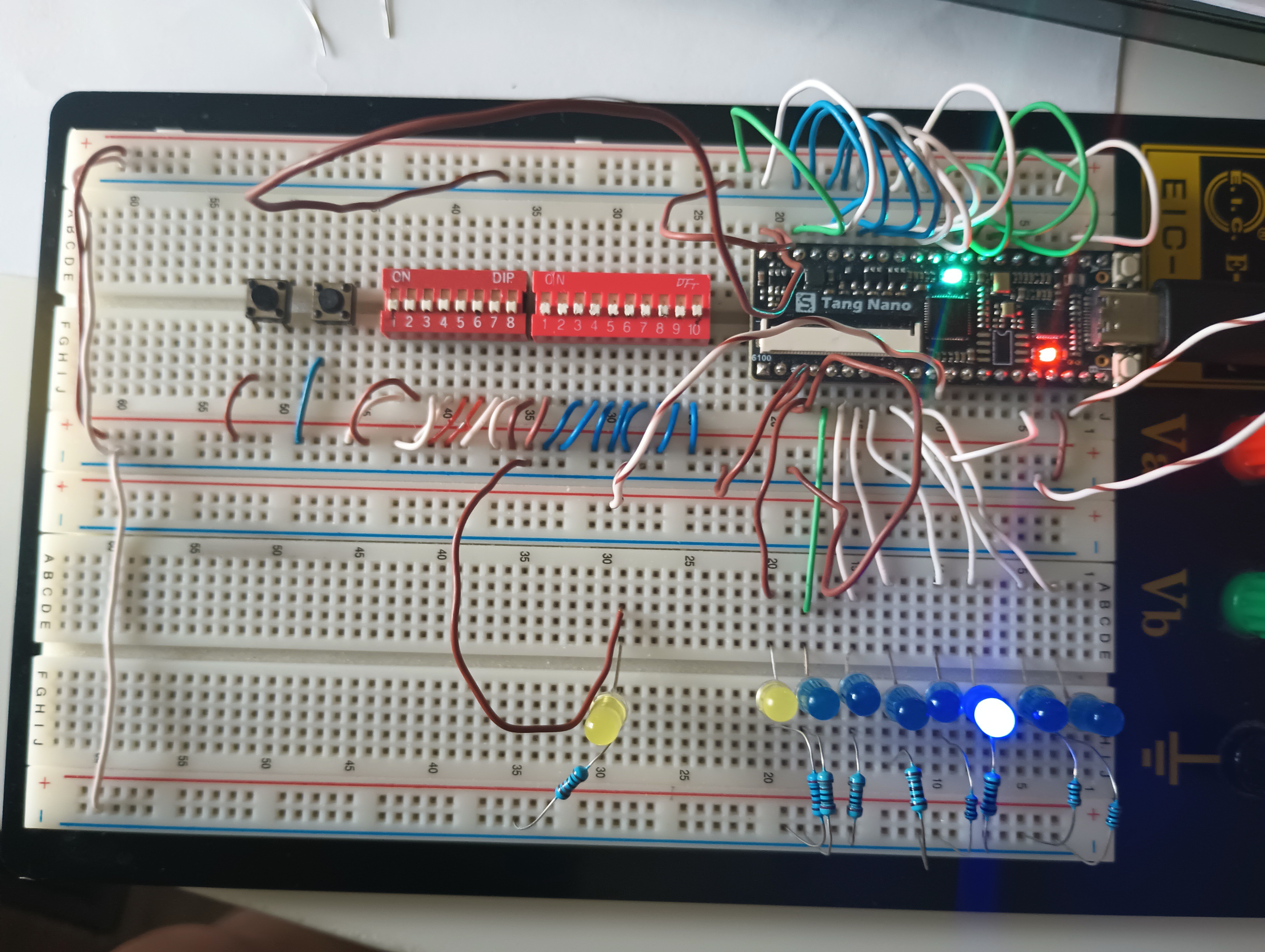
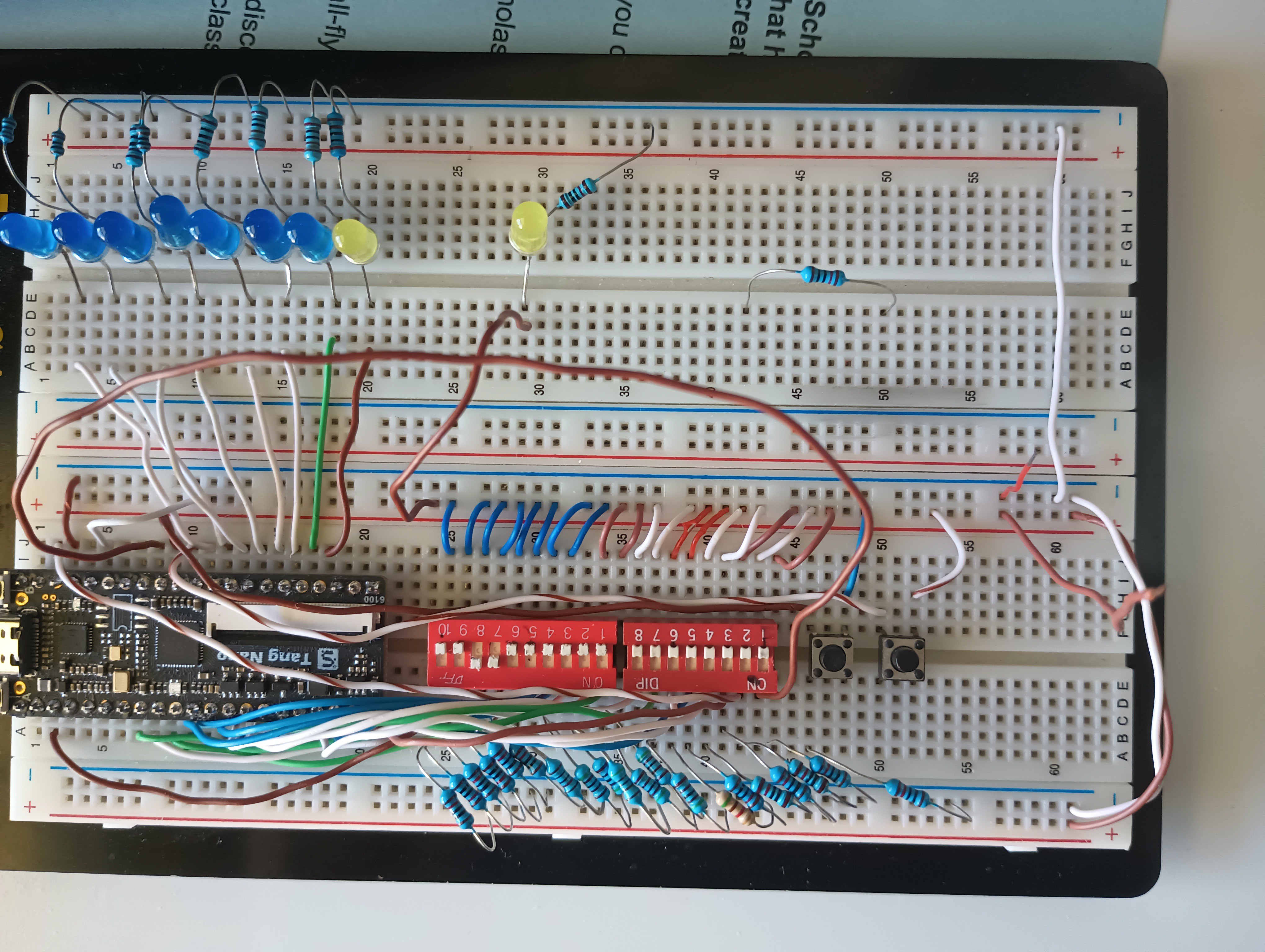
I have a Youtube video about this project and this is the Intro, Part 1: Program Counters, and Part 2: Registers
An 8th grader designing and building a real 8-bit CPU from scratch using custom architecture and discrete logic.
To make the experience fit your profile, pick a username and tell us what interests you.
We found and based on your interests.
I have a Youtube video about this project and this is the Intro, Part 1: Program Counters, and Part 2: Registers
instr.txtInstruction set and microcodeplain - 4.73 kB - 02/06/2026 at 22:56 |
|
|
CPU_4.0.digMain CPUdig - 326.08 kB - 02/06/2026 at 22:56 |
|
|
ALU_V2.digmain ALUdig - 83.19 kB - 02/06/2026 at 22:56 |
|
|
instr-data.hexThe stored hex format of thehex - 67.56 kB - 02/06/2026 at 22:56 |
|
|
Stack_FOR_MIT.digStack for the CPUdig - 22.27 kB - 02/06/2026 at 22:56 |
|
YES! The FPGA works! It didn't work because I used one of the MODE pins as a normal I/O and when I would boot it it would not boot my program. I also changed the switches to just wires because that way I wouldn't have to worry about pull-down resistors.
Please comment or follow! Thanks!
So the ALUI doesn't exactly work. I took the FPGA I was using and put it into a testing circuit. I'm testing it and it doesn't work. Trying to fix it hopefully I will find a solution sometime soon! If you have anything to say please comment! Thanks! Here's a picture:
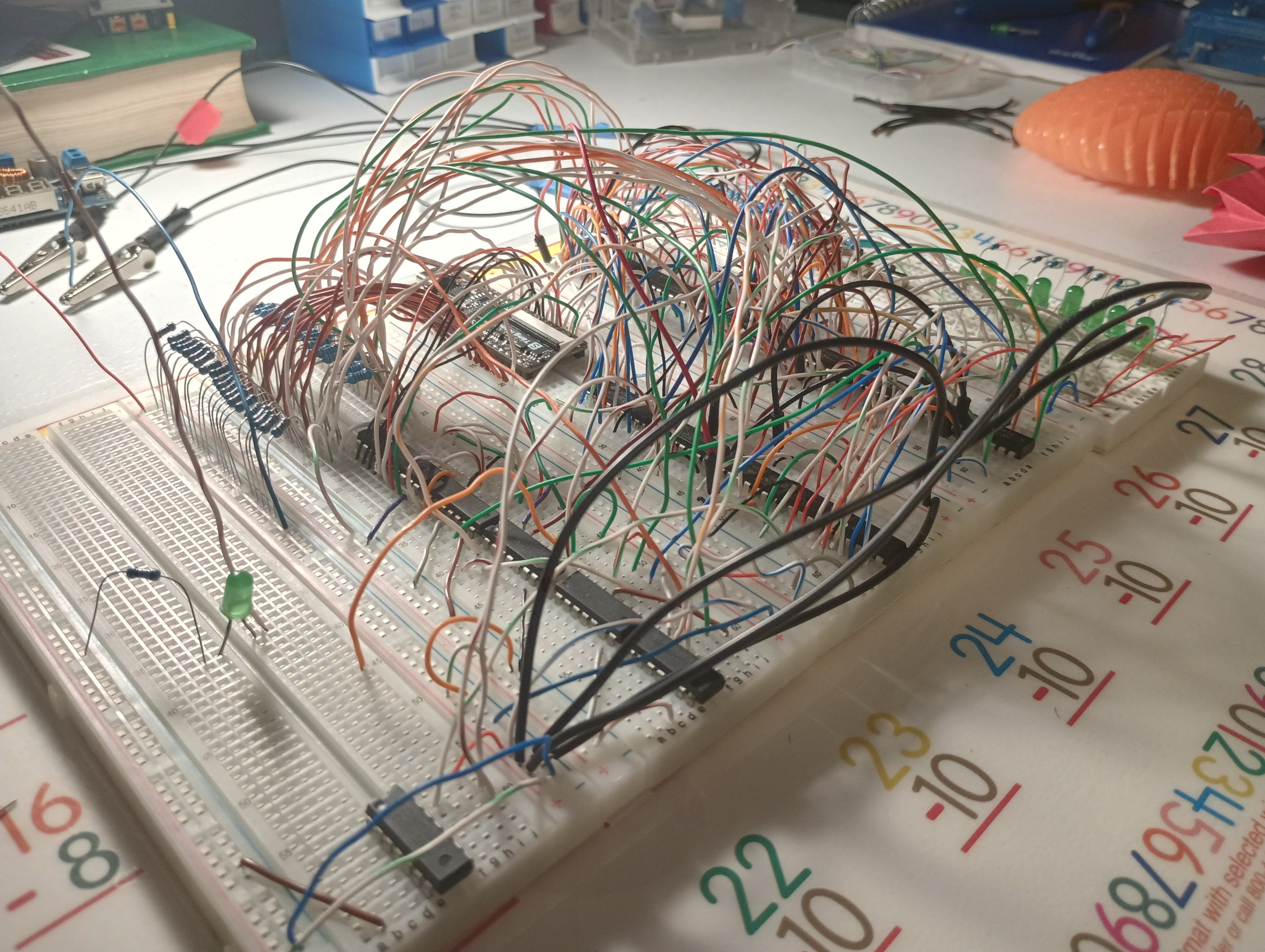
I finally finished building the ALU part! Here's a picture. The FPGA in the middle does addition, subtraction, complement, and, or, xor, and shifts. The rest off the chips are buffers, comparaters, registers, and the A register. The eight LEDs are connected to the data bus. If you have any suggestions please comment! Thanks!
Create an account to leave a comment. Already have an account? Log In.
Become a member to follow this project and never miss any updates
By using our website and services, you expressly agree to the placement of our performance, functionality, and advertising cookies. Learn More
That’s absolutely amazing for your age!