Learning to design and build a 24GHz FMCW Radar from first principles
To make the experience fit your profile, pick a username and tell us what interests you.
We found and based on your interests.
The next part of this project was to understand what exactly is a FMCW Radar?
In a Frequency-Modulated Continuous Wave (FMCW) Radar, a signal is transmitted in which its frequency increases with time, this is known as "chirp"
“Chirpiness” is the rate of change of the instantaneous frequency.
The same concept applies and the signal is reflected off a target and comes back delayed.
Both signals are compared against each other the transmitted and received. This is done using a mixer. The difference between the two is called the “beat frequency”
This is done because frequency is changing with time, and the two frequencies the one transmitted and received are slightly different. This beat frequency lets you compute range.
The closer the target is the lower the beat frequency, and the farther the target is, the higher the beat frequency.
What do we do with this?
Fast Fourier Transform (FFT) transfers this data from the time domain into the frequency domain. This is done on the radar. The beat frequency is sampled, runs an FFT, and each FFT bin corresponds to a distance.
This produces a range of spectrum:
Peaks = targets
Peak position = distance
With motion as we discussed before, this gives rise to the Doppler effect. When the target is moving the beat frequency shifts slightly, this gives the velocity. Doing so and we process these multiple chirps as the radar is doing, the distance is derived and so the velocity from phase change over time.
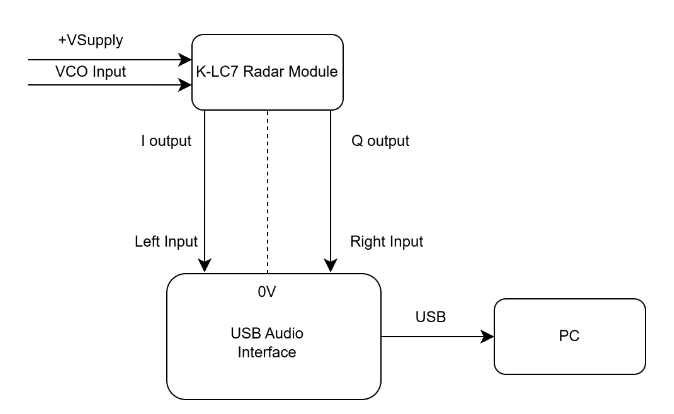
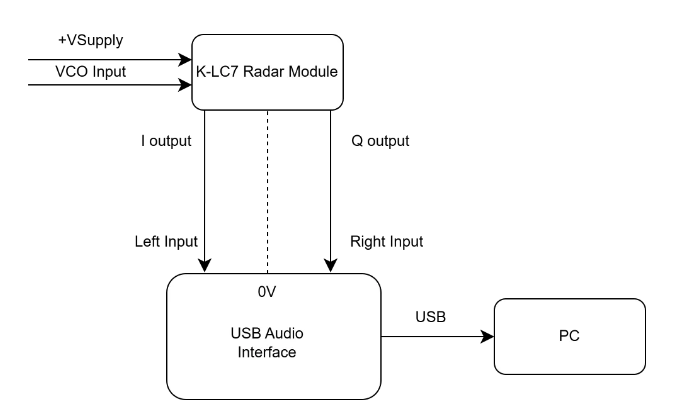
I/Q signal preserve direction and phase.
This is what the radar outputs:
I (in-phase)
Q (quadrature)
In a radar system they are 90 degrees out from each other. These are fundamental components that are used to capture amplitude, phase and frequency of the radar echo.
In-phase (I) signal
This represents the amplitude of the received signal that is in phase with the original transmitted carrier signal. Convection is a cosine wave.
Quadrature (Q) signal
This represents the amplitude of the received signal that is 90 degrees (π / 2) radians out of phase with the original carrier signal (by convection, sine wave)
Together I and Q signals come together and allow the radars digital signal processor to treat it as a complex number.
A FMCW radar turns time delay into frequency, then frequency into distance.
An FMCW radar transmits a frequency-swept signal, compares the received echo with the current transmit signal, and converts the time delay of the echo into a measurable low-frequency tone. The frequency of this tone gives distance, and changes in its phase over time give velocity.
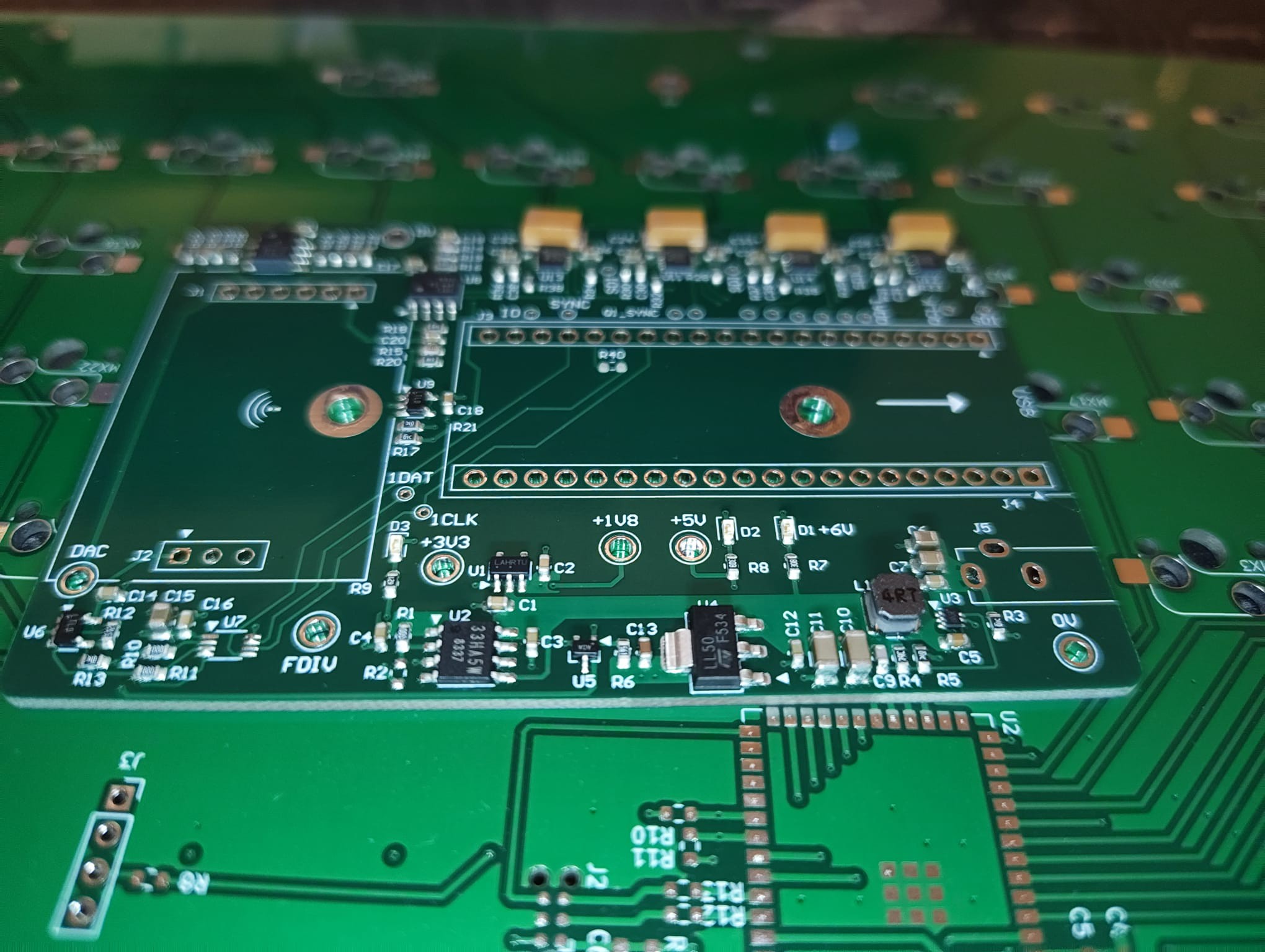
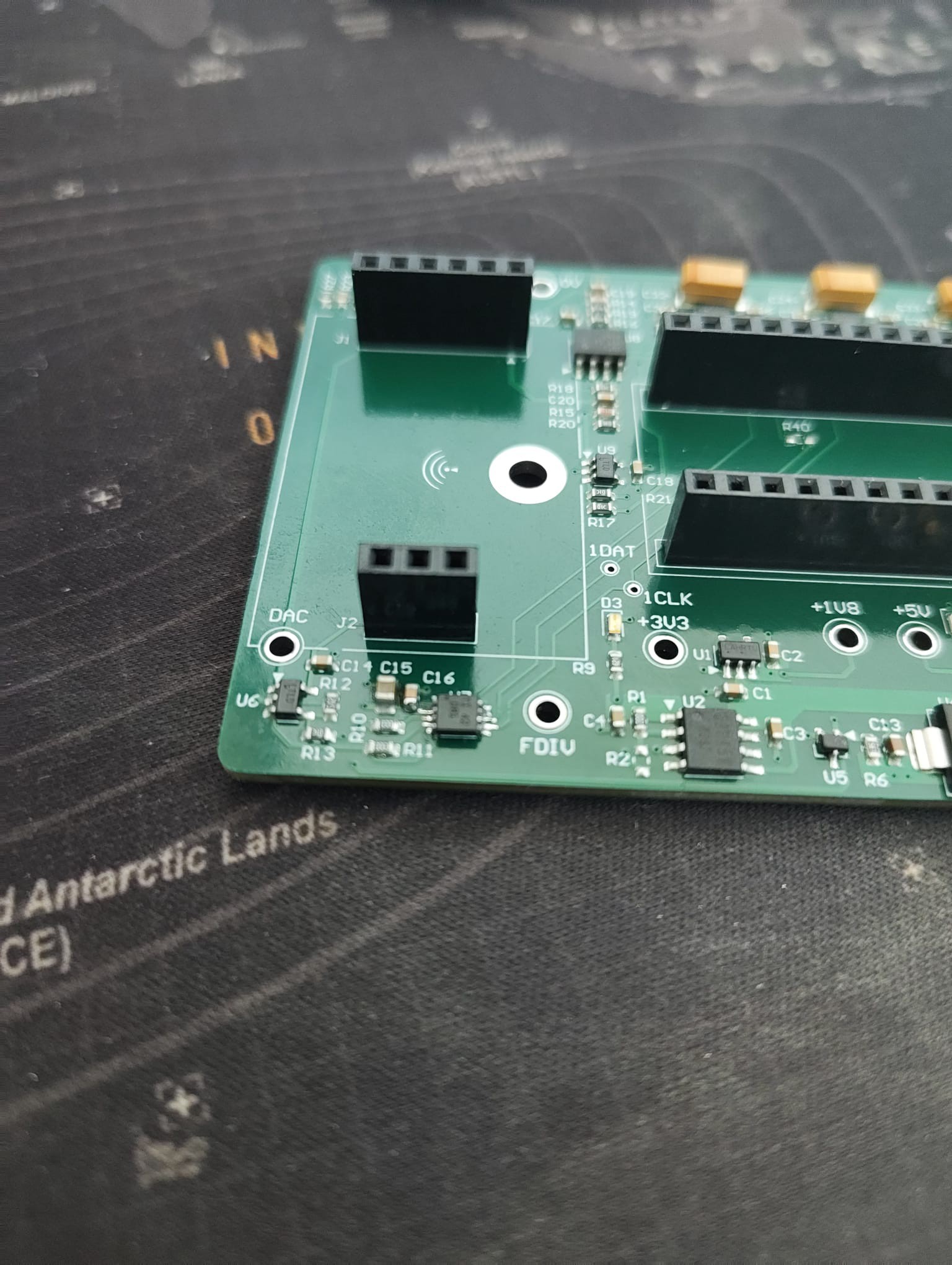
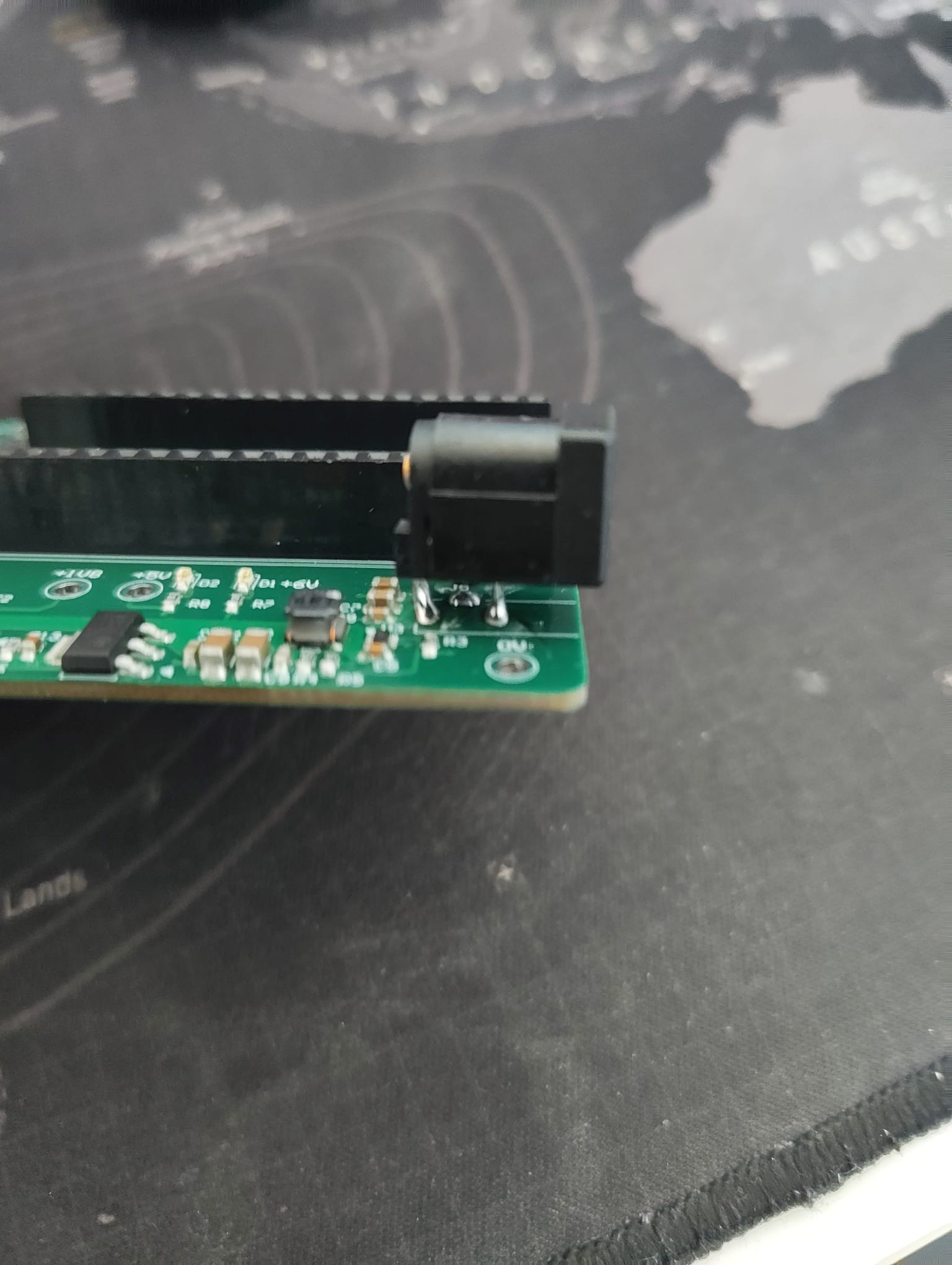
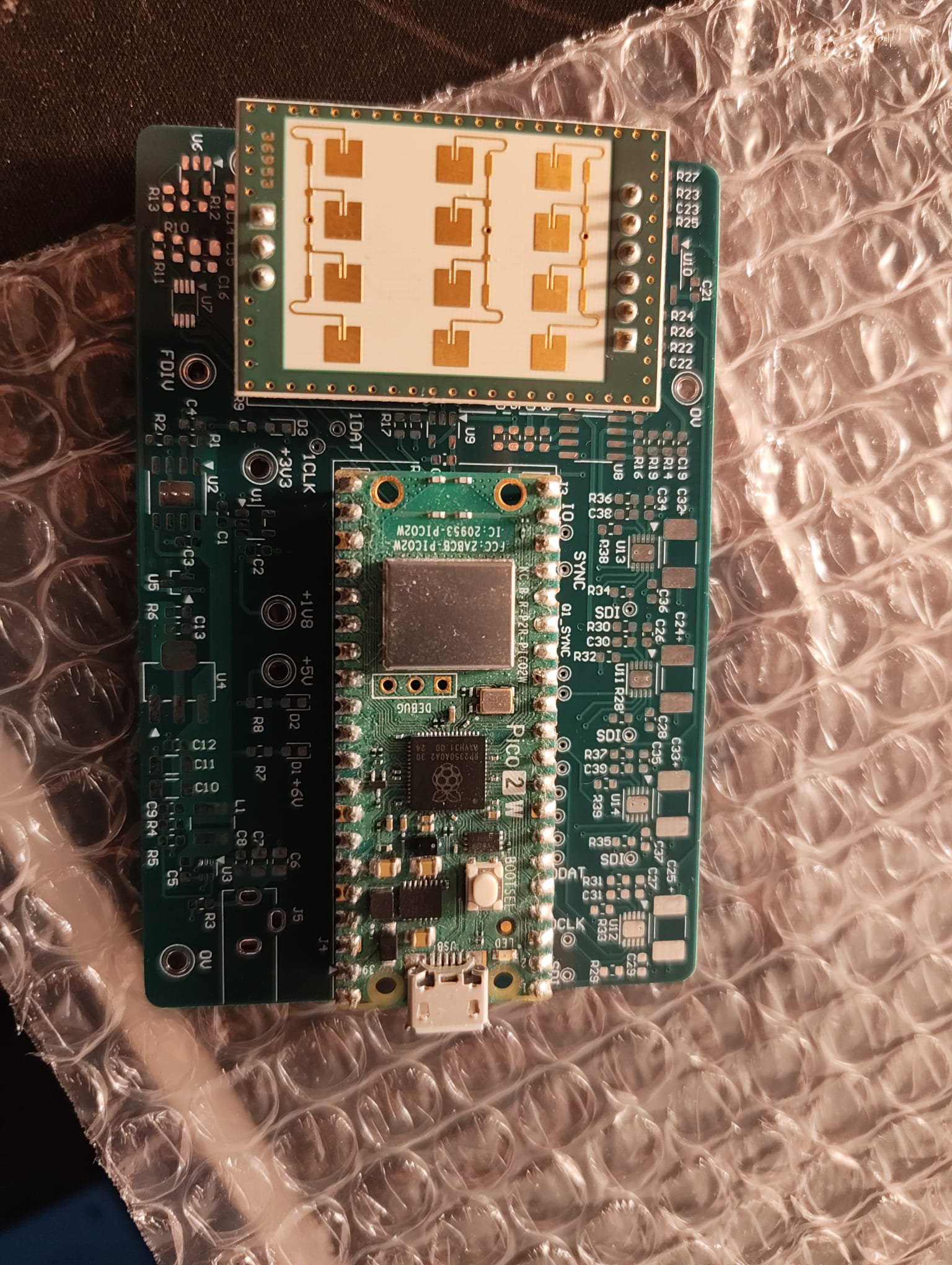
Once this base knowledge has been established we can utilise off the shelf components and are able to start trialling and building a basic radar before proceeding to hardware development. As much as it is really exciting to start drawing out a schematic and such, it is important to validate first and know what you are actually going to design.
I have been wanting to dabble in the world of RF, I have not done an RF design before and thought it would be an interesting way of understanding more with a practical application. The best way to do something is always by trial and application.
There is a certain amount of base knowledge I knew that was required before diving straight into a design and that was well what is a radar? A google search yields "A system for detecting the presence, direction, distance, and speed of aircrafts, ships, and other objects, by sending out pulses of radio waves which are reflected off the object back to the source"
There had to be a start to break down the parts of a radar. Looking at Continuous Wave (CW) radars, these transmit a constant frequency signal and simultaneously receive the refelected echo scattered from objects continuously. These types are typically used in compact, short-range, low-cost applications. CW Radars can utilise any part of the Radio Frequency (RF) electromagnetic spectrum.
An Unmodulated CW Radar continuously transmits a pure tone such as a sine wave, which is the carrier. The echo is the received scattered from objects. All simultaneously.
By doing so, we measure the Doppler Shift from a moving object.
Doppler shift is the change in a wave's frequency and wavelength due to relative motion between the waves source and observer.
An example of this is an ambulance's siren, the pitch rises as it approaches and falls as it moves away. When moving toward's you, the waves compress (higher frequency) and when moving away they stretch (lower frequency).
If a target / object is static, the frequency of the echo signal is unchanged from that transmitted. If the target / object is moving the frequency of the echo is altered due to the Doppler effect. This Doppler frequency is how the object's motion can be determined.
The faster the object moves in a given direction, the larger the Doppler frequency.
FD = 2Vr/λ
where,
Vr = Radial velocity of the object (m/s)
λ = Wavelength of the CW signal (m)
FD = Doppler frequency (Hz)
Create an account to leave a comment. Already have an account? Log In.
Become a member to follow this project and never miss any updates
By using our website and services, you expressly agree to the placement of our performance, functionality, and advertising cookies. Learn More