 nobcha

Rather than relying on ad-hoc construction, the design reproduces established RF principles—such as proper IF selection, image rejection, and front-end filtering—using readily available components.
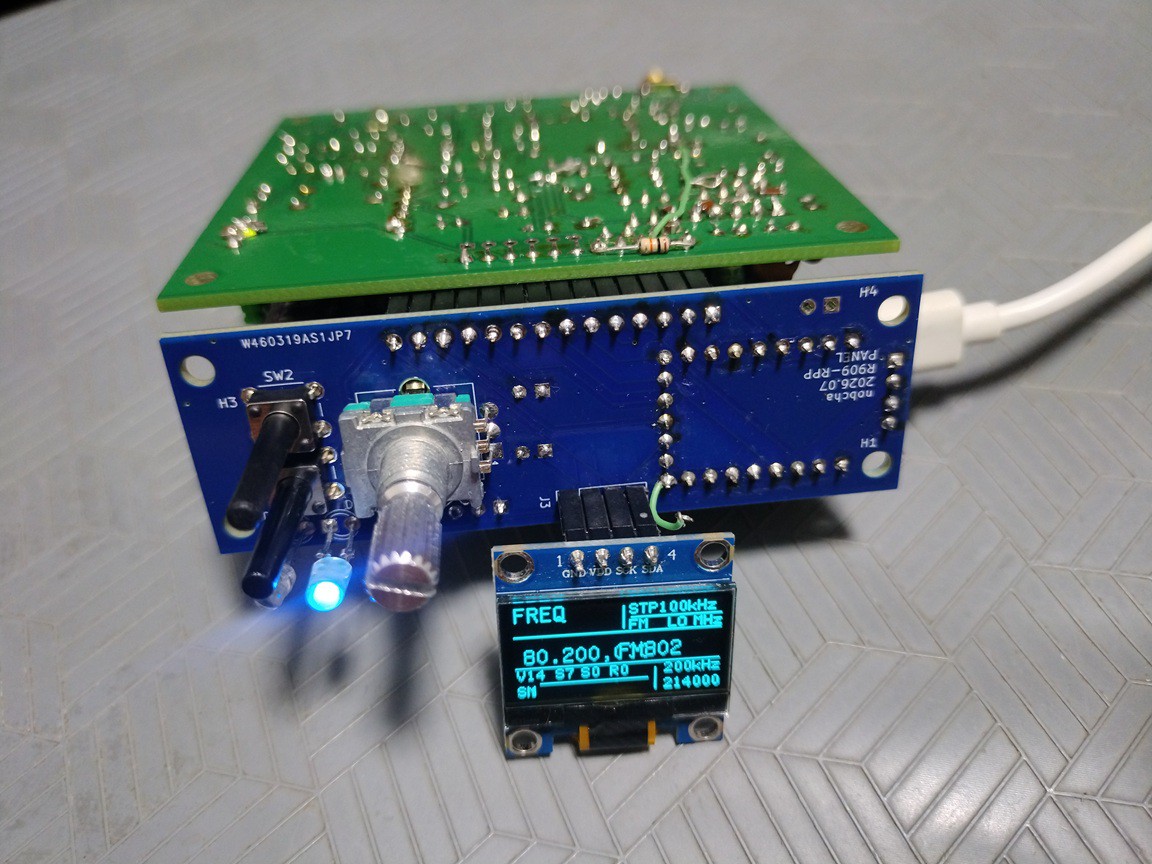
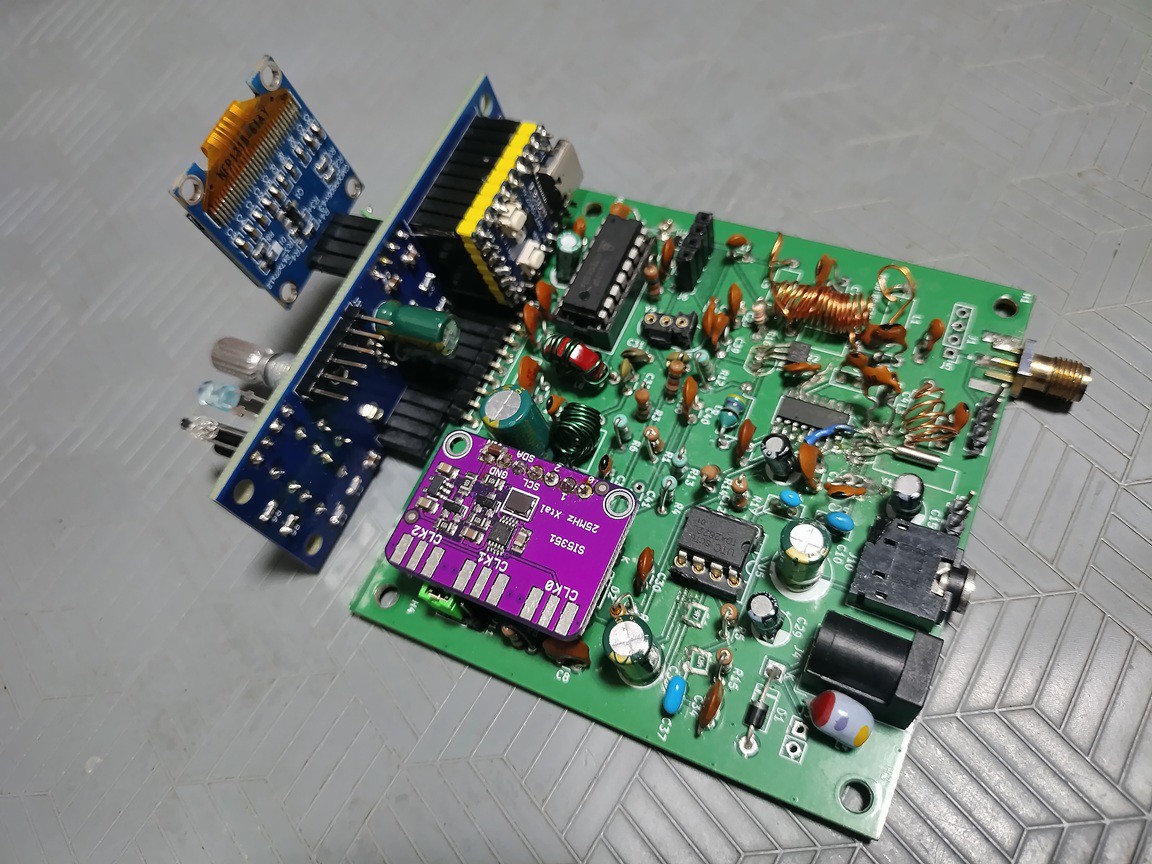
By combining a low-cost analog front-end (TA2003) with modern digital frequency control (Si5351A + Arduino), the receiver achieves a compact and practical solution for stable airband reception.
Problem
Airband reception (118–137 MHz) is challenging due to strong interference sources:
High-power FM broadcast signals (88–108 MHz) that can overload the front-end
Image frequency responses inherent to superheterodyne receivers
Spurious emissions from industrial equipment (e.g., switching inverters)
Many low-cost receiver kits use a 10.7 MHz IF due to filter availability. However, this places the image frequency relatively close to the airband, making suppression difficult without band switching or complex front-end filtering.
Solution
This design addresses these issues by:
Using a 21.4 MHz IF to increase image separation
Implementing a 3-pole Chebyshev band-pass filter at the RF front-end
Using TA2003 as the first mixer stage for low-noise analog processing
Employing Si4732 as the DSP-based main receiver
Controlling frequency via Si5351A + Arduino for flexible tuning and memory channels
Architecture
The receiver follows a hybrid architecture:
RF front-end filtering (band-pass)
First mixing stage (TA2003)
IF processing (21.4 MHz)
DSP demodulation (Si4732)
This approach separates analog RF handling from digital demodulation, allowing each stage to operate in its optimal domain.
Why this architecture?
Flexible frequency control using Si5351A
The receiver frequency is generated and controlled by an Arduino-driven Si5351A, enabling precise tuning and memory channels.
Improved sensitivity and image rejection
A 21.4 MHz IF increases image separation (~42.8 MHz), making suppression easier. The TA2003 provides a low-noise first mixer stage.
Efficient RF filtering
A 3-pole Chebyshev band-pass filter (118–137 MHz) suppresses both lower-frequency interference (FM broadcast) and higher-frequency image signals (~160 MHz).
Compact and cost-effective design
The use of widely available components results in a simple yet technically sound implementation.
RF Front-End Design
A key aspect of this receiver is the RF front-end.
Unlike simple low-pass filtering, a band-pass filter is essential to suppress both:
Strong FM broadcast signals below the band
Image frequencies above the band
The implemented 3-pole Chebyshev filter provides:
Passband: 118–137 MHz
Image rejection: ~20 dB at ~160 MHz
This enables effective suppression of unwanted signals without requiring band switching or complex tracking filters.
Measurement
The RF filter was measured using a nanoVNA.
Passband (118–137 MHz): low insertion loss
Image frequency (~160 MHz): ~20 dB attenuation
These results confirm that the front-end design effectively suppresses out-of-band interference.
I used my DIY LC meter to measure the inductance of self wound aircore coils.
Demo
Reception test of airband signals using the prototype receiver:
The audio demonstrates stable AM demodulation and practical sensitivity for real-world airband communication.
If you would like to know the sensitivity, you shall use the tiny SA Ultra and the DIY SINAD/THD indicator.
Conclusion
This project demonstrates that sound RF design practices can be reproduced in a simple and accessible form.
By combining a properly designed analog front-end with DSP-based demodulation, it is possible to build a low-cost yet capable airband receiver using readily available components.
 gitmodimo
 Ted Yapo
 Grant Giesbrecht
 Darren Winter