 Ben
Ben

The Problem:
Currently, if you want a lithium battery for your project there are essentially two options, each with their own pros and cons: buying standard size/voltage packs from manufacturers and resellers or designing building your own packs using expensive spot-welding equipment. My goal with Cell-Lock was to find the best middle ground between these two options:
Off The Shelf | Custom Build |
+ Easy, plug and play if you can find the right one | + Exactly the right voltage/shape/capacity |
+ Many different chemistries, power to weight ratios | + Use any cells you want, much cheaper |
- More expensive, can’t usually repair/upgrade | - Needs $$ equipment |
- Standard shapes and voltages, no customization | - Takes time/skill, can be dangerous |
I wanted to reap the benefits of custom-building packs, without the hassle of buying zinc strips, spot welding and soldering everything together.
The Process:
I took inspiration from standard cell holders, and begun trying to incorporate electrical connections into the overall square or hexagonal profile of these plastic parts. These initial efforts produced mixed results, with poor connections that would sometimes make it to the correct voltage, but often would work their way loose during assembly or usage. Additionally, they didn’t provide the mechanical rigidity I was looking for in the full battery.
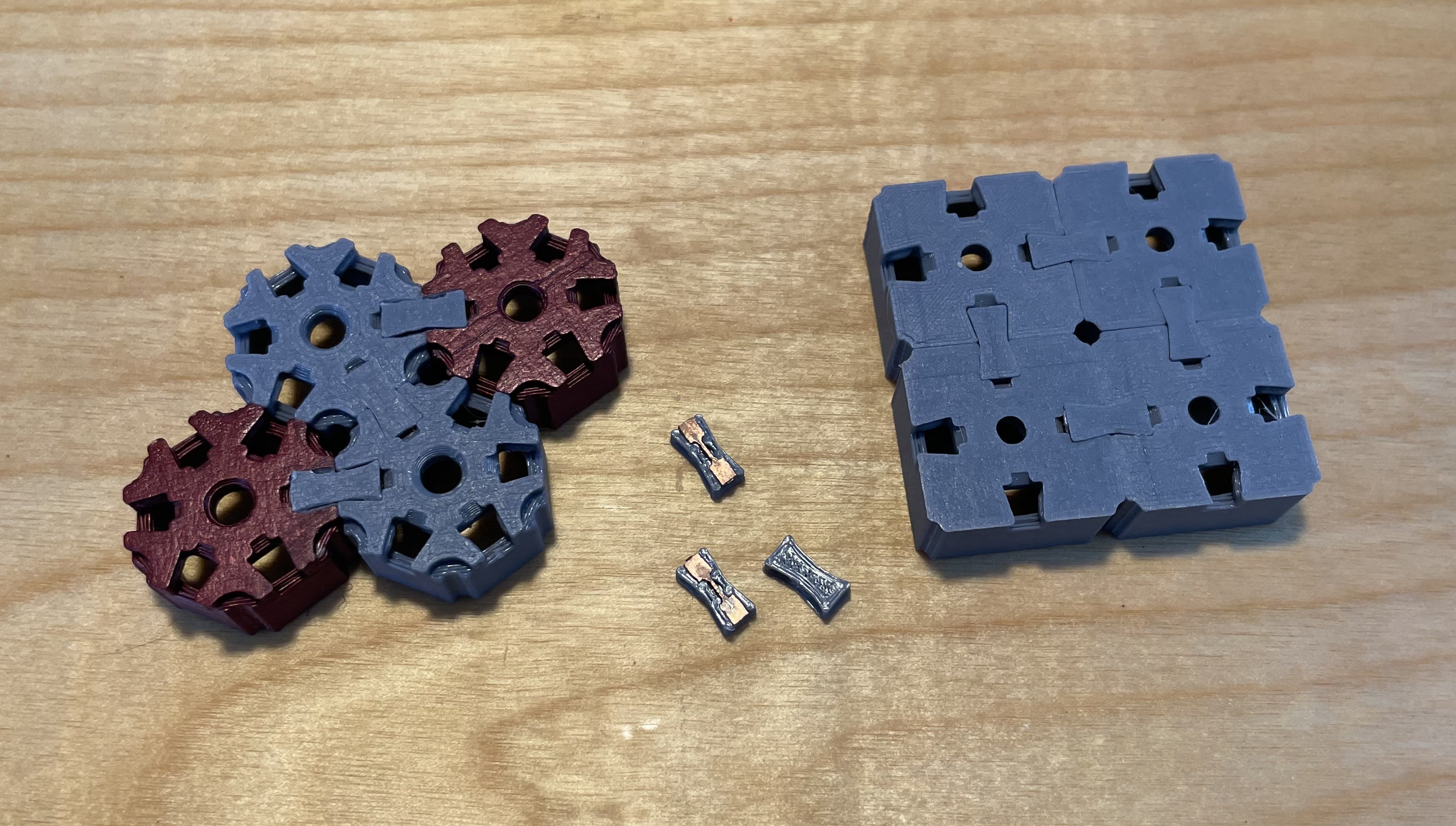
I then started to design my own press fit connectors, using 3d printed parts and laser cut copper sheet to connect the batteries, which was a significant improvement, but still suffered from issues when attaching more than 4 or 5 cells together. It was around this point where I got stuck, and started to work on other projects.
As it happened, some weeks later I was helping a friend build a desk from Ikea and noticed that the parts were all connected using locking metal cams, simplifying the assembly process without compromising strength. The next day I set out to redesign my cell holders.
The Solution (so far):
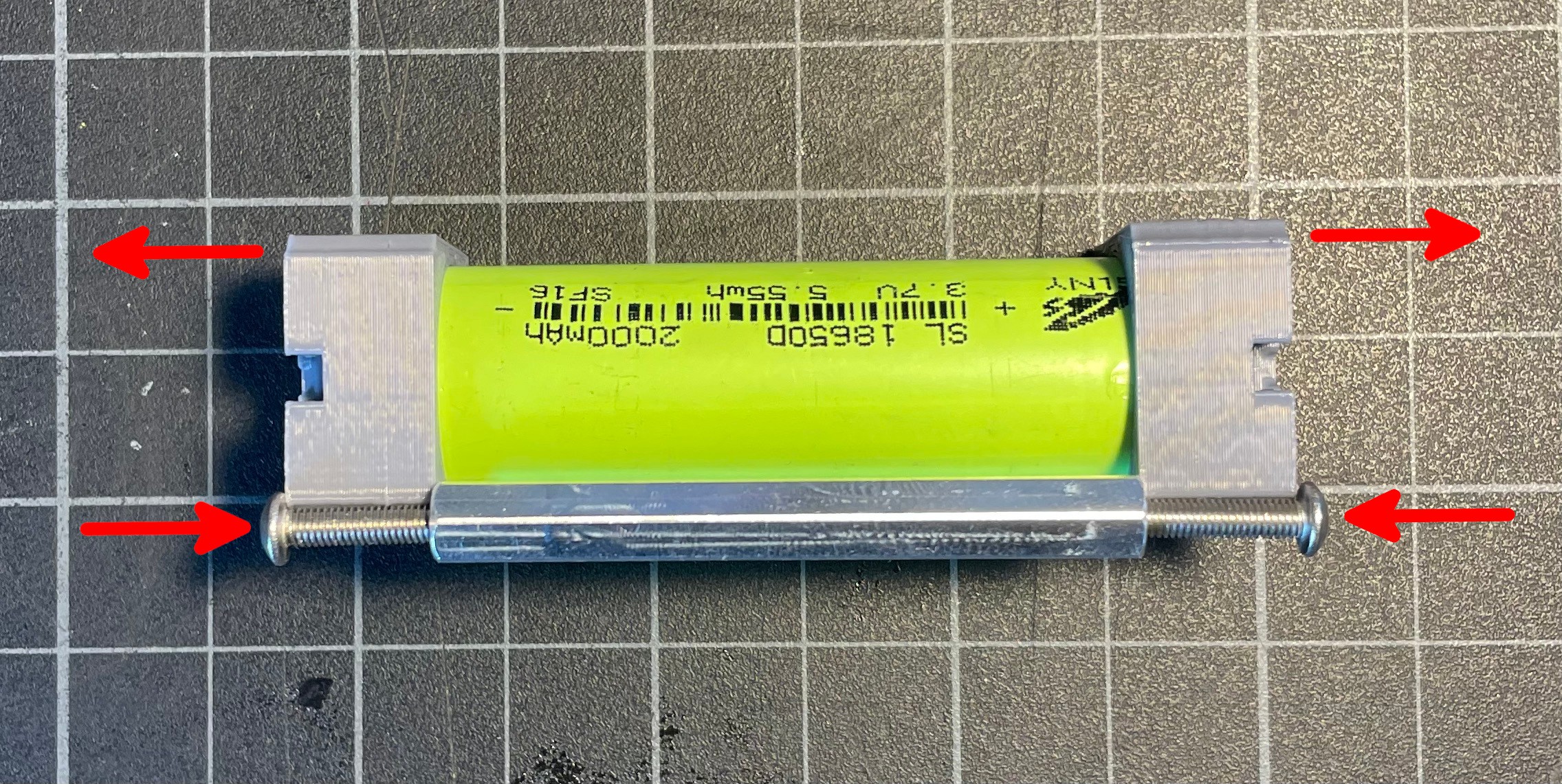
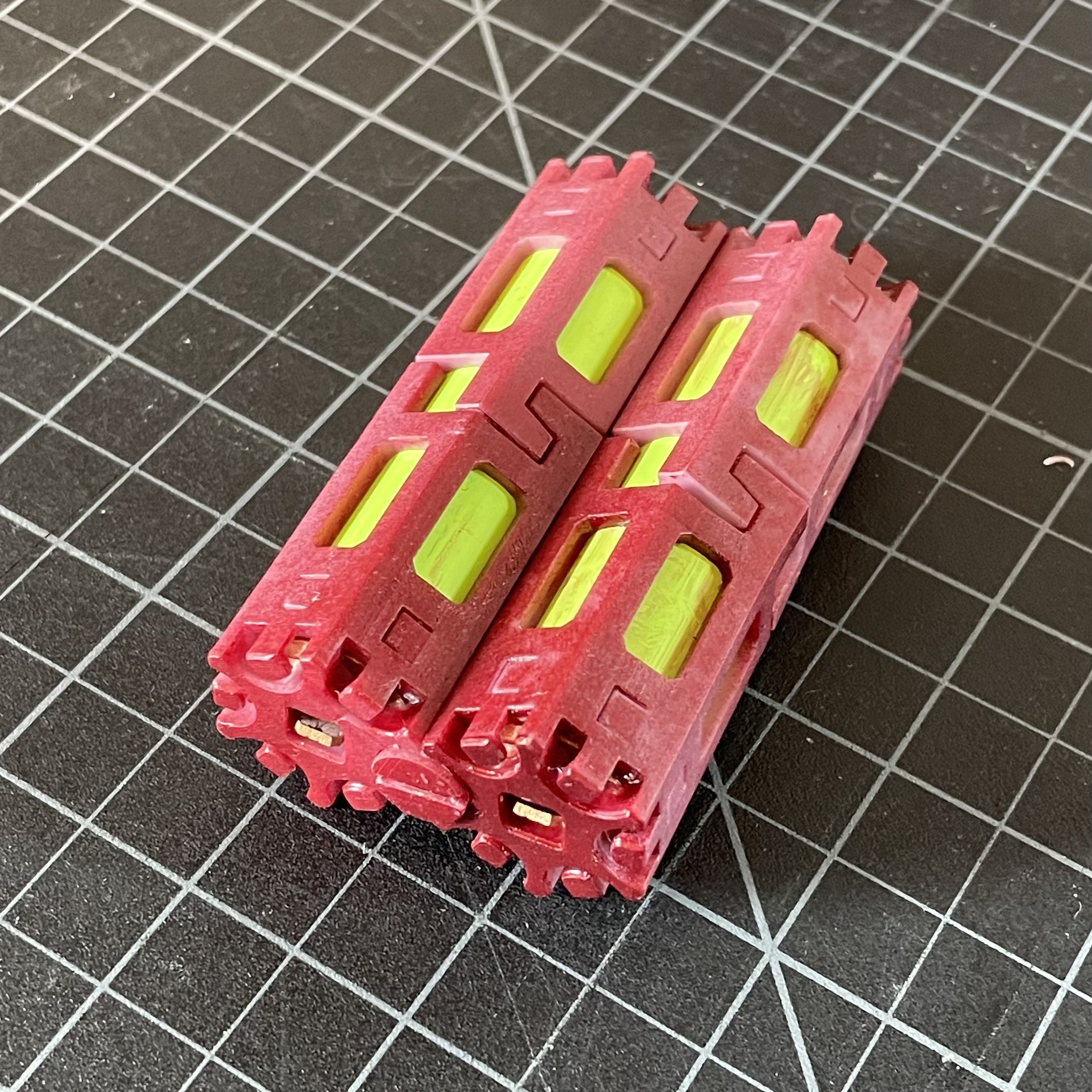
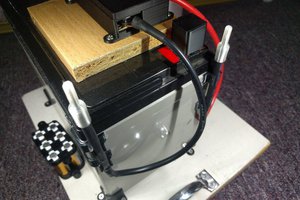
The current Cell-Lock design uses a twisting connector to attach pairs of battery caps. These connectors are either entirely plastic to attach batteries without conducting electricity or include a copper pad on the bottom to form a solid electrical connection. Using a screwdriver to twist the connector 60 degrees engages the cam; locking the two caps together and creating a strong connection. Parallel and series cell groups can be attached and tested in this manner before continuing assembly. The cell caps on the positive and negative sides are held in place using M3 aluminum screws and 60mm standoffs or can simply be mounted directly into their enclosure.

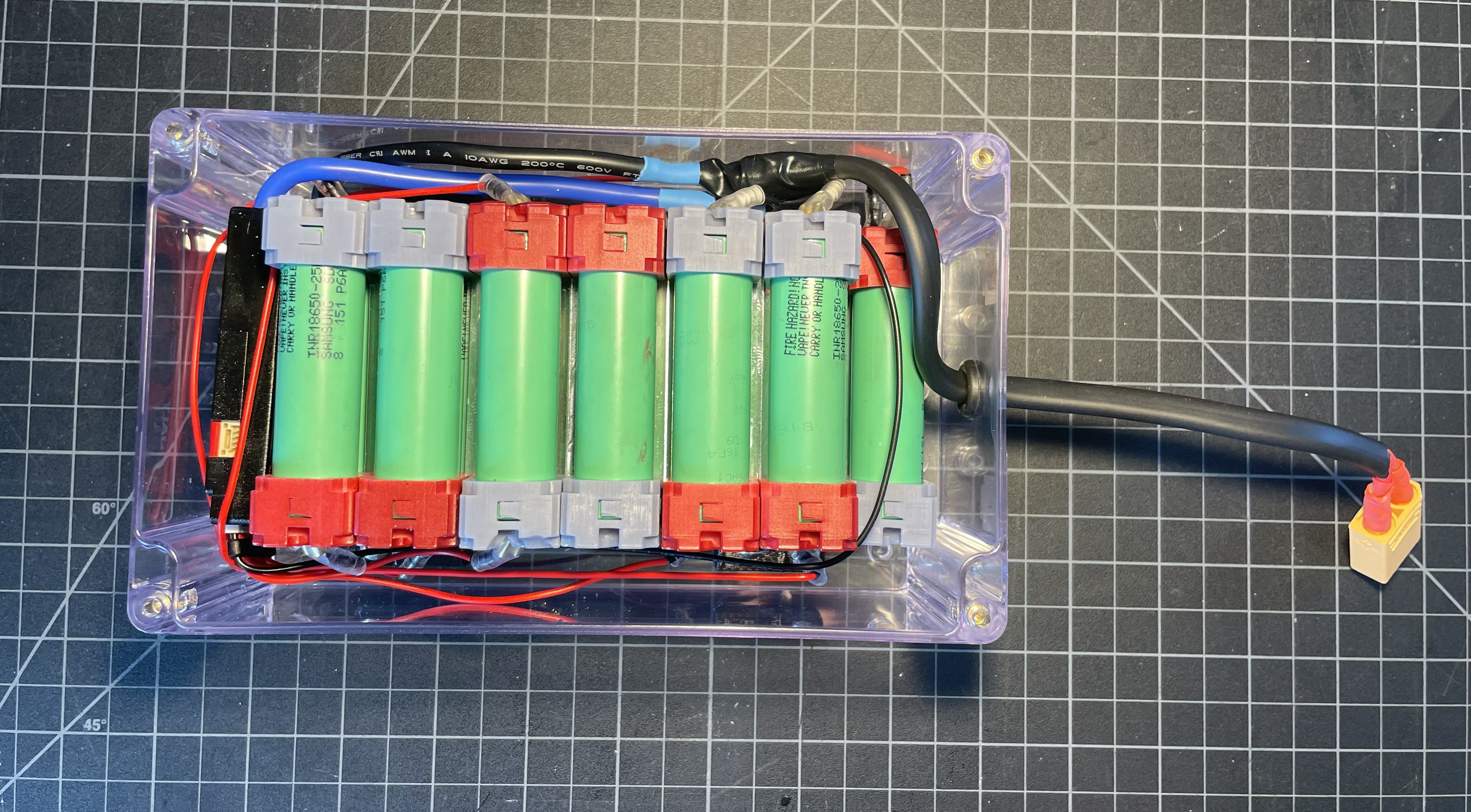
Batteries built using these connectors perform much better than any of my earlier prototypes, and I’m currently using a 36-volt battery to power my E-bike with no vibration or strength issues.

Notes and Improvements:
I’m still working on improving the design and assembly process for these parts, as my current method involves a lot of manual fussing around with the small copper parts that I use for the connectors. Currently, I use a resin printer to make the plastic components, and order my copper parts from SendCutSend, which are then shaped and attached using several custom jigs.
My goal is to allow anyone with a (dialed in) 3d printer to be able to make these for either 18650 or 21700 batteries, but I still need to simplify the build process somewhat before I publish the files and an assembly guide. This is still a work in progress, so let me know if you have any suggestions to make it better!




 CriptasticHacker
 Richard
 Rory
Rory
I have a question about how the individual cells connect. Are those the cell-lock connectors? if so that seems fairly small I'd be worried about the current In between cells or parallel groups. Also, how would someone manufacture this? Are you just using copper tape or something similar? How are you making the copper rings?