Close
0%
0%

Rooftop Ventilator Hybrid Energy Harvester

Transforming rooftop ventilators into green power generators using an axial-flux wind turbine and solar hybrid system.

Similar projects worth following
Rooftop Ventilator Hybrid Energy Harvester Converting Building Ventilation into Renewable Power

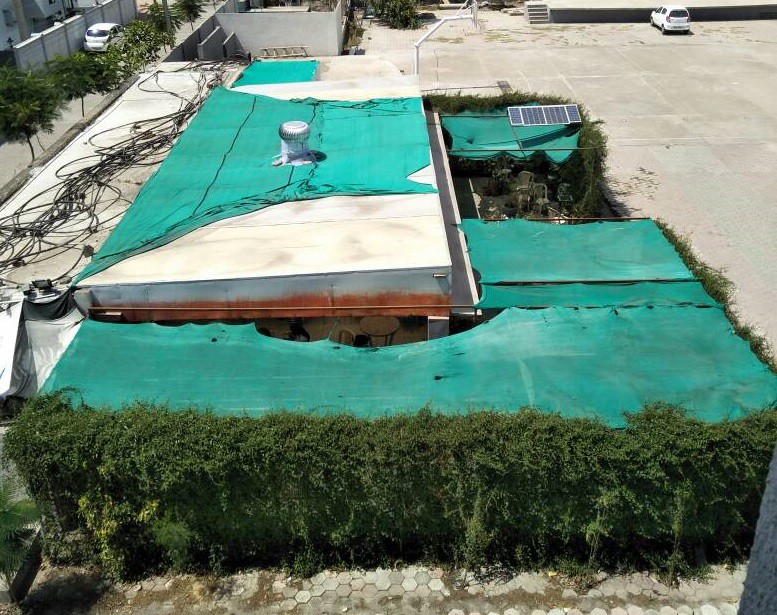
This project converts a rooftop ventilator (industrial/Household) into a small renewable power generator by integrating an axial-flux permanent magnet generator with a solar panel system.

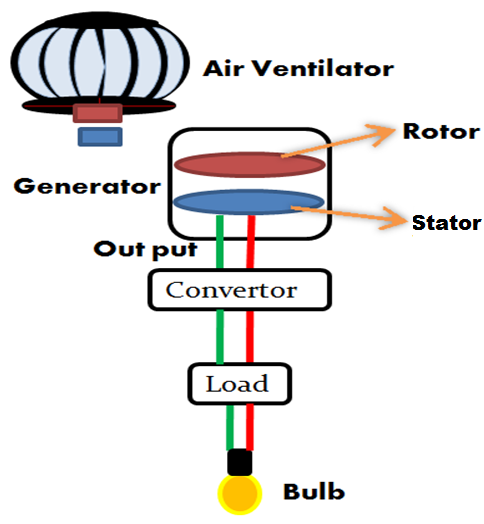
The ventilator rotates naturally due to wind flow and thermal convection inside buildings. By attaching a pancake axial-flux generator to the ventilator shaft, this rotational motion is converted into electrical energy.

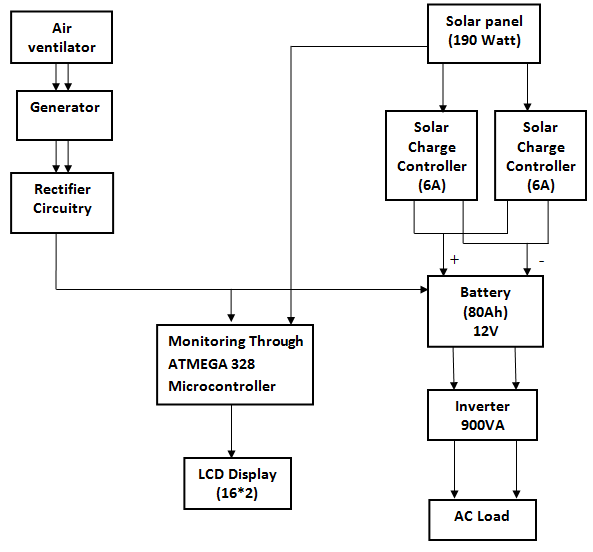
The generated wind energy is combined with rooftop solar panels, stored in a 12V battery system, and used to power small loads such as LEDs, phone chargers, and fans.

The system demonstrates a low-cost retrofit solution that can transform millions of existing rooftop ventilators into distributed renewable energy generators.

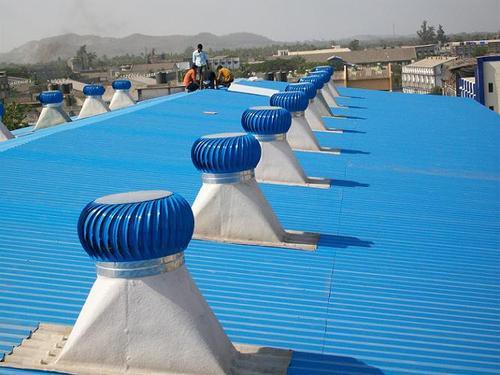
Modern buildings already have rooftop ventilators that spin all day due to wind and hot air rising from inside the building. Normally this motion is wasted. In this project, I explored a simple idea: can this rotation be used to generate electricity?

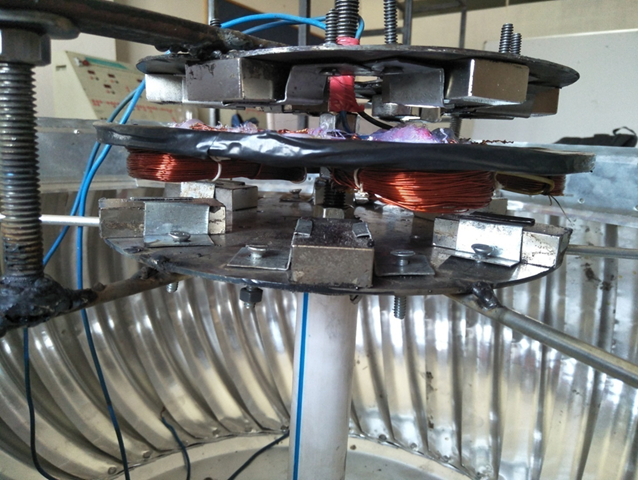
The result is a hybrid renewable energy system where a rooftop ventilator is modified to drive a small axial-flux permanent magnet generator. When the ventilator spins, magnets on the rotor pass over copper coils in the stator and produce electrical energy. The generated AC power is rectified into DC and used to charge a battery.

To improve reliability and ensure energy generation even when wind is low, the system also includes solar panels connected through a charge controller. Both wind and solar sources feed a 12V battery system, which can power small loads such as lighting, phone chargers, and fans.

An Arduino-based monitoring system measures voltage, current, RPM, and temperature. These parameters are displayed on a 16×2 LCD so the performance of the system can be observed in real time.

The goal of this project is not just to build a generator, but to demonstrate a practical retrofit solution. Rooftop ventilators already exist on many factories, warehouses, and residential buildings. If these ventilators can also produce electricity, they could become a simple distributed renewable energy source without installing large wind turbines.

The project focuses on:

  • Low cost hardware

  • Reuse of existing infrastructure

  • Simple construction methods

  • Hybrid renewable energy generation

This prototype shows that even small sources of mechanical motion on buildings can be used to produce useful electrical power.
Project presentation.pptx

this is presentation doc give you high-level idea of project work

presentation - 3.66 MB - 03/13/2026 at 18:06

Download

Project report.docx

This is project report it have detailed documentation of the project. with pictures and formulas and details of components and making steps

document - 2.74 MB - 03/13/2026 at 18:06

Download

MAJOR_PROJECT.ino

this file is to put in arduino so that it will show the readings live

ino - 3.12 kB - 03/13/2026 at 17:48

Download

  • 1 × Rooftop Ventilator Acts as the mechanical driver for the generator using natural airflow.
  • 1 × Neodymium Magnets (N52) High-strength magnets used on the generator rotor to create a changing magnetic field.
  • 1 × Copper Wire Coils Used in the stator to generate electricity when magnets rotate past them.
  • 1 × Bridge Rectifier Converts the generator’s AC output into DC.
  • 1 × Filtering Capacitor Smooths the DC output from the rectifier.

View all 14 components

  • Prototype making plan

    varunsontakke804 hours ago 0 comments

    Initial Idea

    The project started with a simple observation: rooftop ventilators rotate continuously on many buildings. Instead of letting that motion go unused, I wanted to see if it could be converted into electrical energy.

    Generator Design

    An axial-flux generator was selected because it is compact and works well at lower rotational speeds. Magnets were mounted on a rotor plate and coils were wound to form the stator.

    Ventilator Integration

    The generator was aligned with the ventilator shaft so that the rotation of the ventilator directly drives the generator.

    Hybrid Energy System

    To improve reliability, solar panels were added to the system. This ensures power generation even when wind speed is low.

    Monitoring System Development

    An Arduino monitoring system was created to measure voltage, current, RPM, and temperature. These values are displayed on an LCD.

    System Testing

    The system was installed and tested under natural environmental conditions. Measurements were taken to evaluate voltage output, current generation, and overall performance.

View project log

Enjoy this project?

Share

Discussions

Does this project spark your interest?

Become a member to follow this project and never miss any updates