 Robert Gawron
Most important, there's a relatively cheap photomultiplier diode, looks perfect for this project: MICROFC-60035-SMT-TR1.
I've decided to change plans and use a regular DC/DC converter plus a silent voltage regulator at the output; this way, the output voltage will be well-stabilized and can be adjusted for temperature changes.
If I made the math right, mentioned above diode needs a bias of 28.89V - 29.22V (why it's not constant later on in post) assuming the device will work in temperature range of 20C-35C (meaning 15C span)?
I've made this simulation and it seems to work (but it's just a simulation):
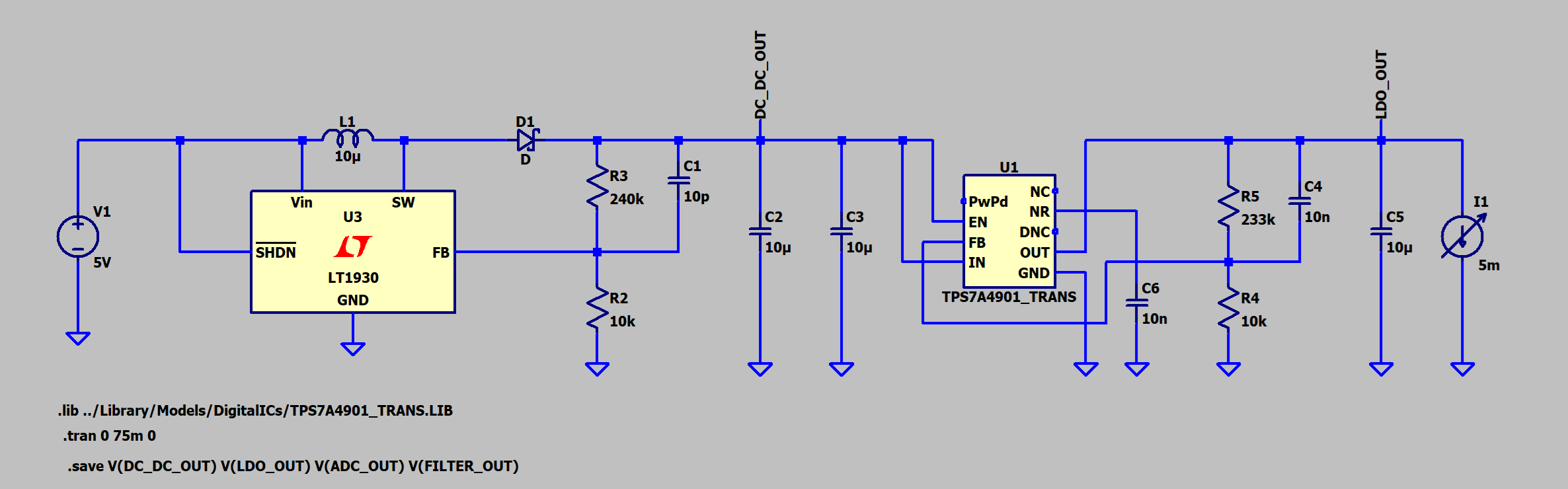
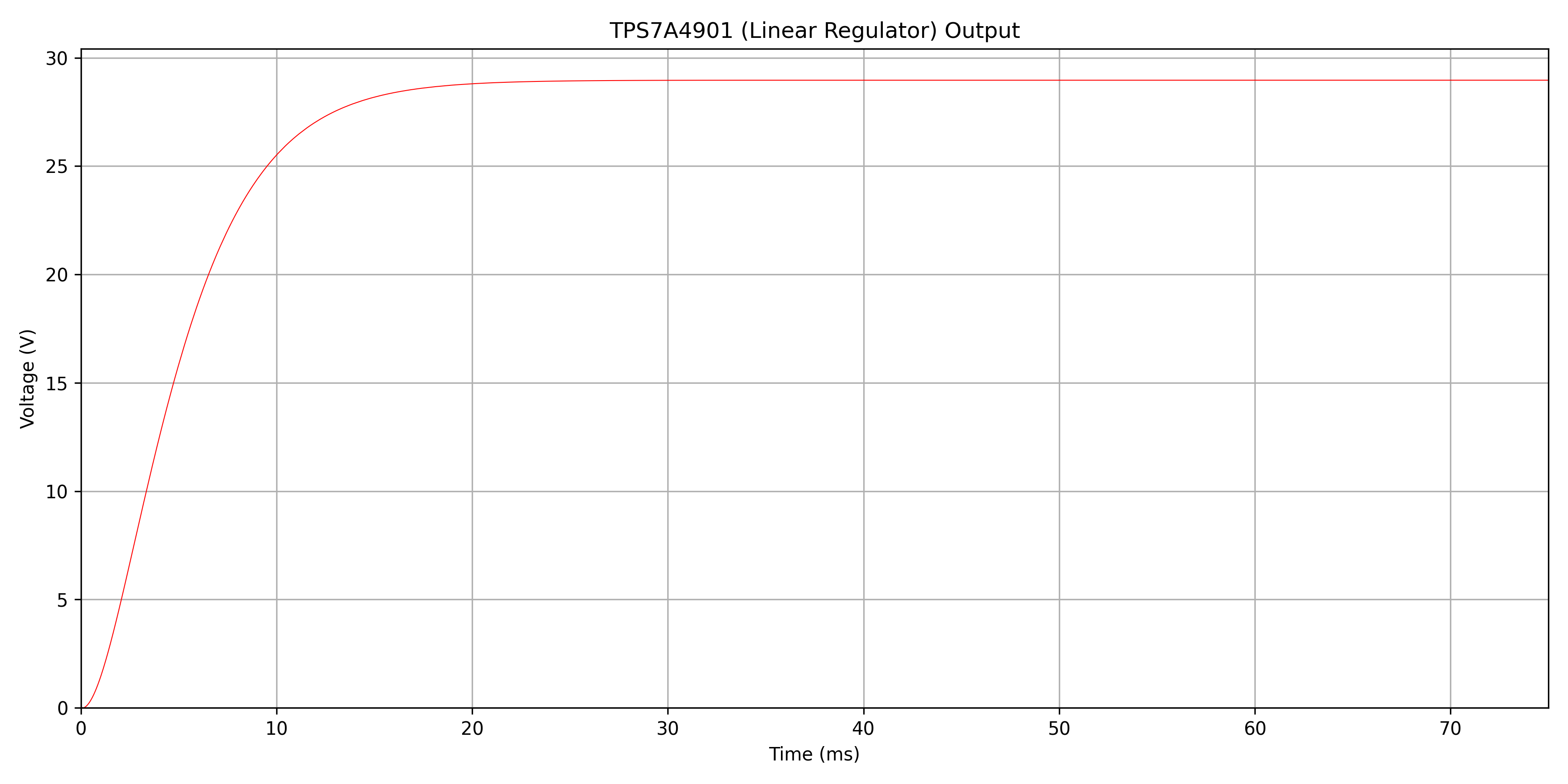
The silicon photomultiplier (SiPM) requires not only a stable bias voltage, but also temperature-dependent voltage adjustment. This is necessary to compensate for the parameter called "temperature dependence of Vbr" (breakdown voltage), specified in mV/°C. As the SiPM temperature increases, its breakdown voltage shifts, causing its detection characteristics to change. To maintain consistent meassurements, the bias voltage must be increased proportionally - by the specified mV/°C value for each degree of temperature rise.
The TPS7A4901DGNR regulator uses a feedback (FB) pin to monitor its output via a resistor divider. By injecting additional voltage into this node, we trick the regulator into sensing a higher-than-actual output, causing it to reduce the real output voltage. This provides a mechanism for precise voltage adjustment through an external control signal directly from microcontroller or via DAC for better precision.
I didn't simulate gathering the actual temperature, as this seems easy.
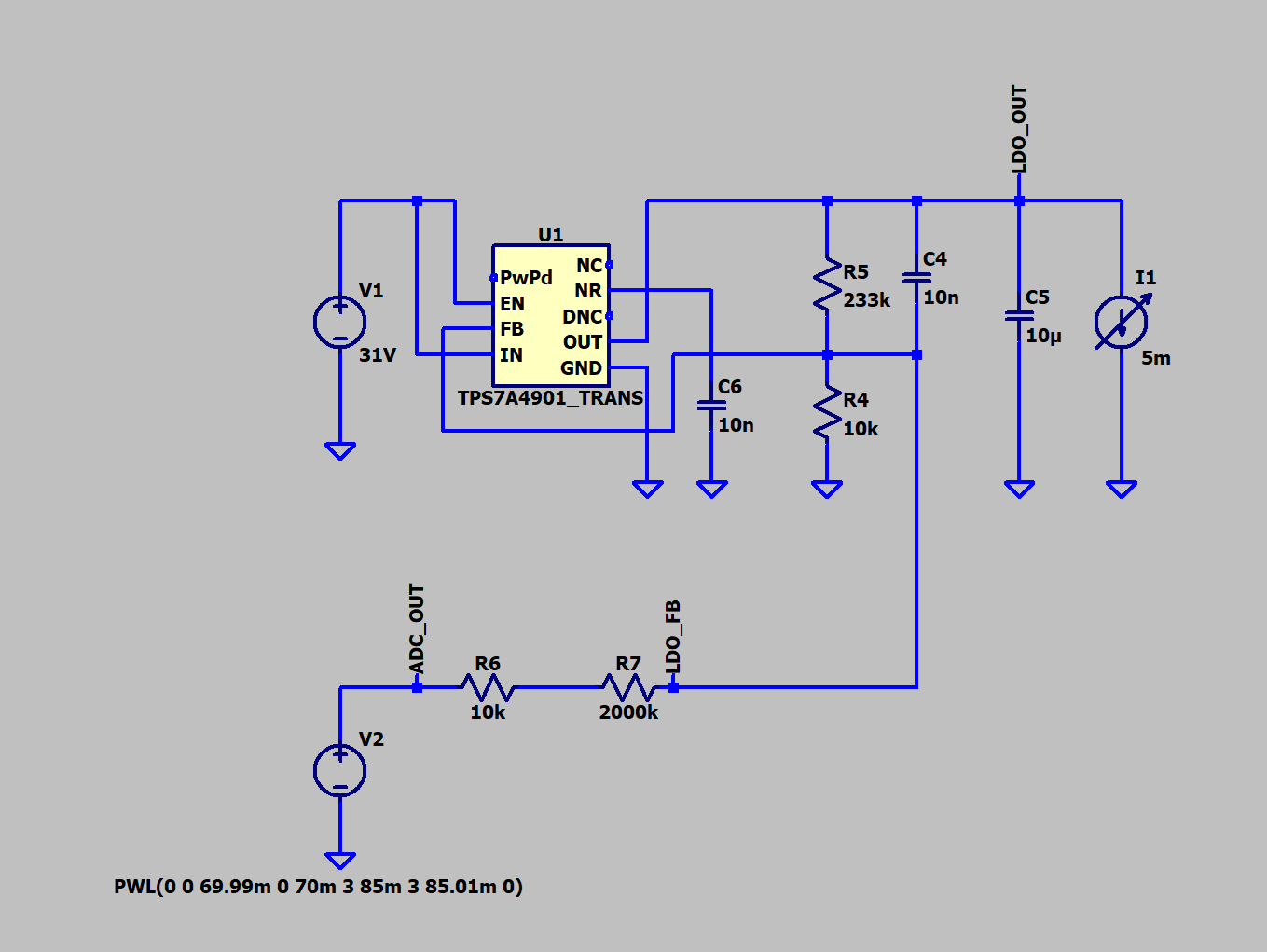
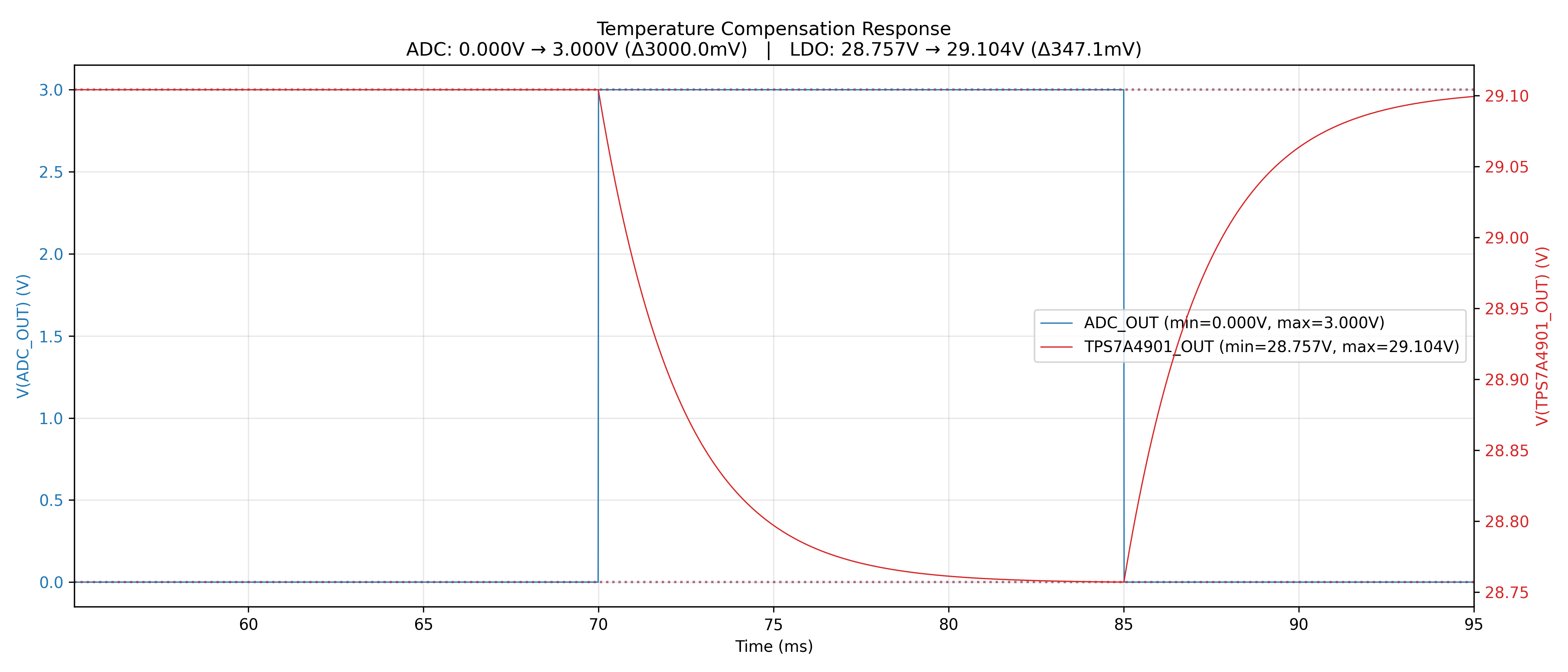
The diagrams were made in LTspice, and then raw output files were parsed in Jupyter Notebook Python to produce the above diagrams; this way, the diagrams look much better, and it's possible to do extra math.
Jupyter Notebook is a web server that acts as a nice wrapper for small scripts, etc.; it's not a full IDE, but it works great for small snippets of code. It's containerized and launched inside Docker, but the web port is exposed so that on the host it can be accessed via a web browser.
Discussions
Become a Hackaday.io Member
Create an account to leave a comment. Already have an account? Log In.