 Ethan
EthanOr: Why Nobody Does This At Large Scale
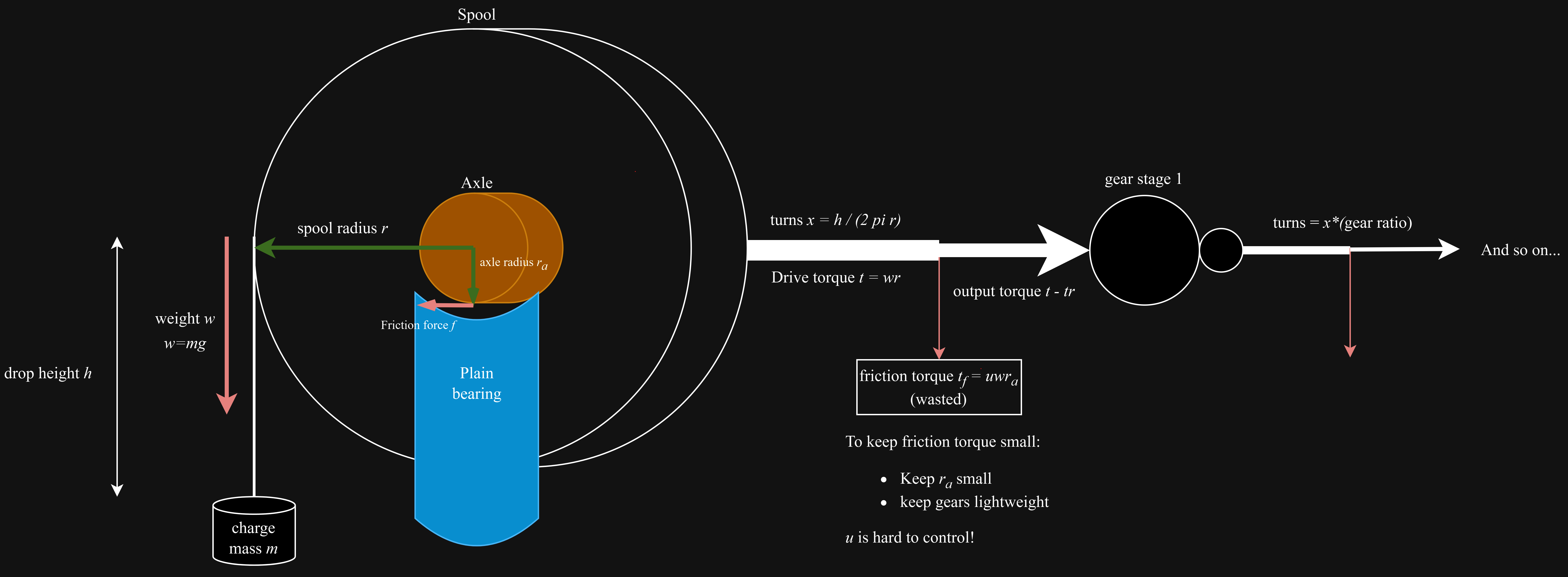
Each stage is subject to a holding torque set by the static friction of the bearing used. The friction force develops a torque with the arm length set by the radius of the axle.
In the first few stages, this torque is negligible. But as the gear ratio increases from stage to stage, a sizeable input torque quickly scales down to a few microNm, even the tiny friction seen in a ball bearing supporting a few grams can become too great:
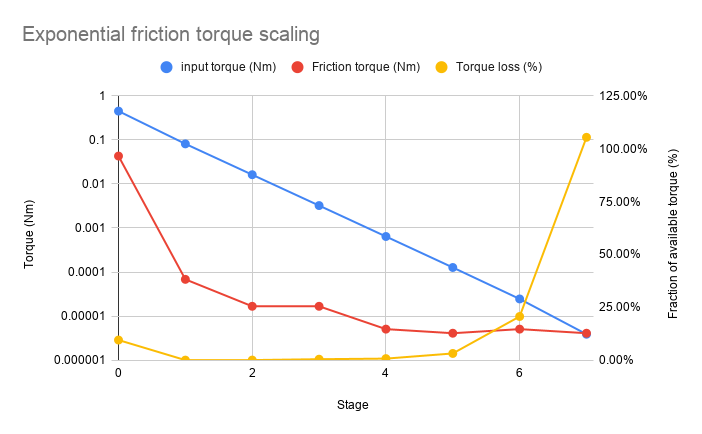
This model doesn't include the gear teeth themselves, so it's probably much worse than this, but this illustrates the problem pretty well.
Currently I cannot seem to turn the 7th stage with the heaviest weight I can support (10lb) and the widest spool I can accommodate, 20mm. I may need to drop the last stage!
Discussions
Become a Hackaday.io Member
Create an account to leave a comment. Already have an account? Log In.