 Nelectra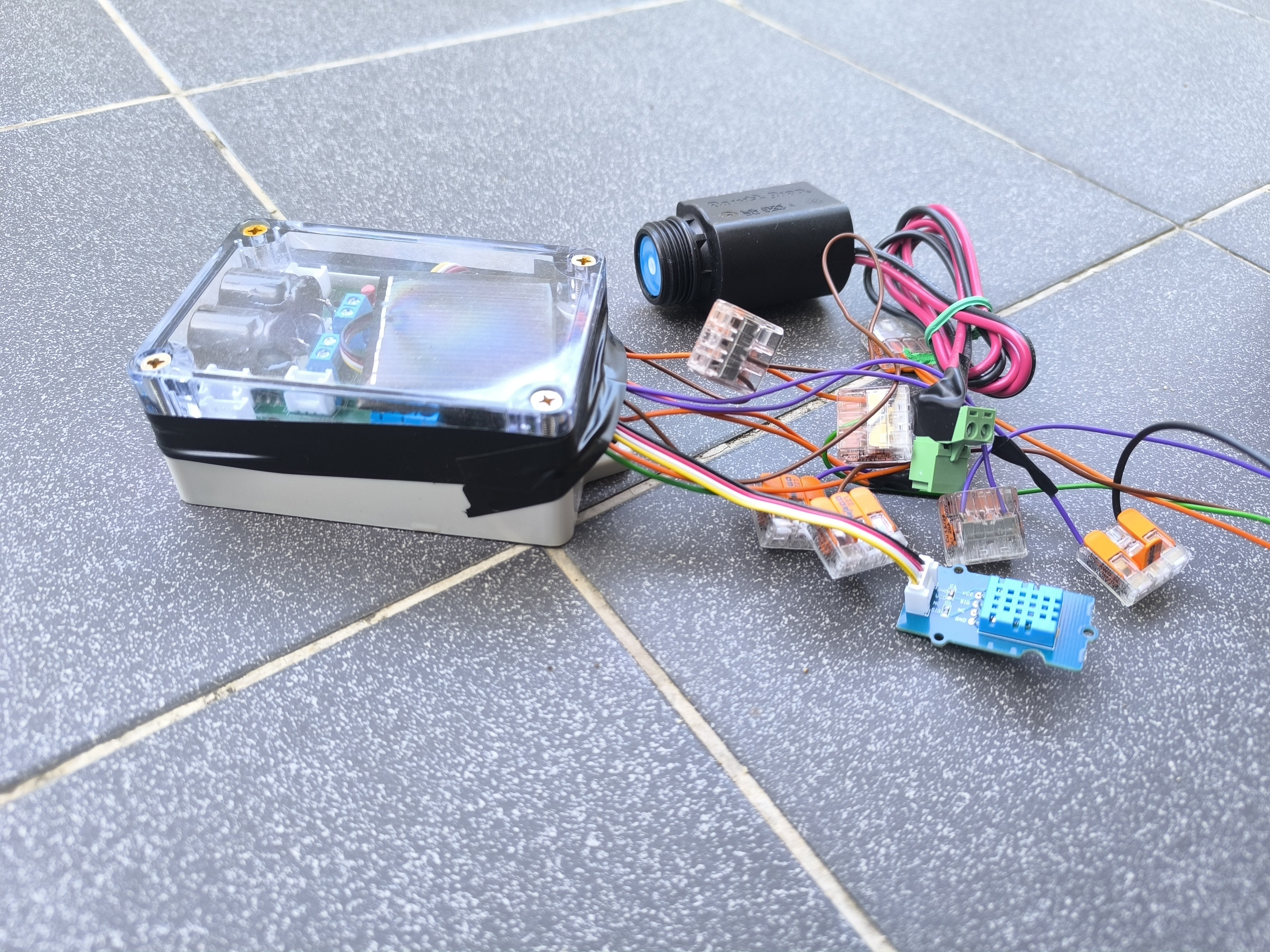
In the first real-world test, the system was connected to a 9 V DC latching solenoid valve (Rain Bird) and a DHT11 temperature and humidity sensor.
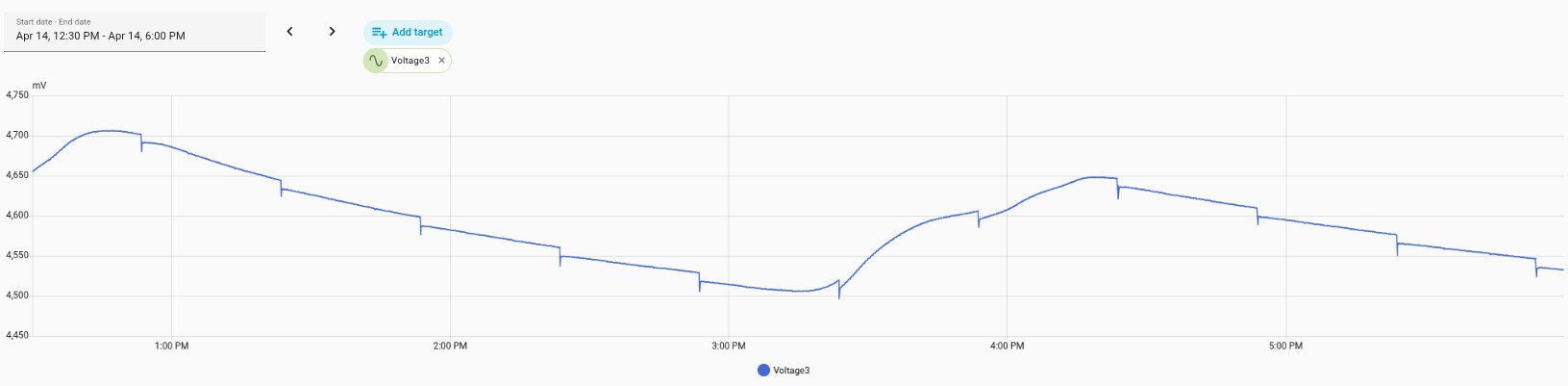
The node communicated with a receiver (XIAO ESP32-C3) every 10 minutes. In addition, the solenoid was actuated in both directions every 30 minutes, with each switching event lasting approximately 1 second.
This setup was used to evaluate the energy of real actuator operation under typical outdoor IoT conditions.
The measurements show that each solenoid actuation caused the supercapacitor voltage to drop by approximately 11 mV, corresponding to an energy consumption of about 550 mJ at ~4.5 V.
These results confirm that even high-power mechanical switching can be supported within a supercapacitor-based, battery-free energy budget when duty cycles are properly managed.
This makes it suitable for applications such as remote irrigation systems where latching valves are used to minimize energy consumption.

Discussions
Become a Hackaday.io Member
Create an account to leave a comment. Already have an account? Log In.