 Lithium ION
I do love making circuits that can power my car amplifier from my car battery. Not just because it is 12V but my amplifier system needs a dual rail power. This is the major problem in transistor based amplifiers because they need a higher voltage with a stable ground reference thus a dual rail power supply concept comes and it hurts me more when I just have a simple 12V battery. Something like +24V and -24V. You need a way to step that up and split it into two symmetric rails. The obvious thing that came to mind is using a transformer that can do it.
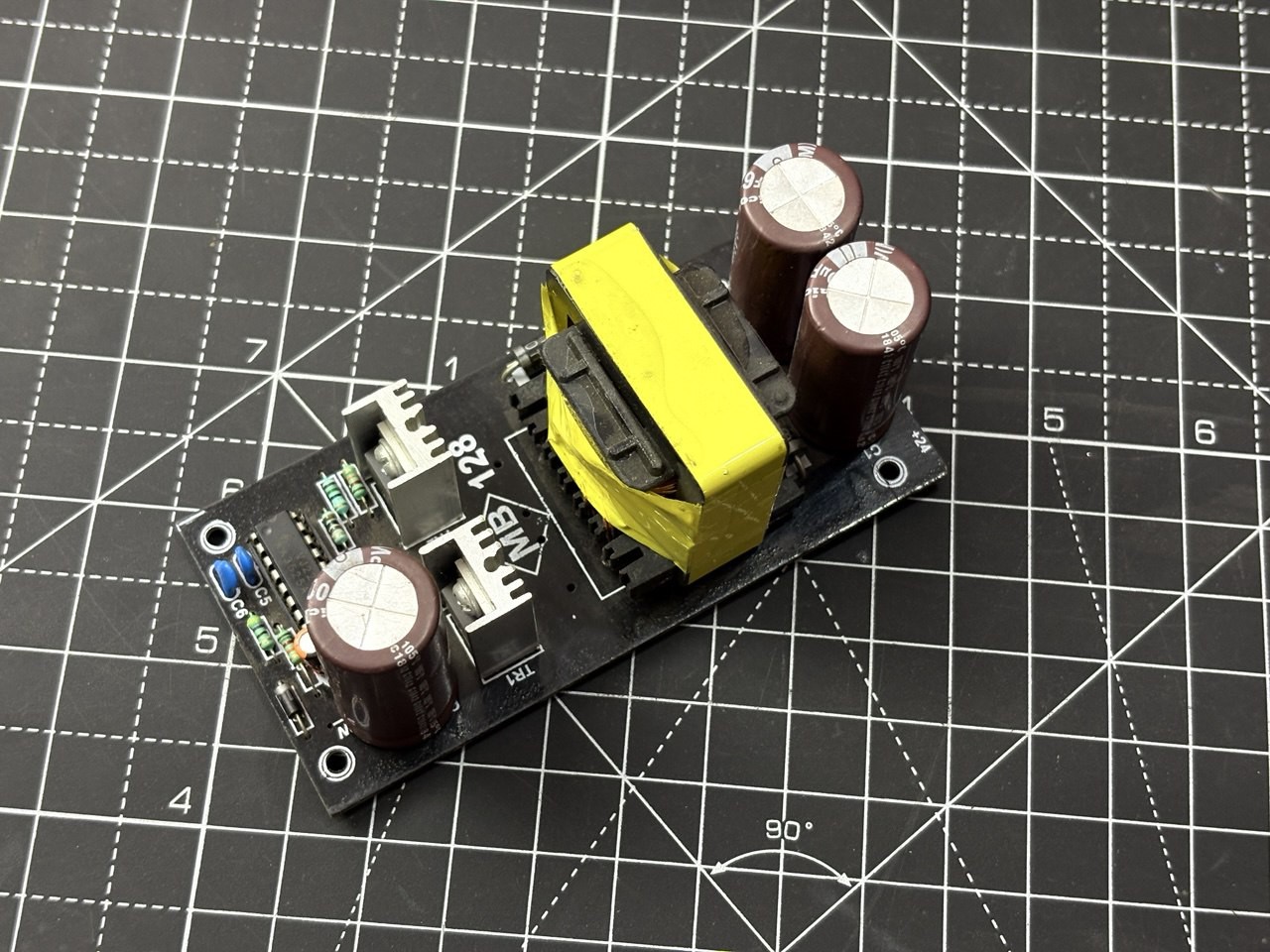
That's exactly what this module does. It's a pre-built push-pull DC-DC converter board that takes 12V DC in and outputs 24-0-24V (that's +24V and -24V with a centre-tap ground) at over 5A. I picked one up for an amplifier project, and I thought it was worth breaking down how it actually works. The controller IC running the show is the KA3525A, a classic SMPS controller that has been around for decades. I will show here how the push-pull topology works, and how to wire it up safely. For real-world power-on and load testing.
What Is This Module?
This is a compact PCB module designed for converting a single 12V DC input into a dual-rail +/-24V DC output. The target application is audio amplifiers and car audio systems. The board uses a push-pull converter topology built around the KA3525A SMPS controller IC and two IRFZ44N N-channel power MOSFETs. There's a centre-tapped transformer wound on a core mounted directly to the PCB, rectifier diodes on the secondary side, and electrolytic filter caps for the DC output.
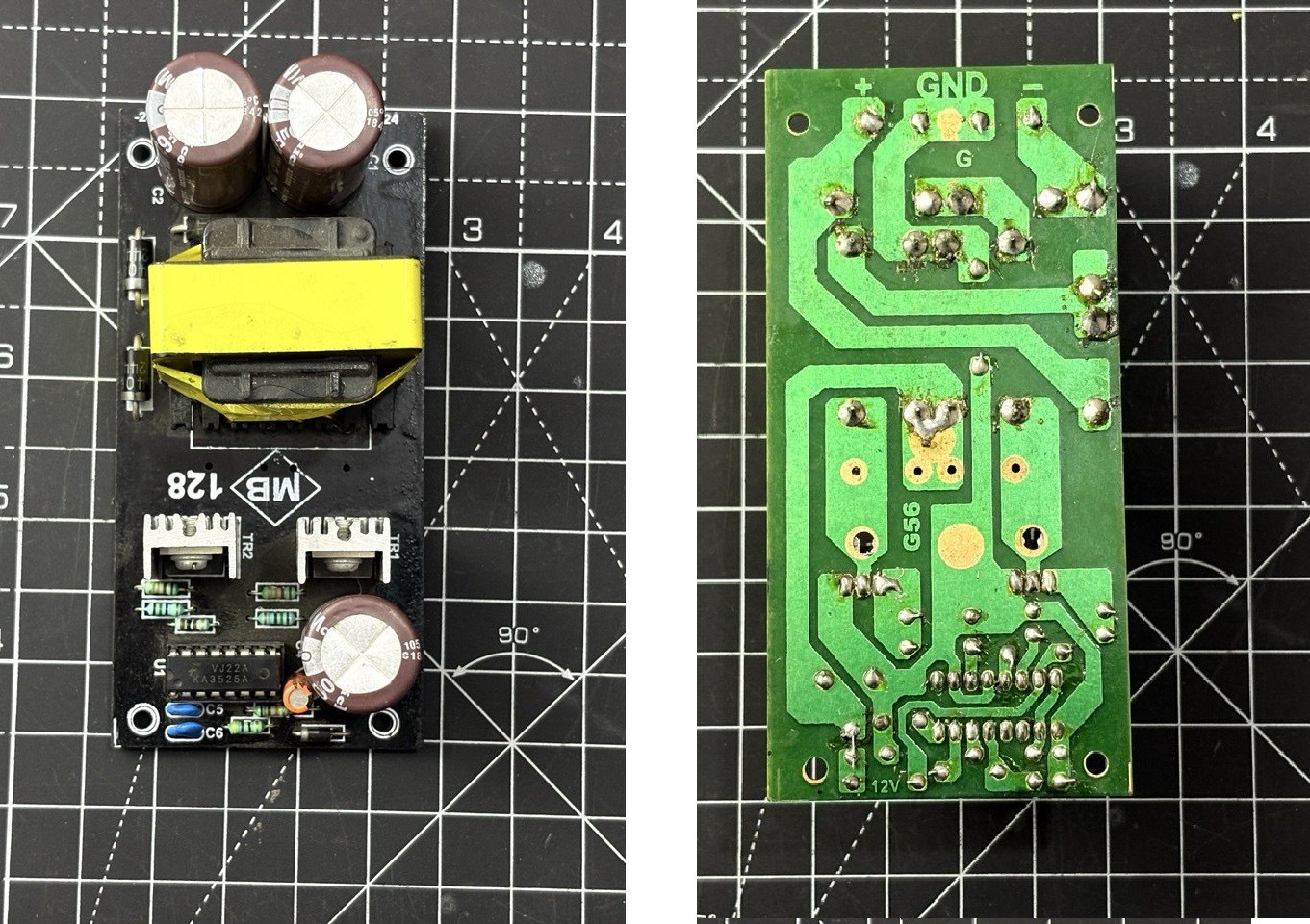
Features:
- Input voltage: 12V DC (from car battery, lead-acid, or regulated adapter)
- Output voltage: 24-0-24V DC (dual rail, +24V and -24V)
- Output current: 5A+ capable
- Controller IC: KA3525A (Fairchild Semiconductor, 16-DIP)
- Power switches: 2x IRFZ44N N-channel MOSFETs
- Topology: Push-pull DC-DC converter
KA3525A SMPS Controller:
The KA3525A is a monolithic IC from Fairchild Semiconductor designed for pulse-width modulating regulators. It packs everything you need for a push-pull SMPS. It has:
- 5.1V band-gap reference.
- Oscillator: Set by external RT (pin 6) and CT (pin 5). Can run up to 400-430 kHz.
- Error amplifier: Differential inputs on EA(-) pin 1 and EA(+) pin 2, output on EAOUT pin 9.
- PWM comparator: Compares the error amplifier output against the oscillator ramp to generate the pulse-width modulated signal.
- Soft start: An external capacitor on this pin ramps the duty cycle up slowly at power-on, preventing voltage spikes and inrush current.
- Shutdown (pin 10): Pull this high to kill the outputs.
- Under Voltage Lockout (UVLO): Keeps the outputs off until VCC reaches 6-8V.
The maximum duty cycle per output is capped at about 45-49%. This is deliberate. In a push-pull converter, if both MOSFETs ever conduct simultaneously, you get a dead short across the supply through the transformer primary. The KA3525A's internal flip-flop and deadtime control (pin 7) ensure that never happens.
How the Converter Works:
Let me walk through the signal flow from 12V input to +/-24V output.
Step 1: PWM Generation:
The KA3525A oscillator produces a sawtooth ramp at the switching frequency set by RT and CT. The PWM comparator slices this ramp against the error amplifier output to generate the PWM signal. The internal flip-flop then alternately routes this signal to OUTPUT A and OUTPUT B two complementary drive signals, each at half the oscillator frequency, with guaranteed deadtime between them.
Step 2: MOSFET Switching:
Each output of the KA3525A drives the gate of an IRFZ44N N-channel MOSFET. These are rated for 49A drain current, 55V drain-source voltage, and just 17.5 milliohms of RDS(on). Massive overkill for this application. When OUTPUT A goes high, MOSFET A turns on and pulls one end of the transformer primary winding to ground. When OUTPUT B goes high, MOSFET B pulls the other end to ground. The centre-tap of the primary is connected to the 12V input. So the current alternates through the two halves of the primary winding, creating an AC waveform in the transformer.
Step 3: Transformer Action
The centre-tapped transformer is the voltage conversion element. The primary-to-secondary turns ratio determines the step-up. With a 12V input and a +/-24V output target, the transformer steps the voltage up by roughly 2x on each half of the secondary. The secondary also has a centre-tap, which becomes the "0" reference to the ground point between the +24V and -24V rails.
Step 4: Rectification and Filtering
The AC from the transformer secondary is rectified by fast-recovery or Schottky diodes. Each half of the secondary feeds a rectifier, producing +24V on one rail and -24V on the other, both referenced to the centre-tap ground. Electrolytic capacitors smooth the pulsating DC into filtered rails. Cap size and quality directly affect output ripple.
Step 5: Feedback and Regulation
If the output rises above target, the error amplifier narrows the PWM pulse width, reducing power delivered through the transformer. If the output drops under load, it widens the pulses. This closed-loop regulation keeps the output stable across varying loads. The soft-start cap on pin 8 ensures the duty cycle ramps up gradually at power-on, preventing transformer saturation and voltage overshoot.
How to Use It:
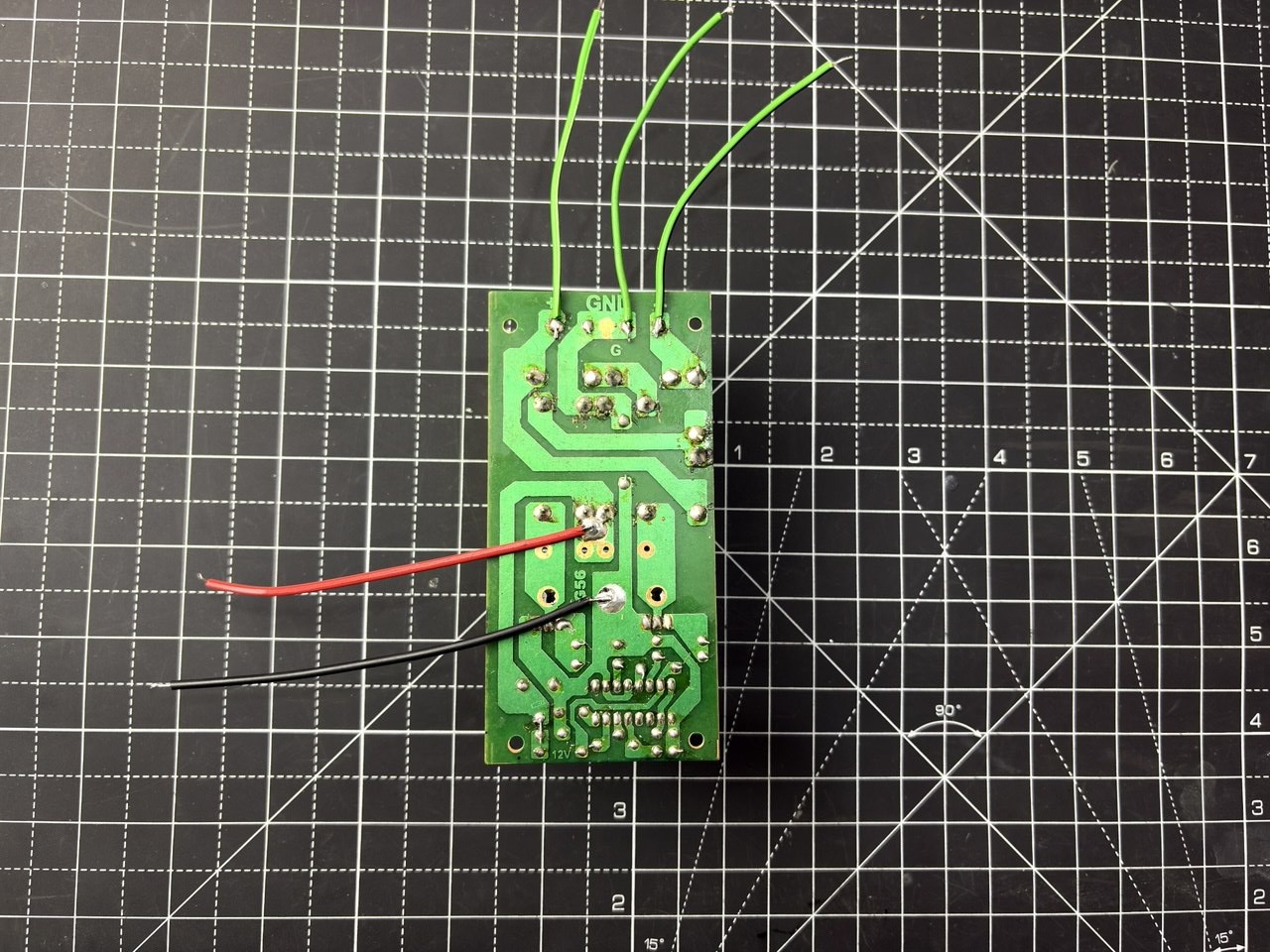
Connect your 12V DC source to the input terminals. Observing polarity, reversing it will likely kill the MOSFETs instantly; this module does not have a reverse voltage protection feature. Use a source capable of supplying enough current. At 5A output on the 24V rails, the input side draws significantly more roughly 10-12A from the 12V supply due to the step-up ratio plus conversion losses. Use thick wires (at least 14-16 AWG) and a source rated accordingly. A 12V lead-acid battery or a beefy 12V switching adapter works well. Avoid unregulated wall warts.
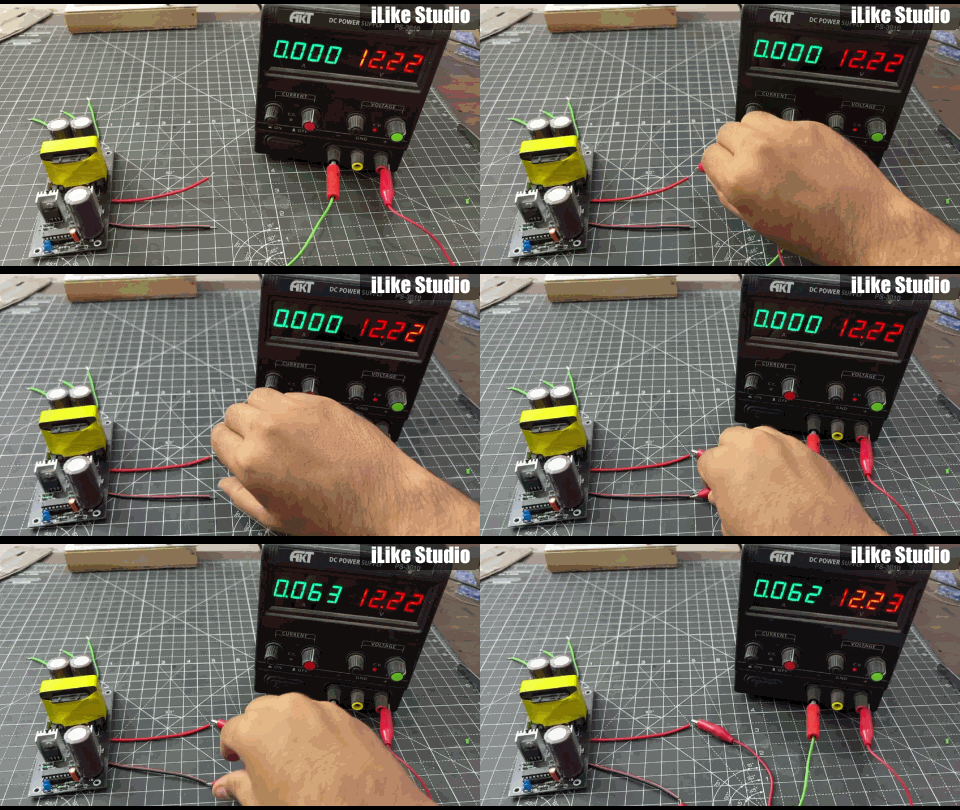
Connect +24V and -24V to your amplifier's V+ and V- supply pins. The 0V centre-tap connects to your amplifier's ground. Some push-pull converters can develop voltage spikes at no-load because the feedback loop has nothing to regulate against. Start with a light load and verify the output voltages with a multimeter before connecting your amplifier. If you want to build this on your own get the schematics and get your assembled one from JLCPCB. I have used the PCB assembly services from JLCPCB in affordable prices.
My Experience:
I got this module to pair with an audio amplifier that needed dual +/-24V rails but I only had a 12V bench supply handy. It delivered on its core promise stable +/-24V rails from 12V input, powering the amplifier, I have checked it using a multimeter. As the output capacitor charges it shows a significantly high voltage around 25V. But I have also tested it under some load for which the results are given here.
Under No Load:
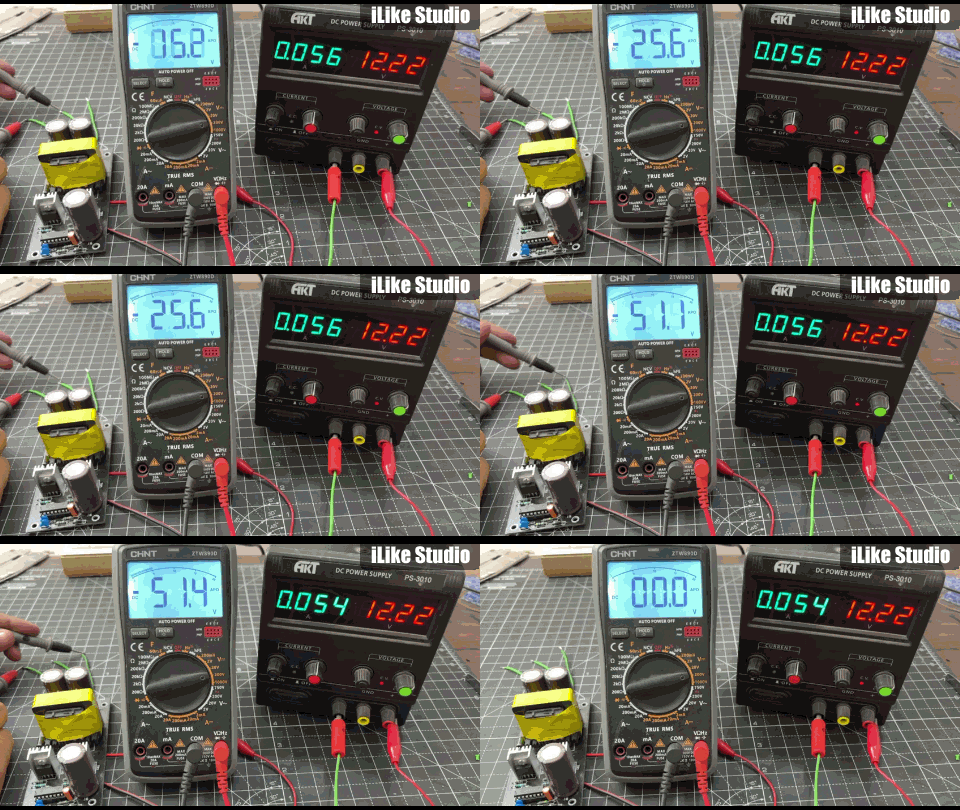
Build quality is what you'd expect from a generic module. The PCB is decent, solder joints are acceptable, and the IRFZ44N MOSFETs are genuine. The transformer is the biggest component on the board and it's wound reasonably well. What you need to find is just a good component vendor in case you are building something like this on your own.
Under Load:
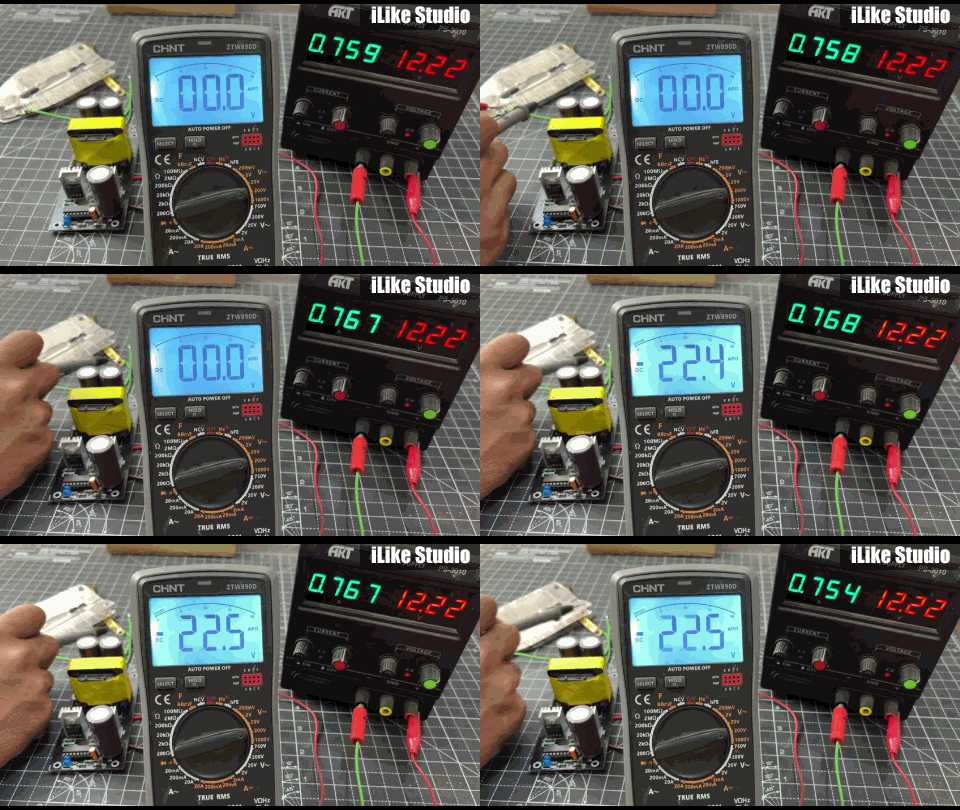
Outro:
This 12V to 24-0-24V push-pull converter module is a practical solution for a very specific problem: getting dual-rail high-voltage DC from a single low-voltage source. The KA3525A controller is a proven, well-understood SMPS IC, and the push-pull topology with IRFZ44N MOSFETs. Is it a replacement for a proper bench power supply or a purpose-built SMPS? No. But for car audio builds, battery-powered amplifier projects, and quick prototyping where you just need +/-24V from a 12V source, it does the job.