 László SZŐKE
The Ugly Truth Behind the Math
Up until now, the TraceVena MetaSpace software engine (with all its Float64 precision and Z3 deterministic proofs) has been running on what can only be described as a "janky" hardware setup.
To prove the core concept of audio-driven TDR and phase-shift measurement, I didn't have a fancy board. I literally used a raw TRRS jack, twisted a bare 13 kΩ resistor onto the wires, and plugged it straight into my soundcard. No hardware firewall, no Zener diodes, no mode switching. Just pure, unprotected proof-of-concept spaghetti wiring.
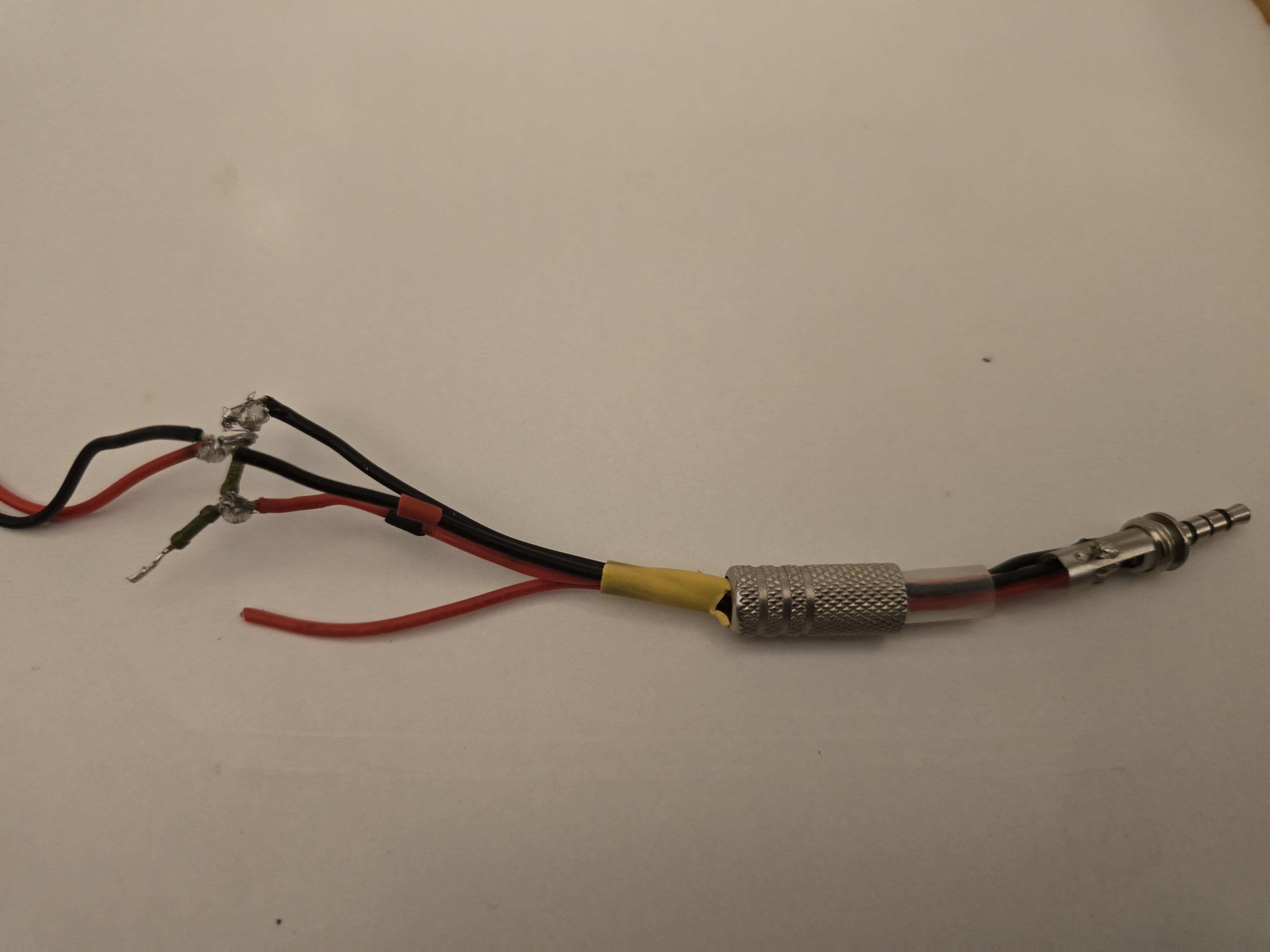
It worked beautifully to validate the math and the Goertzel algorithm extraction, but let's be honest: taking an unprotected TRRS jack and clamping it onto a live automotive wiring harness is basically begging for a blown laptop motherboard.
Building the First "Real" Interface Now that the software logic is solid, it's time to build the hardware that matches the schematic I posted in the project details. Today, I'm firing up the soldering iron to assemble the TraceVena V1 Universal Interface on a proper perfboard.
The goals for this build session:
- Adding the Switch: Installing the SPDT toggle so I can physically switch between the Automotive Mode (13 kΩ) and the Precision Mode (1 MΩ).
- Building the Firewall: This is the most crucial part. I'm soldering the 1 µF film capacitor (for DC blocking) and the back-to-back 3.3V Zener diodes. This is the "armor" that will let me safely probe 12V/24V systems without frying the C-Media audio chip.
- Proper Connectors: Moving away from the twisted TRRS nightmare to clean, dedicated input/output TRS male plugs and proper alligator clips.
I'll post photos of the soldered perfboard once it's done. If the hardware firewall calibrates correctly in the software (setting our parasitic 0.00 cm baseline), we are ready for actual garage field tests.
Time to warm up the soldering iron!
Discussions
Become a Hackaday.io Member
Create an account to leave a comment. Already have an account? Log In.