 Retep V
Version 0.05 was to be the fix-all version, my final version! Of course...
After I had ironed out the problems with the relays, there was one important thing that I had neglected and should fix: protection diodes on the USB port. So I set out to add them.
I found some nice diodes initially, but the were ti-ny... Meant for mobile phones and industrial manufacturing. And I thought that nobody was going to be able to hand-solder those. So I went out to search for bigger ones and used those.
Next was that I, of course, had a few components with the wrong footprint, mostly the large tantalum capacitors, but also the relays.
And after some puzzling, I got to v0.05. Ordered PCBs and started soldering.
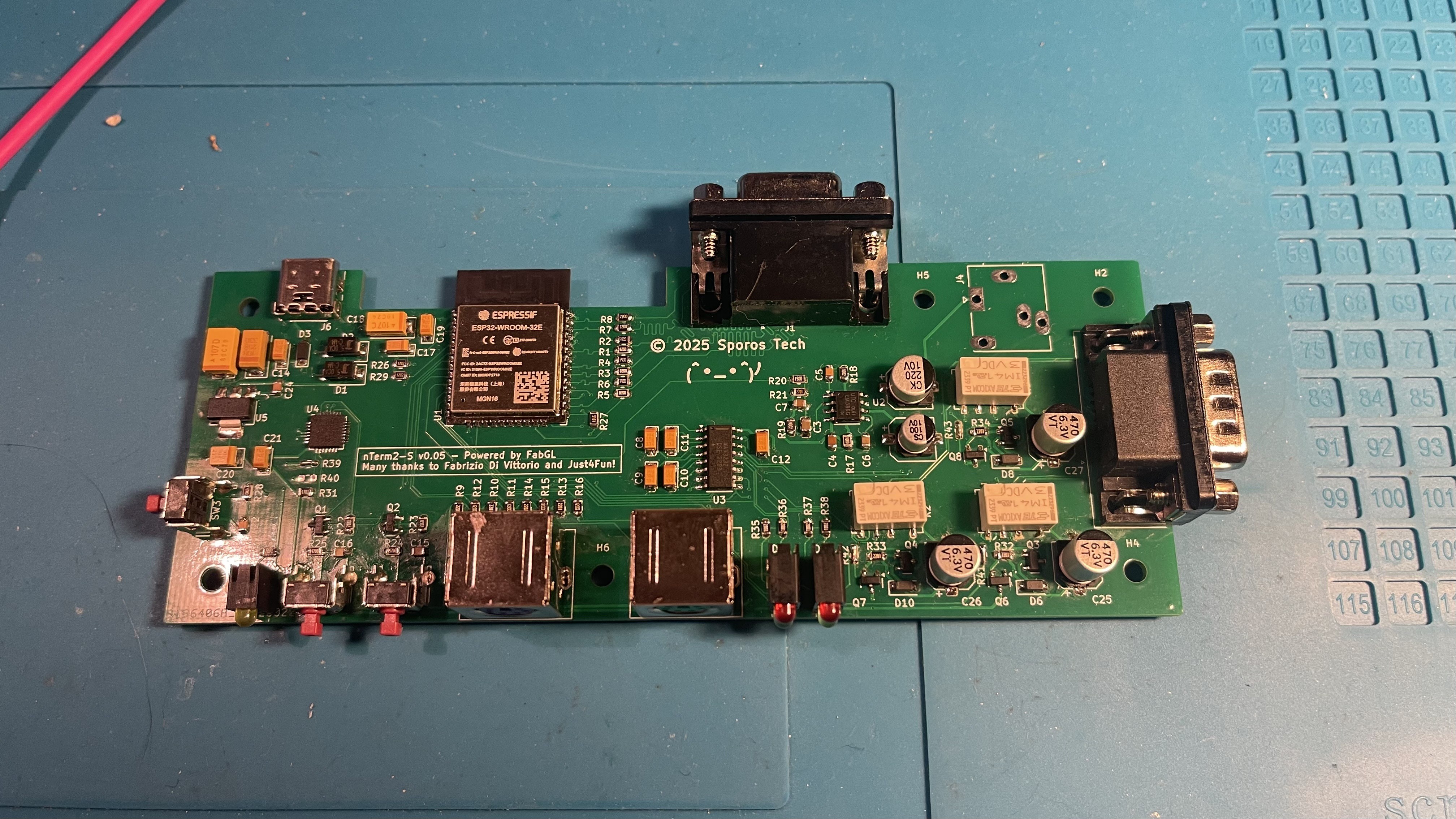
Did I mention that in v0.01 soldering the CP2102 was hell? Well, in v0.05 it was worse for some reason (probably time of day, or my coffee intake). I got it soldered down properly, but I decided that I did not want to go through that again, and did not wish anyone else to have to go through it. This was the final straw, the next version had to have a different USB chip.
So sad that Silicon Labs decided not to produce a SSOP version of the chip. The QFN-28 version has 10 N/C pins, meaning that only 18 pins are used and it could fit in a SSOP-18 package.
Well, after soldering I hit my first big problem: no USB. The device was not recognized at all. I doublechecked all connections, doublechecked my schematics, the PCB design, all seemed fine. So the only thing left to be suspicious about were the TVS diodes. I removed them, and there it was: device recognized and doing its stuff.
I went on the forum to ask what I had done wrong. And well, 54 minutes later I had the answer: the diodes that I had chosen because they were of easily solderable size, actually had way too high a capacity (500pF) and were seriously impacting the USB signal. I should have used diodes with a capacity closer to 0.5pF. So that was also a "back to the old drawing board".
For the rest: everything worked great, I was soo close now! I thought...
Discussions
Become a Hackaday.io Member
Create an account to leave a comment. Already have an account? Log In.