Close
0%
0%

ArduLora: Industrial LoRa Made Easy

Pro-grade LoRa with RS485 & Modbus for the Arduino ecosystem.

Public Chat
Similar projects worth following
0 followers
ArduLora is a compact, robust development board based on the RAK3172 module (powered by the STM32WLE5CC). It is designed to bridge the gap between simple LoRa experiments and real-world industrial deployments.

Most LoRa boards lack the peripherals needed for industrial use, but ArduLora comes integrated with RS485 (Modbus RTU), I2C, and Dual 0-10V Analog Inputs. Whether you are building a smart farm, monitoring industrial machinery, or creating a city-wide sensor network, ArduLora provides the reliable, low-power foundation you need.

The Problem: The "Industrial Gap" in LoRa Development

Most LoRa development boards on the market fall into two categories: simple breakout boards for hobbyists or expensive, closed-source industrial gateways. For developers trying to build professional sensor nodes, this creates a major hurdle.

Real-world industrial sensors (pressure, flow, temperature, air quality) almost always communicate via RS485 (Modbus RTU) or 0-10V Analog signals. Standard LoRa boards require messy wiring, external level shifters, and custom power management to work with these sensors, making the final product bulky and unreliable.

The Solution: ArduLora

ArduLora was designed specifically to bridge this gap. It is an "All-in-One" industrial LoRa node that combines a powerful LoRaWAN module with the essential interfaces needed in the field.

By integrating the RAK3172 (STM32WLE5CC) with a high-performance RS485 transceiver and high-resolution analog inputs, ArduLora allows you to go from a prototype to a deployed industrial sensor node in minutes, not weeks.

Technical Deep Dive

  • Module: RAKwireless RAK3172. This module is the heart of the board, running the RUI3 (RAKwireless Unified Interface V3). This allows developers to use the same C++/Arduino code for both LoRa P2P and LoRaWAN applications.
  • Industrial Connectivity:
    • RS485 (Modbus RTU): Integrated transceiver connected to Serial1. This enables communication with thousands of existing industrial sensors.
    • Dual Analog Inputs: Two dedicated pins (AI1/AI2) configured for a 0-10V range. This is standard for PLC and industrial sensor outputs.
  • Smart Power Management:
    • The board features a dedicated control pin (PB5) to power up/down external sensors. This is crucial for battery-powered nodes where you only want to power the sensor for a few milliseconds during a measurement.
    • Deep sleep support with micro-amp current consumption.
  • User Interface: Three status LEDs (PA8, PA9, PB2) provide instant visual feedback for transmission, reception, and system status.

Why ArduLora?

What makes ArduLora unique is its Native Arduino Compatibility. Unlike many industrial boards that require complex IDEs or custom SDKs, ArduLora works directly with the Arduino IDE. We've even published an official ArduLora Library to simplify sensor reading and data transmission, making professional IoT development accessible to everyone.

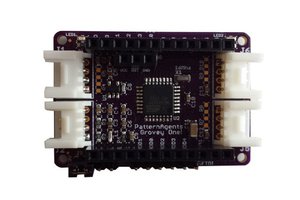
banner.png

Portable Network Graphics (PNG) - 6.53 MB - 05/05/2026 at 18:03

Preview

  • 1 × RAK3172
  • 1 × MAX485 Switches and Multiplexers / Analog Switches and Multiplexers
  • 1 × MC34063 Power Management ICs / Switching Regulators and Controllers
  • 1 × CH340E

  • ArduLora Library v1.0.0 - Initial Release

    namnama day ago 0 comments

    🚀 Initial Release of ArduLora Library (v1.0.0)

    This is the first stable release of the ArduLora library for the RAK3172 module, designed to make LoRa development on Arduino IDE incredibly simple.

    Key Features:

    • 100% compliant with RUI3 v4.2.4+ firmware.
    • Clean and human-readable pin definitions in ArduLora.h (e.g., ARDULORA_LED_STATUSARDULORA_RS485_TX).
    • 24 out-of-the-box compiled examples covering:
      • LoRa P2P: Transmission, Receiving, and settings configurations.
      • LoRaWAN: OTAA, ABP, Class B, Multicast, and network joining.
      • Hardware Interfacing: Modbus RTU (Master/Slave), I2C Sensors (SHT3x, LIS3DH, BH1750), GPS, Analog, and Digital IO.
      • System: Power saving, Multitasking, and Hardware Timers.

View project log

  • 1
    Prerequisites

    Hardware: ArduinoLoRa Rev 1.0 board, 18650 battery, LoRa antenna, USB‑C cable, sensor(s).

    • Software: Arduino IDE or Arduino CLI, STM32 board support (if required), ArduLora library (or your library).
    • Services: LoRaWAN gateway credentials if using OTAA/ABP (AppEUI, DevEUI, AppKey).
  • 2
    Hardware Assembly
    • Insert battery: Place the 18650 cell in the holder with correct polarity and ensure firm contact.
    • Attach antenna: Screw the LoRa antenna onto the SMA connector; keep it clear of metal.
    • Connect sensors: Use screw terminals or headers to wire I2C, UART, or GPIO sensors.
    • Power check: Connect USB and open Serial Monitor at 115200 to confirm the board boots and prints initialization logs.
  • 3
    Wiring Guide
    • I2C: SDA → SDA pin; SCL → SCL pin; 3.3V → VCC; GND → GND.
    • UART: Sensor TX → board RX; sensor RX → board TX; common GND.
    • Power: 18650 supplies Vbat; USB should auto‑switch when connected.
    • Antenna: Keep antenna upright and away from metal enclosures.

View all 5 instructions

Enjoy this project?

Share

Discussions

namnam wrote a day ago point

🛒 Where to buy
https://www.tindie.com/stores/thanhnamlt5
https://www.elecrow.com/ardulora.html

  Are you sure? yes | no

Similar Projects

Does this project spark your interest?

Become a member to follow this project and never miss any updates