 Alireza Noferesti

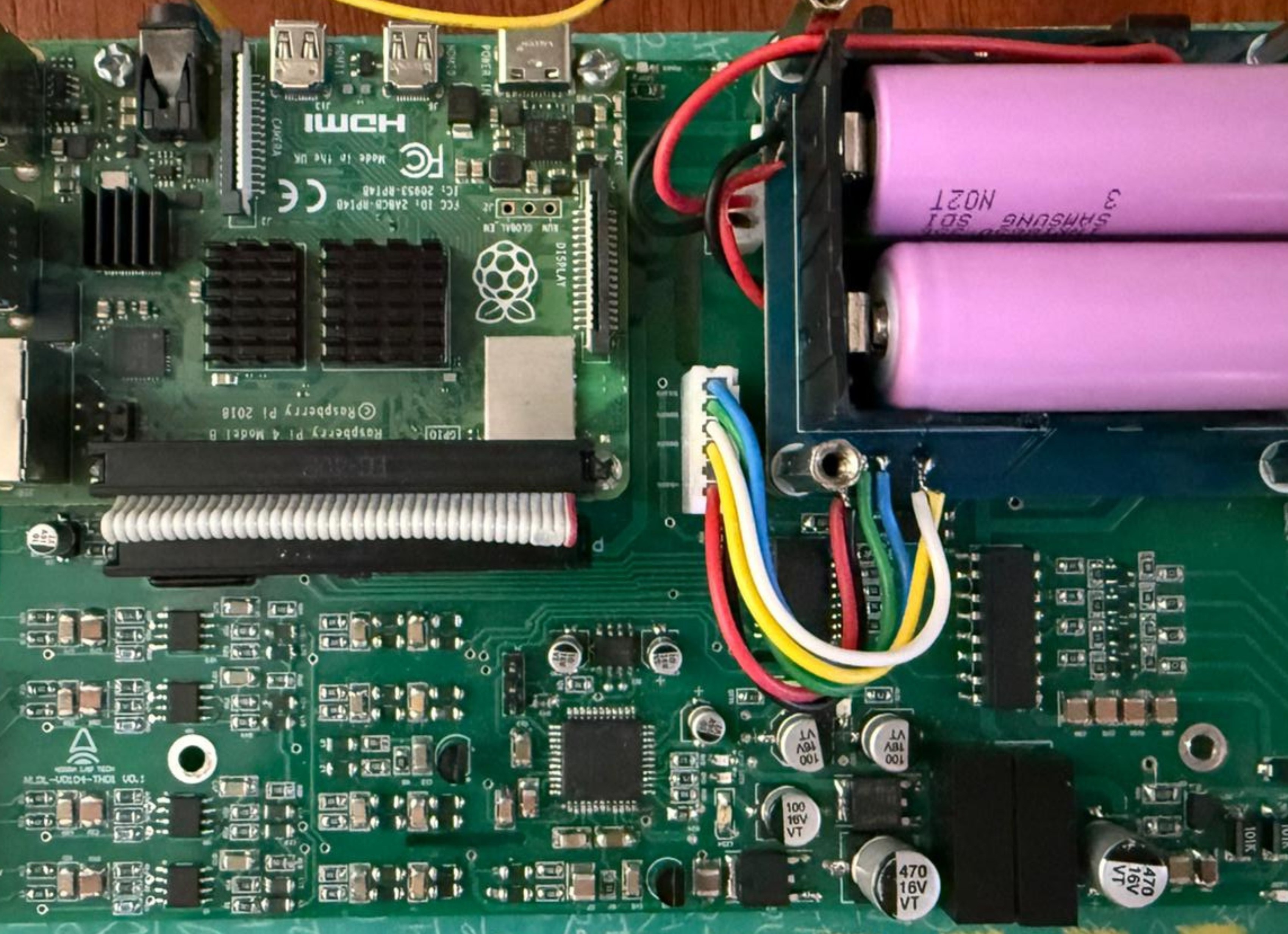
This project started during the development of a real industrial system based on Raspberry Pi.
At the time, we were using one of the commercially available UPS HATs to provide backup power and improve reliability. While the idea worked well on paper, the real-world behavior turned out to be far less stable and predictable than we expected.
During testing and long-term operation, we experienced several problems including:
- unstable restart behavior
- reboot loops after low battery conditions
- unreliable shutdown handling
- inconsistent recovery after power loss
- inaccurate battery and fuel gauge readings
- and power behavior that was difficult to trust in unattended systems
That experience eventually pushed us to start designing our own UPS architecture — with the goal of building something stable, dependable, and truly usable beyond hobby projects and into real industrial environments.
OVERVIEW
The goal of this project is not simply to create another Raspberry Pi battery backup board.
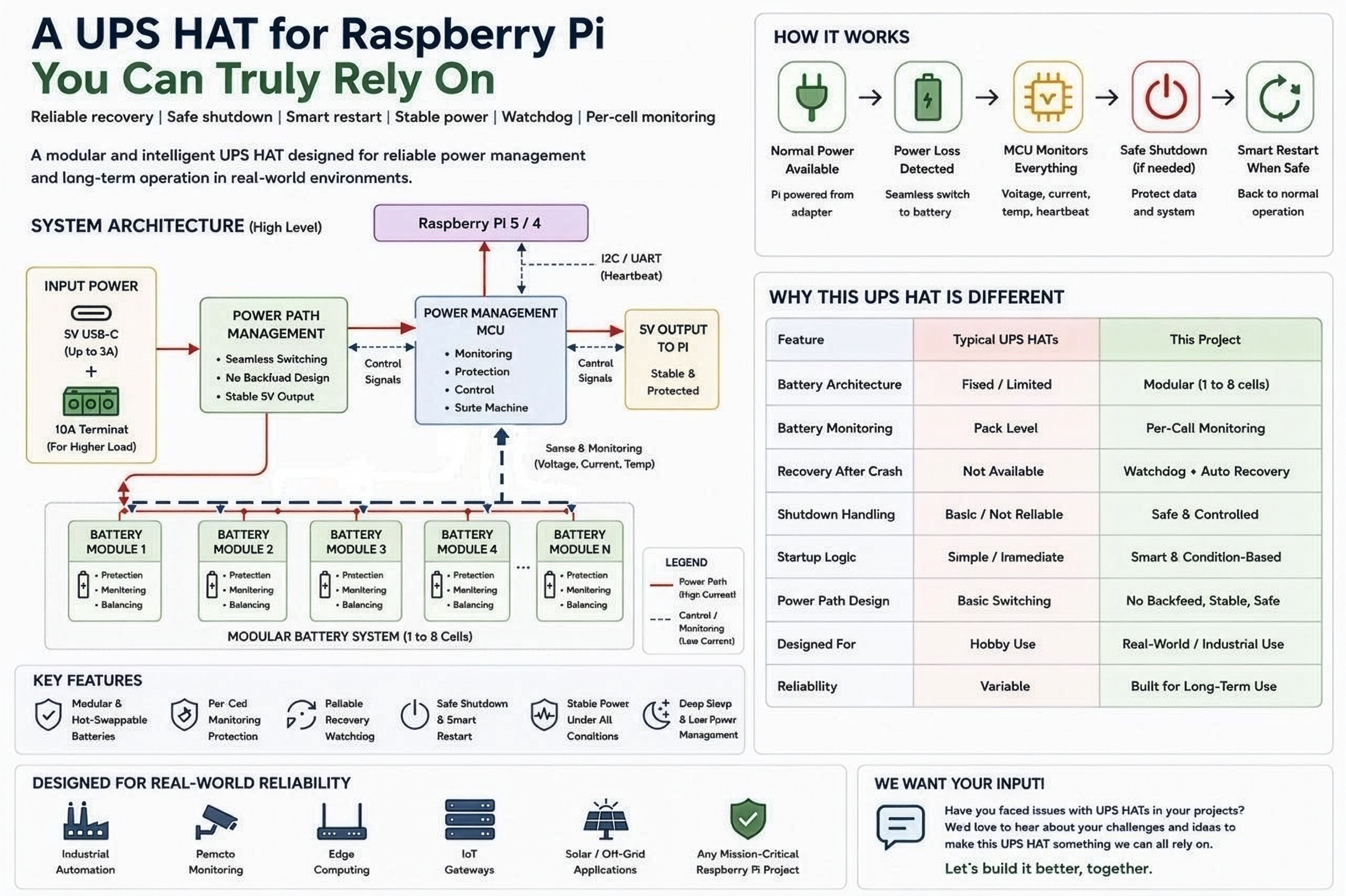
We are trying to design a UPS HAT focused on:
- reliable power recovery
- safe shutdown behavior
- watchdog-based crash recovery
- stable long-term operation
- modular battery scalability
- safer unattended operation
The current design direction includes:
- support for 1 to 8 modular 18650 battery modules
- per-cell monitoring and protection
- hot-swappable battery architecture
- heartbeat-based Raspberry Pi watchdog monitoring
- smart restart and recovery logic
- safe shutdown handling
- no-backfeed power path design
- deep sleep and low power standby behavior
- USB-C and high-current terminal power input options
Current Project Status
At this stage, we have already spent a significant amount of time researching and testing many of the UPS HATs currently available on the market, studying both their strengths and their real-world limitations.
We have also started planning the overall PCB architecture and power management approach for our own design, based on the problems and reliability issues we experienced during industrial use.
As the project progresses, we will share development logs covering:
- architecture decisions
- watchdog and recovery logic
- power path design
- battery management
- prototype development
- testing and reliability improvements
And if you have used existing UPS HATs in your own projects and experienced problems, we would genuinely love to hear about them. Real-world feedback and failure cases can help us design something safer, more reliable, and more useful for everyone.