 Himanshu Dada

Project Overview
The ESP32-S3 AI Wake Word Camera System is a compact AI-powered smart vision device designed for real-time wake-word detection and camera-based interaction. The system combines the power of the ESP32-S3 microcontroller with an onboard circular display, camera interface, and voice-triggered AI functionality to create an intelligent embedded solution for IoT and smart automation projects.
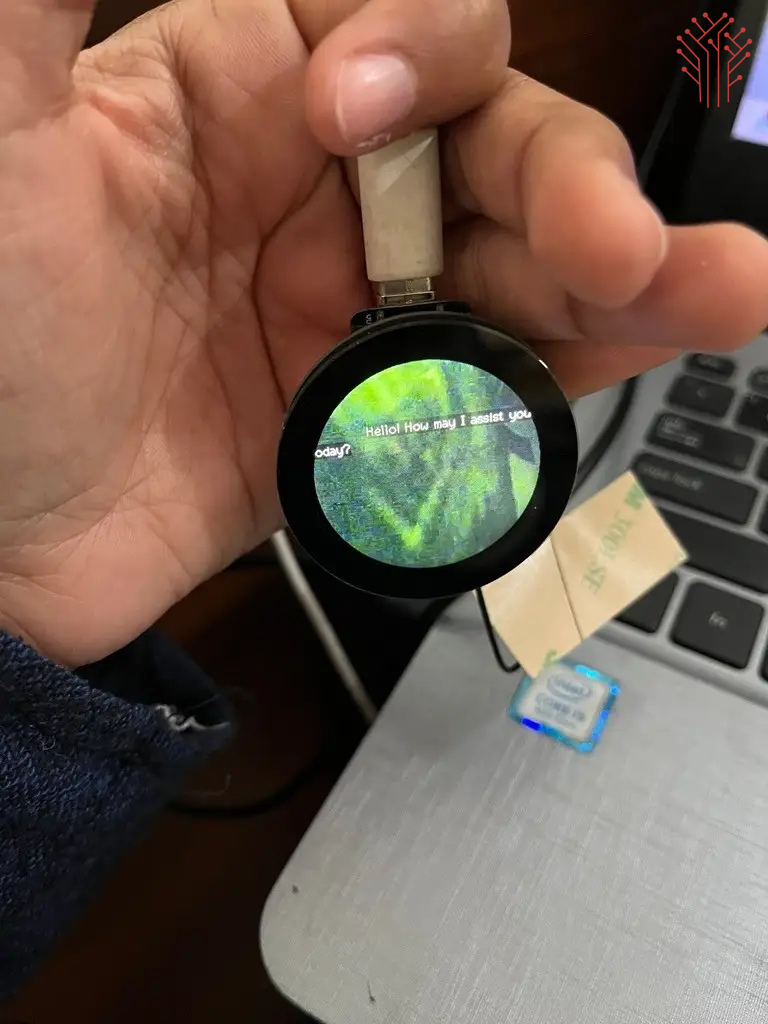
This project demonstrates how edge AI can be implemented on low-power hardware for voice-controlled applications without relying heavily on cloud processing. The device listens continuously for predefined wake words and activates camera-based functions instantly after detection.
Key Features
- AI-based wake word detection
- ESP32-S3 powered edge computing
- Real-time camera activation
- Compact circular display interface
- Low-power embedded architecture
- USB Type-C connectivity
- Portable and lightweight hardware design
- Fast response voice interaction system
- Suitable for smart home and IoT applications
Hardware Used
- ESP32-S3 Development Board
- Circular SPI Display
- Camera Module
- USB Type-C Interface
- Custom PCB Connections
- Embedded Audio Processing Components
Software & Development
The firmware was developed using embedded AI and real-time processing techniques optimized for the ESP32-S3 platform. The project focuses on efficient memory usage, fast wake-word response, and smooth display integration.
The project architecture reflects techniques commonly used in professional embedded systems engineering and modern Embedded Software Development Company workflows.
Working Principle
- The ESP32-S3 continuously monitors audio input.
- When the predefined wake word is detected, the AI engine activates the system.
- The connected camera module initializes instantly.
- Live visual feedback appears on the circular display.
- The device can further be expanded for automation, security, or smart assistant tasks.
Applications
- Smart Home Assistants
- AI IoT Devices
- Voice-Controlled Systems
- Edge AI Prototypes
- Embedded Vision Projects
- Security Monitoring Systems
- Human-Machine Interaction Devices
Challenges Faced
- Optimizing AI wake-word processing on limited hardware resources
- Managing real-time camera streaming efficiently
- Reducing latency for faster response
- Balancing performance with low power consumption
Future Improvements
- Offline voice command processing
- Face recognition support
- Wireless cloud synchronization
- Battery-powered portable version
- Advanced AI interaction features
Conclusion
This project showcases the capability of the ESP32-S3 platform in building compact AI-enabled embedded systems with real-time voice interaction and camera integration. It is an efficient demonstration of edge AI, embedded vision, and smart IoT innovation in a single portable device.