 Himanshu Dada

Project Overview
This project is a smart IoT-based water vending system designed for remote and off-grid communities where access to clean drinking water and stable electrical infrastructure is limited. The system combines embedded automation, RFID authentication, solar-powered operation, and intelligent dispensing control to create a reliable and scalable smart water distribution platform.
The objective of the project was to develop a compact and energy-efficient solution capable of operating autonomously in desert and rural environments while reducing operational complexity and maintenance requirements. The system demonstrates how a custom built vending machine can deliver secure and automated water access using embedded electronics and renewable energy technologies.
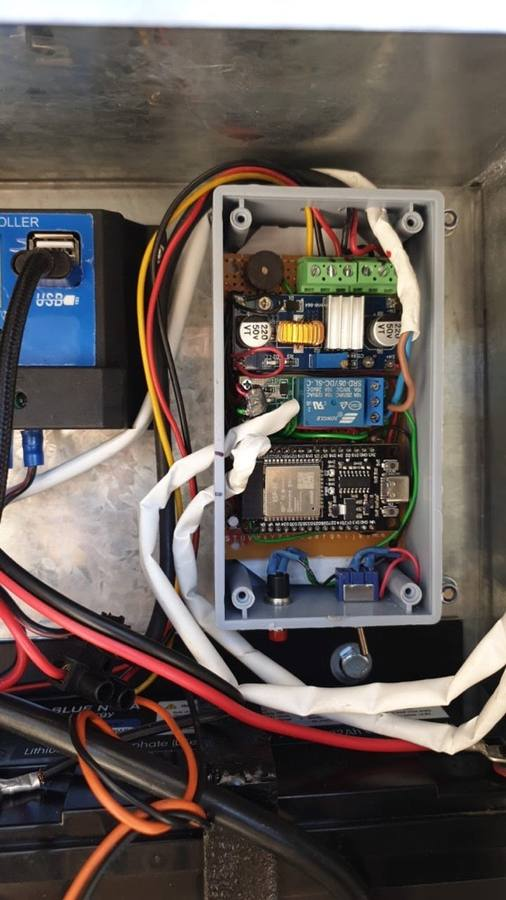
The prototype integrates an ESP32 microcontroller, RFID-based user authentication, relay-controlled dispensing, DC power regulation, and solar battery operation inside a compact controller enclosure optimized for field deployment.
Key Features:
- ESP32-based embedded control system
- RFID-enabled user authentication
- Solar-powered off-grid operation
- Automated water dispensing mechanism
- Low-power embedded electronics design
- Relay-controlled pump and valve switching
- Expandable IoT monitoring capability
- Compact modular enclosure
- Smart energy management system
- Suitable for harsh outdoor environments
System Architecture
The system consists of five major subsystems:
- Solar Power Management
- ESP32 Embedded Controller
- RFID Authentication Module
- Water Dispensing Unit
- Relay and Protection Circuitry
The solar panel charges the battery system, which powers the complete vending machine. A DC-DC buck converter regulates voltage for the ESP32 controller and peripheral modules.
When a registered RFID card is scanned, the ESP32 validates the authentication request and activates the dispensing cycle through a relay-controlled pump or valve system.
Hardware Components
ESP32 Development Board
The ESP32 acts as the central processing unit of the system and handles:
- RFID data processing
- Relay control
- Dispensing logic
- User interaction
- IoT communication support
The ESP32 was selected because of:
- Built-in WiFi and Bluetooth
- Low power consumption
- Reliable GPIO support
- Easy cloud integration
- High flexibility for embedded applications
RFID Authentication Module
The RFID module is used for secure user identification and controlled water access.
Functions include:
- RFID card detection
- User authentication
- Access authorization
- Dispensing trigger activation
The authentication mechanism helps prevent unauthorized water usage and enables future prepaid or smart card integration.
Relay Module
The relay module isolates the high-current pump circuitry from the low-voltage controller electronics.
Used for:
- Pump switching
- Solenoid valve control
- Electrical load isolation
This improves both safety and system reliability.
Solar Power System
The vending machine is powered using:
- Solar panel
- Rechargeable battery
- Charge controller
- DC power regulation system
The solar-powered architecture allows fully autonomous operation in off-grid desert locations.
Water Dispensing System
The dispensing mechanism can operate:
- DC water pumps
- Solenoid valves
- Timed water flow systems
The design supports future integration with:
- Flow sensors
- Water quantity monitoring
- Smart metering systems
Embedded Controller Enclosure
The electronics were assembled inside a compact modular enclosure containing:
- ESP32 controller
- RFID module
- Relay board
- Buck converter
- Terminal connectors
- Protection circuitry
The enclosure was designed for:
- Easy servicing
- Organized wiring
- Field maintenance
- Dust protection
- Compact installation
Special consideration was given to maintaining serviceability for remote deployment conditions.